sábado, agosto 28, 2010
Drenagem, drenagem
.
Apreciemos o panorama, as dores e o parto de um mundo novo...
.
.
Defender o passado impede-nos de abraçar um futuro
Por volta de 1981 entrou em casa dos meus pais um calhamaço dum livro chamado "The Third Wave". Nesse ano ou no ano a seguir li-o. Um dos soundbytes que recordo foi sobre a explosão da diversidade de temas que se podiam aprender numa universidade. O casal Toffler escreveu qualquer coisa como: "numa universidade podem-se aprender desde tácticas de guerrilha até tácticas na bolsa".
.
Pois foi desta frase que me lembrei ao ler este artigo no ionline:
.
"Hipermercados em Lisboa em risco de não abrirem ao domingo".
.
"o alargamento do horário dos hipermercados pode pôr em causa a sobrevivência do pequeno comércio e sustenta que "são dias para olhar para o céu e não para dentro de grandes superfícies". "
.
Estas medidas legislativas para proteger o pequeno comércio têm o mesmo efeito que tentar ajudar uma borboleta a sair do casulo. A ajuda impede o fortalecimento, a ajuda impede a mudança, a ajuda é contraproducente.
.
Tantos milhões que se gastam em apoios, em formações, em... e onde está a mudança?
.
Será que o futuro do pequeno comércio é continuar a ser o que sempre foi, alheio às mudanças no exterior?
.
Será que o preço comanda todas as decisões de compra dos clientes? Será que o preço é o único critério de compra dos clientes?
.
"In the early months of the recession Wal-Mart enjoyed increased store traffic and sales (Moi ici: A migração de valor, ver marcador). This certainly was the result of changing shopping patterns as consumers shifted to retailers with a low-price focus.
.
In an attempt to reduce inventory costs, increase inventory turns, and improve efficiency, Fleming drastically reduced the number of SKUs in Wal-Mart stores. This immediately resulted in decreased traffic as customers went elsewhere to find the products no longer available at Wal-Mart. For the last four quarters, Wal-Mart has experienced decreases in sales. " (Trecho retirado de "The Wal-Mart Dilemma!"
.
In an attempt to reduce inventory costs, increase inventory turns, and improve efficiency, Fleming drastically reduced the number of SKUs in Wal-Mart stores. This immediately resulted in decreased traffic as customers went elsewhere to find the products no longer available at Wal-Mart. For the last four quarters, Wal-Mart has experienced decreases in sales. " (Trecho retirado de "The Wal-Mart Dilemma!"
.
O preço é importante mas não é tudo. Mesmo em tempo de recessão o preço não é tudo.
.
Há cerca de um ano escrevi aqui no blogue sobre o livro "Up Against the Wal Mart's" (parte I, parte II e parte III)... como é que o pequeno comércio pode combater os Continentes e Jumbos e Pingos Doces e Lidls deste país?
.
Eles são grandes, eles são enormes, eles têm muito dinheiro, nós somos pequeninos...
.
Talvez valha a pena ler a interpretação que Malcom Gladwell dá sobre o confronto entre David e Golias, ou sobre Lawrence e os turcos, ou sobre ... (texto de Gladwell aqui e a minha interpretação nesta série sobretudo neste postal).
.
E volto a Toffler, tanto dinheiro gasto em apoios ao pequeno comércio e nunca ninguém convidou ou traduziu os trabalhos ou as teses de gente como Don Taylor e Jeanne Archer ou George Whalin? Até parece que somos o único poço do mundo.
.
O que seguramente não tem funcionado e vai continuar a não funcionar é o coitadinhismo, ainda ao menos se os media não o alimentassem ...
.
Como se instila mudança? Como se aponta para uma Terra Prometida onde corre leite e mel?
.
Ainda ao menos se os media não alimentassem o coitadinhismo... e os políticos.
.
.
.
BTW, se são dias para olhar para o céu ou não deve ser deixado ao livre arbítrio das pessoas, já Hayek no seu livro escreveu sobre a tentação de planear o tempo livre dos cidadãos pessoas impostados.
.
sexta-feira, agosto 27, 2010
A roda do tempo
Moro numa zona que é mais rural do que urbana, apesar da minha freguesia ser a mesma que a do centro da cidade de Estarreja.
.
Esta localização permite-me, já que faço jogging quase todos os dias, aperceber-me do ritmo natural das estações.
.
Em Maio é o cheiro a bosta nos campos.
.
No início de Junho é o cheiro a rosas bravas.
.
No início de Julho é o cheiro a tílias.
.
Hoje... foi o primeiro sinal do Outono que aí vem a passos largos. Pela primeira vez senti o agradável aroma da uvas morangueiras e as amoras perderam a doçura.
.
Entretanto a bosta daqui, alimentou estes campos:
Reencontro
Há mais de 20 anos que não ouvia esta canção.
.
Já me tinha esquecido de quem era, apesar de recordar muitas vezes e, trautear o refrão.
Macedónia
- Os cortes de cabelo andam por aí "PREPARE FOR THE AGE OF “FINANCIAL OPPRESSION”"
- "CDS On Spanish Banks Widen As Country May Need To Return $6 Billion In Taxes"
- Tenho uma curiosidade enorme em perceber se se trata de um padrão ou de um caso pontual "Grupo Ramada sobe lucros mas diminui receita"
- Ainda ontem nos comentários se abordou este tema do crescimento pelo crescimento "Danger, Trader Joes!" e o perigo de perder o foco para começar a dispersar as energias, as atenções, as motivações
- Presumo que há, neste caso, muito a aprender sobre os mitos e a eficácia no marketing. Há um travo de politicamente correcto (marketeiramente falando) "Isaiah Mustafa and Social Media Prove No Match for Free Goods"
- Outro tema abordado recentemente, o perigo da paranóia dedicada aos concorrentes em vez de ser dedicada aos clientes "Believe. Innovate. Be Unique."
- "Têxteis do lar portugueses apostam nos “produtos topo de gama” na China":
.
(Moi ici: Não podia estar mais de acordo.)
.
"“As empresas portuguesas precisam do apoio do Estado para poder entrar neste tipo de mercados”, disse." (Moi ici: Tenho dúvidas...)
Convite
Na sequência destes comentários lançamos o convite para um almoço/jantar de leitores, comentadores e curiosos deste blogue.
.
Há interessados para uma sessão de francesinhas, ou outra opção mais saudável, durante a próxima semana em Aveiro?
.
Interessados podem contactar-me para ccruz@redsigma.pt
Um guia
Desde miúdo, ao longo dos anos, até sei lá que idade, habituei-me a ver na televisão o saudoso Fernando Pessa em entrevistas a inventores portugueses que desesperavam porque ninguém queria as suas invenções, que se queixavam por alguém ter roubado a ideia, que ...
.
Quem tem uma invenção nas mãos, quem tem uma ideia para um negócio e, não sabe que passos seguir pode experimentar este guia "The Entrepreneur's Guide to Customer Development: A cheat sheet to The Four Steps to the Epiphany" de Brant Cooper e Patrick Vlaskovits.
.
quinta-feira, agosto 26, 2010
Macedónia
- "Chart Of The Day: How Spain’s Stimulus Money Helps Germany Achieve Record Growth" em sintonia com o nosso postal "Fora isto, tudo bem". Agora, com o auxílio da distância temporal é possível perceber que se tratou de uma medida sem sentido, demasiado cara para ... apoiar os países que montam os automóveis.
- "Spain uses social security fund to prop up the bond market" e nós por cá?
- "Portugueses são os que mais contestam sacrifícios para reduzir o défice" e "Portugal paga juros mais altos para emitir dívida de 1.300 milhões" e "Pessimismo dispara em Portugal"
- No entretanto, "Megacities" (números impressionantes)
Justificação estranha...
"Falência: centro comercial da Sonae Sierra fecha portas"
.
Há, neste artigo um pormaior significativo:
.
"O grupo tem atribuído a queda do centro comercial à concorrência, já que existem mais dois centros nas imediações."
.
E depois? É justificação?
.
.
E a diferenciação? E o que fizeram para atrair clientes? E o que fizeram para criar uma narrativa, para criar uma tribo?
.
Se calhar estavam à espera que não existissem concorrentes?
.
Esta frase não é da cultura da Sonae que conheci.
Focusing on “revenue productivity”
Na sequência da leitura em curso do livro "The Power of Pull - How Small Moves, Smartly Made, Can Set Big Things in Motion" fiz algumas pesquisas na internet e encontrei este relatório "Measuring the forces of long-term change - The 2009 Shift Index" que de alguma forma está na origem do livro.
.
Nas páginas 84 e 86 encontrei uns trechos que fizeram o meu dia.
.
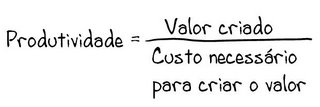
Neste blogue costumamos escrever sobre a produtividade, sobre a importância do numerador, sobre o perigo da concentração no denominador, sobre o foco na criação, na originação de valor.
.
"During the last several decades, public policy liberalization has opened up the global economy, allowing freer flow of capital across geographical and institutional lines.
Businesses now find it easier to enter and exit markets, industries, and countries, and workers enjoy fewer restrictions on where they can work.
.
Meanwhile, digital technology has removed previous barriers to the free flow of information, eroding the information asymmetries that once favored sellers over buyers. Indeed, as described later in this report, today’s consumers have a growing wealth of knowledge and choice when buying goods and services and a loose attachment to brands. The shift in market power from makers of goods and services to the people who buy them continues to raise the pressure on firms to innovate and sell in new and creative ways.
.
Many of today’s companies continue to follow traditional scale-based notions of corporate strategy, pursuing mergers and acquisitions to achieve industry leadership, focusing tirelessly on cost reduction, and making every effort to squeeze value from the channel. As quickly as they accomplish these things, however, competitors enter with new efficiencies and ideas. Even the best firms struggle to stay ahead.
…
executives, seeking to defend their company’s position, acquire competitors both to reduce near-term pressure and to squeeze out more costs through greater economies of scale. However, if barriers to entry and barriers to movement continue to erode as a result of continued digital infrastructure advances and public policy shifts favoring greater liberalization, we expect that these defensive moves will only have short-term impacts until another wave of competitors emerge to challenge incumbents.
…
The profound increase in competitive intensity since the mid-1960s shows no sign of slowing and should provide considerable impetus for businesses to rethink traditional strategic, organizational, and operational approaches— away from the scalable efficiency that was the principal rational for the 20th century toward the scalable learning and performance better suited for today’s environment.
…
Traditional approaches to productivity improvement too often focus on manipulating inputs—the denominator, or cost, side of the productivity ratio. Since companies can only reduce costs so far before reaching zero, this is ultimately a diminishing returns game. The fixation on inputs, moreover, overlooks a bigger opportunity: the potential to sell more with the same amount of cost.
.
Many of today’s companies continue to follow traditional scale-based notions of corporate strategy, pursuing mergers and acquisitions to achieve industry leadership, focusing tirelessly on cost reduction, and making every effort to squeeze value from the channel. As quickly as they accomplish these things, however, competitors enter with new efficiencies and ideas. Even the best firms struggle to stay ahead.
…
executives, seeking to defend their company’s position, acquire competitors both to reduce near-term pressure and to squeeze out more costs through greater economies of scale. However, if barriers to entry and barriers to movement continue to erode as a result of continued digital infrastructure advances and public policy shifts favoring greater liberalization, we expect that these defensive moves will only have short-term impacts until another wave of competitors emerge to challenge incumbents.
…
The profound increase in competitive intensity since the mid-1960s shows no sign of slowing and should provide considerable impetus for businesses to rethink traditional strategic, organizational, and operational approaches— away from the scalable efficiency that was the principal rational for the 20th century toward the scalable learning and performance better suited for today’s environment.
…
Traditional approaches to productivity improvement too often focus on manipulating inputs—the denominator, or cost, side of the productivity ratio. Since companies can only reduce costs so far before reaching zero, this is ultimately a diminishing returns game. The fixation on inputs, moreover, overlooks a bigger opportunity: the potential to sell more with the same amount of cost.
.
By focusing on “revenue productivity,” executives can switch from wringing out ever-more elusive efficiency gains to unleashing the potential of employees by increasing the rate at which they learn, leading to innovation and continuous performance improvement. We believe there is tremendous opportunity to couple the digital infrastructure with new management approaches to empower, create, and mobilize the knowledge workers possess to monetize the intangible assets that make up the lion’s share of company profits in the digital era.”
"
"
Eleazar ben Yair (parte II)
.
Excesso de "Attachment" e uma atitude perante a vida "Passive" produzem, facilmente um "Whiner", um Calimero... não é verdade Aranha?
mm
mm
Play only with what you can afford to lose
Não basta ter um bom produto!
.
Não basta ter clientes satisfeitos!
.
É preciso ganhar dinheiro!
.
"Segundo dados que vou conhecendo através dos jornais a marca portuguesa de vestuário cheyenne entrou em insolvência. Sabe-se que tinha marca própria e, de acordo com o feed back de alguns clientes, estavam satisfeitos com a qualidade dos produtos.
Qual a razão de ter falhado?" (trecho retirado de um comentário a um postal anterior).
.
Não sei as razões da falha, não conheço o caso em concreto. Gostaria de recordar este postal "Lugar do Senhor dos Perdões (parte I)" e, sobretudo, este texto do Público "Fim da Cheyenne deixa 300 pessoas no desemprego" onde se pode ler:
.
"redução na procura, uma política de expansão da rede de lojas incompatível com a capacidade financeira, uma estrutura organizacional pesada, a falência de alguns clientes estrangeiros são alguns dos factores que, segundo o administrador de insolvência, conduziram às dificuldades que levaram à “total falta de liquidez”.
O relatório de insolvência realça ainda a “confusão nas relações entre as empresas do grupo, nas quais se destacam a Paulo Serra & Irmãos [declarada insolvente em Maio] e a Imobiliária das Pateiras” bem como “o conflito com o antigo sócio e gerente José Alexandre Serra Rodrigues”"
.
BTW, ainda este mês me arrepiei, ao folhear as páginas da revista Exame, ao tomar consciência do endividamento, para alimentar a expansão, da empresa por detrás da marca Salsa. E qual foi um dos motivos por detrás da falência do projecto Aerosoles?
.
Recordo a primeira regra que Tony Hsieh aprendeu com o poker relativamente à parte financeira "Always be prepared for the worst possible scenario."
.
Não basta ter um bom produto!
.
Não basta ter clientes satisfeitos!
.
É preciso ganhar dinheiro!
.
No template para descrever um modelo de negócio usado por Osterwalder é fácil de ver:
Existem duas partes no modelo: a da esquerda, relacionada com a parte externa da organização (clientes, relação com clientes, canais de distribuição e fluxo de entrada de dinheiro) e; a da direita, relacionada com a parte interna da organização (parceiros, actividades-chave, infraestruturas-chave e ... estrutura de custos). Não basta uma das partes estar OK, as duas têm de estar OK e equilibradas.
.
Recordo Julho de 2008 em que discuti aqui aquilo que seria a crescente pressão para aumentar a rentabilidade dos negócios assentes em endividamento: mais endividamento, mais risco, taxas de juro reais superiores, necessidade de maior rentabilidade para as suportar, necessidade de estratégias mais puras para obter mais rentabilidade e maior o risco do negócio falhar...
.
Recordo Charan e a sua frase para os tempos de crise... e como muito boa gente evitaria problemas se o escutasse, alguns até assistiram à sua conferência recente em Lisboa mas ... parece que só vão para o social...
.
"Your focus must shift from the income statement to the balance sheet. Protecting cash flow is the most important challenge almost all companies face today whether they realize it or not.
...
Pursuit of revenue growth must give way to understanding the cash implications of everything your company does.
...
Because lack of liquidity will be an ever-present lethal threat, you will have to manage conservatively, lowering your cash breakeven point as rapidly as possible for the worst-case scenario.
...
After spending their careers in a single-minded pursuit of growth, business leaders have to adjust their mentality. Some CEOs are telling their people that they should go for market share against competitors whose conditios could be unraveling. You should pursue that kind of growth only if it is profitable and cash-efficient."
...
Pursuit of revenue growth must give way to understanding the cash implications of everything your company does.
...
Because lack of liquidity will be an ever-present lethal threat, you will have to manage conservatively, lowering your cash breakeven point as rapidly as possible for the worst-case scenario.
...
After spending their careers in a single-minded pursuit of growth, business leaders have to adjust their mentality. Some CEOs are telling their people that they should go for market share against competitors whose conditios could be unraveling. You should pursue that kind of growth only if it is profitable and cash-efficient."
quarta-feira, agosto 25, 2010
Ir à faca!
Muitas empresas, incapazes de se decidirem, querendo jogar em vários tabuleiros em simultâneo, olhando para todos os potenciais clientes como clientes-alvo, inflacionam a paleta de produtos ou serviços que colocam no mercado.
.
Será que todos eles fazem sentido? Será que alguns deles ou a maioria, não funcionam como delapidadores do grosso da contribuição obtida de um número restrito?
.
Peter Drucker escreveu que era muito difícil a uma empresa cortar com o passado, acabar com antigas legendas de vendas que evoluíram para cães rafeiros, eliminar os seus filhos que nunca saíram da cepa torta ou deixaram de ser rentáveis.
.
É fácil racionalizar mil e uma justificações para evitar cortar, para ampliar a gama de oferta.~
.
Eis um artigo interessante que equaciona o tema e dá algumas pistas para o começo da sua resolução "Products, Products Everywhere".
.
O excesso de escolha não é um tema novo neste blogue, aqui abordamos o ponto de vista do cliente (Barry Schwartz e o paradoxo da escolha). Agora, abordamos o ponto de vista do produtor.
.
BTW, vale a pena rever a apresentação de Barry Schwartz.
Resumo
Resumo de parte do capítulo "The Diminishing Power of Pull" onde se pode ilustrar um conjunto, um emaranhado de relações de causa-efeito que estão a alterar o mundo em que vivemos:
alfa - "This sets the stage for a far-reaching transition in how we mobilize resources and, indeed, how we conceive of what a company is. As the Big Shift takes hold, companies are no longer places that exist to drive down costs by getting increasingly bigger. They're places that support and organize talented individuals to get better faster by working with others.
.
beta - "The rationale of the firm shifts from scalable efficiency to scalable learning - the ability to improve performance more rapidly and learn faster by effectively more and more participants distributed across traditional institutional boundaries."
.
"shifts from scalable efficiency" mais um argumento para estar em desacordo com "a indústria mais pequena terá dificuldades".
.
Voltando ao esquema, é possível imaginar n relações de causa-efeito a continuarem, em sequência de cada um dos tópicos fronteira do esquema... um pouco assustador roçar o zeitgeist do tempo que vivemos, a quantidade de mudança em curso e a acelerar... Mongo is approaching us.
Curiosity must come before content
"Curiosity must come before content. Imagine if the TV show Lost had begun with an announcement: "They're all dead people, and the island is Purgatory. Over the next four seasons, we'll unpack how they got there. At the end, we'll take questions." We've all had the experience of being in the audience as a presenter clicks to a slide with eight bullet points. As he starts discussing the first one, we read all eight. Now we're bored. He's lost us. But what if there had been eight questions instead? We'd want to stay tuned for the answers."
.
Eleazar ben Yair
Ao ouvir ontem, um pouco atónito, a descrição que o primeiro-ministro fez da situação económica do país, num noticiário radiofónico, recordei este gráfico que encontrei no livro Linchpin de Seth Godin:
"Irresponsabilidades"
.
Como escreve Un Monstruo Muy Monstruoso no Facebook: "The current generation of Europeans think that they have got a certain monopoly on hypocrisy and social irresponsibility. They are plainly underestimating their children" na sequência deste postal "One more reason to default".
Um pouco de história
Já por mais de uma vez fiz o paralelismo entre o choque da invasão dos produtos japoneses no mercado americano na década de 70 e 80 do século passado e, o choque da invasão de produtos chineses e leste-europeus nos mercados onde operavam as empresas portuguesas na primeira década do século XXI.
.
Encontrei um artigo que ajuda a perspectivar a história desses tempos "Survival Strategies in a Hostile Environment" de William Hall, publicado em Setembro de 1980 (há 30 anos) na Harvard Business Review e, do qual saliento alguns trechos:
.
"Great success is possible, even in a hostile environment
...
is easy to slip into generalizations by extrapolating from aggregate industry problems to the individual companies within the industry."
...
(Moi ici: e acerca dos títulos dos media que generalizam o que se passam em todo um sector económico e não percebem como um sector é heterogéneo...)
.
"typical of those that tend to project adverse trends uniformly onto all competitors in the industry. In fact, however, nothing could be further from the truth. Some of the most vibrant, successful companies in the world reside and prosper in these seemingly hostile industry environments."
...
"survival and prosperity are possible even when the business environment turns hostile and industry trends change from favorable to unfavorable."
...
"Strategies leading to success share common characteristics
...
all 16 of these leading companies have demonstrated a continuous, single-minded determination
to achieve one or both of the following competitive positions within their respective industries:
- Achieve the lowest delivered cost position relative to competition, coupled with both an acceptable delivered quality and a pricing policy to gain profitable volume and market share growth.
- Achieve the highest product/service/quality differentiated position relative to competition, coupled with both an acceptable delivered cost structure and a pricing policy to gain margins sufficient to fund reinvestment in product/service differentiation."
(Moi ici: recordo, um artigo com 30 anos. E o que vem já a seguir)
.
"the industry growth and profit leaders chose only one of the two strategic approaches, on the basis that the skills and resources necessary to invest in a low-cost position are insufficient or incompatible with those needed to simultaneously invest in a strongly differentiated position."
...
(Moi ici: quando penso em estratégia, penso logo num termo que aprendi no ramo da psicologia: situacional. A estratégia é sempre situacional, depende sempre do ambiente competitivo em torno da organização. E o que é verdade hoje... amanhã, é mentira!!!)
...
"For general managers guiding their companies into the economic environment of the 1980s, the implications of these findings are clear. The laws of the jungle change as maturity comes and hostility intensifies. In such a jungle, the range of strategic options narrows, requiring both an early warning of the coming hostility and an early strategic repositioning for a company to survive and prosper."
.
Um esquema interessante que adoptei do artigo é o que se segue:
Permite, por exemplo, posicionar os intervenientes num espaço competitivo.
terça-feira, agosto 24, 2010
Meddley para o arquivo
- "Novos concursos às centenas na função pública"
- "“Ainda nem começámos a consolidação orçamental”"
- "“O Estado assim é um obstáculo ao crescimento”"
- "Moody’s vê défice maior que o Governo em 2010 e 2011"
- "“No meu primeiro emprego éramos 10 a fazer o trabalho de três”"
- "Matar o monstro, mudar o Estado Social"
- "Nós e os espanhóis, produtos da mesma cepa"
Hoje, ao ouvi-lo na rádio "Economia portuguesa dá "sinais encorajadores"" associei a imagem do Governo ao momento em que o Lobo Mau pergunta ao Capuchinho Vermelho (empresário saxão):
.
- O que levas aí nessa cesta?
Ouvir e formular uma abordagem única para uma empresa única
"Three Weapons that Steal Big Clients Away from Big Agencies: How to Get More than Your Fair Share"
.
"You offer them a plan that is an exact DNA-level match to what they need. This is very different from the big agency approach. Look, when you’ve got a PhD in anthropology on staff, everything becomes a question of observing customers in their natural habitat, doesn’t it?
When you’re a hammer, everything does, in fact, begin to look like a nail. So your job is to be very, very careful and deconstruct exactly what the client needs and assemble exactly those elements and team members that match the needs. No fluff, no filler, just a perfectly matched pairing of truth serum and testosterone."
...
"If you’re just another guy doing what a hundred other guys can do, you’ve put yourself at a disadvantage. So question the what and the how of your approach."
...
E sobretudo:
.
"You’re not sending the she-was-an-intern-two-years-ago account rep in now that you’ve landed the fish."
Subscrever:
Comentários (Atom)