quarta-feira, abril 09, 2014

Um mesmo processo automatizado é demasiado rígido para Mongo

Imaginem um futuro à la Mongo.
.
Variedade, diversidade, rapidez, flexibilidade, ...
.
Faz sentido manter linhas de montagem?
As linhas de montagem foram uma criação do século XX que gerou o mercado de massas. No Estranhistão, paraíso das tribos, há cada vez menos mercados de massas.
.
Lembro-me de um dos primeiros postais deste blogue, em Maio de 2006, "Deixar de ser uma Arca de Noé", recuperado em Outubro passado a propósito deste pormaior:
"Canon now has no assembly lines; it ditched the last of its 20 kilometers of conveyor belts in 2002, when a line making ink-jet printers in Thailand was shut down."
Em Mongo, a variedade, a diversidade, a rapidez, a flexibilidade, não se compadecem com a manutenção de um modelo mental que vê na eficiência o grande bezerro de ouro que merece ser adorado no altar do mais sagrado e relevante para o sucesso. Recordar o exemplo:
"Hoje em dia o denim mais procurado pelos especialistas é o japonês, feito com os teares comprados aos americanos quando estes os trocaram por outros mais eficientes"
A par da progressiva obsolescência das linhas de montagem, um outro sintoma deverá ser o cada vez menor valor dos robots. Robots são muito bons para fazer tarefas repetitivas durante meses seguidos. Daí o ter sorrido perante título "Toyota is becoming more efficient by replacing robots with humans" (acho que o autor não percebeu a utilização da palavra eficiência neste contexto)
"Toyota’s next step forward is counter-intuitive in an age of automation: Humans are taking the place of machines in plants across Japan so workers can develop new skills and figure out ways to improve production lines and the car-building process.
...
“He felt Toyota got big-company disease and was too busy getting product out.”"
Trecho retirado de "'Gods' Make Comeback at Toyota as Humans Steal Jobs From Robots"

"Toyota has found that the race to reduce the human element can end up making processes less efficient."
O mesmo processo automatizado é demasiado rígido para dar resposta às diferentes variantes impostas por Mongo.

terça-feira, abril 08, 2014

"This Time is Different"

"When we look at situations we’re always looking for what’s unique. We should, however, give more thought to similarities.
.
“This time is different” could be the 4 most costly words ever spoken. It’s not the words that are costly so much as the conclusions they encourage us to draw.
.
We incorrectly think that differences are more valuable than similarities.
...
History provides context. And what history shows us is that no matter how unique things are today there are a lot of similarities with the past.
...
If you catch yourself reasoning based on “this time is different” remember that you are probably speculating. While you may be right, odds are, this time is not different. You just haven’t looked for the similarities."
Trechos retirados de "This Time is Different"

"Se vão da lei da Morte [do Estado] libertando"

Quando oiço umas vozes falar da desgraça  que será viver 20 ou 30 anos com o Estado a ter de fazer austeridade, imagino o quão fácil é generalizar esse pesadelo de quem vive dependente de negócios com o Estado, a toda a economia.
.
Profissionalmente, vou conhecendo cada vez mais empresas que
"por obras valerosas
Se vão da lei da Morte [do Estado] libertando"
Imaginem o Estado a fazer a sua cura de emagrecimento, necessária e desejável.
.
Imaginem a vida dos trabalhadores e gestores de uma empresa com este desempenho:
"O grupo Visabeira espera que a MOB, fabricante de cozinhas, registe um aumento da faturação de 64% este ano, face a igual período de 2013, para 10 milhões de euros, disse à Lusa o administrador da Visabeira Estudos e Investimentos.
...
No ano passado, a empresa, criada há 26 anos, obteve uma faturação de 6,4 milhões de euros, um aumento de 86% face a 2012." 
Trecho retirado de "Fabricante de cozinhas MOB prevê subir faturação"

"Don’t trust your intuition"

Este trecho, retirado de "A Discussion on the Work of Daniel Kahneman":
"There’s an overarching lesson I have learned from the work of Danny Kahneman, Amos Tversky, and their colleagues who collectively pioneered the modern study of judgment and decision-making: Don’t trust your intuition."
Serve de boa base para a leitura de "How investors get it wrong":
"‘We trade too often because we’re too confident in our ability to spot the latest bargain’
...
Yet illuminating as all this might be, such reporting draws a veil across what we might call the Investor’s Tragedy: that the typical investor doesn’t do nearly as well as the typical investment."

"Do they view others’ success as something unavailable to them?"

"Yet business ‘leaders’ continue to pursue low-price strategies.
.
Why?
.
Behaviors that fly in the face of evidence to the contrary beg the questions:
.
Are they simply not paying attention to what’s going on in the business world?
Are they so lost in the microcosm of their industry that they can’t see what’s working for others?
Is their intellectual arrogance so great that they won’t consider alternatives?
Is their fear so great that they’re hobbled by it?
Do they perceive it to be easier to compete on price than to find new, exciting ways to serve their customers?
Do they view others’ success as something unavailable to them?"

Trecho retirado "A Tale of Two Pricing Strategies"

outra vez o número 6%

Recordar "Para além do politicamente correcto"...

"2013 Setor metalúrgico e metalomecânico exportou mais de 12.500 milhões"
"De acordo com a Associação dos Industriais Metalúrgicos, Metalomecânicos e Afins de Portugal (AIMMAP), as exportações realizadas em 2013 atingiram os 892 milhões de euros, tendo representado um crescimento de 5,9% [Moi ici: Cá está outra vez] em relação aos valores observados no mês homólogo de 2012
...
A indústria metalúrgica e metalomecânica lidera as exportações nacionais, representado quase 30% das vendas da indústria transformadora portuguesa ao exterior.
.
O peso das exportações na faturação também subiu, representado agora 46% do total faturado.
...
As exportações do setor para fora da União Europeia continuaram a crescer em 2013, tendo ascendido a quase 3,9 mil milhões de euros, o que correspondeu a perto de 31% das exportações totais e um crescimento de 2,5% face às vendas para os mesmos mercados no ano de 2012.
.
A análise das exportações entre 2010 e 2013 revela que o setor registou um crescimento de 21,55% no volume das exportações, sendo de destacar que o peso dos mercados fora da Europa tiveram "um crescimento notável" de 67%, justificado pela estratégia de diversificação de mercados que o setor desenvolveu para contrariar a crise interna europeia."

O dilema de trabalhar para os grandes

Em todos os sectores de actividade:
"while all the competition is likely to lower prices in the short term, "it also forces the companies to do things they may not otherwise do."
.
"In order to get those lower prices you're going to see an increase in things that improve efficiency, but they may not improve the quality of the product or even the shopping experience," he said.
.
That could mean the disappearance of an in-store bakery, or butcher, because it's cheaper to package those products centrally and then ship them to the stores.
...
The sheer size of the new giants weakened the negotiating position of suppliers, many who sought to recoup their losses by reducing spending on the research and development of innovative food products.
.
But it's those new products that many smaller, independent grocery retailers rely on to set their stores apart, drawing in customers that are looking at more than price points.
.
"Manufacturers aren't investing in new innovation that they're bringing to the Canadian marketplace because they can't get a return, so ultimately what happens to our guys is that they start looking like everybody else and so they lose their point of difference,""

Trechos retirados de "Grocery wars: Push to lower prices not necessarily ideal for food industry overall"

segunda-feira, abril 07, 2014

Curiosidade do dia

"On current trends, by 2020 China will become the biggest single destination for German exports (overtaking France) and the second-biggest for France (displacing Belgium, but still behind Germany). Italy and Germany will export more to emerging and developing markets than to their euro-zone partners (unlike France, Spain, Belgium and the Netherlands)."
Trecho retirado de "Trading places"

Para reflexão

Para reflexão por muito boa gente:
"Strategy is the means by which a business entity seeks to outperform competitors. In other words, strategy is a quest for a wrinkle in the market [Moi ici: Uma boa boa forma de designar o esforço de tornar a concorrência imperfeita; criar rugas, dobras na paisagem competitiva] that will allow a firm to generate returns greater than those of its competitors. In efficient markets, it is not easy for firms to find lasting sources of competitive advantage. Rivals are quick to locate and replicate sources of advantage and iron out the wrinkles. [Moi ici: Outra metáfora interessante, passar a ferro a ruga, commoditizar a situação, re-estabelecer a concorrência perfeita]
...
A successful tilt strategy, as we have seen, groups your firm's resources and activities into two buckets: upstream or downstream. [Moi ici: Recordar a terminologia em "Ver o filme dos últimos anos..." e na imagem]

Companies seeking a wrinkle to exploit in the upstream tend to home in on advantages such as new products, technologies, features, low-cost sources of supply, and efficient production processes. Downstream sources of competitive advantage, in contrast, reside in your knowledge of; and your links with, your customer base and their knowledge of you.
...
Upstream competitive advantage tends to be located inside the firm. In trying to seize upstream competitive advantage, companies scramble to lock up sources of supply (e.g., exploration rights for oil companies) or achieve efficiencies in production or logistics (e.g., install radio frequency identification systems), build large-scale production infrastructure, develop and patent proprietary technology, hone R&D capabilities, assemble high-performance teams, build lean and efficient organizational structures, and develop a unique culture. Common to all of these endeavors is the idea of building unique assets or capabilities, then constructing a wall around them. The purpose of the wall is to foster and maintain the advantage—to prevent the source of competitive advantage from leaking out to competitors and the rest of the world.
...
Yet, over time, those walls and protection mechanisms can have a pernicious effect: they can keep the external world out. In the extreme, companies become obsessed with what is inside their walls and remain oblivious to the outside world of customers, complementors, channel members, and competitors. In one possible evolutionary trajectory for such companies, their interactions with markets and, in particular, customers can become circumscribed, highly scripted, stultified, and limited to transactions where product is transferred in exchange for money. The companies' ability to listen to the market and respond to its changing needs withers because they are focused on protecting their internal sources of competitive advantage. They obsess about producing more because each unit brings in more revenue and a good margin. This increased revenue allows them to invest in a larger factory or more of any other internal advantage they believe makes them successful. These investments raise their upstream fixed costs, so they now need to sell more. Volume becomes the primary imperative. The upstream focus becomes self-reinforcing. [Moi ici: E os encalhados da tríade não conseguem fugir deste atractor] The market may even buy more for a while. But in their internal focus, upstream players eventually neglect to ask why the customer is buying their product and, in particular, why the customer is buying from them rather than from their competitors. At the logical conclusion of this trajectory, they find themselves enclosed inside the walls they erected." [Moi ici: Outra metáfora interessante...]

Trechos retirados de "Tilt - Shifting your strategy from products to customers" de Niraj Dawar.


Valor, sempre o valor

Sou um grande admirador de Ronald Baker, aprendi muito com:
  • Implementing Value Pricing: A Radical Business Model for Professional Firms
  • Pricing on Purpose: Creating and Capturing Value
No LinkedIn encontrei esta deliciosa história sobre a aprendizagem que o seu pai, barbeiro de profissão, fez à custa da crise gerada pelos Beatles, em "Those Damn Beatles":
"Yet my father was conducting a radical experiment in his shop. He partitioned off a chair in the back and started booking hairstyles in the evenings, by appointment only, [Moi ici: O mundo mudou! E ele, em vez de apostar no aumento da eficiência, em vez de se concentrar na aproximação a uma "vending machine", resolveu fazer uma experiência concentrada na mudança que estava a ocorrer numa faixa importante de potenciais clientes]
...
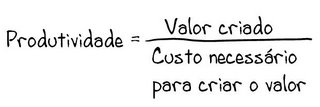
After a few months, my father was astonished to learn that approximately 80 percent of his revenue came from these new hairstyles, and that he was making more in four hours than his fellow barbers were making in eight. [Moi ici: Em vez de correr mais depressa, em vez de reduzir custos unitários, apostar no que é que os clientes procuram e valorizam. E, o que eles procuram e valorizam pode não ser a funcionalidade da oferta. Quem procura a funcionalidade, procura o preço mais baixo. Quem, para lá da funcionalidade, procura algo intangível, algo místico ... o preço é secundário, ponto. Imagine a diferença de produtividade, imaginem o aumento da produtividade, imaginem o melão dos eficientistas puros e duros] He decided he needed to pursue this full- time, so he closed up his traditional barbershop, moved across town, and opened the Hairistocrat.
...
Rigidity is what organizations manifest when they are faced with either superior competition or outdated business models. They blindly cling to “that is the way we have always done it” [Moi ici: Algo fomentado por muitos apoios, subsídios e empréstimos, no tempo em que o dinheiro era barato] in defiance of the evidence that this way is no longer relevant to success.
...
What matters is how we react—either we embrace the possibilities or slide into irrelevancy. How will you embrace the changes happening in your industry or profession?"

Weird, será que ouvi mal?

Actualmente, a minimizar uma lesão, tenho trocado o jogging pela bicicleta e pelas caminhadas. Ontem, ao final da manhã, depois de alguns quilómetros de bicicleta, preparava a água para o duche enquanto ouvia o noticiário das 12h na TSF.
.
Infelizmente não consigo aceder à gravação desse noticiário aqui.
.
A minha mente conspirativa acha que a gravação não está disponível porque só depois da peça ter ido para o ar é que alguém se apercebeu da enormidade proferida.
.
A peça era sobre "Museu de Arte Antiga encerra hoje mostra do Museu do Prado com recorde de visitantes".
.
Penso que foi o director do Museu de Arte Antiga o autor da frase que me ficou na cabeça.
.
Primeiro começa por dizer que se trata de uma colaboração entre o sector público e o sector privado, uma espécie de parceria. Depois, diz que a parceria é feita de modo que os privados não tenham risco.
.
No final, louva os empresários ... e aí a minha mente murmurou "weird"
.
Como é possível chamar a privados que não correm risco de empresários?
.
Bom, também posso ter ouvido mal.
.
Será?

Diferentes posicionamentos competitivos

Estas imagens ajudam a perceber os vários "campeonatos":


Em que campeonato está a sua empresa?
.
Em que campeonato pode a sua empresa actuar?
.
Em que campeonato a sua empresa não deve actuar?
.
Por exemplo, em termos de negócio, faz sentido pensar assim?
"«Liga Europa pode ser apenas e só despesas»"
.
E em função do campeonato, diferentes serão as preocupações e alavancas a manejar. Pena que os jornalistas não percebam que o que é bom para a PSA não pode ser uma vantagem competitiva para outros negócios e sectores.

Imagens retiradas de "Competitive Positioning"

domingo, abril 06, 2014

A parte que me arrepiou ainda mais do que as outras

"Algumas das coisas que lhe fizeram são mesmo inauditas e impensáveis se se tratasse de alguém mais diferenciado e com advogado constituído. Basta referir que Liliana foi convocada para ir a tribunal sem saber ao que ia, que chegou e ouviu a leitura da sentença secamente, que depois não pôde levantar uma cópia porque era sexta-feira e os serviços já tinham fechado, que teve de lá voltar na semana seguinte e acabou assim por falhar o prazo do recurso por 24 horas. Kafkiano, no mínimo."
A sentença era sobre coisa de pouca monta, só:
"Chegamos assim à questão do equilíbrio da sentença - até porque a decisão de dar um filho para adopção é a solução- limite, a solução para casos extremos. Neste caso, retirar sete dos dez filhos a uma família onde se admite que há amor e carinho, onde não há maus tratos, abusos sexuais ou dependência de drogas, onde podem faltar umas vacinas no boletim de saúde mas onde as crianças têm aproveitamento escolar muito razoável, é incompreensível." 
Trechos retirados de "Liliana e os seus dez filhos, uma parábola sobre o que distingue uma sociedade decente"

A ironia da derrota do eficientismo

Tão interessante este comentário do Miguel Barbot ao postal "Acerca dos fabulosos programas de inovação"
"Hoje em dia o denim mais procurado pelos especialistas é o japonês, feito com os teares comprados aos americanos quando estes os trocaram por outros mais eficientes"
A ironia da derrota do eficientismo pelos teares desprezados...
.
Gente que só sabe de custos...

Procurar o queijo

O Portugal que navega nestas águas "Tão novos e já tão velhos" devia reflectir sobre "Design Can Drive Exceptional Returns for Shareholders", por exemplo:
"The bottom line is that companies that use design strategically grow faster and have higher margins than their competitors. High growth rates and margins make these companies very attractive to shareholders, increasing competition for ownership."
Há os que esperam pelo queijo a que julgam ter direito e, depois, há os que vão à procura dele.

Acerca da batota

Uma série de conselhos em torno da batota "Geek Squad founder has harsh words for Best Buy":
"Best Buy's thriving online nemesis, Amazon.com, "is not going to kill physical retail," Stephens added. "It's going to kill mediocre retail."
...
Better workers, better training. "We will employ the best people in retail at all cost to us," he said. "Hire for curiosity above all else. Curiosity for the customer, curiosity for the tech, passion and persistence."
...
Simplicity. At a time when "anything can be Googled," it is essential for Best Buy shopping to be friction-free, Stephens wrote.
.
He proposed one cardinal rule for workers: "Don't ever say, 'I don't know.' Say, 'I'll find out.' At the end of the day, customers don't expect rocket science from any retail employee, but they expect us to try. The majority of complaints stem not from lack of knowledge, but lack of trying.""

Acerca dos fabulosos programas de inovação

A propósito de mais esta história "CHICORAÇÃO (PT2)":
"Quando lá fomos, tinham acabado de comprar a maquinaria de uma antiga fiação e vários teares que estavam destinados à sucata. Tudo estava a ser reparado, afinado e lentamente reactivado.
...
Por isso, se estão a ser enviadas para a sucata em nome de fabulosos programas de inovação, o que está a ir para a sucata é a possibilidade de reiniciar um tipo de produção de média-escala que costuma ser o habitat perfeito de pequenas empresas focadas na qualidade e na diferenciação do produto."
Recordo logo Loulé... em Novembro de 2007 e "Agora vou especular".
.
Curioso, relacionar o nome de "Chicoração" com o que escrevi em 2007:
"Os gestores profissionais só vêem rácios financeiros e oportunidades para reduzir custos. Quantos têm um caso de amor com os produtos das fábricas que gerem?
Quando se tem amor reconhece-se o valor. Quando se reconhece o valor, conhecem-se outras alavancas, além dos custos."
Entretanto, o número de artesãos de cerveja em Portugal... disparou.
.
Recordo também uma fábrica de lixas e outros abrasivos que existia junto à estação de caminho de ferro de Aveiro, a Lusostela. A carcaça já foi demolida, contudo, anos antes, as máquinas tinham sido adquiridas por uma empresa de sucesso do sector. Espero que eles as tenham aproveitado para fazer o pwp de Skinner e, assim, conjugar volume com diferenciação.
.
Pena que os assustados membros da tríade, com a sua aura de conhecimento, com o seu poder informal de influência, com a sua visão enformada no século XX, assustem empresários que subestimam o seu valor e o seu conhecimento, cortando-lhes uma possibilidade de futuro que não passe por mais um fabuloso programa de inovação, para o qual não têm dinheiro, nem conhecimento técnico, nem conhecimento de mercado.
.
Isto tem tudo a ver com a minha leitura em curso "Tilt: Shifting Your Strategy from Products to Customers" de Niraj Dawar.

sábado, abril 05, 2014

Curiosidade do dia

A cultura que é Espanha:

Testar, testar, testar

"Once their firms have reached midsize, the CEO’s impulses must cede center stage.  Scaling the business must be center stage, and strategic innovations must be tested in the wings. Creating a program to prove the viability of a significant change in the firm’s strategy ensures that the experiment won’t knock the ship off course if the idea turns out to be flawed.
.
In these instances, CFOs can play a valuable role: keeping the CEO (or other C-suite leaders) from yielding to the impulse to tinker. The most successful CFOs I know insist their company’s core strategy be written down. When someone begins to tinker with it, they push for clarity. They want to see exactly what resources will be required and what priorities are emphasized. As important,  they want everyone to know how much time a new strategy experiment will be given to succeed.
.
Such discipline creates focus and forces leaders of midsize firms to determine whether a new strategy fits with the original winning plan. These simple protocols can be the difference between a midsize company that keeps its eye on the road ahead, and one that ends up in the ditch because it became distracted."
Trecho retirado de "Tinkering with Strategy Can Derail Midsize Companies"

Escapar ao passado

Este exemplo é tão aplicável a certas empresas (não posso dizer que seja aplicável ao Estado senão o Mário Cortes corta-me o acesso à internet):
"Such is the power of convention, and this power is especially strong when it comes to running a business. We develop our habits, our work patterns, our routines, and we adapt these habits and routines to an ever-changing competitive and technological environment. Over time, we go to greater and greater lengths to preserve our traditional routines, until pretty soon we’re crossing an entire ocean just to be able to do things the way we’ve always done them. And what’s more, we don't even notice that the environment has changed radically.
.
The problem is that the more we simply make minimal accommodations to deal with a radically changed environment (even if the change was gradual), the more fragile we become -- and this is just as true for businesses as it is for reptiles.
...
Businesses fall into the same trap, all the time. They stretch and stretch and stretch to accommodate a changed environment until they are too fragile, with no fall-back position, no redundant capacity. They become fragile, so they are catastrophically vulnerable to the first disruptive innovation, or the first unanticipated regulatory change.
.
If you don't want your own business to be fragile, then think about what you would do if you were to build your company today starting from scratch, for today's environment. Would you build it differently?
.
If businesses were designed for today's new environment, rather than yesterday's,"
 Excelente convite de Don Peppers à reflexão em "Biggest Business Challenge: Escaping the Past"