sexta-feira, abril 26, 2013

O mercado interno NÃO MORREU!!!

No editorial do JdN de ontem em "Aprender a crescer em Vila Velha de Ródão" li:
"As empresas que, através de capacidade de gestão, de investimento, de competitividade conseguem competir nos mercados globais, singram. As que estão sujeitas ao mercado interno, massacrado pela austeridade e pela falta de confiança, mirram."
 Relativamente às empresas que operam no mercado interno, a minha mensagem não é esta. Prefiro esta outra mensagem:
"Porque o mercado está mau, não tem de ficar mau para todos"
É a velha história do leão que aparece de repente a dois indivíduos:
"Dois indivíduos na selva são descobertos por um leão.
.
Um começa a correr desenfreadamente, o outro senta-se e calça umas sapatilhas.
.
O primeiro pergunta-lhe, pensas que vais correr mais do que o leão?
.
E o segundo responde, não preciso, basta-me correr mais do que tu."
Se o mercado interno mudou, resta às empresas que querem ter futuro nele mudarem também.
.
Se o contexto mudou, as estratégias seguidas têm de mudar, a oferta tem de mudar, os clientes-alvo talvez tenham de mudar, a estrutura tem de mudar.
.
O mercado interno NÃO MORREU!!! 
.
Simplesmente está diferente, e as empresas que não perceberem isso, que não mudarem, que não se adaptarem... estão condenadas a mirrar e a morrer.

quinta-feira, abril 25, 2013

Agosto de 2013

Espero com impaciência os dados do desemprego de Agosto de 2013 do IEFP.

Curiosidade do dia

Figura eloquente retirada daqui via PC.

"Processos e experiência dos clientes" (parte III)

Parte I e II.
.
Trechos retirados do Capítulo 3, "Everything is a service", do livro "The Connected Company" de Dave Gray:
"Most companies today are designed to produce high volumes of consistent, standard outputs, with great efficiency and at low cost. Even many of today’s services industries still operate in an industrial fashion.
...
But most of these services are not really services at all. They are factory-style processes that treat people as if they were products moving through a production line. Just think of the last time you called a company’s “customer service line” and ask yourself if you felt well served. Sure, many services require some level of efficiency, but services are not production processes. They are experiences. Unlike products, services are often designed or modified as they are delivered; they are co-created with customers. Services are contextual—where, when, and how they are delivered can make a big difference. They may require specialized knowledge or skills. The value of a service lies in the interactions: it’s not the end product that matters, so much as the experience. Service providers often must respond in real time to customer desires and preferences. To this end, a company with a service orientation cannot be designed and organized around efficiency processes. It must be designed and organized around customers and experiences. This is a complete inversion of the mass-production, mass-marketing paradigm, which will be difficult for many companies to adopt.
...
The first step to a service orientation is to change the way we think about products. Instead of thinking about products as ends in themselves, we need to think of them as just one component in an overall service, the point of which is to deliver a stellar customer experience. (Moi ici: Mas mais do que só "delivery", a experiência continua após a entrega e prolonga-se para o uso, e para lá do uso, prolonga-se nos sentimentos que ao longo do tempo vão emergir com a experiência vivida e, com a reflexão ao longo do tempo sobre essa experiência)
...
We have developed a tendency to think of flows in terms of process, but services and processes are not the same. Processes are linked, linear chains of cause and effect that, when managed carefully, drive predictable, reliable results. A service is different. While processes are designed to be consistent and uniform, services are co-created with customers each and every time a service is rendered. This difference is not superficial but fundamental." (Moi ici: Recordar "Cuidado com a cristalização")

Como é que os desconhecidos podem aproveitar os tempos de crise? (parte III)

Parte II e parte I.
.
Os "desconhecidos" têm a liberdade mental, a flexibilidade de recursos, a ausência de remorsos e a agilidade, para fazer bom uso desta mensagem de Seth Godin "How big is critical mass?":
"In the idea business, critical mass is minimum size of the excited audience that leads to a wildfire. People start embracing your idea because, "everyone else is..."
...
If your idea isn't spreading, one reason might be that it's for too many people. Or it might be because the cohort that appreciates it isn't tightly connected. When you focus on a smaller, more connected group, it's far easier to make an impact."
Basta que acrescentem a isto, um pensamento de criança (os desconhecidos têm mais a ganhar com a exploração do novo ("exploration"), do que com a exploração do conhecido ("exploitation"))  ou de artista.

É a vida!

Os políticos socialistas da situação e da oposição acham uma injustiça que:

  • uma empresa alemã tenha juros mais baixos que uma empresa portuguesa;
  • uma PME exportadora tenha juros mais baixos que um restaurante;
  • um restaurante tenha juros mais baixos que uma PME do sector da construção;
  • se receba menos dinheiro das casas de apostas por uma vitória do FC Porto no Dragão, do que por uma vitória do V Setúbal no mesmo jogo.
Leiam mais, leiam "O Rei Lear"... (Sublinho o comentário ao 3º vídeo)
.
Postal atrasado dois dias, a 23 de Abril Shakespeare fez o seu 449º aniversário.

quarta-feira, abril 24, 2013

Curiosidade do dia

Recordar a série sobre a "pedofilia empresarial".
.
Recordar a nossa frase:
"O cliente tem sempre a última palavra, o fornecedor tem a primeira"
E apreciar:
"Apple suppliers have started referring to the company as the “Poison Apple” due to its “hard-to-meet high standards and low price expectations.” Unnamed suppliers have also told Reuters that they’ve grown weary of Apple’s “ever-moving deadlines” and said they are now trying to “reduce their reliance on the company.”
...
This means it's possible in the future (all other things being equal) that a manufacturing partner with critical supplies could choose to forgo a partnership with Apple in favor of one with Samsung—all because they could be seen as being easier to deal with."

Trecho retirado de "Apple’s Suppliers Are Understandably Pissed"

Receita para disrupcionar mercados

Rita Gunther McGrath dá uma excelente lição sobre como disrupcionar um sector em "Recipe for Disruption Leans on Lazy Incumbents"
Leio isto:
"the would-be disruptor first needs to select a target, and there's no better target than a lazy incumbent. Better yet, an entire niche or setting in which multiple incumbents have enjoyed a privileged position for a long time. Stability in a sector is often synonymous with lack of change.
.
Managers in these niches don't have to take many many risks to move forward in their careers, so guess what? They don't. Powerful people enjoying long, stable careers, lots of perks and very few challenges to their authority are just what the disruptor ordered. Brownie points if the leaders in your target segment take a "I don't want any surprises, and don't bring me bad news" approach to hearing from their direct-reports. Ideally, the incumbents count on sizable revenue flows."
E começo logo a pensar no massacre que foi a "invasão dos produtos chineses" e da "produção na China", para as nossas empresas do sector transaccionável, durante a primeira metade do século XXI, com a entrada da China na OMC. As nossas empresas viviam dos baixos preços, dos baixos salários, tinham-se habituado, com cerca de 25 anos de boleias clandestinas proporcionadas pela desvalorização do escudo, a não precisarem de mudar nada, o Estado mudava por elas. O Estado proporcionava-lhes uma vantagem competitiva externa; a taxa de câmbio.
.
A chegada do factor China foi "mortal"!!!
.
Recordar sempre esta tabela:

(Muitas empresas definharam, colapsaram e morreram. Demorámos cerca de 6/7 anos a dar a volta, a perceber como dar a volta.)
.
De seguida vêm as várias formas de abordar os clientes do incumbente:
"Next, think about the customer need you'll be addressing. It might be the same need that the incumbent provides, or it could conceivably be a way of making what the incumbent provides unnecessary. Or doing the same thing, but at a fraction of the price. Can you think of a customer need that is not being met, is being met badly or expensively, or is being met in such a way that infuriates customers? Might they reward you for making their experience better?"


Para preparar o início de uma reflexão estratégica

Esta manhã estarei numa empresa a animar um exercício de revisão de uma análise SWOT.
.
A versão de partida foi feita em 2009. Entretanto, passaram 4 anos em que a empresa cresceu a bom ritmo, só nos últimos 12 meses o emprego cresceu mais de 30%.
.
Como preparação para o exercício recomendei duas leituras como trabalho de casa individual, como preparação mental.
.
A primeira leitura foi esta "Finding Your Place in the Competitive Jungle". Nela encontra-se esta figura:

E lancei para reflexão:

  • Em que quadrante está a empresa hoje?
  • Em que quadrante estava a empresa em 2009?
A segunda leitura foi esta “The abstract method of problem solving” em particular “Getting Distance".
.
"Depois, olhem para a Tabela SWOT de 2009 e procurem responder a:
  • O que há de novo?
  • O que deixou de ser relevante?
  • O que mudou na empresa de 2009 para cá?"

Explorar, explorar, explorar sempre

Quando se diz que é preciso voltar a ser criança para descobrir como sair do labirinto...
.
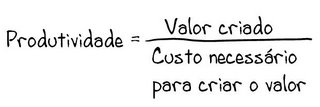
Quando se diz que é preciso deixar de pensar na eficiência, no denominador...
.
Quando se diz que é preciso apostar na criatividade...
"They see play as essential not just to individual development, but to humanity’s unusual ability to inhabit, exploit and change the environment.
...
Lately she has focused on the distinction between “exploring” new environments and “exploiting” them. (Moi ici: March vem logo à mente) When we’re quite young, we are more willing to explore, she finds; adults are more inclined to exploit.
.
To exploit, one leans heavily on lessons (and often unconscious rules) learned earlier — so-called prior biases. These biases are useful to adults because they save time and reduce error:
...
We educated grown-ups failed because our prior biases dictated that we play the game by the more common and efficient “or” rule. (Moi ici: Por isso é tão difícil aos membros da tríade verem alternativas.)
...
Yet this playlike spirit of speculation and exploration does stay with us, both as individuals and as a species. Studies suggest that free, self-directed play in safe environments enhances resilience, creativity, flexibility, social understanding, emotional and cognitive control, and resistance to stress, depression and anxiety. And we continue to explore as adults, even if not so freely."

Trechos retirados de "Mind: Playing for All Kinds of Possibilities"

Gente a mexer-se

Longe da corte, gente que se mexe:
Finalmente parece começar a ganhar raízes a ideia de que o futuro das cidades do interior não passa por tentar emular as cidades do litoral "O repovoamento do interior também passa por isto"

terça-feira, abril 23, 2013

Curiosidade do dia

Noticiário radiofónico das 17h, na TSF ou na Antena 1, o presidente da CIP comentava esta meta apresentada pelo governo:
"Governo quer exportações a representar 50% do PIB em 2020"
Segundo ele, trata-se de um objectivo muito ambicioso dado que actualmente as exportações representam cerca de 32% do PIB.
.
Enfim, mais um que continua em 2011:

É só bitaites... bom para o programa "Liga dos Últimos"

O crescimento da desigualdade

Quando se fala no aumento da desigualdade social eu penso logo nisto "‘Gazelles’ widen company growth gap" como a verdadeira causa:
"The divide between midsized UK companies that are merely surviving and the better-performing “gazelles” is widening, according to a new report.
.
Figures compiled by Experian, the credit checking agency, noted that although the overall number of medium-sized companies – defined as those with turnover of £2.5m-£100m – has been broadly flat at 24,955 over the past 12 months, the number of businesses within that group which have achieved high levels of growth has increased by 10 per cent to 4,353."
É a velha história que os macroeconomistas não incluem nos seus modelos, qualquer sector de actividade económica está carregado de heterogeneidade, de variabilidade, de diversidade de abordagens, de diversidade de visões, de diversidade de interpretações do que é problema e do que é solução. E é essa diversidade que torna as sociedades e as economias resilientes.
.
Recordar a série "Lugar do Senhor dos Perdões", com especial relevo para as partes II e III.

Como é que os desconhecidos podem aproveitar os tempos de crise? (parte II)

Na parte I,  falava-se sobre uma oferta que "rasga", de algo inovador, de moda, por exemplo. Mas os desconhecidos têm mais hipóteses de entrar, aproveitar os passos em falso dos cost-cutters:
"There is constant pressure in business to improve margins through cost-cutting. This is particularly true in 2013, when consumer confidence is shaky and many community costs (particularly in food) are on the rise.
.
Cost-cutting can be the mother of invention, inspiring creative problem-solving and efficiency. But it can also tax product quality over time. Consumers may not notice the change in any one cost-cutting round, but the cumulative effect over time can weaken the products materially. Chronic cost-cutting was a major factor behind the horse meat scandal.
.
Chronic cost-cutting creates an opportunity for new brands to out-premium the premium brands.
...
In the push to increase margins, it’s important to remember that there can be a cost to cost-cutting."
E pensar que esta é a única receita que a tríade conhece... cortar nos custos e remeter-nos para o tipo de competição que empobrece os países... race-to-the-bottom.
.
Trechos retirados de "cost-cutting"

Como é que os desconhecidos podem aproveitar os tempos de crise?

Como é que os desconhecidos podem aproveitar os tempos de crise?
.
Em tempos de crise, os incumbentes são os que têm mais a perder. Por um lado, vêem o consumo a baixar e ficam com o legítimo receio de excesso de inventário e subsequente venda ao desbarato do mesmo.
.
Por outro lado, reconhecem que os consumidores em tempos de crise ficam mais conservadores nos seus gostos. Assim, por tudo isto, os incumbentes reduzem o leque da oferta que colocam no mercado e, matam dois coelhos de uma cajadada: menos inventário e oferta mais conservadora, a que sai mais em tempos de crise, em sintonia com a massa de consumidores.
.
O que pode fazer um desconhecido?
.
Aparecer no mercado com uma oferta que "rasga", uma oferta fora do comum, uma oferta dirigida não à massa mas aos visionários que estabelecem hoje aquilo que será moda daqui a 2/3 anos.
.
Entretanto, os incumbentes, com a sua táctica conjuntural, controlam os inventários e vendem... mas mancham a sua imagem perante os visionários que começam a pensar: Ah! Afinal são como os outros!
.
E assim começam as novas lendas...

Reduzir a taxa de insucesso das startups (parte II)

Parte I.
.
Primeiro recordar este postal recente "Empreendedorismo e planos de negócio... um retrato da superficialidade". Depois, voltar ao texto de Steve Blank:
"But recently an important countervailing force has emerged, one that can make the process of starting a company less risky. It’s a methodology called the “lean start-up,” and it favors experimentation over elaborate planning, customer feedback over intuition, and iterative design over traditional “big design up front” development.
...
The Fallacy of the Perfect Business Plan.
According to conventional wisdom, the first thing every founder must do is create a business plan -a static document that describes the size of an opportunity, the problem to be solved, and the solution that the new venture will provide. Typically it includes a five-year forecast for income, profits, and cash flow. A business plan is essentially a research exercise written in isolation at a desk before an entrepreneur has even begun to build a product. The assumption is that it’s possible to figure out most of the unknowns of a business in advance, before you raise money and actually execute the idea.
.
Once an entrepreneur with a convincing business plan obtains money from investors, he or she begins developing the product in a similarly insular fashion.
...
 After decades of watching thousands of start-ups follow this standard regimen, we’ve now learned at least three things:
.
1. Business plans rarely survive first contact with customers. As the boxer Mike Tyson once said about his opponents’ prefight strategies: “Everybody has a plan until they get punched in the mouth.”
.
 2. No one besides venture capitalists and the late Soviet Union requires five-year plans to forecast complete unknowns. These plans are generally fiction, and dreaming them up is almost always a waste of time.
.
3. Start-ups are not smaller versions of large companies. They do not unfold in accordance with master plans. The ones that ultimately succeed go quickly from failure to failure, all the while adapting, iterating on, and improving their initial ideas as they continually learn from customers.
.
One of the critical differences is that while existing companies execute a business model, start-ups look for one. This distinction is at the heart of the lean start-up approach. It shapes the lean definition of a start-up: a temporary organization designed to search for a repeatable and scalable business model."
Esta abordagem tem a vantagem de não exigir muito dinheiro à partida. O modelo clássico leva a que o empreender atire o dinheiro todo de uma vez para cima da sua intuição sobre o que vai resultar. Quando afinal descobre que errou o tiro e que o alvo está mais ao lado... já não há capital para corrigir o tiro.
A abordagem lean-startup propõe que se gaste o mínimo enquanto não se tiver a certeza que se descobriu o que o mercado realmente pretende.
.
Continua.

Começou...

No ano passado, durante o mês de Maio, tirei fotos a mais de 20 cobras mortas, atropeladas.
.
Este ano começou mais cedo, ontem:
Pobre bicho...

segunda-feira, abril 22, 2013

Curiosidade do dia

"NASA Discovers Three Potentially Earth-like Worlds"

Isto faz-me voltar a ter 13 anos... a recordar a banda desenhada com John Carter, Flash Gordon, e tantos outros.
.
BTW, hoje celebra-se o achamento do Brasil pela armada de Pedro Álvares Cabral... um filme em que os humanos, chegados a Pandora, venceram e dominaram os autóctones... como seria o Brasil de hoje se, à semelhança do filme "Avatar", os autóctones tivessem vencido?

Reduzir a taxa de insucesso das startups (parte I)

E voltando ainda mais uma vez às figuras sobre a taxa de mortalidade das novas empresas em Portugal:


Faz sentido reflectir sobre o artigo que a HBR vai publicar no seu número de Maio deste ano "Why the Lean Start-Up Changes Everything" porque o autor, Steve Blank, escreve:
"While some adherents claim that the lean process can make individual start-ups more successful, I believe that claim is too grandiose. Success is predicated on too many factors for one methodology to guarantee that any single start-up will be a winner. But on the basis of what I’ve seen at hundreds of start-ups, at programs that teach lean principles, and at established companies that practice them, I can make a more important claim: Using lean methods across a portfolio of start-ups will result in fewer failures than using traditional methods.
.
A lower start-up failure rate could have profound economic consequences. Today the forces of disruption, globalization, and regulation are buffeting the economies of every country. Established industries are rapidly shedding jobs, many of which will never return. Employment growth in the 21st century will have to come from new ventures, so we all have a vested interest in fostering an environment that helps them succeed, grow, and hire more workers. The creation of an innovation economy that’s driven by the rapid expansion of start-ups has never been more imperative."
Continua.

A dificuldade é a mãe da inovação

A leitura do Capítulo 2, "Overcompensation and Overreaction Everywhere", de "Antifragile" de Nassim Taleb foi um gosto:
"How do you innovate? First, try to get in trouble. I mean serious, but not terminal, trouble. I hold - it is beyond speculation, rather a conviction - that innovation and sophistication spark from initial situations of necessity, in ways that go far beyond the satisfaction of such necessity (from the unintended side effects of, say, an initial invention or attempt at invention).
...
in Ovid, difficulty is what wakes up the genius (ingenium mala saepe movent),
...
The excess energy released from overreaction to setbacks is what innovates!
This message from the ancients is vastly deeper than it seems. It contradicts modern methods and ideas of innovation and progress on many levels, as we tend to think that innovation comes from bureaucratic funding, through planning, or by putting people through a Harvard Business School class by one Highly Decorated Professor of Innovation and Entrepreneurship (who never innovated anything) or hiring a consultant (who never innovated anything).
...
Yet in spite of the visibility of the counterevidence, and the wisdom you can pick up free of charge from the ancients (or grandmothers), moderns try today to create inventions from situations of comfort, safety, and predictability instead of accepting the notion that “necessity really is the mother of invention.”"


Não acredito que aconteça qualquer mudança estrutural saudável numa economia sem que exista sofrimento, extinção em massa de empresas e desemprego.
.
Aposto que foi algures por este momento no processo de ajustamento que Tatcher pronunciou aquele;
"If our people feel that they are part of a great nation and they are prepared to will the means to keep it great, a great nation we shall be, and shall remain. So, what can stop us from achieving this? What then stands in our way? The prospect of another winter of discontent? I suppose it might.
But I prefer to believe that certain lessons have been learnt from experience, that we are coming, slowly, painfully, to an autumn of understanding. And I hope that it will be followed by a winter of common sense. If it is not, we shall not be—diverted from our course.
To those waiting with bated breath for that favourite media catchphrase, the 'U-turn', I have only one thing to say: 'You turn [U-turn] if you want to. The lady's not for turning.' I say that not only to you but to our friends overseas and also to those who are not our friends."