Figuras retiradas de Centre for the New Economy and Society - Chief Economists Outlook - January 2024

Figuras retiradas de Centre for the New Economy and Society - Chief Economists Outlook - January 2024
"In this paper we argue that endogenous product selection provides a neglected source of bias in measured productivity in addition to the conventional biases of exit self-selection, endogeneity, and misspecification of the production technology and demand. When firms choose their products at a more disaggregated level than is observed in plant- and firm-level datasets, measured productivity reflects both characteristics of the firm and attributes of the products that are non-randomly chosen by the firm. To characterize the resulting bias in measured productivity, we develop a model of industry equilibrium in which firms endogenously sort across products. Following the standard "revenue production function" estimation approach, we use the model to derive the bias in measured firm and aggregate productivity. Calibrating the model's parameters, we show that the bias in measured firm and industry productivity can be quantitatively large and influences the response of both productivity measures to changes in parameter values.Our analysis points to a number of areas for further research. On the one hand, the estimation of structural models of industry equilibrium that feature endogenous product choice is a promising line of inquiry. On the other hand, the development of census of production datasets containing detailed information on establishments' output, inputs, and prices by product is clearly a priority. While census datasets typically allocate establishments to a "main industry" based on their largest good, our research points to the additional insights to be gained from gathering more detailed information on the set of goods establishments supply. It is important to remember, however, that even when this information is available, the industrial classification used is typically coarse compared to the level at which firms make decisions about products. As a result, the bias in measured productivity induced by endogenous product selection is likely to remain a concern."
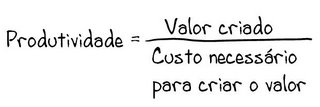
Recordei agora um postal, redigido à porta de uma moradia em Guimarães com uma garagem onde ouvia uma máquina de bordar a trabalhar, sobre a produtividade e o numerador como variável e não como uma constante. Escrito em Agosto de 2011 explicou melhor um outro escrito em Outubro de 2006.
Alterar o tipo de produtos produzidos é uma forma de alterar o numerador da equação da produtividade. E de que maneira.
Trecho retirado de "Products and Productivity" publicado pelo The Scandinavian Journal of Economics 111(4), 681-709, 2009.

Até pode custar 1€ no primeiro mês de funcionamento.
Como dizem no futebol: Não é como começa, é como acaba!

Aquando da apresentação do orçamento de estado o governo publicou:

"Predating Raymond Vernon's work (Vernon, 1966) on the product cycle theory by several decades, Kaname Akamatsu identified two empirical regularities of industrial development (Akamatsu, 1935, 1937).' One is a time-series pattern of a given industry, shifting from imports to import-substitution for the domestic market, and exports (Figure 1, Panel A). The other is a time-series production pattern across industries, in which a series of industries appear, prosper, then decline and finally disappear one after another (Figure 1, Panel B). Because these patterns reflect wild geese flying in ranks, they are called flying geese patterns of industrial development and are referred to extensively in explaining the production patterns of the East and Southeast Asian countries.

"An FG analogy came originally from Akamatsu's empirical findings of the sequential development pattern of imports (M) leading to domestic production (P) and then to exports (X). The sequence involved thus goes beyond a process of import substitution under protection (i.e., infant industry protection) and ultimately leads to exporting....It should be noted, however, that in this age of globalization multinationals (MNCs) can now create new export industries instantly via foreign direct investment (FDI) in the developing host countries (i.e., FDI → P → X) that is, gradual industry building under protection (MPX) is replaced by instant industry building via FDI. [Moi ici: Recordo postais sobre a importância do investimento directo estrangeiro como A receita irlandesa, como Tamanho, produtividade e a receita irlandesa]...A second FG pattern is a sequence of structural change in industrial development, not only in the order of 'capital goods following consumer goods', but also 'in the progression from crude and simple goods to complex and refined goods'."
Em Setembro de 2010 brinquei com isto "Nem de propósito" por causa de um artigo de Quesado no Diário Económico.
Interessante como o mesmo parágrafo é usado pelo autor ao longo dos anos com pequenas variações:


"In his Nobel lecture, James Heckman named 'the evidence on the pervasiveness of heterogeneity and diversity in economic life' the most important empirical discovery from econometric analyses using micro data. Everybody who has ever worked with plant- or enterprise-level data will agree - there is no such thing as a representative firm, not even in four-digit industries where growing and shrinking, entering and exiting firms can be found in each period. Productivity differentials are a case in point as regards firm heterogeneity within industries. 'Of the basic findings related to productivity and productivity growth uncovered by recent research using micro-data, perhaps most significant is the degree of heterogeneity across establishments and firms in productivity in nearly all industries examined'." [Moi ici: Como não recordar o Lugar do Senhor dos Perdões ou Voltar ao Lugar do Senhor dos Perdões]
"The empirical facts uncovered in microeconometric studies motivated formal models for the dynamics of industries with heterogeneous firms...In these models, productivity differentials play a central role in the entry, growth and exit of firms. In equilibrium, growing and shrinking, exiting and entering firms that have different productivities are found in an industry....[Moi ici: Os políticos gostam de estabilidade, receiam a incerteza. Vêem com maus olhos o encerramento de empresas] H1. Firms that exit in year t were less productive in t-1 than firms that continue to produce in t.Given that firms with a low productivity have a higher probability of exit at a point in time, exiting firms will be concentrated among the least productive units. [Moi ici: Por isso, os políticos pensam que as empresas com baixa produtividade têm de ser subsidiadas, têm de ser apoiadas, para que não encerrem. A desculpa é a de que os apoios ajudarão as empresas a aumentarem a sua produtividade] 'Less productive' means that the productivity distribution of exits is stochastically dominated by the productivity distribution of the continuing firms.H2. Firms that enter the market in year t are less productive than incumbent firms in year t.This follows from the selection process described above that leads to an improvement of the productivity distribution of incumbents over time because in each period the less productive firms have the highest probability to fall below the critical level and, therefore, to exit. Here, 'less productive' means that the productivity distribution of entries is stochastically dominated by the productivity distribution of incumbents.H3. Surviving firms from an entry cohort were more productive than nonsurviving firms from this cohort in the start year."
Não me custa nada a crer no poder estatístico de H1, H2 e H3 no texto acima numa economia de mercado. Isto ajuda a explicar o aumento da produtividade agregada num dado sector económico. No entanto, não ajuda a explicar o mais importante.

Ontem de manhã apanhei a parte final de "A História Do Dia", na rádio Observador, sobre o tema "A IA vai ficar com os nossos empregos?". Ouvi os últimos minutos que terminaram assim:
"Os dois problemas do país são a falta de produtividade e a falta de mão de obra"
Sorry, só há um problema, a falta de produtividade. Tudo o resto decorre deste.
Depois, à hora do almoço li no Diário de Coimbra, atraído por uma capa com uma cena de corrupção à base de queijos e spa:
"No entanto, Eduardo Nogueira dos Santos revelou que, «hoje, Penela tem praticamente pleno emprego, sendo que uma das maiores dificuldades dos nossos maiores empregadores reside na captação de trabalhadores». «Temos falta de trabalhadores, porque temos um tecido empresarial robusto, em que a procura excede a oferta. Mas também porque temos falta de habitação, o que também faz com que percamos população e eleitores e, indiretamente, provoca que o municipio veja a sua capacidade de investimento reduzida», frisou."
Temos aqui uma argumentação interessante:
A falta de trabalhadores não é uma causa raiz, a causa raiz é a baixa produtividade. Porque a produtividade é baixa não se conseguem pagar salários que atraiam as pessoas. Por isso, o salário médio do concelho ainda não conseguiu ultrapassar o valor atingido em 2012. Por isso, o concelho de Penela perdeu mais de 9% da sua população em 10 anos segundo o Censos de 2021. Quanto à robustez do tecido empresarial o Censos de 2021 diz-me que em 10 anos:
No JdN da passada segunda-feira sublinhei estas palavras:População empregada na Agricultura e Pescas 2,7 % +0,4 р.р. População empregada na Indústria e Construção 27,6 % -1,1 р.р. População empregada nos Serviços 69,6 % +0,7 p.p Trabalhadores por conta de outrem 1.628 -3,4 Empregadores 235 -2,5 % Trabalhadores isolados 240 +50,9 % População ativa com 25 a 44 anos 41,9 % -12,4 p.p. População ativa com 55 e mais anos 23,8 % +10,5 p.p.
"Falou do candidato Pedro Nuno Santos. Como olha para a proposta dele de aumentar o salário mínimo para mil euros em 2028?Acho que mil é pouco. Devia ser muito mais elevado, mas, para isso, precisamos de uma economia que suporte um salário digno, isso é que é importante. Precisamos de crescer 4%, 5% ao ano de forma sustentada."
BTW, a entrevista ao presidente da câmara de Penela é um manancial de temas para este blogue. Mais um:
"Neste campo, não posso deixar de evidenciar a satisfação com que recebemos a notícia de que no dia 1 de janeiro corrente, as portagens da Al3 iriam ser reduzidas. Menos 65% (desconto) é muito impactante para o nosso território. Porque não nos interessa estar a 15 minutos de Coimbra se isso comporta uma despesa demasiado elevada para a maioria das famílias a utilizarem. Com esta medida, de inteira justiça para as populações, mas sobretudo de extremo interesse para as empresas da região, trazemos também mais centralidade e maior qualidade de vida para Penela», sublinhou."
Qual a remuneração base média mensal dos trabalhadores por conta de outrem no concelho de Penela em 2019 (última ano do Pordata com números)? 776,3 €.
Qual a remuneração base média mensal dos trabalhadores por conta de outrem no concelho de Coimbra em 2019 (última ano do Pordata com números)? 966,1 €.
Qual o sentido mais provável do fluxo de trabalhadores?
Para um político nacional mergulhar a sério no tema da produtividade é perigoso para a sua carreira, porque se for sério vai fazer inimigos. Onde estará a tal fábrica?
"Pedro Nuno Santos é o novo secretário-geral do PS. No seu discurso no congresso do partido, ele prometeu romper com o espírito antirreformista dos Governos de António Costa (de que fez parte) para conseguir uma "transformação estrutural da economia." A trave-mestra do seu pensamento económico é a "obrigação de fazer escolhas quanto aos sectores e tecnologias a apoiar". Ao contrário de outros temas, em que Santos é mais vago acerca do que promete (como é normal nos líderes partidários em eleições), esta é uma convicção profunda pessoal que vai caracterizar um futuro Governo que ele lidere.A discussão sobre a capacidade de o Estado escolher bem os sectores e as tecnologias a apoiar, ou o seu sucesso a promover transformações estruturais, é um tema clássico....No que diz respeito a promover o "perfil de especialização" com "potencial de arrastamento da economia" (palavras de Santos) é difícil pensar num melhor exemplo do que a Efacec....Infelizmente, hoje é um exemplo também de que quando um Governo escolhe um campeão nacional e se empenha a facilitar o seu crescimento acabamos com um escândalo de corrupção.Não há volta a dar, o historial pessoal de Santos como investidor em sectores estratégicos e como transformador de empresas públicas até hoje foi um desastre. Talvez melhore se ele for primeiro-ministro. Um facto bem documentado no estudo dos gestores de carteiras financeiras é que os homens (mas não as mulheres) têm um otimismo persistente nas suas capacidades, que resiste à acumulação de perdas atrás das perdas. Para alguns, este desvio da racionalidade é uma forma de carisma. Para gerir dinheiro, costuma ser algo a evitar."
"In a recent CEO research study we conducted, we interviewed a dozen CEOs of mid- to large-size companies. There was one key challenge every CEO mentioned: their frustration at not being able to get their executive teams to work together. “I’m the only one who thinks about the entire company,” one CEO lamented, “and despite my best efforts, each of my executives is only concerned with their own function or team.”It's long been recognized that cross-functional collaboration is essential. Still, stubborn silos that bog down execution, hamper innovation, and slow decision-making are still a common and persistent challenge. In our work with company leaders, we've found that without leaders working together at the top, silos and dysfunction are inevitable. The onus is therefore on senior leaders to knock down these silos — moving beyond their ability to lead their own teams to also prioritize leading across the organization."
É por isto que a abordagem por processos: ver uma organização como um conjunto de processos teleologicamente focados na sua razão de ser, no seu propósito. Um fluxo a caminho dos entregáveis ao cliente do processo e indiferente a barreiras e "alfândegas" departamentais.
Quanto maior uma organização, maiores os benefícios da adopção da abordagem por processos. Porque:
"Animals do not seem to consider the future in the same manner as we do. [Moi ici: Esse é para mim o significado de Adão e Eva passarem a ser mortais, quando tomaram consciência do futuro] If you visit the African veldt, and you observe a herd of zebras, you will often see lions lazing about around them. And as long as the lions are lying around relaxing, the zebras really do not mind. This attitude seems a little thoughtless, from the human perspective.
...
Relaxed lions are never a problem!" Zebras do not seem to have any real sense of time. They cannot conceptualize themselves across the temporal expanse. But human beings not only manage such conceptualization, they cannot shake it. We discovered the future, some long time ago —and now the future is where we each live, in potential. We treat that as reality. It is a reality that only might be-but it is one with a high probability of becoming now, eventually, and we are driven to take that into account.
You are stuck with yourself. You are burdened with who you are right now and who you are going to be in the future. That means that if you are treating yourself properly, you must consider your repetition across time. You are destined to play a game with yourself today that must not interfere with the game you play tomorrow, next month, next year, and so on."
Li isto há dias em "Beyond Order" de Jordan Peterson.
Agora, acabo de ler em "The Price of Time" de Edward Chancellor:
"The argument of this book is that interest is required to direct the allocation of capital, and that without interest it becomes impossible to value investments. As a reward for abstinence' interest incentivizes saving. Interest is also the cost of leverage and the price of risk. When it comes to regulating financial markets, the existence of interest discourages bankers and investors from taking excessive risks."
E o que é esta abstinência? O sacrifício, o adiar a gratificação imediata:
"Depois da expulsão do paraíso, porque descobrimos que éramos mortais, porque descobrimos que havia uma coisa chamada futuro tivemos de começar a trabalhar. [Moi ici agora: Na verdade no Paraíso também se trabalhava, ver Gn 2, 15] Trabalhar gera frutos que podem ser consumidos de imediato, ou podemos atrasar a gratificação e investir alguns desses frutos em buca de um futuro melhor. Ora uns investem muito, outros investem menos, outros não investem nada. Assim, quando o futuro chega, uns têm mais retorno, outros menos e outros nenhum. Nessa altura cresce a inveja e Caim mata Abel."
"After the Lehman Brothers bankruptcy in September 2008, neoliberal economists implemented the anarchist Proudhon's revolutionary scheme. Central bankers pushed interest rates to their lowest level in five millennia. In Europe and Japan, rates turned negative - an unprecedented development.
...
Central bankers congratulated themselves for restoring calm on Wall Street. The bogey of deflation was dismissed. Unemployment came down sharply. These were the 'seen' effects of zero interest rates. The secondary consequences of zero interest rates went largely unseen. Yet they were there for anybody who cared to look.
...
the sharp decline in interest rates had encouraged households to spend more and save less. The downside of bringing forward consumption from the future, White suggested, was that people must in fact save more for any predetermined goal; and, given the prevailing low interest rates, it would take much longer to accumulate a satisfactory nest egg The authorities believed that low rates would boost corporate investment. But White suggested firms were actually investing less. Furthermore, ultra-easy money was responsible for the misallocation of capital. Creative destruction was thwarted. 'It is possible,' White concluded, 'that easy money conditions actually impede, rather than encourage, the reallocation of capital from less to more productive resources.' By lowering the cost of borrowing, ultra-easy money provided an incentive for investors to take undue risks. At the same time, insurance companies and pension providers were struggling to cope with the low interest-rate regime. Given the low cost of borrowing, governments were unconstrained to run up their national debts. In the last analysis, easy money served only to postpone the day of reckoning. 'Aggressive monetary easing in economic downturns is not a "free lunch", concluded White, 'at best, it buys time to rebalance economies. In reality, this opportunity is wasted.' On Wall Street, they talked about 'kicking the can'."
Trechos retirados de "The Price of Time" de Edward Chancellor.
Qual o significado de ter uma mesa no escritório assim?
Qual o significado de aceitar, querer, ser fotografado diante de uma mesa assim?


"This long run is a misleading guide to current affairs. In the long run we are all dead. Economists set themselves too easy, too useless a task if in tempestuous seasons they can only tell us that when the storm is long past the sea is flat again"
John Maynard Keynes
Não sei porque é que as pessoas se queixam da inflação elevada e das suas consequências? Será porque algures o longo prazo torna-se presente e afinal ainda não morremos?
A vida para além do défice existiu e passou por chamar a troika.
"No very deep knowledge of economics is usually needed for grasping the immediate effects of a measure; but the task of economics is to foretell the remoter effects, and so to allow us to avoid such acts as attempt to remedy a present ill by sowing the seeds of a much greater ill for the future".
Ludwig von Mises
""In the sphere of economics, a habit, an institution, or a law engenders not just one effect but a series of effects. Of these effects only the first is immediate; it is revealed simultaneously with its cause; it is seen.
The others merely occur successively; they are not seen; we are lucky if we foresee them.
The entire difference between a bad and a good Economist is apparent here. A bad one relies on the visible effect, while the good one takes account of both the effect one can see and of those one must foresee."
The bad economist, says Bastiat, pursues a small current benefit that is followed by a large disadvantage in the future, while the good economist pursues a large benefit in the future at the risk of suffering a small disadvantage in the near term."
Há milhares de anos escrevo aqui no blogue sobre os jogadores amadores de bilhar ...
Trecho retirado de "What is Seen and What is Not Seen" de Frédéric Bastiat.
Nunca li a estória do Peter Pan num livro. Aos 8 anos comecei a ler aqueles “patinhas” brasileiros com as histórias das personagens da Disney. Aí comecei a encontrar pequenas estórias, episódios, do Peter Pan na Terra do Nunca com a Wendy, os Meninos Perdidos o Capitão Gancho.
Há tempos descobri que o autor escreveu o livro com camadas de significados a envolver as personagens. Porquê não li o livro escapou-me tanta coisa sobre a vida interior das personagens. Claro que o Capitão Gancho tem medo do crocodilo, quem não tem medo de um crocodilo a correr atrás de si? Mas um crocodilo com um relógio na barriga? Tic Tac Tic Tac. Gancho é cada um de nós com medo da morte que se aproxima inexoravelmente.
Eu, que gosto tanto de metáforas, já arranjei mais uma para as PMEs e para mim. Peter Pan, a criança que não quer deixar de ser criança. Já aqui escrevi sobre o espaço de Minkowski, as escolhas que fizemos no passado limitam as escolhas que podemos fazer no presente. Escolher mal hoje significa limitar o campo de possibilidades no futuro. Muitas vezes optamos por não escolher com medo da perda de potencial. E ser criança é isso, é um campo de possibilidades em aberto. Crescer significa começa a fazer escolhas. E para uma PME escolher é ter uma estratégia e, como dizia Porter, tão importante ou mais ainda é escolher o que não fazer, do que escolher o que fazer. Não escolher é ficar na Terra do Nunca. Não escolher é querer servir todos os clientes, é ficar stuck-in-the-middle.
Comunico que me informaram da razão para a dificuldade de atracção referida na parte I.
Agora fica tudo mais claro. A navalha de Occam funciona mesmo, a explicação mais simples é a preferível.
O marketing é extraordinário.
E volto a "A Growth Strategy for the Greek Economy":
"Global competition in all sectors of the economy, and particularly in manufacturing, demands a reduction in production costs through the introduction of advanced technologies, and the development of innovative high-quality products. Success in these areas requires R&D activities. However, R&D spending in Greece is low compared to other European countries. For example, in 2018, the R&D spending of Greek firms accounted for 0.57% of GDP, compared to 1.41% on average in the EU (Figure 5-13, Section 5.4)."
O texto sublinhado implica que à medida que os custos de produção baixam, o sistema produtivo tem de ser capaz de produzir e vender muito mais unidades para poder pagar o capital investido. Uma via difícil.
Outra vez, os autores não colocam a hipótese da economia se mover na horizontal.
A propósito, no JdN de ontem li:
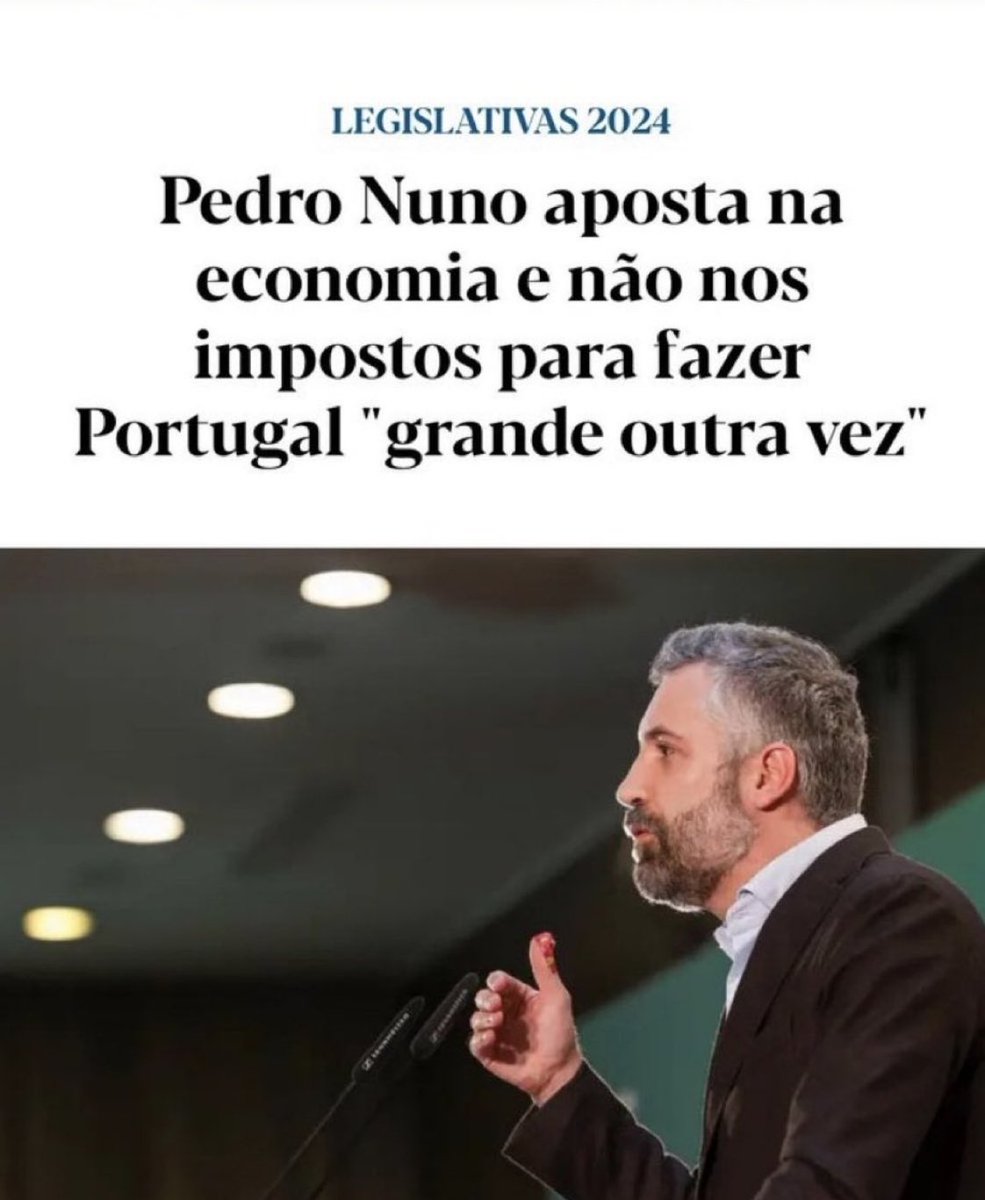
"Se quando venceu as diretas o discurso foi criticado pela falta de preparação, no encerramento do 24.° congresso do PS Pedro Nuno Santos fez questão de dizer ao que vinha: pretende implementar um novo modelo "com mais dinheiro para menos setores" da economia,
...
A grande mudança, anunciou, será feita - se vencer - na forma como os apoios passarão a ser atribuídos, selecionando "um número mais limitado de áreas estratégicas onde concentrar os apoios durante uma década". Defendeu que "é tempo de ser claro e de fazer escolhas [na atribuição de incentivos|". "Só conseguiremos transformara economia com mais dinheiro para menos setores.""
Quem segue este blogue sabe que eu cada vez mais torço o nariz ao efeito nefasto dos subsídios na economia. No entanto, o que acho interessante nesta proposta é saber quais são as áreas estratégicas. Quais os critérios para a sua definição? BTW, "picking winners" sempre deu asneira, daí a minha proposta de longa data "deixem as empresas morrer".
BTW, ainda acerca de Pedro Nuno Santos e este pormaior:
"Isto porque, explicou, "a economia está em profunda transformação", onde "a automatização, a robotização e a inteligência artificial têm um enorme potencial para aumentar a produtividade, mas trazem desafios". "Neste processo, muitos setores altamente lucrativos mas com poucos trabalhadores, deixam de contribuir para o sistema de segurançasocial tanto quanto poderiam e deveriam", enfatizou."
Que mais treta vai inventar ao melhor estilo do jogador de bilhar amador, tão focado na próxima jogada, na jogada imediata, que não se pensa nas consequências dessa jogada. Um clássico deste blogue: Nós não estudámos até ao fim todas as consequências das medidas que sugerimos.
Sempre preocupados em sacar e não em criar riqueza. Aquele "setores altamente lucrativos", faz-me logo pensar no Portugal actual, se ganhas mais de 1800 euros por mês já és rico pela bitola socialista.
Já nem a UE nos consegue salvar deste monstro fiscal.
Primeiro, pelo que vou lendo, tenho uma opinião positiva sobre a evolução da economia grega. Recordo, por exemplo este postal do início do passado mês de Dezembro, "A receita irlandesa na Grécia (parte II)", ou este outro publicado no início do passado mês de Outubro, "A receita irlandesa na Grécia".
Segundo, há dias escrevi este postal "Por causa de uns pastéis de nata (parte II)" que termina com um comentário a um video de Milei:

"Voltando agora ao vídeo de Milei. Simpatizo com a teoria, mas o desafio é criar as condições para que a evolução horizontal na figura acima possa ocorrer a uma velocidade tal que não torne a transição muito dura. Contudo, os governos fazem exactamente o oposto. Em vez de apoiarem o novo, apoiam os incumbentes, fica-se numa terra de ninguém tão bem descrita por Spender e Taleb."
Na passado Sexta-feira mão amiga mandou-me este artigo, "A Growth Strategy for the Greek Economy" que me levou ao original.
Escolhi começar pelo capítulo 3, "Vision and goals for the Greek economy" e o que li ... não me agradou:
"Employment in manufacturing has fallen internationally, but in Greece it has declined excessively. This is attributable to distortions that have led to too many self-employed individuals and small businesses that are dominant in the specific environment. In more technologically mature EU member states (the so-called EU15 group), the share of labour in the manufacturing sector was 20% in 2000, and just 14% in 2019. The reasons behind this reduction are new technologies and globalisation, in particular China's emergence and its impact on international trade. In Greece, 14% of the labour force was employed in manufacturing in 2000 and 8.2% in 2019. Based on Greece's technological lag compared to the EU15 countries and its relatively closed economy, one would expect that the share of employment in manufacturing would be larger than in the EU15. Indicatively, in Portugal, which is at the same technological level as Greece, 22.7% of the labour force was employed in manufacturing in 2000 and 17.6% in 2019.
It is important to contain the reduction of employment in Greece's manufacturing sector and to achieve a convergence to the EU average. Currently, Greece exhibits one of the lowest shares of manufacturing activity in the EU, comparable only with the Netherlands and the Nordic countries - economies with much higher per capita income and greater industrial maturity. Policy proposals for enhancing Greece's manufacturing sector, and the remaining sectors examined in this section, are examined in detail in Chapter 6. This section summarises the main directions.
The support of salaried employment is critical to the growth of the manufacturing sector in Greece. Greek manufacturing firms are generally small, in part due to the particularly high number of self-employed in the services sector. When measures to support salaried employment are adopted, these businesses will have a greater comparative advantage in the international markets and will grow."
E recuo a 2006 e à ideia de Blanchard sobre a redução de salários para aumentar a produtividade que comentei em "Redução dos salários em Portugal" (Blanchard retratou-se em 2017). E recordo Reinert e o caso do Uganda e o quadrante do empobrecimento.
O que os autores propõem no artigo citado acima é aumentar a competitividade das empresas apoiando-as no pagamento dos salários dos seus trabalhadores. Weird!!!
O que estes autores não perceberam ainda foi a necessidade do que escrevi acima "mas o desafio é criar as condições para que a evolução horizontal na figura acima possa ocorrer a uma velocidade tal que não torne a transição muito dura". Não conseguem ganhar produtividade a proteger o passado.
%2006.21.jpeg)