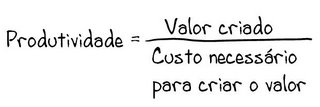
segunda-feira, junho 06, 2016

Diferenciação (parte III)

Parte I e parte II.
.
É algo desesperante lermos o tipo de discurso que se encontra na parte I desta série e encontrarmos cada vez mais informação em linha com o que propomos aqui no blogue há quase 10 anos para o sector do leite.
.
Por exemplo, pensamento estratégico, não são todos iguais:
Chamo a atenção sobretudo para:
"Dairy companies which belong to the “differentiated niche products” and “Mediterranean” clusters will be expected to export smaller quantities but get higher prices as a quality premium on their products. These companies play an important role in adding value to raw milk and to foster a sustainable strategy for maintaining milk production in less advantaged regions, such as mountainous areas."
Claro que estas duas abordagens requerem um modelo de negócio bem diferente do necessário para:
"Dairy farmers and companies belonging to the “large cost leaders” cluster will act as major players on international markets, especially in the segment of low-price dairy products. Their ability to compete on international markets will have a strong influence on milk quantities produced in Europe and milk prices paid to farmers, which will experience upward and downward pressure, respectively. Companies belonging to the “international product champions” cluster are similar to the ones in the “large cost leaders” cluster, but tend sometimes to supply more innovative milk products."
Por exemplo, este caso "O que 130 cabras podem fazer por 19 pessoas" pode ser um bom exemplo do tipo de actividades a considerar quando se desenha um modelo de negócio que não passe por uma proposta de valor baseada no preço mais baixo.
.
Este blogue tem 130 postais com o marcador "leite", muitos deles são sobre o lado estratégico para fugir ao preço mais baixo. Por exemplo:

Trechos e imagem retirados de um saboroso relatório a merecer mais postais e estudo, muito estudo "AGRI-2012-C4-04 - Analysis on future developments in the milk sector Prepared for the European Commission - DG Agriculture and Rural Development" (Setembro de 2013)

domingo, junho 05, 2016

Curiosidade do dia

"Rust never sleeps" o nome de um álbum de Neyl Young do final dos anos 70 do século passado.
.
Rust never sleeps, está lá sempre a minar, a corroer, a estragar, a deteriorar...


A rust que tenho em mente é esta "Rocha Andrade não descarta aumento de impostos nos próximos seis meses".
.
Um monstro insaciável que não pára, que nunca dorme, que não descansa, que continua a sugar, a chupar, a vampirar a vitalidade que resta a um país.

O mundo a mudar

A propósito desta notícia:
Como não a relacionar com as previsões sobre o futuro do home delivery. O job-to-be-done está lá, a forma de o realizar é que vai mudando:

Impressionante como as plataformas põem em causa a necessidade da existência de uma empresa...
"The opportunity for a multisided platform ordinarily arises when frictions keep market participants from dealing with each other easily and directly. Entrepreneurs can identify opportunities for starting a matchmaker by looking for significant transaction costs that keep willing buyers and sellers apart and that a well-designed matchmaker can reduce."


Quais as implicações desta parceria?

Retirado de "Matchmakers: The New Economics of Multisided Platforms" de David S. Evans e Richard Schmalensee.


Acerca das plataformas de negócio

A propósito de "What is Platform Cooperativism and Why is it Important? | MIT Center for Civic Media".

Um texto carregado de política e contaminado por um espírito de conflito que não partilho, No entanto, há muito que sou um apologista das plataformas cooperativas, ou de segunda geração. Recordar:

 Por isso, a importância deste postal "Estratégia em todo lado - não é winner-take-all"  e do seu:
"Economists missed the fact that matchmakers, just like any other businesses, can differentiate themselves."
Voltando ao texto inicial:
"Platform companies like Uber don't actually own many things -- they own people's captive attention and loyalty, getting a $50 billion valuation purely on the beliefs of people. That can change, she argues. Taking back platforms is actually easier than change in other areas -- rather than contest over resources, we just have to clone the heart of these platforms and use them instead." 
Estes activistas têm um lado positivo no avanço do conceito de plataforma cooperativa. No entanto, têm este lado negativo:
"Platform cooperatives may have their own problems and aren't a silver bullet for society. But they are a vehicle for like-minded people to organize and fight for basic democratic rights for workers." 
Não, as plataformas cooperativas não são um veículo para "fight for basic democratic rights for workers", dessa forma não teriam sucesso. A beleza das plataformas é o efeito de rede. As plataformas cooperativas só terão sucesso se forem um veículo para servir melhor os seus clientes-alvo e, acredito que o podem ser. Como consequência, e só como consequência, conseguir-se-à "basic democratic rights for workers"... que nessa altura já não serão trabalhadores como empresários cooperantes.

Acerca do mapa da estratégia (parte IV)

Parte I, parte II e parte III.
.
Considerem uma empresa que recorreu há cerca de 10 anos ao BSC com um sucesso muito grande. O sucesso fez com que crescesse a facturação cerca de 10 vezes. 
.
Será que faz sentido, ao fim de 10 anos manter o mesmo mapa da estratégia e o mesmo BSC? Como não recordar "Estratégia e iteração"...
.
Como não reconhecer que o caminho se faz caminhando e que o bailado da evolução nos devia obrigar a actualizar periodicamente o mapa da estratégia. Porque nos metemos a caminho, a certa altura:

  • vemos e percebemos coisas que não conseguíamos quando estávamos no começo;
  • adquirimos conhecimentos que não tínhamos nem podíamos manipular e que agora nos abrem novos horizontes.
Ao mesmo tempo que isto acontece, naturalmente, saem chefias e entra gente nova, gente para quem o mapa da estratégia ou o BSC já nada dizem, são uma imposição, não viveram o desafio de o criar.
.
Acredito que há aqui um potencial de melhoria por explorar.


Problemas como a base para o sucesso

Li algures durante o mês de Maio um título que rezava mais ou menos assim "Os problemas de uma empresa são a base para o seu sucesso". Infelizmente não consigo rastrear esse artigo para o recuperar. No entanto, encontro agora um outro que vai no mesmo sentido "Your greatest constraint is your greatest advantage":
"Constraints get a bad rap. People see them as wholly negative: they impede progress and diminish potential. Entrepreneurs, in particular, seem locked in a perpetual grim struggle against scarce resources and abundant obstacles.
.
But constraints can also be fertile, enabling--even desirable. They can make people and businesses more than they were rather than less than they could be. Constraints force people to reframe problems and get creative. And from that fresh perspective and creativity emerge new opportunities: superior alternatives at which smooth, open roads would never have arrived."

sábado, junho 04, 2016

Curiosidade do dia

O que eu fui combinar:
"A single, definitive BSC does not exist. It is always very specific to the unit that implements it
...
Reading research on the BSC, one might think that business models are universal. Kaplan and Norton suggest BSC perspectives and a standardized strategy map that argue the following: (->) educated employees perform great (->) internal processes that satisfy customers, and their (->) loyalty boosts (->) profits. But as we can see from the experiments of Humphreys and Trotman (2011), even more training on the generic BSC does not eliminate typical BSC-related problems. Nørreklit et al. (2012) offer “pragmatic constructivism” as an alternative to this generic strategy map and point out that cause-and-effect relations in business are nothing like cause-and-effect in natural sciences. The laws of business are not universal and they cannot be “discovered” like the law of gravitation in physics. Instead, they need to be “constructed” by managers and employees. Each organization has distinct values, different resources and market segments, facts that lead to diverse possibilities and need to be communicated in the appropriate way."
Trechos retirados de "Strategy maps: the essential link between the balanced scorecard and action", Journal of Business Strategy, Vol. 36 Iss 2 pp. 34 - 40. "Rainer Lueg , (2015)
"A estratégia do Governo passava por dar uma folga, via reposição de salários e pensões e alívio fiscal, ao rendimento dos particulares. Isso permitiria um aumento do consumo, impulsionando o crescimento económico. Se assim fosse, as empresas aumentariam o investimento para responder ao acréscimo da procura interna. E isso seria assim porque os rendimentos mais baixos, aqueles que seriam mais aliviados do garrote fiscal, tem uma baixa propensão à compra de consumos importados."
Trecho retirado de "As campainhas de alarme estão todas a soar"

BTW, se até o Nicolau Santos está alarmado...

Uma questão de postura

Acerca dos que abraçam a mudança em vez de lhe resistir:
"When in doubt, try wings.
.
Wings use finesse more than sheer force. Wings work with the surrounding environment, not against it. Wings are elegant, not brutal."
A propósito de "Comissão diz que proibir serviços como a Uber e Airbnb só em “último recurso”"

Trecho retirado de "Add engines until airborne"

Mongo, código e modelo de negócio

Mais um sintoma da evolução para Mongo, para o Estranhistão e da entrada do "é meter código nisso":
"Technology advancements and the Industrial Internet of Things are making this outcome orientation [Moi ici: As empresas deixarem de ver-se como produtores de produtos com atributos mas antes como facilitadoras de recursos para que os clientes vivam determinadas experiências e/ou atinjam determinados resultados] more feasible every day."
Impressionante mesmo a lista de dificuldades que se colocam às empresas que querem ir por esta via:
"The transformation requires manufacturers to redesign every major function in its organization - especially commercial functions charged with defining, selling and servicing value propositions.
.
[Moi ici: Muito interessante o trecho que se segue e o seu alinhamento com Mongo] For instance, in a traditional, customer-centric organization, marketers identify customer segments across multiple dimensions, then define solutions (a mix of products and services) to meet each segment’s needs. But in an outcome-centric organization, marketers target individual customers. Then they tailor value propositions to each customer in order to deliver an outcome.
...
For an outcome-centric company to carry out marketing’s promise, sales organizations must know the customer well enough to understand the specific outcomes it seeks. This requires a strong partnership between sales organizations and customers.
...
Becoming outcome-centric requires more than changes to marketing and sales, however. Product development teams will need to focus on delivering products as a service to enable real-time service level monitoring. [Moi ici: É aqui que entra o "é meter código nisso"] This way, engineers and product designers no longer have to make educated guesses about how their products perform in the field, because they can collect actual performance data instead.
...
Pricing is another function that has to adapt. [Moi ici: Tanto tema dilecto deste blogue!!!] While many manufacturers today use a cost-plus or market-based pricing model, pricing in an outcome-centric organization must change to something like price per outcome or usage. This is critical if manufacturers are to capture a greater share of the revenue from the outcomes they help deliver. But for many industrial companies, developing advanced pricing capabilities has not been a priority.
.
After-sales support and customer service are also affected as they increasingly focus on predictive interventions.
...
Becoming an outcome-centric organization is arguably one of the most important strategic decisions your company can make. And it’s becoming more feasible every day, thanks to technology advancements and the Industrial Internet of Things. Without an outcome-centric mindset and operational model, companies risk falling behind. But it involves a foundational shift in organization and culture. Embracing this major undertaking and maintaining the discipline to follow through will likely mean the difference between future success and stagnant survival."

Trechos retirados de "Manufacturing Companies Need to Sell Outcomes, Not Products"


Estratégia em todo lado - não é winner-take-all

Ando a dar uma vista de olhos a "Matchmakers: The New Economics of Multisided Platforms" de David S. Evans e Richard Schmalensee.
.
A investigação já compensou!
.
Descobri algo que questionava interiormente já há algum tempo e que não vi ainda referido em lado nenhum. A primeira vez que equacionei o tema foi por causa da língua inglesa, talvez em 2001: quanto mais pessoas usam a língua inglesa como língua franca, mais a língua inglesa fica atraente para os falantes que aprendam inglês. No último ano o tema voltou a interessar-me por causa da Uber e das plataformas funcionarem como winner-take-all:
"It soon became apparent that much of the received wisdom about network effects was wrong. The first-mover advantage and winner-take-all theories, for example, were shaky at best.
...
The largest credit card network, Visa, expanded nationally sixteen years after the first national card network. We can’t think of many multisided platform industries where the first mover won it all. In fact, for most industries with indirect network effects, the first movers mostly died and few remember them.
There are some important industries where “winner takes most” may apply. But even there, victory is likely to be more transient than economists and pundits once thought.
...
Economists missed the fact that matchmakers, just like any other businesses, can differentiate themselves.[Moi ici: Isto é muito bom]
...
Participants can, and often do, use several platforms—a practice that the old network effects literature dismissed. The new economics of multisided platforms calls this multihoming. Most people use and most merchants accept several different brands of payment cards, for instance.
...
Economists also recognize now that the extent to which indirect network effects could be reversed varies across industries. They had focused on businesses in which people had to make a significant financial commitment to a new technology such as a fax machine or a video game console. Once a network business of that sort got someone on board using its standard, it didn’t have to worry much about losing that person. For many matchmaker businesses, however, participants can easily decide to switch. People commonly stop going to a mall and retailers commonly decide not to renew their leases there."

Acerca do mapa da estratégia (parte III)

Parte I e parte II.

"Although a vast number of studies on the BSC exist, only a few reveal the importance of strategy maps as the crucial link between strategy and the BSC. In general, management involvement, strategic alignment and communication throughout the organization are key factors when transforming strategy into action. Strategy maps seem to be a valuable tool, as they simplify the complex causal relations which the BSC is built upon. Both proponents and critics of the BSC agree that a performance management system (such as the BSC) cannot work in practice if it lacks strategic causality, which may explain why the BSC is often seen as irrelevant for practice.
Organizations put great effort into implementing the four BSC perspectives as a set of numbers, but forget to construct the causalities along these numbers. Evidence shows positive results in using strategy maps for planning, as they are more suitable for communication than the BSC itself. [Moi ici: Acredito que isto seja tanto mais verdadeiro quanto mais pequena é a organização. Numa organização mais pequena os números são menos importantes para conhecer a realidade e perceber o que está a acontecer]
...
A single, definitive BSC does not exist. It is always very specific to the unit that implements it [Moi ici: Cuidado com os transplantes. Mesmo sector, diferentes estratégias, diferentes BSC]
...
The laws of business are not universal and they cannot be “discovered” like the law of gravitation in physics. Instead, they need to be “constructed” by managers and employees. Each organization has distinct values, different resources and market segments, facts that lead to diverse possibilities and need to be communicated in the appropriate way.
...
strategy maps seem to enhance the implementation of a strategy into a performance measurement system such as the BSC. But they need to be supported by dedicated and experienced managers who construct causality in the performance measurement system that is unit-specific, and not just copied from the generic BSC books.[Moi ici: Venenosamente verdade]

Para terminar uma reflxão sobre o envelhecimento de um mapa da estratégia e do seu BSC.

Trechos retirados de "Strategy maps: the essential link between the balanced scorecard and action", Journal of Business Strategy, Vol. 36 Iss 2 pp. 34 - 40. "Rainer Lueg , (2015)

sexta-feira, junho 03, 2016

Curiosidade do dia

"Ninguém se confessa, nem sequer argumenta em sua defesa. Na confusão da mistura, todos esperam escapar para poderem continuar a fazer o que sempre fizeram, com a repetição do erro a ser prova da sua inocência. A culpa transforma-se em convicção sincera e inocente dos bem-intencionados, os erros são transferidos para as circunstâncias infelizes das pressões externas e ficam sem autor."
Trecho retirado de "Culpados inocentes"

Outra ajuda para Mongo

Outra ajuda para Mongo, os pequenos robots para as pequenas explorações, os modelos de negócio focados nos pequenos produtores, "The Rise of Small Farm Robots"
"For decades, farm machinery has targeted industrial-sized farmers, underpinning the “get big or get out” ag model of consolidation. Now, the miniaturization of farm machinery may be the ag-tech counter-trend that actually encourages smaller, more diverse farms.
...
When we think about the future in ten years, we’re going to see smaller machines rather than big ones,”[Moi ici: Uma clara divergência em relação à tendência do século XX]
...
By making it easier to take care of a diverse landscape, the Rowbot actually allows the landscape to be resettled with a different type of farm. Small machines can get to spots on a field that farmers sitting in the cabs of big vehicles have struggled to tend well — ecological niches like the understory of a bean plant, in between two rows of corn, between layers of grape leaves.
...
Which brings us to HelloTractor. Calling itself the Uber of Farm Machinery, this startup based in Washington, DC and Nairobi, Kenya, allows farmers to request farm machinery, just as you might “hail” a car with Uber. HelloTractor’s delivery system is tied to its own small, smart tractors, which monitor usage and location for the security of the owner. Owners can help offset the cost of their purchase by renting it out. And because labor shortages on farms can lead to poor harvests and lost income, the wider availability of these size-appropriate machines can help whole communities grow.
...
Companies are rolling out small machine products seemingly every week. I just came across BeanIoT, a sensor the size and shape of a bean developed by Cambridgeshire-based RFMOD that can be added to silos or other grain storage to monitor humidity, temperature and spoilage. [Moi ici: Mais código na agricultura] And Infratab is developing active RFID labels that record freshness data points every 30 seconds and can be put on food packages — or even individual fruits, vegetables or groceries — to indicate if the foods have exceeded certain temperature or humidity thresholds that would compromise quality and safety.
...
The soil-based sensor company CropX has just raised $10 million on the notion that its “internet of the soil” tool will save farmers time and money. These don’t have moving parts like what we think of as robots or machines, but they do “help” farmers in the same way a Rowbot or Agribotix drone will.
...
Yes, big machines may have allowed a single person to farm miles of land. But they also created farms low on diversity. Small machines could not only help large farms to become more diverse and ecologically sound, they can be a huge help to small, diversely planted farms that suffer from too little machine solutions to help them."

Diferenciação (parte II)

Parte I.
.
Bastou-me pesquisar no Google e em menos de 2 minutos cheguei a "MODULE 1 POSITIONING THE PRODUCT Chapter 6: 7 strategies for creating unique product-identities"
.
Como ninguém fala disto em Portugal um tipo até pensa que é louco.
"In the modern market place, each product has to find an appropriate market- niche. In order to do this, each product must stand out because of characteristics only that particular product possesses which also give the product its unique identity."
Eis as alternativas:

  • Strategy #1: Product Differentiation
  • Strategy # 2: Unique Characteristics
  • Strategy # 3: Price differentiation (“Less is More”)
  • Strategy # 4: Niche-offers
  • Strategy # 5: Differentiation through services
  • Strategy # 6: Product Differentiation through Direct Communication
  • Strategy # 7: Making the difference purely through the packaging.
Gosto particularmente deste exemplo da estratégia #5
"Milchhof Reitbrook (Germany): High quality fresh milk delivered directly to your home? This is what we, two traditional farming- families, Kohrs and Langeloh, offer you. Our dairy farm is just outside Hamburg, and we have revived the old tradition of delivering fresh and special quality milk to homes in the eastern part of the city. We also offer fresh yogurt made from unsterilized milk as well as different types of fruit yogurts. Come and see us –– the farm, the cows, the milk and ––– above all, the special service we offer!"
 Como eu gostava de comparar o breakeven de exploração produtora de leite para entrega a processador e o de exploração com o modelo de negócio do exemplo. Quantos litros teriam de vender a que preço e com que margens para o modelo ser equivalente em rentabilidade?

Contudo, parece que estamos condenados à abordagem dos coitadinhos, à postura dos desgraçados indefesos açoitados pela maldade do mundo. BTW, "You Are Always Becoming What You Think the World Is"

Acerca do mapa da estratégia (parte II)

Parte I.
"Strategy maps expose gaps between strategy formulation and execution, direct attention to flaws in the BSC and enable top management to reformulate strategies if necessary. As a result, organizations can be sure that the attainment of the BSC’s (operative) objectives ensures reaching its strategic goals."
Algumas descobertas que a empresa fez com este mapa da estratégia:

  • não fazemos promoção a sério da marca, não temos ninguém a trabalhar o Marketing;
  • não relacionamos inovação com margens ou preço médio;
  • nunca percebemos que trabalhamos para um ecossistema e que diferentes agentes têm de ser abordados de forma diferente porque valorizam propostas de valor diferentes
"Strategy maps improve understanding the business model behind the performance measurement system, which must fit the strategy it is supposed to assess. The strategy map functions as a link between these two.
...
The strategy map forces BSC-implementers to think about specific goals they want to achieve, and how they need to be measured. [Moi ici: Construído o mapa da estratégia os indicadores aparecem naturalmente] Research documents that employees who use strategy maps find it easier to identify strategically important activities and are more effective in quantifying targets during the subsequent BSC implementation. Overall, it appears that the strategy is reflected better in the performance measurement system if a strategy map is involved beforehand."

Trechos retirados de "Strategy maps: the essential link between the balanced scorecard and action", Journal of Business Strategy, Vol. 36 Iss 2 pp. 34 - 40. "Rainer Lueg , (2015)

Usar a ISO 9001 como orientação para melhorar

Em empresa que estou a apoiar na transição para a ISO 9001:2015 chegamos à subcontratação, agora inteligentemente apelidada de processo a realizar por fornecedor externo, e concluímos que a empresa não recorre a esse tipo de actividade.
.
Não recorre mas pretende vir a recorrer para crescer para segmentos novos de mercado. Faltando-lhe experiência, conhecimento e tecnologia, arranjou um parceiro no estrangeiro disposto a colaborar.
.
A empresa nunca recorreu a subcontratação mas algures num futuro que se quer curto vai recorrer. Como vai funcionar?
.
- Lembram-se no ano passado da auditoria interna que vos fiz em que torci o nariz a não terem desenvolvido nenhum acção correctiva/preventiva? Eis uma boa ocasião para realizar uma.
.
Não se trata de uma acção para melhorar um processo já existente, para melhorar uma situação crónica. Trata-se de uma acção para criar um processo de raiz. Portanto, vamos conciliar planeamento e experimentação com 2/4 serviços subcontratados para rever e validar.

Primeiro, planeamento: 5 minutos de brainstorming inicial sobre as etapas do processo e sobre os tópicos a considerar em cada etapa.
.
Segundo, todos os dias da próxima semana dedicar 5 minutos a discussão e acrescento de etapas e/ou tópicos.
.
Recordar a Trilogia de Juran.

quinta-feira, junho 02, 2016

Curiosidade do dia

À atenção dos suinicultores portugueses:
“When pricing is delegated or — if worse comes to worst — left to the market, you will never get beyond mediocrity.”
Não, não é um convite a meter o Estado no assunto, é um convite a pensar estrategicamente.
.
BTW, "A Spanish Delicacy Grazes in Texas"

Citação retirada de "Profitable Innovation" um e-book de Georg Tacke, David Vidal e Jan Haemer.

Acerca do mapa da estratégia (parte I)


Algumas das razões porque sou um fã incondicional do mapa da estratégia: ferramenta de comunicação; ferramenta de visualização; ferramenta de discussão; ferramenta de concretização; ferramenta de organização do pensamento.
"A strategy should not just exist as a vision among top managers in an organization. It should also be linked to a strategic performance measurement system (SPMS) that helps all employees achieve their strategic objectives in a set time frame. Successful organizations start building this linkage by communicating their values, resources and possibilities to lower-level managers.
...
the BSC can fail in conveying strategies if it is just a collection of performance measures without the logic of the business model behind it.
...
As a potential cure, best practice examples suggest that top managers should use strategy maps to explain the business model behind the BSC.
...
Research actually shows that strategy maps foster a better understanding of the BSC among employees, create greater commitment, reduce resistance, cultivate a feeling of fair evaluations and are far superior to a stand-alone BSC in communicating how to achieve strategic goals. Also, strategy maps facilitate evaluations of the relevant environment so top and middle managers can engage in discussions, challenge each other’s assumptions and “construct” the causalities of their organization jointly."

Trechos retirados de "Strategy maps: the essential link between the balanced scorecard and action", Journal of Business Strategy, Vol. 36 Iss 2 pp. 34 - 40. "Rainer Lueg , (2015)

Acerca da segmentação

Recordando "E na sua empresa, como é?"
"Incumbents are still segmenting almost exclusively by value, which leads sales teams to stack-rank customers on the basis of revenues and operating margins. Because the revenue model for software-as-a-service (SaaS) trades up-front license fees for a subscription model whose fees are spread over several years, SaaS customers aren’t identified as strategic priorities. Yet many of these companies, although small today, will likely become key customers in the near future. By placing them in the bottom tiers, companies may be leaving millions on the table.
.
With a new approach to segmentation, incumbents can find their “growth hot spots,” those high-potential customers obscured by more traditional methods. Sales leaders need to consider two critical but often overlooked factors when assessing their current and future customers: need and behavior. When combined with value, these indicators will reveal the customers whose strategic direction and operating model come together in a way that could make them huge sources of revenue. Sales teams should then tailor their deployment strategies toward these customers."


Diferenciação (parte I)

Leio "Industriais de lacticínios em "completa impotência" para resolver crise do sector":
"A Associação Nacional dos Industriais de Lacticínios (ANIL) defendeu esta terça-feira no parlamento que a produção, a indústria e os decisores políticos encontram-se numa situação de "completa impotência" para resolver estruturalmente a "grave crise" do sector leiteiro."
E recordo logo:
"The future is not a scenario we should prepare for, but a process we enact in the present. It’s not a fate we discern, but an extension of our actions ... If anything, when the future seems inevitable or out of control, it’s simply because we have not yet unearthed the embedded assumptions informing our highly determinative actions." 
No entanto, há tantos exemplos positivos que podiam servir de inspiração:
"O setor das frutas e legumes cresceu 20% em exportações em 2015, faturando 1.200 milhões de euros no mercado externo,
...
A organização Portugual Fresh, que representa dezenas de produtores do setor das frutas e legumes, tem como objetivo chegar aos 2.000 milhões de exportações até 2020." 
Se não podemos competir com os chineses da Europa na produção de leite comoditizado, como nos podemos diferenciar? Como é que cada produtor ou região se pode diferenciar?
.
Continua.