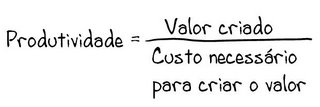
"“The main source of the productivity slowdown is not so much a slowing of innovation by the most globally advanced firms, but rather a slowing of the pace at which innovations spread out throughout the economy - a breakdown of the diffusion machine,” the OECD said.Trechos retirados de "OECD: Broken “Diffusion Machine” Is Slowing Productivity"
.
But why are innovations not spreading as quickly as before? One key reason appears to be that the process of “creative destruction” identified by Austrian economist Joseph Schumpeter as essential to capitalism’s dynamism appears to have lost some of its ferocity. In the OECD’s words, “market selection is weak.”
.
One reason for that is government policy, which the OECD said favors incumbents across a whole range of areas, from regulations designed to protect the environment, to taxation. As a result, older firms that suffer from low productivity growth endure, often “trapping” workers in jobs for which they are over qualified.
.
“High rates of skill mismatch often coincide with the presence of many small and old firms,” the OECD said. “These firms are often unproductive and tend to be harmful for aggregate productivity to the extent that they absorb valuable resources, thereby constraining the growth of more innovative firms.”
sábado, julho 11, 2015
Não é novidade nenhuma

O fim do século XX
Uma imagem metafórica do que é o fim do século XX:
 O fim dos monólitos, o fim do domínio das empresas grandes, a explosão de variedade.
Imagem retirada de "Opening Windows"
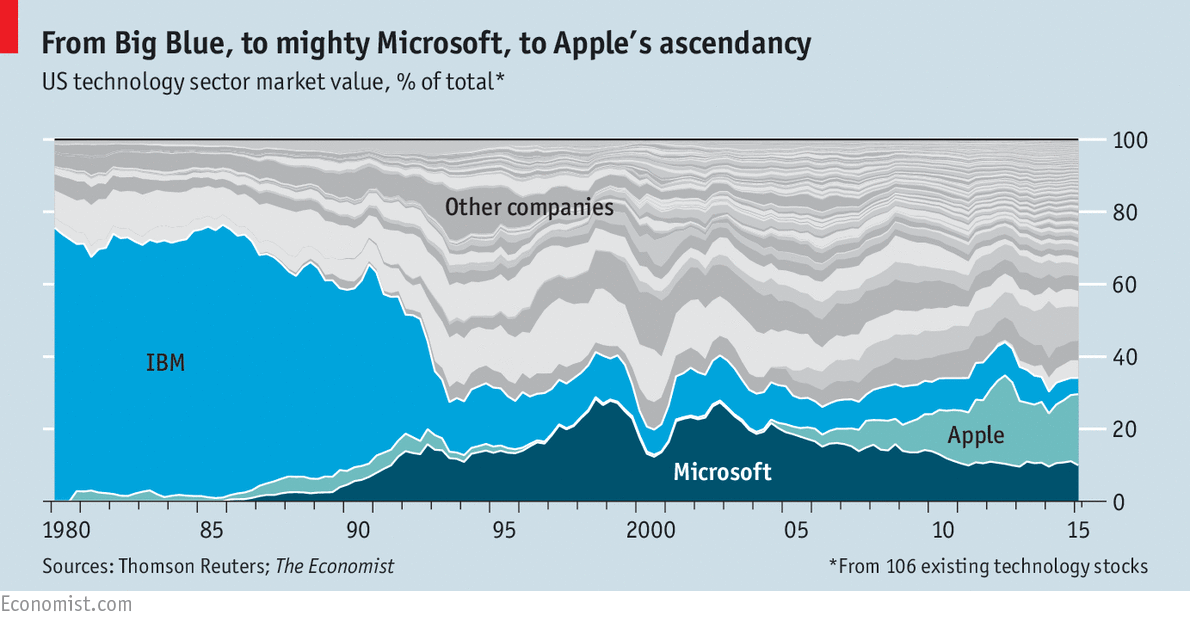
Imagem retirada de "Opening Windows"
O que é isto senão Mongo?
Via @armando_moreira cheguei a este artigo "Salesforce cofounder explains where big old tech companies like Microsoft often go wrong" cim uma mensagem tão querida deste blogue:
.
Em vez de querer ser tudo para todos, em vez de uma oferta alargada, just-in-case"; foco, foco, foco!!!
.
Interessante como o tema está presente numa série de outros artigos publicados recentemente.
.
Por exemplo, "In Technology, Small Fish (Almost Always) Eat Big Fish" (este artigo merece outro postal futuro, sobre outra vertente) pode ler-se:
.
BTW, em sectores completamente diferentes, recordar:

Especialização, diferenciação, nichos...
"Salesforce is expected to surpass $6 billion in revenue this year, making it the fastest enterprise software company to ever do so. Now it’s worth over $45 billion..It took almost 16 years for Salesforce to get to this point, but its cofounder Parker Harris believes there’s one key reason to its massive growth in a relatively short period of time: focus..Unlike some of its bigger rivals like Oracle and SAP, who are virtually in every area of enterprise software, Salesforce has kept its business focused on the customer relationship management (CRM) space, largely comprised of sales, marketing, and service automation....“Many people have said we just need to add more products. Look at Oracle, look at SAP. Add ERP and inventory or compensation. Add all this stuff,” Harris told IDG. “What we realized is we’re the customer company. We’re the front office solution and our customers would be really upset if we just added a whole bunch of stuff and lost focus.”"Foco, foco, foco!
.
Em vez de querer ser tudo para todos, em vez de uma oferta alargada, just-in-case"; foco, foco, foco!!!
.
Interessante como o tema está presente numa série de outros artigos publicados recentemente.
.
Por exemplo, "In Technology, Small Fish (Almost Always) Eat Big Fish" (este artigo merece outro postal futuro, sobre outra vertente) pode ler-se:
"Eventually, and inevitably, these “small” entrants eat their way up the food chain into the market, capturing a larger and larger share, until the behemoths of the sector are forced to retreat back into a narrowing market niche.Ainda um outro artigo sobre o poder do foco "The Increasing Fragmentation of SaaS":
...
One sterling example is in the CRM (customer relationship management) space. For as long as anyone could remember, the market was owned by Siebel. It was big, offering an incredibly complex solution that had to be installed for customers on their servers, licensed in bulk, with tons of training and customer service attached. Sounds unwieldy, but it was the norm, and everyone needed it.
.
Then along came a company called Salesforce.com, offering just one capability of the many Siebel already provided. Only they offered it differently — instead of having to buy hundreds of licenses, customer companies could pay per employee using Salesforce.com, and use it in their web browsers hassle free. They became the automatic choice for the many young companies that couldn’t afford to do anything but start small with SaaS.
.
Even so, the larger incumbents like Siebel comforted themselves that enterprise customers would never entrust their precious data and prospect lists to an offsite cloudbased system. Today, Salesforce.com completely dominates the CRM market and has an enormous ecosystem around it. Siebel, having had their lunch eaten right in front of them, became acquisition bait for Oracle.
.
Salesforce.com’s ascent highlights the momentum of all cloud solutions, led by small, specialized companies purveying simple, easy-to-understand benefits for consumers and enterprises alike. Think Dropbox and Box, respectively. They are now what people think of when they hear the term “cloud,” not the large, vertically integrated storage solutions of yesteryear.
...
[Moi ici: Recordando o exemplo de ontem sobre as peúgas, sobre a decomoditização] Your rallying objective should be to build something truly great for the low end of the marketplace, solving an important problem with a simple, low-friction product in a segment of the market that's underserved by the incumbents. Once you've achieved excellent market traction in this arena, you can nibble your way upward until you're competitive with the heavyweights of your industry."
"According to ChiefMarTec, in 2015 there are 1875 marketing technology companies, up from 947 last year. If the number of marketing software companies is any indication, there is a huge expansion in the number of SaaS companies in almost every segment including sales tools, engineering productivity, finance, and human resources.O que é isto senão Mongo? Diversidade, focalização, especialização, decomoditização...
.
This fragmentation trend has been happening for quite some time. In the old model of software procurement, companies would call one of the large software monoliths (Oracle, SAP, IBM, etc) and negotiate an enterprisewide license for a software suite to serve the majority of their departments. These suite offerings promised simplified negotiation and procurement, a single integrated platform with free data interchange across departments, and one point of support. But, this promise was never fulfilled. For example, according to a recent study by Panorama Consulting Solutions, the average
ERP implementation requires 16 months to deploy and 20% of them are considered failures.
.
The alternative, which is the fragmented market of today, enables teams to purchase best-of-breed point solutions, try them, and quickly cycle through all the different offerings until they find the best one for their needs. This change in purchasing behavior is happening broadly across SaaS.
...
These department specific software stacks serve their customers much better than a single suite ever could, because each team in each company can select precisely the products that offer the features that meet their specific needs. and if requirements should change, it’s as simple as canceling a subscription, and starting with another product."
.
BTW, em sectores completamente diferentes, recordar:
- "Hits" versus nichos;
- "Ter uma estratégia clara = escolhas claras = ideias claras = desejar sucesso à concorrência (parte V)"
A lição da biologia:
Especialização, diferenciação, nichos...
"aposta noutro mindset"
Primeiro, este trecho de Trout em "Differentiate or Die: Survival in Our Era of Killer Competition":

.
.
Corrida para fechar agências!
.
Corrida para passar a oferecer os serviços via internet!
.
O que se passa nos Estados Unidos, que vão à frente na tendência do eficientismo?
 Recordar "The Three Rules" de Raynor e Ahmed:

Trechos 2 retirados de "Is This a Coffee Shop or a Bank?"

"Now let’s look at that 0 percent differentiation degree in the Banking sector. How can that be? All these big name banks spend millions on advertising telling us how wonderful they are to do business with. Well, class, the answer is obvious. Mergermania has taken a terrible toll. And after all these mergers, who knows who is who these days much less for what they stand. As the psychologists advise, without a line to the past, how can you be sure of a line to the future. The Banking category is a mess and deserves their 0 percent."O que ouvimos e lê-mos em Portugal sobre os bancos?
.
.
Corrida para fechar agências!
.
Corrida para passar a oferecer os serviços via internet!
.
O que se passa nos Estados Unidos, que vão à frente na tendência do eficientismo?
"Banks just can’t figure out what to do with their branches.Entretanto no Twitter, encontrei estes tweets de Esko Kilpi, bem em linha com a mensagem deste blogue (ler de baixo para cima):
...
The efforts are proving tricky given that banks want customers to come to branches for moneymaking financial products such as loans or credit cards, but also have to serve the millions of Americans who still regularly make deposits and withdraw cash at the teller line.
...
Bank of America Corp. soon will begin converting about 9,000 tellers to “relationship bankers” who can direct customers to high-tech ATMs or show them how to deposit a check via smartphone.
...
Despite banks cutting costs sharply in recent years, as many as one-third of those branches remain unprofitable, says consulting firm Simon-Kucher & Partners.
...
“Nobody buys a home equity line of credit on impulse,” ... In some cases, the changes risk turning off customers.
...
Some firms are simply shuttering branches. Fifth Third Bancorp last month announced that it will close or sell 100 branches, or 8% of its offices. Like many of its peers, the Cincinnati-based bank also is expanding its use of employees who can handle a variety of functions."

- Better before cheaper;
- Revenue before cost;
- There are no other rules
O que é que os bancos andam a fazer há anos?
.
A fugir da interacção e a fugir daquelas 3 regras.
.
A fugir da interacção e a fugir daquelas 3 regras.
.
Para terminar, este trecho retirado de "Home and Away" na revista "Health Club Management":

Quem não aposta no "cheaper" e no "cost", aposta na interacção, aposta na co-criação, aposta noutro mindset... eu diria, "Every visit customers have to make are an opportunity for interaction and co-creation"
.
Nunca esquecer, Golias pode apostar e ganhar com a automação porque está no seu ADN; contudo, David não tem qualquer vantagem em seguir esse caminho, tem muito mais a perder do que os euros que poupa.
.
Nunca esquecer, Golias pode apostar e ganhar com a automação porque está no seu ADN; contudo, David não tem qualquer vantagem em seguir esse caminho, tem muito mais a perder do que os euros que poupa.
Trechos 2 retirados de "Is This a Coffee Shop or a Bank?"
sexta-feira, julho 10, 2015
Curiosidade do dia
Imaginem que esta vigilância acerca do uso de conceitos económicos, "Does Jeb Bush Understand Economics?", se alargava a outros políticos... como Tsipras, ou Arménio Carlos, ou a João Galamba ou Paulo Portas...
.
O debate político teria muito menos lixo tóxico a poluir as mensagens. Imaginem o que este tipo de vigilância diria dos políticos que prometem o aumento do SMN para baixar o desemprego, ou das palavras do bispo da Guarda que começa uma frase a lamentar a falta de investimento das empresas grandes no interior e acaba-a a chamar-lhes gafanhotos que chegam, sacam e voam para outras paragens.
.
Hoje, com a publicação dos números do comércio internacional foi interessante ver os que defendem o aumento do consumo para fazer crescer a economia, criticarem o aumento das importações... go figure.
.
BTW, ganda confusão na cabeça daquele Bush
.
O debate político teria muito menos lixo tóxico a poluir as mensagens. Imaginem o que este tipo de vigilância diria dos políticos que prometem o aumento do SMN para baixar o desemprego, ou das palavras do bispo da Guarda que começa uma frase a lamentar a falta de investimento das empresas grandes no interior e acaba-a a chamar-lhes gafanhotos que chegam, sacam e voam para outras paragens.
.
Hoje, com a publicação dos números do comércio internacional foi interessante ver os que defendem o aumento do consumo para fazer crescer a economia, criticarem o aumento das importações... go figure.
.
BTW, ganda confusão na cabeça daquele Bush
Baptistas da Silva e números ... (parte II)
Parte I.
Enquanto misteriosamente, segundo a AHRESP, o sector da restauração perdia 53 mil empregos, isto acontecia em Portugal:
Trechos retirados de "Portugueses voltam a ir ao restaurante"
Ver também "Famílias vão menos ao supermercado e gastam mais nos cafés e restaurantes"
Enquanto misteriosamente, segundo a AHRESP, o sector da restauração perdia 53 mil empregos, isto acontecia em Portugal:
"Pela primeira vez desde 2012, há mais famílias a consumir fora de casa, em cafés e restaurantes. Em contrapartida, fazem menos compras nos supermercados, de acordo com os dados recolhidos pela Kantar Worldpannel e divulgados pelo jornal Público e pelo Jornal de Notícias.
O consumo dos portugueses fora de casa aumentou no primeiro semestre do ano, pela primeira vez desde o início da crise.
...
O trabalho "Retrato do shopper português no grande consumo" conclui também que há menos 5% de pessoas a levar comida para o emprego, uma tendência que se acentuou consideravelmente desde o início da crise, com os cortes nos rendimentos, aumentos de impostos e, concretamente ao nível da restauração, o aumento do IVA para os 23%."
Trechos retirados de "Portugueses voltam a ir ao restaurante"
Ver também "Famílias vão menos ao supermercado e gastam mais nos cafés e restaurantes"
Quem tem a cabeça no século XXI concentra-se no ...
Ontem, ao jantar uma francesinha, alguém descrevia-me de forma simples e clara o "ajavardamento" do mercado automóvel, com a montagem de veículos com "plásticos" de fraca qualidade. Sintoma das consequências da aplicação da metodologia do eficientismo, tão cara ao século XX, levada ao extremo.
.
Quem tem a cabeça no século XX concentra-se no custo unitário e apela à massa.
.
Quem tem a cabeça no século XXI concentra-se no valor percepcionado pelos clientes. E começa por escolher uma tribo em vez de apelar à massa.
.
Ao longo dos anos tenho aqui dado exemplos como:

.
Quem tem a cabeça no século XX concentra-se no custo unitário e apela à massa.
.
Quem tem a cabeça no século XXI concentra-se no valor percepcionado pelos clientes. E começa por escolher uma tribo em vez de apelar à massa.
.
Ao longo dos anos tenho aqui dado exemplos como:
Produtos para tribos!
.
Agora, mais um exemplo, ainda no reino das peúgas, Stance:
"In a startup world crazy with competition to find a niche, Stance's founders realized theirs was hiding in plain sight.…
Oakley weren't the creators of the eyewear category, … Reef, with sandals. Total dominant player, category leader." Both of those brands took basic, utilitarian items and made them lifestyle necessities through design, function, and focused distribution.
…
In researching the sock category, … discovered that even big brands like Polo and Hilfiger licensed their sock business to other companies. "As we put this landscape together, we just became convinced, everyone is really sleepy here," says Kearl. "There's big room for innovation. No one's really created the lab environment where you could innovate on a platform like socks.”"
Em qualquer sector podemos encontrar este "hiding in plain sight", produtos e serviços básicos, utilitários, tratados como commodities, dominados por um mindset concentrado no eficientismo, à espera de quem veja a realidade com outros olhos:

Trechos retirados de "This Company Raised $86 Million to Revolutionize the Tired, Boring World of Socks"
Workshop - RBT (ISO 9001:2015) (Parte III)
Parte I e parte II.
A cláusula 4.1 da ISO DIS 9001:2014, sobre o perceber e compreender uma organização e o seu contexto, menciona a necessidade de identificar os factores internos relevantes, que podem afectar os resultados esperados para o sistema, ou a sua orientação estratégica.
.
Uma ferramenta possível, para identificar os factores internos, pode ser baseada na abordagem por processos e, em cada processo investigar o que pode correr mal para que não se cumpram os objectivos de cada processo:
 Não o fazemos perder tempo com a matéria para os auditores, não lhe falamos da evolução da norma, ou do Anexo SL, ou da transição, todo o tempo concentrado na RBT.
Valor do investimento: 80€ (mais IVA)
Local: Porto
Inscrições: código RBT01 para o e-mail metanoia@metanoia.pt
A cláusula 4.1 da ISO DIS 9001:2014, sobre o perceber e compreender uma organização e o seu contexto, menciona a necessidade de identificar os factores internos relevantes, que podem afectar os resultados esperados para o sistema, ou a sua orientação estratégica.
.
Uma ferramenta possível, para identificar os factores internos, pode ser baseada na abordagem por processos e, em cada processo investigar o que pode correr mal para que não se cumpram os objectivos de cada processo:

Valor do investimento: 80€ (mais IVA)
Local: Porto
Inscrições: código RBT01 para o e-mail metanoia@metanoia.pt
Este futuro estava escrito nas estrelas
Recordando "Este futuro está escrito nas estrelas".
Trecho retirado de "The 10 Most Profitable Industries of Tomorrow"
"The freight trucking industry is growing profit margins at the fastest rate of all industries, according to financial information company Sageworks.
...
"If the trucking industry is doing well, growing revenues and profits and hiring more employees, it often indicates that consumer demand is strong and their appetite for buying is high," says Sageworks analyst Kevin Abbas.[Moi ici: Este parágrafo faz-me comichão... acredito que o home delivery cresce sobretudo por causa dos novos modelos de negócio online, mais do que por causa do aumento do consumo]
.
According to the American Trucking Association, more than 93 percent of companies within the trucking industry are small businesses, with 20 or less trucks.
.
Because the freight trucking industry acts as a middle man between production and consumption, increasing profitability in the sector is good news for both U.S. retailers and U.S. manufacturers."
Trecho retirado de "The 10 Most Profitable Industries of Tomorrow"
quinta-feira, julho 09, 2015
Curiosidade do dia
A propósito destes números:
 Reparem como na redacção da Renascença não percebem nada disto "Alemanha é o país da OCDE onde se trabalha menos", agora imaginem as pessoas que todos os dias, subliminarmente, são catequizadas por eles.
Workshop - RBT (ISO 9001:2015) (Parte II)


Parte I.
Ter memória...
Ter memória...
.
Gostava de ouvir Nicolau Santos, o mesmo daqui e daqui, comentar isto:
BTW, só espero que a fiscalização da AT e a comunicação das existências, tenha tido um efeito marginal nestes números.
Trechos retirados de "Inquérito de Conjuntura ao Investimento - Inquérito de abril de 2015" do INE
.
Gostava de ouvir Nicolau Santos, o mesmo daqui e daqui, comentar isto:
"De acordo com as intenções manifestadas pelas empresas no Inquérito de Conjuntura ao Investimento de abril de 2015 (com período de inquirição entre 1 de abril e 1 de julho de 2015), o investimento empresarial em termos nominais deverá aumentar 2,5% em 2015. Esta expetativa corresponde a uma revisão em alta das intenções manifestadas no inquérito anterior de outubro de 2014, que apontavam para uma variação de -2,2%. Os resultados deste inquérito indicam ainda um aumento de 5,4% do investimento em 2014, traduzindo também uma revisão em alta face às perspetivas reveladas no inquérito anterior (variação de 1,0%)."
BTW, só espero que a fiscalização da AT e a comunicação das existências, tenha tido um efeito marginal nestes números.
Trechos retirados de "Inquérito de Conjuntura ao Investimento - Inquérito de abril de 2015" do INE
Não há alternativa, não se pode ser neutro (parte V)
Parte I, parte II, parte III e parte IV.
Em linha com:
Em linha com:
- o teste da estratégia estúpida;
"Quality and Customer Orientation Are Rarely Differentiating IdeasA situação é algo caricata e perigosa... a Qualidade, como a estratégia, em vez de promover a diferenciação... promove a uniformização.
...
quality is a given these days, not a difference. Knowing and loving your customer is a given, not a difference.
...
The great myth of marketing in the 1990s was that ‘‘serving the customer’’ was the name of the game.
.
Many marketing people live in a dream world. They believe in the fantasy of the virgin market. This is the belief that marketing is a two-player game involving just the company and the customer. In this fantasy, a company develops a product or service designed to appeal to customer needs, and then uses marketing to harvest the crop.
.
But there are no virgin markets. The reality of marketing is that a market consists of consumers strongly or weakly held by a range of competitors. A marketing campaign, therefore, consists of holding on to your customers while at the same time attempting to take customers away from your competitors.
.
That’s what differentiation can do. It’s not just about knowing your customer. It’s about your customer knowing about you.
...
Customer satisfaction is not the same as customer commitment. ... More than 40 percent of customers who claimed to be satisfied switched suppliers without looking back."
Acerca de Mongo
"Maker Movement and these types of Maker Faires as being important for fostering innovation. The result is that more and more people create products instead of only consuming them, and it’s my view that moving people from being only consumers to creators is critical to America’s future. At the very least, some of these folks will discover life long hobbies, but many of them could eventually use their tools and creativity to start businesses. And it would not surprise me if the next major inventor or tech leader was a product of the Maker Movement."Um mundo de diversidade, de variedade, de prosumers, de novas relações económicas.
.
Trecho retirado de "Why the Maker Movement Is Important to America’s Future"
quarta-feira, julho 08, 2015
Curiosidade do dia
"“Many negative emotions such as anger, fear, and frustration become problematic when those emotions turn into a more permanent disposition or a habitual outlook on the world,”Recordar “Tell me something good that happened today.”
...
This way of thinking may also hurt your heart. A 2009 study from the journal Circulation looked at data from nearly 100,000 women and found that the most cynical participants were more likely to have heart disease than the least cynical folks. The more pessimistic women also had a higher chance of dying over the study period, versus those who were more optimistic about humanity.
...
Our thoughts and emotions have widespread effects on bodily processes like metabolism, hormone release, and immune function, Simon-Thomas says. One theory is that when you’re stressed or depressed, cortisol levels increase, making your immune system less able to control inflammation, which could lead to disease over time."
Trecho retirado de "Can Negative Thinking Make You Sick?"
Arriscar
Uma metáfora sobre o arriscar antes de ser claro, sobre ser o que abre o caminho, sobre ser o que tenta quando o resultado é incerto:
Trechos retirados de "Buzzer management"
"You need to press the buzzer before you know the answer.
.
As soon as you realize that you probably will be able to identify the answer by the time you're asked, buzz. Between the time you buzz and the time you're supposed to speak, the answer will come to you. And if it doesn't, the penalty for being wrong is small compared to the opportunity to get it right.
.
This feels wrong in so many ways. It feels reckless, careless and selfish. Of course we're supposed to wait until we're sure before we buzz. But the waiting leads to a pattern of not buzzing.
...
The act of buzzing leads to leaping, and leaping leads to great work. Not the other way around."
Trechos retirados de "Buzzer management"
Não há alternativa, não se pode ser neutro (parte IV)
Parte I, parte II e parte III.
Como as empresas não se mexem, julgando que podem ser neutras e estacionar algures num local confortável:
.
Trechos retirados de "Differentiate or Die: Survival in Our Era of Killer Competition" de Jack Trout.
Como as empresas não se mexem, julgando que podem ser neutras e estacionar algures num local confortável:
O que faz a sua empresa para se diferenciar?"While categories are expanding thanks to the law of division, something sinister is happening. Despite all the attention paid to branding these days, more and more of these categories are sliding into commoditization. In other words, fewer and fewer of the brands in these categories are well differentiated....[Moi ici: Por que é que a Starbucks tem pricing power?] Today everybody from clothing designers to celebrities claims to be a brand, but ultimately the products and services must face the realities of the marketplace—and the consumers. Consumers ask, ‘‘What do you have on offer? How are you different from others inthe category? How are you better? Do you represent values that are valuable to me and make me feel valued? How are you differentiated from the others?’’.‘‘It’s no secret that more and more companies are having problems differentiating themselves from their competitors. [Moi ici: E agora um tema caro a este blogue. Caro porque foi aqui que começamos a nossa vida profissional e, porque percebemos que se trata de um grupo que não percebeu a mudança que ocorreu no mundo com a globalização e com a mass customization e o advento de Mongo. O mundo da qualidade continua tão concentrado a construir a Torre de Babel, a combater a variabilidade que nem se apercebe do tesouro que é a variedade]
The Total Quality and Process Re-Engineering movements of the last two decades of the 20th century pretty much guaranteed that companies that actually made it to the 21st century were going to be virtually indistinguishable from one another,’’

.
Trechos retirados de "Differentiate or Die: Survival in Our Era of Killer Competition" de Jack Trout.
Como se ganha pricing power?
Reparem no título "Starbucks Raises Prices Despite Declining Coffee Costs", ou neste outro "Starbucks is hiking prices, again".
.
Acham que uma PME típica pode justificar um aumento de preço com um aumento dos seus custos? Poder pode, mas qual é o resultado? Insatisfação dos clientes!!!
.
Como é que uma Starbucks consegue aumentar preços?
.
Porque pode!
Preço não tem relação matemática com os custos, apesar do que digam os economistas.
.
Como se ganha pricing power?
.
Com diferenciação e oferecendo propostas de valor percebidas como superiores pelos clientes.
.
Com estratégia...
.
Pois, o que é que a sua empresa está a fazer para ganhar pricing power? Nope, não olhe para dentro, olhe para fora!
"The Seattle company, like other coffee purveyors, often raises prices for its products when coffee prices increase, but the latest move comes despite a decline of about 42% in Arabica futures prices from a peak late last year."Por que é que a Starbucks consegue aumentar os preços, várias vezes, apesar da descida dos custos da matéria-prima?
.
Acham que uma PME típica pode justificar um aumento de preço com um aumento dos seus custos? Poder pode, mas qual é o resultado? Insatisfação dos clientes!!!
.
Como é que uma Starbucks consegue aumentar preços?
.
Porque pode!
Preço não tem relação matemática com os custos, apesar do que digam os economistas.
.
Como se ganha pricing power?
.
Com diferenciação e oferecendo propostas de valor percebidas como superiores pelos clientes.
.
Com estratégia...
.
Pois, o que é que a sua empresa está a fazer para ganhar pricing power? Nope, não olhe para dentro, olhe para fora!
Workshop - Abordagem Baseada no Risco (ISO 9001:2015)

Interessados em trabalhar com o novo conceito introduzido pela ISO 9001:2015?
Tem curiosidade em saber o que é a abordagem baseada no risco (RBT)?
Quer participar numa sessão que conjuga a análise das cláusulas ISO 9001 relevantes para a RBT, com a realização de exercícios e a análise de exemplos e casos práticos?
Um Workshop de 7 horas, com o seguinte programa:


Valor do investimento: 80€ (mais IVA)
Local: Porto
Inscrições: código RBT01 para o e-mail metanoia@metanoia.pt
NOTA: Aquando da realização dO workshop será utilizado o referencial em vigor no momento (versão DIS, ou FDIS, ou ISO).
terça-feira, julho 07, 2015
Curiosidade do dia
Para mais um banho de humildade sobre a capacidade dos humanos preverem o futuro:
HT @ValaAfshar
"The limitations come from what people actually do with computers, as opposed to what the marketers expect them to do. On the whole, people don't want to lug a computer with them to the beach or on a train to while away hours they would rather spend reading the sports or business section of the newspaper. Somehow, the microcomputer industry has assumed that everyone would love to have a keyboard grafted on as an extension of their fingers. It just is not so.Trechos retirados de "THE EXECUTIVE COMPUTER" (Dezembro de 1985)
...
But the real future of the laptop computer will remain in the specialized niche markets. Because no matter how inexpensive the machines become, and no matter how sophisticated their software, I still can't imagine the average user taking one along when going fishing."
HT @ValaAfshar
Subscrever:
Mensagens (Atom)
%2006.21.jpeg)