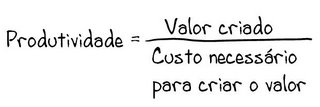
É meter código nisso.
.
"Innovation: Floor Tiles That Can Monitor the Health of the Elderly"
.
Vamos aplicar o teste:
.
Quem são os clientes-alvo?
"hospitals and physical therapists"
.
Que problema estão a resolver?
"evaluates a walker’s health based on footstep patterns. The tile system’s cloud-based analytics can provide health updates via smartphone and assist caretakers for the elderly"
.
É melhor do que a opção analógica?
Aumenta a produtividade dos profissionais de saúde. E, no caso de aplicação em casa, melhora o acompanhamento dos idosos sozinhos... faz-me lembrar a balança e a sanita com código da Caremore.
domingo, março 23, 2014

5 recomendações pós-crise
"In any kind of economic, political, or corporate crisis, it's doubly difficult to resist the urge to fight fires. But the reality is that managing for the short-term never breeds greatness. And doing so has left a lot of companies in a tough spot. They survived the crisis, but they don't have the headroom or resources to fuel long-term growth.
...
Stay true to who you are and resist the urge to chase others
The things that make companies truly great are slow to develop; they can't be built overnight. If they could, they wouldn't be worth very much, because anyone could copy them. The most capable companies know who they are and understand the job they are uniquely qualified to do in the market. They clearly define how they add value to their customers and use their identity to drive growth over the long-term.
...
Don't wait for customers to tell you what they want—influence them
Instead of chasing growth by responding rapidly to what consumers say they want or need, change the game. Proactively create demand by getting out in front, shaping the wants and redefining the needs of your customers.
...
Trade benchmarking and best practices for capabilities
If every company focuses on benchmarking and functional excellence (doing the same things better and better), they'll all end up in the same place—fighting for an ever-smaller share of the same market. Instead, spend your efforts building the handful of distinctive capabilities that your company does better than anyone else.
...
Stop restructuring and put your culture to work
There were a raft of reorganizations during the downturn. All too often, a reorg is really a backdoor attempt to solve a culture problem and reengineer success. Unfortunately, it rarely works because corporate culture is notoriously sticky. Culture always wins when you try to restructure it away or execute strategies that run against it. Instead of fighting your culture, leverage what's great about it and the unique way you get work done and create value for your customers.[Moi ici: A lição de Lincoln]
...
Invest no matter what—but funnel money where it matters most
Companies make three classic mistakes in their investments. They relentlessly take out costs across the board to improve profitability. They dilute their investment dollars by making bets on dozens of new projects, hoping that one will win. Or they stop investing completely when times get tough. None of these work. The approach that really pays off is to surgically and strategically cut costs. And then redirect money to invest more in the core capabilities that drive your profits. This allows you to cut costs and grow stronger at the same time."
Trechos retirados de "Booz & Company CEO: You survived the financial crisis. Now what?"
A propósito do "é meter código nisso"
A propósito da série e do desafio de "meter código nisso"
"Who is my growth customer?.Trechos retirados de "Do People Really Want Smarter Toothbrushes?"
As basic as it sounds, the first step in understanding customer needs is identifying your real customer. Although attracting early adopters is essential for early success and encouraging virality, growth customers - the people who are likely to buy the next generation of products - are crucial for building a sustainable business.
...
What problem am I actually solving?.
With the growth customer identified, the next step is to develop a strong understanding of the problem to solve, especially through exploratory research with potential users. Traditionally, designers have promoted ethnographic approaches with extreme users, while Lean Startup practitioners advocate for just “getting out of the building.” In either case, the general logic is the same: go talk to some real people. Understanding which problem is especially important in IoT: as advances are made in computing power, battery life, and network infrastructure over time, the problem a company is focused on solving provides a North Star for evolving the product roadmap and the overarching business, too.
...
How is this better than analog?.
Through sensors and the cloud, connected devices allow companies to build experiences that have a richer interaction and more meaningful connection with the customer, his or her devices, and the environment around them. But that direct relationship requires the voluntary exchange of personal data and some loss of anonymity – and the benefit of that exchange in value must be clear to users."
sábado, março 22, 2014
Guião para um político da oposição
"Porque sou o cavaleiro andante
Que mora no teu livro de aventuras
Podes vir chorar no meu peito
As mágoas e as desventuras
...
Porque sou o que chega e conta
Mentiras que te fazem feliz
E tu vibras com histórias
De viagens que eu nunca fiz"
Trechos retirados de "Cavaleiro andante" de Rui Veloso.
É mais fácil dizer que a culpa é dos alemães
"a team from the Organisation of Economic Cooperation and Development identified last year, as part of an 11-month investigation commissioned by the Greek government. In its report the OECD made 329 recommendations for rules that should be changed to open up competition and give a much-needed boost to the economy.
.
Quantifying the cost of these restrictions is a difficult task, but in 66 cases, the international experts did figure out a way to do so. Eliminating them would lead to a positive effect on the Greek economy of 5.2 billion euros, or just over $7 billion, they calculated.
...
In many European nations, a similar patchwork of rules limit competition, protect existing monopolies or otherwise restrict businesses for sometimes archaic reasons. [Moi ici: Realmente, aquela lista de constrangimentos absurdos... parece-me ter reconhecido alguns que se praticam por cá]
...
Even by European standards, Greece stands out as having especially tangled regulation and glaring inefficiencies.
...
But changing that state of affairs is controversial. Many argue that tradition is more than just a question of economics, but a way of life. ... On March 10, the Panhellenic Pharmacists’ Union began a two-day strike to protest the plan to allow supermarkets to sell aspirin and some other drugs, holding up placards in central Athens reading “health is a human right.” Among their arguments: consumers may unwittingly overdose if drugs become easier to purchase.
A Grécia era a Terra Prometida das corporações, sindicatos, estadinho e crony capitalismo
Trechos retirados de "Why regulation — on yogurt and more — is blocking Greece’s recovery"
Forças anti-Mongo
Se na América que, apesar de ser cada vez mais socialista, ainda é a América, existem estas forças anti-Mongo "The Fight Over Tesla Shows How Little Value Dealerships Add", como será na Europa e em Portugal, onde tudo se faz de forma mais camuflada.
Um nicho, um target, um produto
"Da empresa têxtil tradicional ficou-lhe apenas o nome herdado de 1974, quando António Ferreira abriu a fábrica e lhe deu o nome das duas filhas: Sónia e Carla. Hoje, a fábrica de Vila Nova de Famalicão nem parece uma empresa têxtil tal é a tecnologia envolvida. Especializada no nicho de vestuário sem costuras (que tem o nome técnico de 'seamless') tem nos desportistas o seu target.A Sonicarla só vende para atletas de alta competição?
.
"Tudo começou em 2010 'quando a tecnologia do têxtil sem costuras vocacionada para roupa interior [Moi ici: Reconversão de uma economia é isto multiplicado por muitas decisões individuais. Em vez de continuar a torrar dinheiro num modelo de negócio que ficou obsoleto, mudar de produto, de proposta de valor, de clientes-alvo, de marketing, de orientação estratégica] foi comprada conjuntamente com o nome à antiga Malhas Sonicarla. Iniciou-se de imediato a reconversão tecnológica para a actual vocação, a produção de têxteis de elevada tecnicidade", conta Pedro Silva."
Julgo que não. Se calhar os atletas de alta competição nem compram os artigos da Sonicarla.
Os atletas da alta competição são influenciadores dos utilizadores que compram Sonicarla.
Recordar o recente:
""But if I aim at one type of customer, won't I miss some of the people who would make really good customers?" The answer to that is, "Yes, but."Durante quase dois anos fazia diariamente a viagem do Porto para Guimarães numa camioneta da empresa onde trabalhava. Lembro-me de parar em Joane, onde entrava e saia gente, consoante a direcção da viagem. Do outro lado da estrada ficava Mogege onde se situava a Sonicarla. Recordo que era uma fábrica com alguma dimensão, até chegou a estar registada no EMAS, o que dá muito mais trabalho do que ser certificado ISO 14001. Por isso, este trecho:
.
It's almost a paradox, but if you do a good job of target marketing – aiming at the center of the target – you're likely to attract more good customers, not less."
"Desde então, a pequena fábrica que dava emprego a apenas duas pessoas passou para os actuais 131 trabalhadores."Desperta-me a curiosidade, o que terá acontecido para, em 2010, estarem reduzidos a duas pessoas?
.
Entretanto, enquanto os media falavam de crise, de recessão, de austeridade, de ser impossível viver assim... enfim, o choradinho do costume:
"O volume de negócios aumentou 46,6% de 2012 para 2013, tendo passado de 2,8 milhões de euros para 4,1 milhões."Por fim, como podia não sublinhar isto:
"O projecto desenvolveu-se sem qualquer apoio estatal, comunitário ou bancário, apenas apoiado com os cash-flows gerados."
Trechos retirados de "O orgulho de vestir atletas famosos de alta competição"
e, seis meses depois de Agosto de 2013
Evolução do número de desempregados inscritos nos Centros de Emprego entre Janeiro de 2011 e Fevereiro de 2014:


A figura que se segue tira uma fotografia da evolução homóloga do desemprego em Fevereiro de 2014 e, mostra onde está a ser criado emprego líquido (barras negativas):

Em Janeiro de 2013 havia 1 barra negativa, 18 em Outubro, 19 em Novembro, 21 em Dezembro e 24 em Janeiro e Fevereiro de 2014. As ofertas de emprego no IEFP em 2014 aumentaram mais de 72% (58% na comparação homóloga do mês passado) o mês passado em comparação com o mês de Fevereiro de 2013.
.
Situação e oposição são duas equipas que se defrontam constantemente, a economia sustentável deste país é como o árbitro, faz o seu próprio jogo, está noutro campeonato.
.
Interessante... só se fala dos Açores por causa das benesses concedidas aos funcionários do Estado. No entretanto, o desemprego por lá continua a subir.
sexta-feira, março 21, 2014
Diferenciação em função do preço
Eu já sabia isto, há anos que trabalho, falo e escrevo sobre isto. Contudo, creio que este discurso que se segue é tão claro, que acaba por remover algum nevoeiro:
Trechos retirados de "Creating Value Successful business strategies" de Shiv S. Mathur e Alfred Kenyon.
"differentiation can be seen by customers as a distance, as a lack of closeness to substitutes.
...
A more quantifiable way is to see it as the reciprocal of price sensitivity
...
The more differentiated an offering is, the less its sales will depend on customers’ price comparisons.
A highly differentiated offering may appeal to a comparatively narrow group of customers, but those customers will see no close substitute, and will not choose a substitute because it has a slightly or moderately lower price. The price difference would have to be commensurately high to affect their choice.
Price sensitivity measures how sensitive the sales volume of an offering is to marginal changes in price differentials between that offering and its substitutes. It therefore indirectly measures the price consciousness of the customers.
In a limiting case, the degree of differentiation is zero or infinite. Where it is zero, the offerings are homogeneous and the slightest price difference would shift customer choices. Where it is infinite, ... the offerings are not substitutes at all and no price difference would shift choices.
The phenomenon of the discounter illustrates the usefulness of treating differentiation as the reciprocal of price competition."
Trechos retirados de "Creating Value Successful business strategies" de Shiv S. Mathur e Alfred Kenyon.
Apostar nas experiências
"ReD trained a group of adidas design staff in basic techniques, and sent each of them to spend 24 hours with a customer: to have breakfast, run and do yoga with them, and find out what made them exercise. In a related project, an anthropology doctoral student working for ReD mailed dozens of customers a disposable camera, asking them to photograph something that made them work out. Of 30 women who responded, 25 sent a picture of a little black dress, says Mr Carnes. The company had assumed that most customers were training to be good at specific sports; in fact for many, fitness itself was their “sport”."Em vez de apostar em atributos:
"A mobile phone, he said, may have 72 functions, but that is 50 more than most people wanted, or used."Apostar nas experiências, apostar no que a oferta faz na vida das pessoas.
Trecho retirado de "The adidas method"
Comunicar um aumento de preço
Nem de propósito, na sequência de "Custo, preço e valor, qual a relação?" encontro "Prices Going Up? How to Tell Your Customers":
"Whatever your reason--and we’re sure it’s a damn good one--you have to raise your prices. Just don’t share the whole truth with your customers.Agora começar com a história dos custos, para justificar um aumento de preço ... not good
...
1. Tell them what they stand to gain.“Explain the reasons that [the increase will] benefit the customer: added content, additional service, or support,”
...
2. Show your worth.Along similar lines, pricing-strategy expert Rafi Mohammed writes in an HBR Blog Network post: “Make it a point to reinforce that even with the price increase, your product or service is still a great deal.
...
3. Play favorites.In an Inc. column, sales consultant Tom Searcy suggests that it’s important to let your biggest clients and customers know about the increase early to soften the blow. “It’s a mistake to let them get the news through an email or a salesperson,” Searcy writes. “A price increase, even if understandable, is still going to be seen as bad news--so it should be communicated executive to executive, not couriered by frontline people.”
.
4. Be flexible.“No one likes being cornered with a ‘take it or leave it’ ultimatum,” Mohammed writes. “A price increase is more palatable if there is an option to save money. Even if you don’t expect anyone to take the cheaper option, offer it anyway. Consumers appreciate choices.” Mohammed goes on to suggest that offering “silver” or “gold” product packages with increased offerings to the customer may work better than offering an across-the-board price hike."
Preparar o depois de amanhã
Há tempos numa rádio, para animar o nacional-pessimismo, uma jornalista transmitia entrevistas, no pequeno comércio de Penamacor, onde os comerciantes faziam o seu choradinho e, queixavam-se das migrações dos novos e do envelhecimento dos seus clientes para justificar o pouco negócio que tinham. Pena que a senhora não tenha entrevistado os franchisados do Minipreço que abriu há pouco mais de um ano, ou não tenha analisado o impacte do Intermarché de Idanha...
.
Lembrei-me disto ao recordar as montras que apreciei na terça-feira em São João da Madeira, na rua que era o antigo coração da cidade, quando era Estrada Nacional nº 1. As montras tinham ficado congeladas no tempo e ainda apresentavam os mesmos modelos e cores que teriam feito furor em 1970... as peúgas Lassie, os lenços Poker, as camisas... Na altura perguntei em voz alta:
.
Lembrei-me disto ao recordar as montras que apreciei na terça-feira em São João da Madeira, na rua que era o antigo coração da cidade, quando era Estrada Nacional nº 1. As montras tinham ficado congeladas no tempo e ainda apresentavam os mesmos modelos e cores que teriam feito furor em 1970... as peúgas Lassie, os lenços Poker, as camisas... Na altura perguntei em voz alta:
- Quem é que compra aqui?O Aranha respondeu logo:
- As avós compram aqui as prendas de Natal, ou de aniversário...Entretanto, ontem ao final da tarde, o Aranha mandou-me o link deste artigo "The Strategic Mistake Almost Everybody Makes" e, depois de ler, julgo que está tudo ligado.
"Every business and business model has a finite life. Products come and go. Customer preferences change. As Rita Gunther McGrath notes, competitive advantage is increasingly a transient notion. The companies that last over long periods of time do so by creating new products, services, and business models to replace yesterday’s powerhouses.E a sua PME que opera no B2B, está a preparar o depois de amanhã?
...
Companies need to make sure they balance investment in strengthening today’s business with investment in creating tomorrow’s."
quinta-feira, março 20, 2014
Curiosidade do dia
O @jcaetanodias esteve muito feliz com o título:

A Internacional Jarreta!!!
Interessante esta postura "“Devia ser constitucionalizado um limite à pressão fiscal”" sem uma palavra sobre a constitucionalização de limites à despesa.
Acerca da estratégia (parte II)
Parte I.
"ESCAPING THE TRAPS...
Rule 1: Keep the strategy statement simple. Focus your energy on the key choices that influence revenue decision makers-that is, customers. They will decide to spend their money with your company if your value proposition is superior to your competitors’. Two choices determine success: the where-to-play decision (which specific customers to target) and the how-to-win decision (how to create a compelling value proposition for those customers).
...
Rule 2: Recognise that strategy is not about perfection. As noted, managers unconsciously feel that strategy should achieve the accuracy and predictive power of cost planning – in other words, it should be nearly perfect. But given that strategy is primarily about revenue rather than cost, perfection is an impossible standard. At its very best, therefore, strategy shortens the odds of a company’s bets. Managers must internalise that fact if they are not to be intimidated by the strategy-making process.
...
For that to happen, boards and regulators need to reinforce rather than undermine the notion that strategy involves a bet....
Rule 3: Make the logic explicit. [Moi ici: Mapa da estratégia faz soar a campainha?] The only sure way to improve the hit rate of your strategic choices is to test the logic of your thinking: For your choices to make sense, what do you need to believe about customers, about the evolution of your industry, about competition, about your capabilities?"
Trechos retirados de "The big lie of strategic planning"
não é o que fazem, é o resultado
Ultimamente tenho visto tantas referências ao tema:
Trecho retirado de "We Need To Stop Telling Customers What We Do"
"But your customers don’t want to know what you do. They want to know how you’re going to enable them to do what they want to do."Bem na linha da service-dominant logic, o que um fornecedor oferece é um recurso para que o cliente o integre na sua vida, para experienciar algo procurado e valorizado.
Trecho retirado de "We Need To Stop Telling Customers What We Do"
Os trunfos a funcionar
A propósito de "Ecco reforça produção na Feira e vai contratar mais 300 trabalhadores", recordar "Em vez de domesticar o consumidor, para que não tenha ideias parvas..."
.
Os trunfos a funcionar: proximidade; flexibilidade; rapidez; "made in Portugal"; pessoas competentes
.
Os trunfos a funcionar: proximidade; flexibilidade; rapidez; "made in Portugal"; pessoas competentes
As dimensões da diferenciação (parte I)
É possível distinguir duas dimensões ao longo das quais uma oferta pode ser diferenciada. Podem ter haver com a dimensão do produto ou com a dimensão do suporte. Os atributos que os clientes vêem como a forma como o fornecedor os ajuda a escolher, obter e usar uma oferta, constituem a diferenciação pelo suporte. Todos os outros atributos que os clientes vêem como diferenciadores podem ser tratados como diferenciação pelo produto.
.
A diferenciação é uma questão de grau. Em cada uma destas duas dimensões, suporte e produto, podemos seleccionar um grau maior ou menor de diferenciação. O que nos dá quatro situações-base de estratégias competitivas:

Trechos baseados em "Creating Value Successful business strategies" de Shiv S. Mathur e Alfred Kenyon.
"even the most common, even the most ‘commoditized’ offerings like paperclips can be differentiated in the support dimension, and command a price premium in a smaller, less competitive private market."Nem sempre os empresários estão a despertos para a dimensão do suporte...
.
A diferenciação é uma questão de grau. Em cada uma destas duas dimensões, suporte e produto, podemos seleccionar um grau maior ou menor de diferenciação. O que nos dá quatro situações-base de estratégias competitivas:
Trechos baseados em "Creating Value Successful business strategies" de Shiv S. Mathur e Alfred Kenyon.
E a sua empresa, também tenta impingir peixe podre?
A imagem metafórica que Seth Godin usa neste texto "The rotten fish problem" é tão comum...
.
Por que é que um empresário não se livra do peixe pouco fresco ou mesmo podre?
.
Já o escrevi aqui várias vezes. Por exemplo, por vergonha! Livrar-se do peixe pouco fresco significa prestar menos serviços ou vender menos serviços, significa reduzir a dimensão da empresa, para que esta se concentre nas actividades lucrativas e não na quota de mercado que faz perder retorno, recordar a curva de Stobachoff.
.
Há dias almoçava com alguém que só quando a sua empresa ficou com menos de um terço da dimensão que tinha em 2010, pressionado pelas circunstâncias, é que começou a livrar-se de serviços que prestava e com os quais perdia dinheiro.
.
Desde 2010 que fazia orelhas moucas aos avisos dos seus colaboradores e, só perante uma situação de "burning platform" é que cedeu.
quarta-feira, março 19, 2014
Curiosidade do dia
Já vejo o filme do próximo governo PS:
"Apesar de ter discordado [do Governo PSD/CDS-PP], o tempo passou e houve uma decisão que agora não deve ser alterada", disseJosé Sócrates,António José Seguro, [colocar aqui nome de peão do Coiso] voltando a invocar a importância de Portugal ter "estabilidade no seu sistema fiscal".
Os anti-Muhammad Saeed al-Sahhaf
Eheheh "Carlos Silva: Situação de Portugal não tem melhoras"
.
Entretanto:
.
Entretanto:
"Em Portugal, o indicador de clima económico prolongou em fevereiro o perfil ascendente observado desde o início de 2013, fixando o valor mais elevado desde novembro de 2010. O indicador de atividade económica voltou a aumentar em janeiro. A informação proveniente dos Indicadores de Curto Prazo (ICP) revelou, em janeiro, uma diminuição homóloga menos intensa da atividade económica nos serviços e na construção e obras públicas e um ligeiro aumento da produção na indústria. O indicador quantitativo do consumo privado aumentou de forma ténue em janeiro, refletindo a aceleração da componente de consumo duradouro."Os anti-Muhammad Saeed al-Sahhaf não percebem que o exagero na propaganda é contra-producente?
Subscrever:
Mensagens (Atom)
%2006.21.jpeg)