sábado, setembro 11, 2010

Sonho de um optimista ingénuo (parte II)

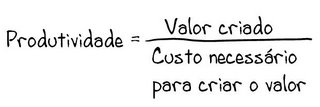
“Overwhelmingly, the cost that firms have in mind when they locate production abroad, or contract out to foreign manufacturers, is labor.

Most people believe that trade and foreign direct investment directly translate into a competition between the high-wage workers of the already developed countries and the low-wage workers of poor countries. They think wages of the well-paid workers of the West will sink when goods and services similar to the ones they produce – or the components of these products – can be made at lesser cost abroad, imported, and sold at lower price.

Managers … They reason that whenever they can relocate an activity currently carried out in a high-wage country to a low-wage country, they reduce their costs.

reducing labor costs was almost always high on the list of motivations; sometimes it was the only rationale for the move.

But what matters in the bottom line is not wage rates but unit labor costs.

But there’s yet another reason all garment manufacturing will not move to China: Fast deliveries and replenishment are services that still command a highprice in well-to-do societies. People are willing to pay for having the latest best thing now, not a month from now. This factor privileges production in high-wage economies with large numbers of affluent consumers.

The Italian and the German examples show, although in very different ways, that survival and prosperity are real possibilities, even for textiles and garments. Even though the industry is declining rapidly in most of Europe, in countries like Italy employment levels are quite stable, with good jobs and profits."
.
Continua.
.
Trechos retirados de "How We Compete" de Suzanne Berger

Dá que pensar... a sério

É impressionante...
.
Li recentemente Linchpin de Seth Godin, ouvi recentemente Tribes do mesmo autor, ando a ler The Power of Pull de Hagel e outros.
.
Todos estes autores escrevem sobre pessoas e a economia do futuro, todos eles escrevem, ainda que indirectamente, sobre o fim das empresas como as concebemos ainda hoje, todos eles escrevem sobre novas relações entre criadores, produtores e compradores e, sobretudo, sobre as novas relações que existirão entre quem vai constituir as entidades futuras, as task-forces, de criadores e produtores.
.
Há momentos o cirandar pela net levou-me a esta citação:
.
"This, I believe, is what separates the new networked thinking from industrial era doctrine. Peter Drucker said "In the knowledge economy all staff are volunteers, but our managers are trained to manage conscripts". Dan Pink pointed out that 'management' is an invented technology from the 1850s, and that "management leads to compliance, but only self-direction leads to engagement". "
.
E páro... e recordo o que li ontem em "Complexity and Management":
.
"A complex adaptive system consists of a large number of agents, each of which behaves according to its own principles of local interaction. No individual agent, or group of agents, determines the patterns of behavior that the system as a whole displays, or how those patterns evolve, and neither does anything outside of the system. Here self-organization means agents interacting locally according to their own principles, or “intentions,” in the absence of an overall blueprint for the system.
...
Kauffman’s ... shows how the dynamics of a self-organizing network consisting of a number (N) of entities is determined by the number (K) and strength (P) of the connections between these entities.
...
Kauffman is developing a notion of formative causality in which numbers and strengths of connection between entities in a system cause the patterns of behavior of that system. The patterns of behavior are not, initially anyway, caused by chance and competitive selection, on the one hand, or by an agent’s choice, on the other. No agent within the system is choosing the pattern of behavior across the system and neither is Kauffman, the simulator. Instead, that pattern emerges in the interaction between the agents, neither by chance nor by choice, but through the capacity to produce coherence that is intrinsic to interaction itself.
If this notion of causality were to apply to human organizations, its implications would be profound because it would mean that organizational change, strategic direction, is caused neither by chance nor by the choices of managers, but by the nature of interaction, relationship or cooperation between people in that organization. If one thinks along these lines, it immediately leads one to ask what managers are doing when they think they are choosing and planning their organization’s future. The notion that managers can choose what happens to their organization as a whole is so deeply ingrained that it leads to a typical response. The response is to argue that if managers cannot choose a creative outcome because it is radically unpredictable, then at least they can choose those numbers and strengths of connections, those qualities of relationship that produce the dynamics at the edge of chaos where creative change is possible. However, this misses the whole point because no agent within the system is choosing the numbers and strengths of connections for other agents in the system, or for themselves either; even if they were, this is not enough to determine the dynamic"
.

sexta-feira, setembro 10, 2010

Sonho de um optimista ingénuo (parte I)

.
Minuto 3:34 - 3: 46
.
Continua.

Notícias que merecem pouca reflexão

Esta notícia merecia mais reflexão "Falências subiram na Alemanha apesar da retoma".
.
Não se pode ignorar o buzz todo em torno do sucesso recente da economia alemã... e, no entanto, as falências subiram!!!
.
Isto faz-me recordar o que li ontem de Prigogine, ao nível macro temos um copo cheio de água e a água não se move está quieta, estável, estagnada. No entanto, ao nível micro, é um festival de movimentação.
.
Será que estas falências são sintomas de uma reconversão da economia?
.
Há bocado, já não sei como, encontrei esta pérola "Para produtores em tempos difíceis, virtude é não estar no meio"... no news por aqui: stuck-in-the-middle; polarização dos mercados, o colapso do mercado do meio-termo.
.
As falências são necessárias numa economia saudável... o problema é quando os recursos libertados numa falência não são desviados para outras tentativas. E só são desviados quando as pessoas acreditam que o Estado é uma pessoa de bem.

Temos de competir como um país de moeda forte

A propósito de "Burocracia e rigidez laboral tornam Portugal menos competitivo".
.
Estes rankings têm o seu mérito certamente, não ponho em dúvida.
.
O que me aborrece são as interpretações que os media fazem deles... fazem-me lembrar um jovem recém-licenciado que entra no mercado de trabalho cheio de respostas, cheio de certezas, não tem dúvidas, aprendeu tudo, então não acabou de sair de um templo do saber!
.
Passados 20 anos aprendeu muito mais, sabe muito e está carregado de dúvidas...
.
É só a burocracia e rigidez laboral?
.
E vale a pena comparar-mo-nos com a Albânia ou a Guatemala?
.
Somos um país prisioneiro de uma moeda forte, temos de competir como um país de moeda forte, tudo o que fuja disto é uma ilusão não sustentada.
.
Os números da Alemanha, no ano passado, colocavam-na ao nível de Portugal relativamente à rigidez laboral:
.
"The most problematic factors for doing business
  • Alemanha - Restrictive labor regulations - 19,6
  • Portugal - Restrictive labor regulations - 19,3"

'The chaos zone'

Continuando a minha leitura do livro "Complexity and Management" encontrei, ontem de manhã, um texto que fez acender umas luzes e me chamou a atenção para a importância do alinhamento das pessoas:
.
"The possibility of the evolution of novelty depends critically on the presence of microscopic diversity. When individual entities are the same – that is, when they do not have any incentive to alter their strategies for interacting with each other – the model displays stability. When individual entities are different (Moi ici: aqui estou a pensar em culturas diferentes, em visões diferentes, em prioridades diferentes) and thus do have incentives to change their strategies of interaction with each other, the model displays rapid change of a genuinely novel kind. The “openness” of the individual entities to the possible, through some “error-making” or search process, leads to a continuing dialogue between novel individual “experiments” and (almost certainly) unanticipated collective effects. Since this kind of possibility will out-compete an equivalent system without it, the process might be described as an “evolutionary
drive.”"
.
Entretanto à noite no twitter alguém escreveu: "Understanding organizations as ongoing processes of communication"
.
Se as pessoas são diferentes uma organização pode colapsar por causa do excesso de variabilidade.
.
Se as pessoas são iguais uma organização pode anquilosar por falta de renovação.
.
Se as pessoas são diferentes mas existe uma comunhão entre elas, uma organização pode aproveitar as diferenças para se renovar e progredir.
.
Como está na coluna de citações ao lado: "If an organisation is too stable it can ossify, but if it is too unstable it can disintegrate. Successful organisations work between these two conditions or states, in what Stacey called ‘the chaos zone’."

Fazer escolhas claras!!!

Parte I.
.
Volto ao artigo da revista Business Strategy Review, publicado em 1999, da autoria de Constantinos Markides, intitulado "Six Principles of Breakthrough Strategy" para enfatizar uma característica das boas estratégias: a clareza:
.
"Strategy Involves Making Clear Choices
Having developed a long list of strategic options, the firm has to decide what to actually do. This means that every idea needs to be evaluated and choices made on what to pursue and what not to pursue.
.
Choosing is difficult. At the time of choosing nobody knows for sure whether a particular idea will work nor does anybody know if the choices made are really the most appropriate ones. One could reduce the uncertainty at this stage either by evaluating each idea in a rigorous way or by experimenting with the idea in a limited way to see if it works or not. However, it is crucial to understand that uncertainty can be reduced but not eliminated. No matter how much experimentation we carry out and no matter how much thinking goes into it, the time will come when the firm must decide one way or another. Choices have to be made and these choices may turn out to be wrong. Lack of certainty is no excuse for indecision.
.
Not only must the firm choose what to do but it must also make clear what it will not do. The worst strategic mistake possible is to choose something but also "keep our options open" by doing other things as well." (Moi ici: receita para acabar atolado no pântano da indefinição do meio-termo)
...
"Organizations which say one thing and then do another are those that have failed to make clear choices on what they will do and what they will not do with their strategy."
.
Escolher, cortar, deixar de fora, focar, concentrar... tão difícil!
.
Por isso é que as crises extremas, as burning-platforms, precipitam as situações e obrigam a tomar decisões com um sentido de urgência.

quinta-feira, setembro 09, 2010

Se eu conseguisse influenciar uma escola

Faria pressão para criar uma disciplina, a partir do 10º ano de escolaridade, que se dedicasse a divulgar as ideias de Seth Godin no livro Linchpin.

A estabilidade podre em que vivemos e a que nos habituamos é uma ilusão

Se não vivêssemos numa sociedade anestesiada o dia de ontem devia ter sido o dia da revolta de quem não recebe o salário do Estado. Foi um carrocel de emoções:
.
A estabilidade podre em que vivemos e a que nos habituamos é uma ilusão, por debaixo da superfície a corrosão vai-se desenvolvendo, invisível para a maioria.
.
O Presidente da Republica preza mais a estabilidade ilusória, tal como o gerente de uma PME condenada a médio prazo, porque não arrisca a mudança. Assim, a situação em que vamos vivendo vai-se tornar cada vez mais irrespirável, para quem cria riqueza neste país, até que um dia a implosão do sistema vai ser uma inevitabilidade. Se calhar, já passamos esse ponto-limite e aproximamos-nos de uma singularidade, do caos.
.
A implosão vai abater a maior parte da resistência ao necessário "reset" e permitir repensar um novo regime mais adequado à capacidade de riqueza gerada pelo país.
.
Qual o risco?
.
Num ponto de singularidade não é possível prever o que vai suceder a seguir. O risco é tudo isto descambar para uma situação de violência.
.
Talvez tenhamos de aprender com os checos e eslovacos, ou com os polacos, ou com os húngaros, como é que se faz uma mudança de regime sem derramar sangue.
.
Esta rota que seguimos, como já alguém disse, vai levar-nos seguramente em direcção a uma parede contra a qual chocaremos com estrondo. E basta ler Joaquim Aguiar para perceber que a Grande Recessão apenas acelerou o que já estava escrito nas estrelas.

Saltar do disco do HOW, HOW, HOW, HOW.

A revista Business Strategy Review publicou em 1999 um artigo Constantinos Markides intitulado "Six Principles of Breakthrough Strategy".
.
O artigo é muito interessante. Destaco, numa primeira parte:
.
"In every industry, there are several viable positions that companies can occupy. The essence of strategy is, therefore, to choose the one position that our company will claim as its own. A strategic position is simply the" sum of the answers that a company gives to the questions:
  • WHO should I target as customers?
  • WHAT products or services should I offer them?
  • HOW should I do this in an efficient way?
Strategy is about making tough choices on these three dimensions: the customers we will focus on and those we will consciously not target; the products we will offer and the ones we will not offer; the activities we will perform and the ones we will not perform." (Moi ici: escolher o que fazer e o que não fazer. Matar filhos, produtos ou serviços tornados obsoletos, é quase blasfémia. Como desenhou Seth Godin, o attachement cega).
.
"Strategy is all about choosing and a company will be successful only if it chooses a distinctive (ie different from competitors') strategic position. Sure, it may be impossible to come up with answers which are 100% different from the answers of our competitors but the ambition should be to create as much differentiation as possible whilst satisfyng your chosen customers' needs.
.
The "WHO-WHAT-HOW" decisions set the parameters within which the company will operate. At the same time, they also define the terrain for which the company will not fight: the customers it will not pursue, the investments it will not make, the competitors it will not respond to. As a result, these decisions are painful to make and are often preceded by internal arguments, disagreements and politicking. But unless a decision is taken, the company will find itself spreading its resources too widely with no clear focus or direction." (Moi ici: De acordo com tudo isto, só acrescentaria outra questão, anterior às outras: Qual é o nosso negócio? Ou, seja, ter em conta a primeira lei que Tony Hsieh aprendeu com o poker "Table selection is the most important decision you can make. It’s okay to switch tables if you discover it’s too hard to win at your table. If there are too many competitors (some irrational or inexperienced), even if you’re the best it’s a lot harder to win.")
.
"Most managers have a strong bias towards the "HOW" question (Moi ici: Atenção a este ponto muito importante). Either because they do not think the "WHO" and the "WHAT" choices are real strategic choices or because they think that, once decided, these choices should never be revisited, most managers spend little time on the "WHO" or "WHAT" questions (Moi ici: como refere David Birnbaum "We in the garment industry — both the factory suppliers and the importer/retailer buyers — none of us like strategies. We are very good at tactics. We are masters at dealing with crisis. But long-term strategies are simply not our thing.").
.
BUT EXPERIENCE SHOWS THAT MOST BREAKTHROUGHS IN STRATEGY OCCUR NOT SO MUCH WHEN THE "HOW" IS QUESTIONED BUT WHEN THE "WHO-WHAT" CHOICES ARE CHALLENGED.
...
Usually, strategic innovation takes place when companies question and chalenge the answers they gave, often a long time ago in their history, to the "WHO-WHAT" questions."
.
Saltar do disco do HOW, HOW, HOW, HOW... para o pôr o jogo em causa e virar a mesa é tão difícil.
.
Cada vez percebo melhor este título e a ideia subjacente ao livro "Hero with a Thousand Faces" de Joseph Campbell... calçado, têxtil, mobiliário, maquinaria, medicamentos,... à primeira vista parecem histórias diferentes, heróis diferentes, mas depois de alguma análise, começamos a perceber que há um arquétipo por trás disto tudo. Steven Blank tem razão!!!

quarta-feira, setembro 08, 2010

Diamantes por lapidar

Ainda descubro neste país diamantes por lapidar, PMEs industriais que estão a exportar e que fervilham de "inquietude" que, na boa tradição portuguesa do comerciante que calça os sapatos do cliente, se traduz numa busca contínua de melhoria das soluções, se traduz numa atenção, num viver o problema do cliente...

Quando se acredita que o futuro é uma continuação do passado

Quando se acredita que o futuro é uma continuação do passado, fazem-se afirmações deste tipo:
.
.
.
.
.
.
O que previu Malthus?
.
O que previu o Clube de Roma?
.
.
Há quantos anos é que o petróleo se ia esgotar?
.
.
Há quantos anos é que os alimentos se iam esgotar?

"preso por ter cão e por não ter"

Consigo perceber o argumento de Martin Wolf "Germans are wrong: the eurozone is good for them".
.
No entanto, julgo que a Alemanha se encontra na posição de "preso por ter cão e por não ter".
.
Hermann Simon retrata um país competitivo, não, não escreve sobre a VW ou a Siemens, para o qual o custo não é assim tão relevante.

Há alternativas

Interessados no desafio de competir no mundo de hoje e triunfar, apesar dos mega-concorrentes no preço ou nos custos, devem procurar ler "How We Compete" escrito por uma equipa do MIT liderada por Suzanne Berger.
.
O livro tem a grande vantagem de partir da micro-economia, do contacto com empresas reais, com pessoas concretas, para relatar histórias de sucesso sobre como competir com a Ásia.
.
Um must!
.
Para competir é preciso ter uma estratégia, sem estratégia corre-se o risco de se ser um prato numa prova de tiro aos pratos. Por isso, esta apresentação faz crescer água na boca:
.
"We in the garment industry — both the factory suppliers and the importer/retailer buyers — none of us like strategies. We are very good at tactics. We are masters at dealing with crisis. But long-term strategies are simply not our thing. At best, strategic thinking in our industry is a last resort. At worst, it occurs only afterwards.
We all had ten years to create viable strategies to meet the challenges of the quota phase-out. We all knew the actual date that quotas would disappear on December 31, 2004. We all knew that the end of quota would bring the greatest change in the history of the global garment industry. Yet on January 1, 2005, we were all taken by surprise, unprepared." (Moi ici: Aqui os caviares dirão, a culpa é dos empresários portugueses que são ignorantes, temos de lhes expropriara as fábricas)
.
"Tactics provide short-term incremental change. Strategies provide something new. There is a difference between faster production or higher productivity and speed-to-market, just as there is a difference between reduced prices (whether FOB, DDP, wholesale or retail) and lower costs. Faster production and reduced prices are the result of applying successful tactics. Speed-to-market and lower costs are strategic.
This concentration on the short term traps us in the world of competition, where local factories vie against other local factories for increased orders, and where regional and national retailers vie against other regional and national retailers for a greater share of the consumer market."
...
"Again this is not a case of something better. It is about something different. This is all about strategy. Tactics is about competition — winning the game against your competitors. Strategy is about excellence. And, if excellence is a game, there is only one player — you."

Financiar as infraestruturas adequadas à economia do século XX

O livro "The Power of Pull", a certa altura altura refere a obra de Carlota Perez "Technological Revolutions and Financial Capital: The Dynamics of Bubbles and Golden Ages".
.
"she examines the patterns associated with the deployment of new technologies in society - including the steam engine, electricity, and automobiles - Carlota Perez outlines three phases of change that must occur.
.
First, there is the innovation of the technological building blocks themselves. Second, the innovation causes a society to engage in a rethinking of the infrastructures required to deliver these new technologies most effectively to everyone.
.
As infrastructures begin to harness the power of the new technology, the third phase of change kicks in. In this phase, the rest of societyworks on discovering the best way to use the new technology in their professional and personal lives.
...
In the twentieth century, the Great Depression ended up being a key catalyst for change.
...

The twentieth-century firm scaled rapidly as a result of these efforts. ... They were built on the premise that the primary role of the firm was to arrive at lower costs by getting bigger - to make the most of the scale economies available through the new infrastructures of the day, what we call "Scalable efficiency."
.
Thanks to the long reach of the railroad, and, later, contanerized shipping and airfreight, large-scale manufacturing operations could be centralized and concentrated into fewer facilities and deliver lower-cost products on a national and eventually a global scale. The scale of manufacturing operations led inevitably to efforts to build comparable scale in marketing operations: If companies were going to mass-produce products, then they needed mass markets to consume them. The rise of the mass media in the forms of magazines, radio, and television helped to make mass marketing a viable proposition.
.
These push programs proved enormously successful and spread rapidly across the business landscape."
.
Não pude deixar de recordar este trecho quando li acerca disto "Barack Obama anuncia plano de investimentos em infra-estruturas para combater o desemprego nos EUA":
.
"O Presidente norte-americano, Barack Obama, anunciou ontem um ambicioso plano de investimento em infra-estruturas,"
...
"Obama revelou que o programa prevê a recuperação ou construção de 240 mil quilómetros de estradas, a construção ou manutenção de 6400 quilómetros de vias férreas e a reabilitação de 240 quilómetros de pistas em aeroportos, bem como a modernização de todo o sistema de controlo do tráfego aéreo."
.
Não acredito nestes programas para criação de emprego sustentado, mas adiante, o meu ponto aqui é que Obama está a financiar as infraestruturas adequadas à economia do século XX... e nós já estamos, graças a Deus, a abandonar a ditadura da escala, da eficiência, da massa.
.
Quais serão as infraestruturas da economia do século XXI?

terça-feira, setembro 07, 2010

Cassandra

Cassandra, Cassandra. Sei o que sentiste...
.
.
Gostei foi de ouvir a justificação do director do jornal económico do regime à TSF:
.
O risco da dívida portuguesa subiu por que em Nova Iorque se especulou que os bancos europeus esconderam as contas reais durante os testes de stress.
.
Um dia, hei-de recolher dinheiro para eleger uma estátua a homenagear Avoila, Picanço, Sócrates e tantos outros que fizeram o trabalho sujo, mas necessário, de dinamitar o resto do regime. Bem hajam!

Os resultados da inovação estratégica

Marc Sniukas, no seu livro "Reshaping Strategy -Exploring the Content, Process and Context of Strategic Innovation" escreve acerca dos resultados, das consequências da inovação estratégica:
.
"three outcomes of strategic innovation can be identified. Strategic innovation leads to either
  1. new business models (including a new value chain architecture), or
  2. new markets (either by creating new ones or reshaping existing ones), or
  3. increased value for both the customer and the company
or a combination of these three."

Quando penso nas empresas que conheço e que deram a volta, estando a competir com sucesso no mercado de bens transaccionáveis, vejo:
  • que mudaram o seu modelo de negócio, passando a assentar as suas vantagens competitivas noutras actividades e atributos;
  • que mudaram de clientes, passando a trabalhar com clientes mais exigentes; e
  • que passaram a produzir bens ou serviços com um maior valor acrescentado.

Sobre a impossibilidade de prever o futuro e o paradoxo de Zenão (parte I)

Durante o jantar BSC, por momentos, falou-se sobre a impossibilidade de prever o futuro.
.
Eu sei que é impossível prever o futuro.
.
Mas talvez não precisemos de prever o futuro... talvez baste pensar sobre os hipotéticos futuros que podemos vir a ter pela frente, para nos tornarmos mais robustos.
.
Já aqui escrevi várias vezes sobre este cenário de 2008 para o calçado. Cenário que recentemente revisitei por causa do anunciado regresso de clientes que tinham trocado Portugal pela China.
.
Também em tempos, nesta série sobre o paradoxo da estratégia (parte VII, parte VIII, parte IX, e parte X) apresentei um sistema de factores que poderiam ser considerados para equacionar os hipotéticos futuros das escolas públicas e privadas.
.
Hoje, no DN, encontro mais um artigo que era expectável "Fuga de alunos do privado entope escolas públicas". Sublinhei na figura os factores que estão em jogo neste artigo:
Sim, é verdade, não podemos prever o futuro, mas podemos viajar até aos futuros hipotéticos que podemos vir a ter pela frente, para nos prepararmos, para à medida que o vector tempo se desenrola, irmos reconhecendo alguns dos sinais que caracterizam um presente próximo de um dos futuros hipotéticos.
.
Continua

Faz-me espécie

Retirei esta figura do livro “The Execution Premium” de Robert Kaplan e David Norton por que me faz muita espécie.

No meu modelo mental a coisa funciona assim:

Olho para os resultados como consequência de algo que se faz a montante, ou seja:

Gosto da metáfora do diagrama de causa-efeito para explicar onde actuar a montante para ter os resultados pretendidos.

Não gosto de colocar iniciativas, projectos de mudança, nas perspectivas de resultados. Se realizamos uma iniciativa é para mudar uma daquelas causas que contribuem para o efeito e o efeito são os resultados.

Daí que prefira usar:

Voltando à figura do livro de Kaplan e Norton:

.

Se modifico a segmentação dos clientes estou a alterar uma prática de trabalho.

Se passo a fazer uma avaliação da satisfação dos clientes… estou a acrescentar uma nova prática de trabalho.

.

Ou seja, colocaria as iniciativas na perspectiva interna e não na dos clientes.

segunda-feira, setembro 06, 2010

Correlação não é o mesmo que causalidade

Hoje, por masoquismo, fiz questão de ouvir Peres Metelo no seu regresso ao comentário radiofónico na TSF.
.
Ao ouvi-lo, consegui chegar a uma racionalização interpretativa do seu discurso que ainda não tinha alcançado.
.
Peres Metelo, por exemplo aqui: "Investir 3% do PIB em I&D, como a própria UE quer fazer, só que nós partimos de um ponto mais recuado: 1,51% do PIB em I&D em 2008;" e os governos quando, por exemplo, falam sobre os números do investimento público, julgo que confundem causalidade com correlação.
.
Uma boa explicação do tema pode ser encontrada aqui "Cargo Cult Marketers":
.
"Correlation is often confused with causality. It’s an easy trap to fall into, because facts devoid of context can easily create an airtight argument. Anecdotal evidence can be extrapolated to a universal principle. Viola!
.
As Feynman said, “The first principle is that you must not fool yourself – and you are the easiest person to fool.”"
.