terça-feira, julho 13, 2010

Os alemães a prepararem o depois de amanhã

Os alemães não vão em fantasias e ilusionismo.
.
Começam a preparar os cortes de cabelo dos PIIGS "Merkel's Rules for Bankruptcy"

.
Finance Minister Wolfgang Schäuble, in complete agreement with Merkel, said: "We have to think about how, in an extreme situation, member states could become insolvent in an orderly fashion without threatening the euro zone as a whole."
...
"The experts propose a two-step procedure. In describing the goals of this approach, Schäuble says: "Whenever a company files for bankruptcy, the creditors must relinquish a portion of their claims. The same should apply in cases of national bankruptcy." (Moi ici: Acho muito bem, para que da próxima vez que emprestarem pensarem duas vezes)
...
"The reformers expect the plan to have a deterrent effect, both for lenders and borrowers. If banks and private investors must anticipate that they may not recoup all of their investment, they will be more cautious about lending money to certain countries."

...
"But is this feasible? In a situation in which a euro-zone country can no longer service its debts, the government experts propose a "tailored combination of maturity extension and a suitable reduction of the face value or interest rate" of the bonds in question. In other words, creditors receive less money than they are entitled to, and they have to wait longer for it, a process experts refer to as a "haircut."
.
A versão do Público
.
Outra versão.

segunda-feira, julho 12, 2010

Courage is one of the scarcest commodities there is

“Too many firms have made growth and size, rather than differentiation, their strategic priority. Instead of identifying and executing a clear market positioning, many companies and firms have consciously pursued a policy of “If you need it, we can do it!”

“staying focused and true to a strategy has been, and always will be, hard to do.
.
The hunger for volume has meant that many individuals and firms are uncomfortable with (or even shocked by) the notion that, to achieve a distinctive strategy, they will need to turn away work that a major competitor may reasonable want to serve.”

“you can’t get the benefits of a strategy that you don’t implement, and half measures are unlikely to work. Strategy is not about understanding something – or planning to get around to it. It’s about having the courage to make it happen. You can’t let other people, even clients, determine the pace at which you create your distinctiveness.”

Courage is one of the scarcest commodities there is. That’s why it’s a significant source of competitive advantage!
.
Trechos retirados de "Strategy and the Fat Smoker" de David Maister

domingo, julho 11, 2010

Ganhar competitividade reduzindo a complexidade

"A strategy is not just choosing a target market, but actally designing an operation that will consistently deliver the superior client benefits you claim to provide." (Moi ici: O sumo que se encerra nesta frase!!! Quando escolhemos um mercado-alvo, quando escolhemos um tipo de clientes-alvo, se os queremos servir bem, se os queremos servir com vantagem competitiva, temos de transformar a nossa organização numa máquina dedicada, concentrada, alinhada, sintonizada em servir esses clientes-alvo)
.
"Strategy is deciding whose business you are going to turn away" (Moi ici: Assim, se escolhemos um tipo como os clientes-alvo, se transformamos a nossa organização numa máquina dedicada a servi-los bem, transformamos a nossa organização numa máquina pouco competitiva para servir outros tipos de clientes)
.
"As companies keep discovering to their detriment, it is certain business decay if you try to plase all possible market segments. The broader the group of clients to which you try to appeal, or the wider the range of services you try to provide, the less customized your operation can be to each segment within that group.
.
If you never say "no," you will just be one more undifferentiated firm, trying to do a little bit of everything and, as Skinner pointed out, will almost certainly be superb at none of them" (Moi ici: Esta semana tive uma reunião com o gerente de uma pequena empresa cheia, repleta, atolada de trabalho, que já descobriu isto sozinho. Em vez de ter uma empresa que faz tudo e recorrer a subcontratados que não cumprem, que não têm qualidade, que não sabem dizer não... Por que não ter duas empresas: uma para as grandes séries e trabalhos baratos e, outra para a nata. Para uma o preço como factor competitivo (order winner), para outra o preço como factor higiénico (order qualifier) (Terry Hill))
.
Trechos retirados de "Strategy and the Fat Smoker" de David Maister

Os verdelhões, os papa-moscas, os chapins, os ...

... alimentam o cuco até não dar mais.

"90% dos aumentos de impostos entre 1995 e 2008 foi para pagar o aumento da massa salarial na Função Pública" (Medina Carreira no programa Plano Inclinado na SIC-N de ontem)
.
Depois, os cucos ainda se queixam da qualidade da gestão dos verdelhões, chapins e companhia...
.
No entanto, são estas pequenas empresas, anónimas, sem tempo para frequentar os corredores e tapetes do poder, que mantêm este país a funcionar:
.
.
.
ADENDA: Estes chapins trabalham como desalmados para continuar a alimentar o cuco "Teixeira dos Santos mantém tabu sobre congelamentos salariais em 2011"

Simplex

Ontem à noite no programa Plano Inclinado da SIC-N, João Duque referia que tinha lido o CV de todos os ministros do actual governo e tinha constatado que nem um tinha feito parte dos corpos sociais de uma empresa privada.
.
O que é que se aprende quando se trabalha nos dias de hoje numa empresa privada que não vive à custa do Estado? Que não opera no mercado dos bens não transaccionáveis?
.
Uma dessas coisas é a importância de servir os clientes.
Ganhar dinheiro é uma consequência de conseguir satisfazer os clientes de forma sustentada.
.
Uma outra dessas coisas é a importância da rapidez.
Se se é lento, compete-se pelo preço, compete-se pelo que já não é novidade, não se tem grande futuro. Se se é rápido, tem-se uma vantagem competitiva.
.
Para que é que existe o Instituto da Mobilidade e dos Transportes Terrestres? Qual a sua razão de ser? Qual a sua finalidade?
.
.
BTW, onde é que 90 lugares sentados e 40 de pé dão 150?

sábado, julho 10, 2010

Retrato rápido da evolução salarial na Alemanha em 2009

"Des salaires de base légèrement plus dynamiques en Allemagne qu’en France en 2009"
.
.
E ainda vamos descobrir que os custos unitários do trabalho voltaram a baixar...

Não é a mesma coisa

Krugman continua a laborar no erro do costume: gastar não é o mesmo que investir.
.
Gastar gasta-se, no momento em que acaba o dinheiro acaba-se o incentivo para a continuação da tarefa.
.
Investir é diferente, quando se esgota o dinheiro inicial do investimento, se o investimento foi bem feito, já o retorno do mesmo permite manter e fazer crescer o empreendimento.
.
Faz-me lembrar a passagem do triângulo do fogo para o tetraedro do fogo, se não houver reacção em cadeia... não há tetraedro

Vai ser assim

Este é um sintomas do princípio do fim...
.
... do fim deste estado de coisas, do apodrecimento da situação, do fim das ilusões:
.
.

sexta-feira, julho 09, 2010

Cover the Canvas

Ao desenvolver e implementar um sistema de gestão da qualidade não gosto de perder muito tempo com a versão inicial da documentação que descreve o funcionamento dos processos.
.
Não por que não veja valor nesses documentos, mas por que acredito que demasiado investimento à procura da versão inicial ideal retira ímpeto, retira momentum ao projecto. Por outro lado, ao concluir rapidamente a documentação limita-se, traça-se uma fronteira em torno do projecto... até lá, há sempre uma sensação de algo incerto, algo difuso, não se conhece onde acaba o trabalho. Por outro lado, assim que acaba a cartografia rápida, podem-se iniciar as auditorias no terreno e, a partir daí, aparecerão sucessivas versões mais completas, mais adequadas.
.
Ontem, deparei com este texto que explica a metodologia que sigo de forma muito mais clara "Cover the Canvas":
.
"Why Cover the Canvas works

The genius of this conception is twofold. First, we discover that the strongpoints we’ve bypassed often melt away by themselves. Second, once we’ve reached our objective, however shakily, the enemy frequently gives up. He can’t believe we’re on his doorstep. He waves the white flag.

Our enemy as artists is Resistance. If we make the mistake in our first draft of playing perfectionist, if we agonize over syntax and take a week to finish Chapter One, by the time we’ve reached Chapter Four, we’ll have hit the wall. Resistance will beat us.

But if we can stay nimble and keep advancing, slapping paint on the canvas and words on the page till we’ve got something that works from east to west and north to south, however imperfectly, then we’re like Mattis’ Marines on the threshold of Baghdad. True, we’ve got plenty more fighting to do, but at least we’re here. We’ve got something we can work with."
.

Bandeira ou algo mais?

O que se pretende com a certificação do sistema de gestão da qualidade de uma organização? Uma bandeira ou algo mais?
.
De vez em quando encontro empresas certificadas com objectivos da qualidade que não passam de treta, são genéricos, infantis e nada têm a ver com o negócio.
.
"2. Auditing quality objectives
Auditors need to verify that the organization’s overall quality objectives have been defined, that they reflect the quality policy, are substantially coherent, aligned and compatible with the overall business objectives, including customer expectations. (Moi ici: Treta, quantas vezes deparo com empresas certificadas e com objectivos da qualidade da treta, objectivos sem qualquer relação com o negócio) If this is not the case, the auditors should further evaluate Top Management commitment to quality. (Moi ici: LOL)
The fulfilment of quality objectives needs to be measurable and documented.
There is no specified way of identifying or documenting quality objectives, as these may appear through business plans, management review outputs, annual budgets, etc. It is up to the auditors to satisfy themselves that the objectives are adequately documented.
The auditors should obtain evidence of the way the quality objectives are suitably cascaded throughout the organization’s structure and processes, linking the general strategic objectives to management objectives and down to specific operational activities. (Moi ici:LOL, brincamos. Até parece que muitos auditores de terceira parte não conhecem estas linhas de orientação)
It is recommended that the documented quality objectives should be examined at the
documentation review stage of the audit.
Before the end of the audit, the auditors have to satisfy themselves that the quality objectives are realistic and relevant, and that the organization has assigned to responsible personnel the resources needed to meet their objectives. Evidence of this should be obtained at all levels of the organization.
Quality objectives are not static and need to be updated in the light of the current business climate and the quest for continual improvement. Auditors should verify that the overall performance of the organization reflects the aims of the quality policy and reasonably meets the quality objectives.
Auditors should keep in mind that the fulfilment of objectives can be measured in a quantitative or qualitative manner. They should also remember that there is a clear link between the dynamic aspects of revising the quality policy and the quality objectives and the commitment of the organization to continual improvement."
.

quinta-feira, julho 08, 2010

A acontecer... será um autêntico day of reckoning

"Legal noose tightens on Europe's monetary union":
.
"Contrary to general belief, Germany’s eurosceptic professors have not abandoned their legal efforts to block the EU rescues for European banks exposed to Greek debt, and since May 7 for banks exposed to debt from Spain, Portugal, and Ireland as well.
.
Should they succeed, of course, the eurozone risks disintegration within days, and perhaps hours. I am not sure that investors in New York, London, Tokyo, Beijing, or indeed Frankfurt quite understand this."
.

Alguém quer fornecer um modelo alternativo que explique estas observações?

Factos:
  • Os salários alemães (parte Ocidental) entre 2002 e 2007 subiram 9%; (daqui)
  • Os custos unitários do trabalho na Alemanha, durante a primeira década do século XXI subiram 20% menos que na Europa do Sul; (daqui)
  • Os preços no produtor, na Alemanha, durante a primeira década do século XXI tiveram esta evolução: (daqui)
  • Exportações alemãs de vento em poupa e desemprego a baixar (daqui)

Entretidos com folhetins nacionais socialistas

Todos contra a Telefónica...
.
Entretanto a dura realidade continua a minar os alicerces onde assenta este estado de coisas:
.
.
.
.

Produtividade e salários ou O jogo do gato e do rato (parte VI)

"Setting aside whether or not such programs would be effective, an implicit assumption is that higher productivity will turn into higher wages. However, although this relationship was once fairly solid -- changes in productivity translated into real wage gains -- it has not held up in recent decades. The growth in wages has lagged behind the growth in productivity:
.
productivity growth is supposed to yield improved economic outcomes via higher real wages. Yet ... labor's share of output has been steadily decreasing since the early 1980s. This downward trend was interrupted by gains evident during the tech bubble of the mid-1990s. Apparently, only during that brief, shining moment of generational technological change did the productivity story work as we believe it should, at least since the early 1980's.
Gains in productivity won't work the wonders described above if they don't translate into gains in real income for the working class. The fact that wages are not keeping up with productivity, something that should happen when markets function well, indicates something is awry in the distribution of gains in the economy. The cause of this is the source of much controversy, and some say nothing is awry at all -- it's just that the "skill premium" has increased substantially causing the distribution of income to become more skewed. But some of the highest rewards for increases in productivity went to people in the financial industry, and we know now that those productivity gains weren't really there -- the rewards were based on an illusion rather than something real. And I don't think the change in the skill premium is the whole story in any case. The reduction in the ability of labor to bargain on an equal footing with employers due to the decline in unions and other forces also played an important role in holding down real wages in recent decades." (daqui)
.
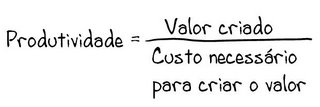
Voltemos à figura:
Antigamente, o aumento da produtividade acontecia sobretudo à custa da diminuição dos custos, do aumento da eficiência. No entanto, nesse tempo, não só a concorrência não era tão forte e tão omnipresente, como a globalização não tinha chegado aos Low-Cost-Manufacturing-Countries (LCMC). Assim, nesses tempos, os ganhos de produtividade podiam ser distribuídos entre o capital e o trabalho de forma mais equitativa.
.
Ainda, nesses tempos, como se pode aprender no livro "The Lords of Strategy" de Walter Kiechel III o mundo competitivo era muito mais infantil, mais naíve e carregado de mistério (na linha do que Roger Martin define no seu livro "The Design of Business")
Hoje, o que antes era um mistério, foi traduzido, e transformado em linhas de código de um qualquer algoritmo.
.
Assim, hoje, perante um excesso de capacidade produtiva e perante a inexistência de mistérios, é a própria sobrevivência das empresas que é posta em causa ao canalizar as magras e raquíticas décimas de ponto percentual de aumento da produtividade para salários. Basta atentar nesta série recente "O jogo do gato e do rato" (especial a parte IV e a parte I, com a tirada do ministro TdS.)
.
Voltando à primeira figura deste postal... quem me conhece já sabe qual a receita que proponho para vencer este paradoxo... fujam da guerra dos custos que só vos levará à anorexia da Red Queen.
.
Só a concentração na criação de valor, só a concentração no numerador da equação da produtividade permitirá compensar melhor os trabalhadores, sem pôr em causa a competitividade das empresas.

Começar pelo fim!!!

Há muito que defendo neste blogue o começar pelo fim, o começar pelo ponto de chegada. O que fazemos é instrumental, é o que nos faz chegar ao porto ambicionado. Por isso, já escrevemos, por exemplo: "Formação de auditores que começa pelo fim"; "Mais uma vez - Começar pelo fim é precioso!"; e sobretudo "Mais uma vez e sempre: Começar pelo fim!!!".
.
Mais uma achega para defesa desta abordagem "Start At The End":
.
"I’ve just finished a really interesting book, The Sinai Campaign by Moshe Dayan, the great Israeli general. Dayan, facing the Egyptian army in 1956, did the same thing Stallone did. He worked backwards from the end. He figured out what the Israeli Defense Forces needed to accomplish, politically as well as militarily, to extricate themselves from a dangerous situation (Egyptian terrorism, a blockade of the straits of Tiran, etc.) Then he figured out what actions were necessary to get to that place.

Another way to look at this principle is to think of it in terms of leadership. What service does a leader perform? A leader defines the goal. (In writing terms, he figures out the climax of the story; in biz terms, he articulates where the organization wants to go.) Then he turns to his colleagues and says, “Okay, ladies and gentlemen, figure out how to get us there.”

For us, as artists and entrepreneurs, we have to be the leader and the working stiffs. Part of us has to define the goal–what’s the finish? what’s the climax? where do we want this train to end up? The other part has to figure out what specific actions we need to take to get us there.

I’m not saying Start At The End is the only way to do this. But it’s a sound principle that applies across a whole range of disciplines. Work back-to-front. It works."
.
Para quem nunca experimentou, um conselho: Tentem!!!

E o que tem sido a economia portuguesa favorecida pelo centralismo dos governos?

"But let's be honest here. Nothing is being stimulated. All that's happening is that the government is taking over more and more of the economy, so as to keep more and more of it "moving" by centralized dictat. If that's the goal, then so be it, but to think that somehow demand is magically being created is silly."
.
"Let's Be Honest About What "Stimulated Demand" Really Means"

quarta-feira, julho 07, 2010

Este polvo chamado Paul

É uma metáfora muito boa para usar nas empresas que 'inventam' demasiado criando relações de causa-efeito mirabolantes, só para justificar o injustificável.

Por que a abordagem por processos é fundamental

"No one diet idea is free of flaws or drawbacks. The best diet for you is the one you will stick to.
.
Your firm needs to debate the following questions if you really want to pursue this or any other strategic goal:
  • Which “diet,” if integrated into the normal running of the firm, would actually get us to perform at the level required to achieve the benefits we seek?
  • Which would we be prepared to adopt as a central part of our regular lifestyle?
  • If we don’t like any of these diets, can we think of another that will have as much force as these, but that we could live with more easily?
If there is no specific diet that all your people can agree to follow, then you must conclude that you are not really willing or able to pursue that strategic goal.

If all business improvement is like curing a fat smoker or helping an alcoholic recover, then what actually motivates people and organizations to change?
.
We all know the main thing that works: a major crisis! (Moi ici: A velha burning platform... a grande criador do sentido de urgência)

A major source of failure in implementing sensible business strategies is that we underestimate how much effort is truly required to bring about significant improvement. Individuals and organizations frequently fail to incorporate the new activities into their dayli lives. Strategic actions are viewed as special, separate events rather than regular business activities. In other words, there’s real life, and then there’s the diet. (Moi ici: As acções estratégicas, as iniciativas estratégicas, são projectos, são transientes, são eventos especiais. É fundamental incorporar, embeber, as mudanças trazidas pelas iniciativas naquilo que é permanente, naquilo que é a rotina, nos processos. Ou seja, a abordagem por processos.)
.
Viewed that way, all improvement programs are doomed to failure. As my trainer has pointed out, you don’t really get the sustained benefits of exercise until it has become as routine and is as natural as brushing your teeth and taking a shower each day.
.
Anything less than that will jeopardize any short-term gains you may obtain with bursts of activity. It’s about routines, not special events."
.
BTW, sempre que os governos falam de austeridade e PECs é possível visualizar mudanças nos hábitos e nos comportamentos? Ou não são antes suspensões temporárias do regabofe, ou não são antes um "suster a respiração" por momentos até que se possa voltar a respirar em força.
.
Eheheh... a densidade, o substrato de quem gere este país é tão superficial como a camada de húmus no deserto do Saara. Há um ano os líderes de Banco de Portugal queriam aumentar-se em 5%... lembram-se?
Trecho retirado de "Strategy and the Fat Smoker" de David Maister

Jorge Sampaio é um aprendiz de ilusionista

Tem medo do desemprego que quer minorar, apoiando as empresas existentes em dificuldades, a manutenção do nível de investimento (eufemismo usado por políticos para gastos sem retorno positivo). Em simultâneo, quer que a nova estrutura produtiva apareça do nada sem mais nem menos.
.
Enfim, mais um que gosta das renováveis às segundas, terças e quartas e protesta contra as tarifas da electricidade às quintas, sextas e sábado.

terça-feira, julho 06, 2010

TGV em Espanha

Acerca do TGV em Espanha, é de ler os comentários no Facebook de Edward Hugh e este texto "About AVE (Spanish High-Speed Trains)"
.
Por cá vamos no mesmo deboche de endividamento.
.
"The cost of the AVE project so far comes to about 50 billion euros. The passenger/kilometre ratio is 2.8 (compare 41.5 in France). The yearly maintenance cost is between 28,000 and 33,000 euros/km. When all the projected lines have been built and are operational, the maintenance costs will run to some 120 million euros a year. (Moi ici: Ah! São Lucas....) According to the International Union of Railways (UIC), an average of 6 million passengers are needed for any line just to cover its maintenance costs: the most successful one so far in Spain (Barcelona-Madrid) carries around 5 million passengers a year, and the Madrid-Seville line just over 3 million. The US Secretary of Transportation, Ray LaHood, was very impressed when he came to Spain to gather information about a possible high-speed train project in America. Until he saw the bill. His comment: “You guys are rich. We can’t afford anything like this.”

"