quinta-feira, setembro 22, 2016

"um atestado de desconhecimento da realidade" (parte V)

Parte I e parte II, parte III e parte IV.
.
A propósito de "Exportações são a chave para Portugal fugir do baixo crescimento" fico com a ideia de que se trata de mais um típico caso de actuação à portuguesa, como aqui.
.
Os economistas olham para o agregado das exportações e dão as suas opiniões, longe da realidade. Pessoalmente, olho para a realidade de uma forma diferente, ver "Acerca das exportações dos primeiros 7 meses de 2016".
.
Tanta conversa e nem lhes passa pela cabeça que a quebra das exportações se deve a combustíveis, automóveis e aço/ferro fundido. Sem esses itens as exportações crescem quase 350 milhões de euros no acumulado do ano.
.
BTW, não deixa de ser caricato ler que o bicicletas terá dito isto:
"“A procura externa neste momento é um dos motores mais importantes do crescimento português"
O mesmo que costuma dizer cobras e lagartos das exportações porque serão feitas à base de salários baixos.

Clientes-alvo e estratégia

A nossa grande preocupação quando trabalhamos a vertente estratégica com empresas:
"These examples both illustrate an aspect of smart strategy that companies often overlook: choosing a unique definition of their target customer to gain a competitive edge or minimize head-to-head competition.
...
Of course, sometimes strategy works in the other direction: You choose your value proposition and let customers self-select.
...
Sooner or later, though, this approach to strategy will require sharper thinking about target customers
...
The best strategies always include a sharp definition of the target customer. And the more unique it is, the better. For example, if your competitors define their target customers by where they are — say, in certain parts of the world or in particular parts of town — you could instead define them by one or more of the following:
.
How they buy (perhaps through specific channels)
Who they are (their particular demographics and other innate characteristics)
When they buy (for example, on particular occasions)
What they buy (are they price buyers or service hounds?)
For whom they buy (themselves, friends, family, their company, or their customers).
The possibilities are infinite. They key is to distinguish your strategy, and give your business a competitive edge."
Identificar os clientes-alvo!

Trechos retirados de "Why Distinctive Customer Targeting Is a Smart Strategy"

quarta-feira, setembro 21, 2016

Curiosidade do dia

 Os portugueses, com um fardo cada vez mais pesado para sustentar um insaciável estado gordo e anafado, enquanto outros países, com políticos mais maduros e constituições menos obsoletas, vão libertando desse jugo os seus cidadãos e empresas.
"O endividamento do sector não financeiro em Portugal situou-se em 710,8 mil milhões de euros no mês de Julho, o que representa um agravamento de 500 milhões de euros face ao mês anterior, revelou o Banco de Portugal.
.
Em Junho o endividamento total da economia portuguesa (excepto sector financeiro) totalizou 710,31 mil milhões de euros, o que correspondia a 390,3% do PIB.
...
Este agravamento em Julho resultou de um aumento do endividamento do sector público, que mais do que anulou a redução de dívida no sector privado não financeiro.
.
No sector privado a descida do endividamento registou-se nas empresas e também nas famílias."
Trechos retirados de "Endividamento da economia portuguesa sobe 500 milhões em Julho"

"to look beyond the economics of the situation"

"Gray areas are situations with high uncertainty and serious human stakes. In these situations, you have to look hard at the economics, but you can’t stop there. You have to approach these problems as a manager and do the best analysis you can, including hard-headed financial analysis. In the end, however, you have to rely on your judgment and resolve these problems as a human being. In these cases, running the numbers and grasping what they tell you is important, but it isn’t enough. With gray area problems, you have to look hard at the economics and look past the economics.
...
it is important, when you face a great area decision, to look beyond the economics of the situation.
...
this important obligation — to earn strong returns — doesn’t override or replace your fundamental duties as a human being. And managers have to be careful that they don’t use their economic obligations as excuses for putting their good judgment aside, narrowing their focus, and ignoring their basic human duties."

Trechos retirados de "The “Maximize Profits” Trap in Decision Making

"clientes satisfeitos impedidos de trabalhar com fornecedor da sua confiança"

Ontem, ao preparar o material para a revisão do sistema ISO 9001 numa empresa X, B2B, um factor aparecia constantemente nas conversas, quer como um risco, quer como um factor externo relevante para o contexto da empresa X.
.
Cada vez mais clientes querem, ou preferem trabalhar com o sector A, migrando de outros sectores onde os clientes são mais autónomos. Clientes que trabalham para o sector A não podem recorrer aos serviços da empresa X porque isso é definido pelos seus clientes, que normalmente preferem mandar recorrer a multinacionais que cobram 10 vezes mais, literalmente.
.
Assim, temos clientes satisfeitos impedidos de trabalhar com fornecedor da sua confiança.
.
Assim, temos a empresa X a ter de equacionar alternativas de actuação:

  • perceber quem está a ficar com os trabalhos que os clientes estão a abandonar;
  • melhorar o trabalho comercial, muito localizado;
  • incluir no ecossistema da procura os clientes dos clientes, ou melhor ainda, e isto não é um jogo de palavras, os clientes dos clientes dos clientes. Desafio maior: como lhes dar a confiança de que fazem tão bem como as multinacionais? Como chegar a eles? Que proposta de valor apresentar?
Agora há que deixar marinar para depois decidir: que alternativas aproveitar, que plano de actuação desenvolver para cada uma.

E assim temos, de forma natural, abordadas as cláusulas: 4.1 (compreender o contexto); 4.2 (partes interessadas relevantes) e 6.1 (riscos e oportunidades).


A mensagem de quem sabe quem são os seus alvos

Assim que vi o nome Jofebar, li logo o artigo. "A janela levita, a Jofebar voa" publicado no Expresso Economia de 17 de Setembro de 2016.
.
Conheci a Jofebar num artigo que li e que analisei num postal de Novembro passado, "Um sistema de gestão que começa no negócio". Fiquei impressionado com a visão e execução estratégica da empresa.
.
Neste artigo, volto a encontrar a mensagem de quem sabe quem são os seus clientes-alvo (bem, não são clientes, são antes prescritores-alvo)
Em Novembro li:
"É nossa missão ser uma Ferramenta de Trabalho dos Arquitectos"
Agora leio:
"Ainda bem que os arquitectos inventam, criam e sofisticam. Se recorressem a soluções simples ou padronizadas, os fornecedores seriam chineses" 
O interessante é que os arquitectos não inventam, co-inventam com empresas como a Jofebar.
.
Outra nota:

Outra profecia fácil, prisioneiros da inércia

Em Outubro de 2010 começámos a usar a frase:
"Um dia até as tatuadas vão ser avós!". 
Em Novembro de 2010 voltei ao tema em "Sinais dos tempos". Em Dezembro de 2011 sublinhámos "A 3ª idade que aí vem é muito diferente da 3ª idade que conhecemos em criança".
.
Agora em "Moda ignora mulheres mais velhas" encontro:
"Os retalhistas britânicos de vestuário de senhora estão a perder a oportunidade de servir as consumidoras mais velhas, que têm um maior rendimento disponível e uma «paixão pela moda», afirma a Mintel. Cerca de 44% das mulheres britânicas com 55 ou mais anos afirmam querer roupa mais na moda e sentem-se frustradas pela falta de escolha na high street – um valor superior à média de 32% de todas as mulheres. O estudo concluiu que 74% coloca a qualidade no topo das suas exigências em comparação com apenas 55% das mulheres entre os 16 e os 24 anos, e 75% considera mais importante encontrar um visual que se adeque à sua idade do que tentar parecer mais nova.
...
Uma questão essencial para o mercado da faixa etária acima dos 55 anos é o tamanho, com quase um quarto das mulheres que usam roupas no tamanho 18 ou acima a afirmar ser impossível encontrar moda nesse tamanho, enquanto 26% deste grupo etário gostaria de ver uma maior disponibilidade de roupas em tamanhos maiores. Alice Goody, analista de retalho da Mintel, afirma que os retalhistas precisam de fazer mais para atrair este mercado essencial. «Com as mulheres com mais de 55 anos a serem a demografia com crescimento mais rápido nos próximos cinco anos, servir estas mulheres é uma oportunidade para o mercado de vestuário de senhora, sobretudo tendo em conta o seu elevado rendimento disponível», explica. Além disso, estas consumidoras atentas à moda e à qualidade têm tendência para trabalhar até mais tarde e até durante a reforma, aumentando a necessidade de um guarda-roupa mais cuidado. «Contudo, uma questão essencial para a consumidora madura é a falta de vestuário com estilo para a sua idade, o que sugere que os retalhistas têm de trabalhar mais de perto com a sua cliente-alvo quando desenvolvem as suas gamas», aponta Alice Goody. «Vários novos retalhistas lançaram coleções para servir as clientes plus-size, muitas vezes ignoradas. A não ser que se adaptem, os retalhistas mainstream arriscam-se a perder para estes que estão a servir estes outrora segmentos de nicho de mercado», conclui."
BTW, recordar esta curiosidade do dia de Junho passado três verdades escritas por Tom Peters no Twitter:
"Oldies USA: (1) ALL the money. (2) Time to spend it. (3) Mortgage/tuition paid, hence "discretionary income.""
E a sua empresa, olha para o mercado? Identifica segmentos interessantes underserved? Recordar que a melhor forma de subir na escala de valor é servir grupos underserved.
.
Ou será que a sua empresa é prisioneira da inércia? Lembre-se que os gigantes petrolíferos também o foram.

terça-feira, setembro 20, 2016

Curiosidade do dia

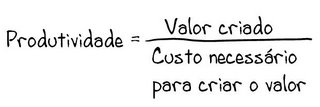
Um artigo, "As infinitas formas de criar valor", publicado no Expresso Economia de 17 de Setembro de 2016.
.
Não consigo deixar de pensar no artigo como um avatar, como um exemplo paradigmático de tanta coisa que se passa neste país.

.
Primeiro, o tema do encontro:
"na terceira breakout session do Círculo da Inovação, com o tema Criar Valor,"
Depois:
"A definição de criar valor
...
Houve, no entanto, um conceito em que não estiveram de acordo: criação de valor.
...
Mas afinal qual é a definição de criação de valor?
...
também não tem a resposta que gera a concórdia para o que é criação de valor, mas não tem dúvidas de que tem de se aprender a criar valor em Portugal"
Há um tema, falam do tema mas ninguém arrisca afirmar o que é o que quer dizer o tema.
.
Estarei a ser demasiado exigente ao pensar que há aqui muita superficialidade?
.
Alguém, ao menos, podia avançar com as ideias de Ricardo e Marx, ou de Gronroos, ou de ...
.
Há tanta discussão sobre valor e onde é que é gerado no mundo científico e ... nada.

Matéria-prima para cenários

Dois textos que permitem perceber como o proteccionismo se está a entranhar nos Estados Unidos.

Não deixa de ser sintomático. Quando países como Portugal e a Itália foram atirados para a arena e sofreram o choque do confronto directo com as Chinas deste mundo os gringos não viram razão para se preocupar.
.
Quando as PME portuguesas foram ao tapete abalroadas pelas Chinas os gringos não viram razão para se preocupar.
.
Agora que as PME portuguesas aprenderam a dar a volta ao factor China é que os gringos se mostram preocupados...
.
E estão preocupados porque os líderes do pensamento gringo ainda estão com o modelo mental do Fórum para a Competitividade e, agora que se começa a ver o reshoring continuam a querer ganhar o mesmo mantendo a mesma estratégia tornada obsoleta.
.
Muito cuidado com o peso dos gringos, podem ser como um governo português para quem opera no sector não-transaccionável, game-changers para pior.

"Your business is not your location"

"the number one lesson I now preach to other retailers:
.
Your business is not your location. Make pitches outside to drive traffic inside.
...
So your next step, dear retailer, is to brainstorm a list of outside groups and bring 'em in.
.
Remember: your business is not your location. Your business uses your location."
Tantas PME fabris que ainda estão nesta fase da "location" e não passam disso. Apetece atirar-lhes isto "The Giant Zero".


Trechos retirados de "Are You a Crack Retailer? (It's Bad, But Not What You Think)"

O fim do capitalismo dos últimos 200 anos

"Starbucks has become an everyday stop for millions.
.
But that ubiquity could now be its problem.
“Starbucks is now competing with chains like Dunkin’ Donuts and McDonald’s,” Business Insider proclaimed this week. “It has gotten, in a sense, too basic.”
...
So what’s an overexposed company to do?
Starbucks in recent years has begun looking for ways to restore its luster.
...
But can a brand that’s gone mainstream turn high-end again?
...
“I’ll just say this: It’s much harder to go up-market than it is to do the opposite,”
...
It’s a phenomenon Pam Danzinger calls “lux-flation”: Our ideas of what constitutes a premium product or experience are always evolving. “A brand like Starbucks starts at the top, and as it expands, it becomes the new normal,” said Danzinger, author of “Putting the Luxe Back in Luxury.” “Now it’s got to create that mystique once again.”
...
They’re putting the human touch back into the equation,” Danzinger said. “That’s one way to regain that luxury edge.”[Moi ici: O oposto da Grab & Go, meter interacção, fugir da automatização]
...
But, he says, there have been some successes: In the early ’90s, Gucci was almost done for. [Moi ici: A propósito da Gucci, "De ajavardamento em ajavardamento] The Italian fashion company was in financial despair and its creative director was quoted as saying “no one would dream of wearing Gucci.” Then Tom Ford took over, and revived the brand, boosting sales and restoring the company to its previous glory.
.
“There are examples, but it takes a lot of money and a lot of paring back,” Pedraza said. “And frankly, not every company has the courage to do that. Everything is so grow, grow, grow in today’s world. And before you know it, you have a mainstream brand that isn’t special anymore.”"[Moi ici: Julgo que há aqui qualquer coisa metafórica acerca do fim do capitalismo dos últimos 200 anos. Quando se chega ao fim da rua e não há mais terreno novo para explorar, e já não há possibilidade de crescer como dantes]
Trechos retirados de "Why ‘basic’ is bad for Starbucks".

Suspeito que no futuro me irei recordar muitas vezes deste texto "Hipsters and artists are the gentrifying foot soldiers of capitalism". Sobretudo deste trecho, tão ao modo de Mongo, tão ao modo de fechar o ciclo e voltar ao pré-Revolução Industrial:
"I asked the hipster owner and his beard-nurturing hipster customer (a tattooist from across the road) how they described themselves. “Socialists,” they replied, quickly adding that they were not looking “to build empires”, just to “make a living”. They had both left safe jobs working for the state and local government respectively. This led me to wonder about suggestions that the hipster may represent some form of reincarnated frontiersman/woman or pioneer. In many ways, I think they do. Their styling certainly harks back to the mid-to-late 19th century; to the British colonialists and the western frontiers. These people want to earn a reasonable living, independently, by “crafting” and “creating”. They, like the original pioneers, are explorers and artists and they are capitalists.
.
Unlike the colonising pioneer of the past, however, the hipster is postmodern, post-industrial, and post-Fordist." 

O poder da interacção directa

Continuando a minha leitura de Christian Grönroos e Johanna Gummerus em "The service revolution and its marketing implications: Service logic vs service-dominant logic".
.
Penso primeiro nos que sonham com a automatização das relações com os clientes, penso nos encadeados pelos faróis do eficientismo e que, por isso, passam ao lado da vantagem competitiva da interacção.
"The firm is not restricted to offering value propositions ...Service marketing knowledge, concepts and models reflect the foundational premise that service providers are not restricted to offering value propositions; instead, the marketing context of service firms, unlike that for consumer goods, is characterised by interactivity, reciprocity and two-way influences in the service process. The value for the customer of the service being provided in this process thus depends on how the service provider and customer, through their behaviour and communication, influence each other. The provider clearly influences the service and its value for the customer. In addition, fellow customers who are simultaneously present in the process may exert impacts....providers, together with other parties, may need to act to ensure the realisation of proposed value, which is possible only during the interaction between the firm and the customer....Because the actors’ processes – the firm’s service production process and the customer’s consumption and value creation processes – merge into one collaborative, dialogical process during direct interactions, a platform for co-creation of value for both actors arises. The activities on this platform are interactive, mutual and reciprocal. Both parties can directly and actively influence each other’s processes. Therefore, the value-in-use created for the customer (or the firm or both actors) is influenced by actions that occur on the platform..As a clearer understanding of the nature of direct interactions shows, in services there are ample opportunities for the firm, as a service provider, to go beyond the goods logic-influenced view that the firm can only offer value propositions. The service provider can actively and directly influence customers’ perceptions of the firm and its service, as well as customers’ willingness to continue buying from it. Whatever value the service provider has originally promised, or proposed (using value proposition terminology), may be moderated and altered during the interaction process and thus change the customer’s experiences and determination of value-in-use. The higher the value-in-use, the greater the likelihood that the customer considers buying from the same firm the next time. If the co-creation process has an unfavourable impact on the customer’s experiences and value-in-use, the effect likely will be the opposite."

segunda-feira, setembro 19, 2016

Curiosidade do dia

""Nós temos todos a consciência, a começar pelo Governo e pelo PS, de que aquilo que estamos a fazer ainda é insuficiente e sobretudo que é muito condicionado. Sabemos também que temos compromissos externos que determinam a obediência à preservação de alguns indicadores, designadamente em sede de défice. Tudo isso conjugado não permite que se faça tudo aquilo que se deseja. Trabalhamos sabendo que não estamos a fazer tudo o que gostaríamos de fazer, mas que estamos a fazer tudo o que podemos fazer", resumiu."
Imaginem que estas palavras eram proferidas por Passos Coelho no tempo da troika.
.
O que diriam os deputados Carlos César e Galamba?
.
Cairia o Carmo e a Trindade.
.
Recordar esta outra "Curiosidade do dia"

Trecho retirado de "Carlos César admite falha nas previsões do Governo"

Experiências em toda a parte

"Immersive productions are a hit with local audiences as they appear across the US.
.
Immersive theater—an approach to performance loosely defined by its participatory nature and unusual settings—had its first mega-hit with the 2011 New York production of Sleep No More. Five years on, the production has inspired creatives across the US to bring immersive theater to their hometowns, introducing it to a much wider audience.
...
In contrast, immersive theater offers something different. Unlike regional productions of Broadway hits, immersive productions often adapt to local environments in a way that feels authentic and special."
Trechos retirados de "Immersion everywhere"

Marcas que viraram carcaças (bonitas por fora mas ocas)

Ler "The Decline Of Premium American Fashion Brands. What Happened, Ralph And Tommy?" é tomar consciência do cumprimento, em toda a linha, da profecia fácil do "hollowing", ou "radioclubização", de como uma marca forte e genuína se transforma numa carcaça, num aristocrata arruinado, fruto de deixarem os muggles à solta.
.
É ver na prática a resposta das tribos aguerridas de Mongo aos gigantes que perderem a magia e julgam que podem tratar os clientes como plancton.
"I'm not the only one who feels that these iconic American brands have lost their luster. Many are on a downward spiral, hit by sluggish sales.
...
What went wrong? How did premium American companies lose their way? And is there a new generation of labels that will fill the void?
...
Charles Lawry, a professor at Pace University's business school who specializes in studying the luxury market, points to how high-end American brands have been creating cheaper products for decades now.
...
In their new incarnations, these companies all faced new shareholder pressures to keep business booming. "Growth became more important than brand," ... "This meant everything from lowering the cost of manufacturing to making the brand accessible to new a wider spectrum of consumers."
...
"There was an over-expansion and distribution into places like factory stores, which presented a tremendous economic opportunity," he says. "But it came at the expense of the brand. If you start training the consumer to believe that the brand is widely distributed in factory outlets, people who were once your core customer will start doing that, or lose interest in the brand altogether."
.
To lower costs, many of these corporations shipped production to China and Vietnam, where labor was cheap. As a result, products suffered: People who weren't trained to work with premium leather or master expert tailoring could not be expected to create high-end merchandise on a massive scale. "With globalization and an effort to cut cost by going overseas, these megabrands that were once known for high quality started to see their quality deplete and decay,"
...
It was also hard to predict consumer demand when outsourced orders had to be placed many months before they hit stores. This lead to bloated inventories. Karla Gallardo discovered this firsthand when she studied the luxury brand supply chain before cofounding her own brand, Cuyana, three years ago. "These businesses had to liquidate their inventories at low prices," she says. "When this happens once, twice, and three times, the customer gets used to buying on sale. This is a problem that gets compounded over time."
.
In 2008, American prestige fashion hit new lows. "During the recession and post-recession periods, these brands went further by having a lot of these products trickle down to discount retailers," .
...
In short, bargain prices robbed luxury brands of their mystique."
Depois, em "The Rise Of The High-Quality, Reasonably Priced, Direct-To-Consumer Brands" o artigo continua mas já com as marcas que estão a aparecer agora e a ganhar força:
"A younger generation of companies saw the decline of legacy American brands as an opportunity to redefine premium fashion and educate customers about how high-end goods are made.
...
"Digital-first retail brands,
...
"They architected brands that had a belief system built into them—about things like quality and social good—and a conversational tone built into its messaging that transparently exposed [those values].
...
It has focused on creating women's clothing and accessories made by experienced craftsmen using quality materials so that consumers can enjoy their products for a long time—and perhaps even pass them on to their children.
.
Another important distinction between these fashion startups and older apparel companies is that they are much less flashy. ... "Millennials are not as interested in logos as previous generations who gravitated toward things like the enormous Gucci Gs. Those garish logos would scare today's consumer away.
...
Today, many people see high-end products as one-of-a-kind items—the antithesis of mass-produced commodities whose attention-grabbing logos turn consumers into advertisements. And a new wave of savvy entrepreneurs have built businesses on the idea of offering customers something that feels unique.
...
"I understand what can happen when demand for your product explodes: The easiest way to respond to that on a knee-jerk basis is to aggressively pursue growth. But I think if you want to maintain status as a luxury brand, you have to temper this desire." A little self-control can go a long way, even in fashion."
A propósito deste parágrafo final mais dois artigos:


  • "How Mansur Gavriel Beat the ‘It’ Bag Hangover"

  • "“Certain articles of clothing, once they become coveted by everyone, everyone gets over it,” says street-style photographer Tommy Ton, who shot the brand’s spring/summer 2016 presentation. Not Mansur Gavriel’s.
    ...
    “In addition to being great designers,” he says, “they’re also good businesswomen. They’re careful not to overdistribute.”
    .
    Mansur Gavriel restricts its retail partners to a few high-end boutiques and department stores and limits the number of bags a retailer can order." 

    Profecias fáceis

    Em Novembro de 2013 fiz esta profecia fácil, demasiado fácil, "A reacção dos incumbentes a Mongo passará por coisas como esta".
    .
    Em Abril de 2015 escrevi ""o mundo para as EDP deste mundo está à beira de mudar de forma dramática""
    .
    Agora, leio "Blockchain Changes Business Model in European Energy Sector, Decentralized Power In View" e, sobretudo, leio "As solar installations multiply, U.S. utility companies fight back".
    .
    Empresas grandes a terem de compensar os produtores de energia quando deixam a rede porque se tornaram autosuficientes.
    ""Of course the utility is powerful," Sherman says. "The utilities had a monopoly on energy here since... since there's been energy here. And they have a lot of friends in the legislature. What we're seeing is the utility, rather than adapting to the changes that are happening in the energy sector, they're choosing to blame rooftop solar and trying to place discriminatory charges and fees on rooftop solar customers.""
    E aquela cena de terem de se ressarcir os custos afundados?
    ""We saw the change in Nevada, and we understand that what we do today puts lots of pressure and risk on the utilities after investments of hundreds of billions over 130 years,""

    Interacção e co-criação de valor

    Parte I.
    .
    Continuando a saborear a reflexão de Christian Grönroos e Johanna Gummerus em "The service revolution and its marketing implications: Service logic vs service-dominant logic".
    "If co-creation of value is used analytically, rather than in a metaphorical sense, we must ask: what is the role and focus of co-creation, who is involved, and when does value co-creation occur? The key to answering these questions is the interaction concept.
    ...
    Although “enterprises can offer their applied resources for value creation and collaboratively (interactively) create value following acceptance of value propositions, but cannot create/deliver value independently”, the meaning of this assertion gets disguised by the claim that firms and customers are always co-creators of value.
    ...
    Direct interaction means that two (or more) actors act together in one process, in which their doings and sayings influence each other’s actions and perceptions. The two actors’ processes thus merge into one collaborative, dialogical joint process. During this interactive process, every actor involved can directly and actively influence the value-in-use that emerges for the other actor (or actors). This collaborative, dialogical joint process then becomes a platform for reciprocal co-creation of value. What takes place on the interaction platform may influence how value is realised, or value fulfilment, for one or all actors – provided they are prepared to and effectively make use of the value co-creation opportunity.
    .
    Direct interaction need not be a joint collaborative, dialogical process with two persons though; it also can be a direct interaction between one actor (e.g. customer) and an intelligent non-human resource. For example, interactions with a system that can intelligently register the actions or speech of a person and respond to it form a joint dialogical process together with the person, as well as a platform for value co-creation. Both parties learn and immediately react on the basis of the lessons. Such interactions are also direct interactions. Most non-human resources, such as products and various types of systems, do not possess intelligent properties in this sense. For example, physical products or IT-based systems that respond in a standardised way to user actions do not meet the  criteria of intelligent non-human resources. The customer still interacts with the firm, through the use of products or resources, but the interactions do not provide a value co-creation platform. These indirect interactions with a firm or a service provider involve resources, including non-intelligent products and systems, that the service provider offers to the customer as a source of potential value-in-use. Whether value-in-use is created or emerges by the use of such resources depends on the actions of the customer alone. This value creation can be characterised as a customer’s independent value creation.
    ...
    Only direct interactions enable co-creation between the actors, such as a service provider and a customer, and form a platform for value co-creation. In the total value generation process, the development and provision of products and other resources by a firm, which enable indirect interactions only, are part of the provider sphere, which is closed to the customer (and other actors). Similarly, the resource integration actions of a customer, involving only indirect interactions with the firm, is closed to the firm."

    domingo, setembro 18, 2016

    Divagações de um consultor de província

    Depois de ler "Consultora propõe plano de poupanças para a TAP competir com as ‘low cost’" fica-me uma grande interrogação: por que é que há-de resultar na TAP aquilo que não resultou em nenhuma companhia de bandeira, em nenhum lugar da Europa e da América, ou seja, ganhar o campeonato do low-cost às companhias low-cost?
    "Some legacy carriers such as British Airways, KLM, Continental and Delta have already tried and failed to operate low-cost airline subsidiaries. They sold off the business or just ceased operations. Aer Lingus, Lufthansa, Alitalia and Air Canada did at one time or another set up low-cost ventures but then reverted to traditional operations. And others such as United, British Midland, SAS, Iberia, Qantas, Singapore Airlines and Mexicana currently run low-cost airlines in parallel but independently from their legacy operations."(1)
    Entrando no artigo:
    "No projeto “Transformar a TAP numa companhia aérea mais eficiente”, a que a Lusa teve acesso, a Boston Consulting considera que os custos da TAP estão numa boa posição quando comparados com as companhias de bandeira, mas precisa de ser mais eficiente para competir com as de baixo custo."
    Espero que a administração da TAP seja suficientemente sensata para saber das vantagens do modelo de negócio das low-cost e, na verdade, esteja a usar esta desculpa como forma de justificar uma muito necessária redução de custos:
    "Nesse sentido, aponta as “oportunidades” para reduzir os custos da transportadora, sendo que um terço da poupança – entre 50 e 70 milhões de euros – é alcançado na categoria dos pilotos e tripulantes, com a renegociação de acordos de empresa e o ajustamento do número de assistentes de bordo ao mínimo exigido por voo.
    .
    A segunda maior poupança proposta pela consultora, num valor entre os 40 e os 65 milhões de euros, resultaria de cortes nos serviços aos passageiros – como por exemplo no ‘catering’ (refeições a bordo) – e poupanças na área comercial, com a renegociação de taxas e incremento das vendas diretas." 
    Eu, que não passo de um anónimo consultor da província e sem conhecimentos do sector do transporte aérea de passageiros, pensaria numa empresa mais pequena e forte onde pode fazer a diferença:
    "De acordo com o diagnóstico realizado pela consultora que já tinha em Portugal realizado estudos sobre o aeroporto Francisco Sá Carneiro, no Porto, o ‘calcanhar de Aquiles’ da estrutura de custos da TAP está nos voos mais curtos, porque “no longo curso, a TAP está bem posicionada, quando comparada com as companhias de bandeira, como a British Airlines ou a Emirates”." 
    (1) - Trecho retirado de "COMPETING AGAINST LOW COST AIRLINES"

    Onde residem as minhas preocupações?

    Tendo em conta a argumentação daqui, tendo em conta o querer subir na escala de valor, em teoria faz todo o sentido este propósito "Famalicão lança Centro de Competências do Agroalimentar".
    .
    Onde residem as minhas preocupações?
    .
    Ressalva: Não ponho em causa a seriedade do projecto nem a genuína vontade e empenho dos participantes.
    .
    Primeiro, por que é que tem de ser a câmara a avançar com a iniciativa? Muda o presidente e o que vem tem outras ideias. 
    "O foco principal estará nas carnes, onde Famalicão acredita poder distinguir-se a nível nacional, mas o objetivo é cobrir outras áreas. "Não existe concelho em Portugal que tenha tão grande e qualificada concentração de empresários no sector das carnes. Temos um know how empresarial único no país e empresas altamente competitivas e com vocação exportadora", justitfica o autarca."[Moi ici: Se são tudo isso, por que é que nunca tiveram eles a ideia, bottom-up, de criar tal Centro de Competência? Por que tem de ser iniciativa da câmara? Acaso o Centro de Competências não é para ajudar as empresas a ganhar mais dinheiro?]
    .
    Segundo, se é agroalimentar porquê o albergue espanhol? 
    "Nesta fase de arranque, o primeiro passo foi a formalização de um protocolo de cooperação e criação do centro de competências com 13 entidades, do ensino aos têxteis, onde está um dos pilares industriais e exportadores de Famalicão, mas aberto desde já à entrada de novos membros porque o objetivo é aproveitar a capacidade instalada ao nível da produção, investigação e inovação."[Moi ici: Não faria mais sentido, numa fase inicial começar por um núcleo mais pequeno e coeso e concentrado em um ou dois projectos-bandeira? Recordar aquele título ... qualquer coisa como "improvement programs start with results. Com 13 entidades estou já a imaginar o funcionamento das comissões de escolha dos hospitais públicos... só para marcar uma reunião não vai ser fácil ter agenda para todos.]

    Aceleração e suas consequências

    "Staff reporter Zoe Henry talks about how fashion companies and brands have innovated the ways they use New York Fashion Week to sell new collections. In the past, brands would strut their new collections down the runway and the clothing would go on sale in six months. But Rebecca Minkoff launched a new model called "See Now, Buy Now." Customers can buy the clothes being shown during Fashion Week right away instead of waiting for next season. After Minkoff launched this new model, other companies like Burberry, Tommy Hilfiger and others jumped on the trend. Brands bet big on new collections, which is a risk, but the new model prevents competitors from ripping off your designs before you can go to market. The model has paid off, Minkoff's sales have jumped 200 percent since launching See Now, Buy Now."
    Mais um exemplo de aceleração, da redução do tempo da prancha de desenho até à prateleira. Consequência: se não se esperam 6 meses, então, porquê 2 épocas por ano? Por que não ter antes 15 ou 20 colecções por ano?
    .
    E se o tempo da prancha à prateleira se reduz desta forma, então, a produção tem de estar mais próxima do consumo, encomendas mais pequenas e muitas reposições. Eventualmente, encomendas a alterarem o produto ao longo do tempo como se de uma evolução animal se tratasse.

    Trecho retirado de "How Fashion Companies Turn the Runway Into a Retail Store"