"Then the economists, many on the left but some on the right, in quick succession 1880 to the present - at the same time that trade-tested betterment was driving real wages up and up and up - commenced worrying about, to name a few of the grounds for pessimisms they discerned concerning ”capitalism”: greed, alienation, racial impurity, workers’ lack of bargaining strength, women working, workers’ bad taste in consumption, immigration of lesser breeds, monopoly, unemployment, business cycles, increasing returns, externalities, under-consumption, monopolistic competition, separation of ownership from control, lack of planning, post-War stagnation, investment spillovers, unbalanced growth, dual labor markets, capital insufficiency, peasant irrationality, capital-market imperfections, public choice, missing markets, informational asymmetry, third-world exploitation, advertising, regulatory capture, free riding, low-level traps, middle-level traps, path dependency, lack of competitiveness, consumerism, consumption externalities, irrationality, hyperbolic discounting, too big to fail, environmental degradation, underpaying of care, overpayment of CEOs, slower growth, and more.
.
One can line up the later items in the list, and some of the earlier ones revived à la Piketty or Krugman, with particular Nobel Memorial Prizes in Economic Science. I will not name here the men (all men, in sharp contrast to the method of Elinor Ostrom, Nobel 2009), but can reveal their formula: first, discover or rediscover a necessary condition for perfect competition or a perfect world (in Piketty’s case, for example, a more perfect equality of income). Then assert without evidence (here Piketty does a great deal better than the usual practice) but with suitable mathematical ornamentation (thus Jean Tirole, Nobel 2014) that the condition might be imperfectly realized or the world might not develop in a perfect way. Then conclude with a flourish (here however Piketty falls in with the usual low scientific standard) that “capitalism” is doomed unless experts intervene with a sweet use of the monopoly of violence in government to implement anti-trust against malefactors of great wealth or subsidies to diminishing-returns industries or foreign aid to perfectly honest governments or money for obviously infant industries or the nudging of sadly childlike consumers or, Piketty says, a tax on inequality-causing capital worldwide.
A feature of this odd history of fault-finding and the proposed statist corrections, is that seldom does the economic thinker feel it necessary to offer evidence that his (mostly “his”) proposed state intervention will work as it is supposed to, and almost never does he feel it necessary to offer evidence that the imperfectly attained necessary condition for perfection before intervention is large enough to have reduced much the performance of the economy in aggregate.
...
The economists didn’t say how to attain the knowledge to do it, or how much their non-quantitative advice would actually help an imperfect government to get closer to the perfect society."

"The Paradigm A implication is that the strategist must construct a logical theory of how to achieve the goal chosen—and articulate it into a plan. It assumes reasonable people will follow along willy-nilly because of what has been scientifically proven.Por isso, ouve-se, tantas e tantas vezes a afirmação, para mim "infantil":
...
Ultimately a well-constructed plan is a theory about how selected resources and their relationships must lead to the goal sought. The emphasis is on completeness and logicality and there is no distinction between theory/plan and strategy."
"É preciso que o governo defina uma estratégia para o país!"Como se a realidade fosse objectiva e igual para todos...
"Paradigm B is more realistic because it seems to bring “real people” back in.A mudança do paradigma A para o paradigma B é pressionada pela falta de conhecimento objectivo completo. A realidade é tramada! O que é verdade hoje, amanhã é mentira! O que tomamos por Juno, afinal não passava de uma nuvem. As lacunas no conhecimento têm de ser preenchidas pelo julgamento do estratega com base na sua experiência. Assim, em vez do plano perfeito, aspira-se ao plano tão bom quanto possível.
...
presumes flexible and imaginative people are needed to provide creative inputs—for understanding is invariably incomplete and may not be rigorously logical. But it does not identify them or make them central to the analysis. OK, we discover our data is incorrect and our predictions do not turn out as expected. Likewise we are often ignorant of some of the necessary facts about the entities and their relationships until after we have acted. We get surprised. Then we muddle through.
...
Paradigm B does not hang on rigorous plans; just plans that are as-good-as-practicably-possible. It allows gaps, to be addressed later by competent and imaginative people. Many things will not be taken into consideration and the hope is that it will all work out well in the end. It is muddling through. Successful business people are those who make “good calls” in such situations, successfully judging which facts to take into account and which to ignore, and who guess well when there are no facts to be found."
"Paradigm C moves away from the scientific methods as normally defined. It does not assume our socioeconomic world is comprised of objective facts about things and logical causal relations between them. Rather the strategist’s universe consists of ideas that lead people to do things, especially to produce and consume.E chegamos ao paradigma D:
...
In Paradigm C the strategy’s core is a production/consumption idea, the entrepreneur’s idea.
...
In Paradigm C tangible things, especially “resources,” matter strategically because they “carry” or “fasten” our expectations and desires.
...
Paradigms C and B both spin on strategic judgment. But in Paradigm C the judgment needed is not about what is missing from what is known or knowable about a real situation
...
Judgment is no longer subordinated to the logical plan. Rather the reverse. The strategy hinges on what people might be persuaded to think, how their expectations might be changed, and so induced to behave in a new way imagined by the entrepreneur."
"This is like Paradigm C in that it presumes the strategist’s world is made up of malleable people with changeable expectations rather than an unchangeable reality. But it goes beyond Paradigm C towards the logical limit that embraces the changeability of the entrepreneur her/himself in addition to the changeability of her/his world. Paradigms A, B, and C presume a stable entrepreneur with a chosen goal. In Paradigm A this goal drives the plan; in Paradigm B the plan + some judgments. In Paradigm C it is translated into an apparatus to persuade some other people to behave in a way that subordinates them to the entrepreneur’s goal."O que o paradigma A não prevê, não contempla é a surpresa, seja ela positiva ou negativa.
"Strategic work precipitates activity that goes beyond the possibilities theorized. Seeking surprise is part of the way we are, our restlessness and desire to inquire into and change (improve) the human condition. We are strategic animals and strive to learn more."


"Urban Outfitters adapta el producto que vende en cada tienda al público de la ciudad o del área. En Barcelona, sin embargo, la compañía ha introducido el mismo mix de oferta que en otras ciudades del mundo por la cercanía a la campaña navideña, ya que el grupo no quería retrasar más la apertura.E, recordando os rouxinóis de Robert MacArthur:
.
“En cuatro semanas sabremos qué se vende y qué no y podremos hacer cambios”, admite el directivo. “También tenemos que aprender a vender con este clima: conocemos el norte de Europa, pero no el sur”, sostiene."
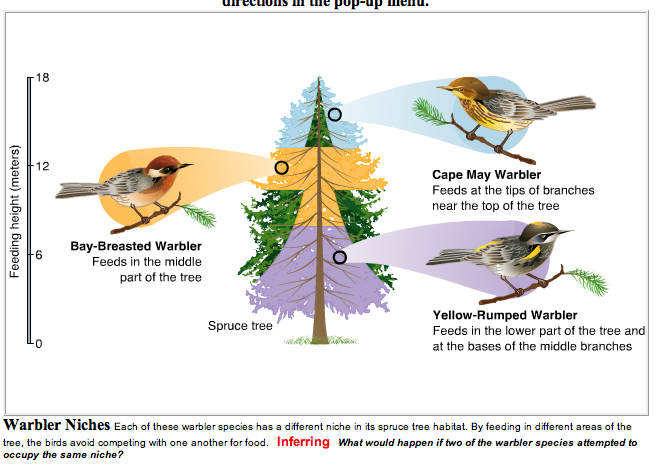
"Los precios de Urban Outfitters son sensiblemente superiores a los de la gran distribución, que domina el negocio de la moda en España, con cadenas como Zara o Mango. “No podemos competir con la gran distribución, no tenemos sus economías de escala –afirma Briars-; en Reino Unido también existen empresas de gran distribución, como Primark o New Look, pero no competimos con ellos”.Conhecer o seu nicho e perceber o seu contexto.
.
“No vamos a entrar en bajar precios para competir”, sentencia el ejecutivo, que afirma que, hoy en día, “si tienes un buen producto y un buen concepto de tienda, la gente termina comprando”."
"So how do you really create strategy, rather than end up with a hodgepodge list like this? By following these steps:Trecho retirado de "A List of Goals Is Not a Strategy"
.
Identify which stakeholders you depend on for success. It might seem obvious that you’d need to start here. (Moi ici: É fundamental começar pelos clientes-alvo e pelo ecossistema do negócio. Contudo, convém não esquecer a radiografia interna, a identidade, os pontos fortes e fracos) But most managers, even at the world’s largest companies, don’t take this basic step.
...
Recognize what you want from your stakeholders. Because most management teams don’t identify key stakeholders, they don’t even get to this point.
...
Why is sorting out the from so important? What an organization wants from each group of key stakeholders translates neatly into its objectives. For instance, sales and revenue growth will come from customers, productivity and innovation from employees, and quality goods and services at the right price from suppliers. [Moi ici: E os prescritores? E os influenciadores? E os reguladores? E os concorrentes?]
...
Recognize what your stakeholders want from you. When management teams delve too quickly into problem-solving, they make assumptions. They think they already know what’s good for their stakeholders. As a result, their companies end up with products and services that don’t sell.
.
When you articulate what key stakeholders want, you’re defining what I call “strategic factors.” ...They are those few things that you must excel at if you are to achieve a competitive advantage and, simultaneously, meet your corporate objectives." [Moi ici: Começo pelas experiências e resultados que os clientes-alvo e outros agentes do ecossistema do negócio esperam e valorizam]
"O negócio de fabricação de chinelos em pequena escala é relativamente novo no Brasil, pois até bem pouco tempo, esse negócio era dominado pelos grandes fabricantes.
...
Embora a produção de chinelos por si só já seja uma ótima opção para quem quer ganhar dinheiro, o pulo do gato nesse segmento está na personalização das peças. Se você estampar os chinelos com imagens bonitas e criativas ou então acrescentar detalhes como tiras decoradas com strass, pérolas, miçangas e outros enfeites, o preço dispara e pode chegar facilmente a R$ 50,00. O custo de fabricação aumenta um pouco, mas em compensação a margem de lucro dispara.
.
O mercado para chinelos personalizados é simplesmente gigantesco e com uma máquina de fazer chinelos você também pode entrar nesse segmento. Você pode criar chinelos personalizados para empresas, casamentos, formaturas e outras ocasiões, além de partir para uma linha fashion que agrada muito ao público feminino."
"Our job is to find the disconnected and connect them, to find people eager to pursue a goal and give them the structure to go achieve that goal. But just about always, we start with an already existing worldview, a point of view, a hunger that's waiting to be satisfied."Como fixei, numa formulação que apreciei:
"strategy lies at the intersection of the actor’s chosen identity, her/his intention, and the difficulties s/he faces in a specific context."A identidade do actor, da empresa, tem de estar em sintonia como uma "fome" à espera de ser saciada.

"Businesses that used to just sell products are courting customers with classes, entertainment, and social experiences.Batota, "experience economy" e co-criação.
...
Consumers are increasingly responding to blended retail and entertainment experiences,
...
“Millennials in particular are responding well to these enhanced shopping and recreational experiences. Businesses looking to engage these customers should consider crafting a hands-on shopping experience with a consultant or expert in the field,”"
"Sérgio Real diz que as condições hoje para quem quer avançar com um negócio de conservas são bem diferentes do que eram há 10 anos. "Quando entrava num banco e dizia que era conserveiro parecia que tinha lepra. Ninguém acreditava no negócio, porque a imagem que se passava para o exterior era péssima". diz o empresário. "A banca agora olha-nos de maneira diferente do que olhava há 10 ou 15 anos". adianta Sérgio Real."Os agentes de um ecossistema não são vítimas das circunstâncias, ou podem ser mais do que isso, podem ser agentes de transformação da realidade. Por isso, falar em "vantagens comparativas dos recursos portugueses" é demasiado simplista.
"The next step is to decouple strategy development from plan formulation. When formulating plans, the focus is on efficiency and internal matters (“what actions, resources, and performance will we commit to?”). Developing strategy is, in contrast, a creative act. It requires innovation, external focus, and significant iteration. If the two processes are mashed together, plan formulation will usually dominate and strategy will be relegated to high-level packaging.Em "Business Strategy - Managing Uncertainty, Opportunity, and Enterprise" de J.-C. Spender leio:
The final key to unlocking the true power of strategy is to free it from the calendar."
"Strategy’s meanings are always “situated” reflections of the knowledge absences the strategist chooses to grapple with in the pursuit of profit. “What are we going to do now?” is the key question, and time matters."Em "Elevate" de Rich Horwath leio:
"A major reason managers don't become more strategic over time is because they only perform the related task once a year during the annual planning process.E na sua empresa, quantas vezes por mês se têm conversas estratégicas?
...
A skill deteriorates if the primary circuits comprising the activities in a particular behavior are not used for 30 days. If you're not dedicating time at least monthly to questions and frameworks to think strategically about the business, then you will not ne strategic."
"Your employees notice when you take action. And when you don't.Continua.
.
When a storm hits your company, the instinct is to wait it out, to seek shelter, to work to set an agenda, not to let the outside world set it for you.
.
And sometimes this works. But even if the storm passes, your employees remember. They remember the standard you've set and the way things are around here.
.
Every time we give someone the employee of the month parking space for perfect compliance, or fire someone for creating a culture of disrespect, we send a message.
.
Action or inaction are both forms of leadership and standard setting."
"almost every firm needs a different approach to innovation and strategy.A ênfase na experimentação e no "shape de future".
The future is not about prediction but about shaping the future with agile experimentation on what works and what does not work.
Regardless how much you plan, you will not predict the future because neither customers nor companies can anticipate what is possible. The only way to push for radical innovation is to accept the uncertainty and thereby accepting that with more traditional planning we can not predict the future.
.
By saying so, I do not mean that we need no planning or management anymore. We even need it more than ever, but with a different aim. The aim should not be to predict the future but to plan a creative process how to shape the future."
"They hint at a future where the key is organizing talent, not necessarily employing talent.Mongo a entranhar-se!
...
you may find the existing model of employing people in jobs is vulnerable to new ways of organizing work."
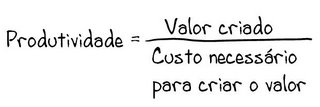
"Our research further indicates that more than 80 percent of all productivity variation occurs within a given sector for a given country and that there’s a “long tail” of persistently badly managed firms in all countries and across all sectors. [Moi ici: Por que não as deixam morrer de morte natural?] These findings suggest a significant potential for management-led productivity improvements in every country on Earth.
...
Interestingly, there’s an almost complete lack of self-awareness among managers about the productivity or management effectiveness of their own companies: we found virtually no correlation between their independent rankings of the management practices of their companies and our own assessment, conducted as a double-blind study."
"Estado deve desenvolver uma acção empenhada na detecção e divulgação de mercados potencialmente interessantes e de vantagens comparativas dos recursos portugueses em relação a previsíveis concorrentes."Lembrei-me logo do Lugar do Senhor dos Perdões.
"The takeaway is to stop thinking about whether the industry you are in is "good" or "bad" — recognizing that as the wrong question — and to focus instead on what you can do to win where you are."Em "Lugar do Senhor dos Perdões (parte II)":
"A filosofia por trás do caso do Lugar do Senhor dos Perdões está relacionada com a proposta de António Vitorino no Prós e Contras de ontem: o Estado é que sabe quais os sectores de futuro em que se deve apostar."Em "Lugar do Senhor dos Perdões (parte III)":
"The magnitude of within-sector heterogeneity implies that idiosyncratic factors dominate the determination of which plants create and destroy jobs, and which plants achieve rapid productivity growth or suffer productivity declines."Lembrei-me logo de um vídeo que vi no sábado passado, em que Gary Hamel ao minuto 25 afirma que a melhor alternativa para os líderes é experimentarem, testarem (o nosso, fuçarem) e aprenderem com os erros, para melhorarem a abordagem seguinte:
"Organizations loose their relevance when there is more experimentation outside than inside"E, por fim, lembrei-me logo do que comecei a ler em "Business Strategy - Managing Uncertainty, Opportunity, and Enterprise" de J.-C. Spender:
"Strategy’s meanings are always “situated” reflections of the knowledge absences the strategist chooses to grapple with in the pursuit of profit. “What are we going to do now?” is the key question, and time matters. In our capitalist system these choices are incredibly varied, and strategic work is a corollary of this freedom of choice.Quem define o que é um mercado potencialmente interessante? Quem define quais são as vantagens comparativas dos recursos portugueses?
...
So this chapter moves towards a notion of strategic work as the practice of managerial judgment, choice, and persuasion rather than observation, computation, and instruction...
Any definition that ignores the particularities and difficulties of the context in which the goal is pursued is useless “one-handed clapping.” Because particulars are crucial to the nature of strategic work, no general definition can work. Second, not every distinction helps. Sometimes market segmentation will matter, sometimes not. Likewise technological evolution will sometimes matter and sometimes not. Strategic work begins with finding the specific distinctions that are appropriate to help us wrap our arms around the particular collision of intention, context, and difficulty that is the firm.
...
Merely being in a context does not mean you need a strategy; you may have no intention of changing your situation. Intention is not simply about reaching for a goal, it is also about purposively or intendedly moving away from your current position and towards another particular situation. Thus intention and strategy are bound up with the specific changes we want to make in specific situations. The essence of the managers’ strategic work lies in the difficulties that stand in the way of satisfying their desire to make these changes. Paradoxically we have to know who we are—strategically speaking—before we can delineate the context of our goal seeking. Socrates was absolutely right on this—know thyself! Strategy is as much about choosing who we are as about choosing a goal or the context in which to pursue it. Again, strategy lies at the intersection of the actor’s chosen identity, her/his intention, and the difficulties s/he faces in a specific context."
"Life is the most resilient thing on the planet. I has survived meteor showers, seismic upheavals, and radical climate shifts. And yet it does not plan, it does not forecast, and, except when manifested in human beings, it possesses no foresight. So what is the essential thing that life teaches us about resilience?Como se diz em inglês, "Shift happens!" e só a diversidade de opiniões e apostas cria a antifragilidade do todo e, mesmo as escolhas que parecem absurdas para uns, podem ser a solução para outros.
.
Just this: Variety matters. Genetic variety, within and across species, is nature's insurance policy against the unexpected. A high degree of biological diversity ensures that no matter what particular future unfolds, there will be at least some organisms that are well-suited to the new circumstances."
"Contudo, produzir e vender para o exterior em quantidades significativas, exige um forte empurrão por parte do poder político, particularmente do Ministério da Agricultura."Luxleaks em versão portuguesa?
"Fica para outra altura a reflexão sobre o realismo de estratégias de subida na escala de valor em negócios B2B. Parece-me que isso é mais fácil em negócios B2C."A frase acompanhou-me durante todo o dia de ontem.
- Não me venham oferecer o mesmo que os outros. Vocês não têm preço para isso. Ofereçam-me este serviço X e este serviço Y. Não há ninguém no mercado a oferecê-los neste momento e, mais um ano ou dois e vou precisar de gente competente nessas áreas.Commodities versus diferenciação.
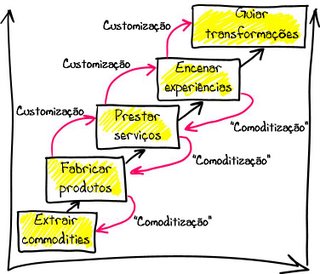
"Agricultores não conseguem dar vazão à procura."Na verdade os agricultores optam por culturas mais atraentes financeiramente.
%2006.21.jpeg)