"Globalization was always dependent upon the Americans’ commitment to the global Order and that Order hasn’t served Americans’ strategic interests since the Berlin Wall fell in 1989. Without the Americans riding herd on everyone, it is only a matter of time before something in East Asia or the Middle East or the Russian periphery (like, I don’t know, say, a war) breaks the global system beyond repair . . . assuming that the Americans don’t do it themselves....A central factor in every growth story that accompanies industrialization is that much of the economic growth comes from a swelling population. What most people miss is that there's another step in the industrialization cumurbanization process: lower mortality increases the population to such a degree that it overwhelms any impact from a decline in birth rates . but only for a few decades. Eventually gains in longevity max out, leaving a country a greater population, but with few children. Yesterday's few children leads to today's few young workers leads to tomorrow's few mature workers. And now, at long last, tomorrow has arrived....No matter how you crunch the numbers, China in 2022 is the fastest-aging society in human history....The country's demographic contraction is now occurring just as quickly as its expansion, with complete demographic collapse certain to occur within a single generation. China is amazing, just not for the reasons most opine. The country will soon have traveled from preindustrial levels of wealth and health to postindustrial demographic collapse in a single human lifetime. With a few years to spare. Nor will China die alone. The time-staggered nature of the industrialization process-from Britain to Germany to Russia and northwestern Europe and Japan to Korea to Canada and Spain combined with the steadily accelerating nature of that process, means that much of the world's population faces mass retirements followed by population crashes at roughly the same time. The world's demographic structure passed the point of no return twenty to forty years ago. The 2020s are the decade when it all breaks apart.For countries as varied as China, Russia, Japan, Germany, Italy, South Korea, Ukraine, Canada, Malaysia, Taiwan, Romania, the Netherlands, Belgium, and Austria, the question isn't when these countries will age into demographic obsolescence. All will see their worker cadres pass into mass retirement in the 2020s. None have sufficient young people to even pretend to regenerate their populations. All suffer from terminal demographics. The real questions are how and how soon do their societies crack apart? And do they deflate in silence or lash out against the dying of the light?...Economic development, quality of life, longevity, health, and demographic expansion are all subject to the whims of globalization. Or rather, in this case, deglobalization."
quarta-feira, julho 06, 2022
O fim da globalização (parte II)
terça-feira, julho 05, 2022
O fim da globalização (parte I)
"Globalization brought development and industrialization to a wide swath of the planet for the first time, generating the mass consumption societies and the blizzard of trade and the juggernaut of technological progress we all find so familiar. And that reshaped global demographics. Mass development and industrialization extended life spans, while simultaneously encouraging urbanization. For decades that meant more and more workers and consumers, the people who give economies some serious go. One outcome among many was the fastest economic growth humanity has ever seen. Decades of it....The American-led Order is giving way to Disorder. Global aging didn't stop once we reached that perfect moment of growth. Aging continued. It's still continuing. The global worker and consumer base is aging into mass retirement. In our rush to urbanize, no replacement generation was ever born.Since 1945 the world has been the best it has ever been. The best it will ever be. Which is a poetic way of saying this era, this world-our world-is doomed. The 2020s will see a collapse of consumption and production and investment and trade almost everywhere. Globalization will shatter into pieces. Some regional. Some national. Some smaller. It will be costly. It will make life slower. And above all, worse. No economic system yet imagined can function in the sort of future we face....The coming global Disorder and demographic collapse will do more than condemn a multitude of countries to the past; it will herald the rise of others."
Os trouxas engolem tudo
O que nos disse Welch em 2006 quando veio a Portugal? Lembram-se disto?
"Afirmou também que« os gestores que apenas gostam de números e que não querem saber de pessoas – mas elas existem na empresa! – são uns idiotas»."
E o que praticava? Ver "How Jack Welch Revolutionized the American Economy":
"He “instituted a series of mass layoffs,” and enthusiastically industrialized even this process by rating every employee and then each year firing the lowest-rated 10 percent."
Recordar:
- Apologia da flexibilidade - Junho de 2010
- Passou-lhe completamente ao lado ... no fim MacGyver vence a Sandy - Abril de 2011
segunda-feira, julho 04, 2022
Continuam a querer que comamos gelados com a testa
Em 2009 escrevi aqui no blogue sobre as espécies que vivem à boca das fumarolas - Fake recoveries, os 3 amigos e a linguagem de carroceiro. Há dias em "Expert opinion" citei este trecho:
"The scholar, of course, had an answer. Scholars always have an answer. To him, the greatness of an idea should be judged by a panel of experts who opine on whether the idea is “novel” and “technically brilliant.” However, in the business context, “well executed” means commercially successful. When I pointed out that there is no known correlation between expert opinion on novelty or technical brilliance and commercial success"
Agora, encontro mais um exemplo da Big Man Economy tão querida das elites portuguesas, "Banco de Fomento vai capitalizar 12 empress de "interesse nacional", incluindo a de Mário Ferreira". Empresas tão boas, ou com projectos tão bons que nem têm acesso a capital da banca comercial.
Lembram-se das campeãs nacionais e as empresas PIN?
- Os PIN
- Fiem-se nos PIN's e nos campeões nacionais e não corram não, que eu não quero
- Campeões nacionais versus campeões escondidos
- Comemos gelados com a testa!!!
domingo, julho 03, 2022
Já lhe falaram? (parte II)
“Perhaps the oddest thing of our soon-to-be present is that while the Americans revel in their petty, internal squabbles, they will barely notice that elsewhere the world is ending!!! Lights will flicker and go dark. Famine’s leathery claws will dig deep and hold tight. Access to the inputs—financial and material and labor—that define the modern world will cease existing in sufficient quantity to make modernity possible. The story will be different everywhere, but the overarching theme will be unmistakable: the last seventy-five years long will be remembered as a golden age, and one that didn’t last nearly long enough at that.The center point of this book is not simply about the depth and breadth of changes in store for every aspect of every economic sector that makes our world our world. It is not simply about history once again lurching forward. It is not simply about how our world ends. The real focus is to map out what everything looks like on the other side of this change in condition. What are the new parameters of the possible? In a world deglobalized, what are the new Geographies of Success?What comes next?”
sábado, julho 02, 2022
Já lhe falaram?
Governo alemão reactiva o uso de centrais a carvão. - Fonte.
Governo alemão fala em racionar o consumo de energia. - Fonte.
Governo alemão regressa a austeridade, cortando pessoal e orçamento de 7 ministérios. - Fonte.
E Portugal, já ouviu alguma coisa acerca do futuro a médio prazo?
Já lhe falaram sobre as implicações da ferramenta anti-fragmentação do euro para Portugal? - Fonte
Já percebeu que Mário Centeno gostaria que o prazo do PRR fosse ampliado? - Fonte
E em cima do PRR ainda se constrói um aeroporto e um TGV?
sexta-feira, julho 01, 2022
"Expert opinion"
E termino a leitura de "A New Way to Think" de Roger Martin com:
“The scholar, of course, had an answer. Scholars always have an answer. To him, the greatness of an idea should be judged by a panel of experts who opine on whether the idea is “novel” and “technically brilliant.” However, in the business context, “well executed” means commercially successful. When I pointed out that there is no known correlation between expert opinion on novelty or technical brilliance and commercial success, he simply restated the proposition in a different way: “Creativity is the potential of an idea, and execution is the extent to which that potential is realized.” Of course, there was no definition of potential or how it would be measured in his response. I gave up trying any further.”
quinta-feira, junho 30, 2022
"Value Conversations "
"Value Conversations are, well, valuable. This is the best way I've seen to estimate how much value someone receives from a solution. The point of value-based pricing is to charge what a buyer is willing to pay, and the more value they receive, the more they're willing to pay. It has always been hard for a salesperson to estimate a buyer's value from a solution. Here's what's funny. It's often tough for a buyer to know how much value they will receive from a solution. Value Conversations helps you and the buyer understand the R part of ROI.Great salespeople master this technique. They clearly understand many problems and desired results typical in the industry they serve. They know what's important to their buyers and how they make money. But even though they have all this knowledge in their head, they shouldn't spew it out. Instead, they must guide the buyer while the buyer provides the answers."
Trecho retirado de "Selling Value: How to Win More Deals at Higher Prices" de Mark Stiving
quarta-feira, junho 29, 2022
"Raising labour productivity"
"one problem fills the screen: the country’s anaemic growth rate. A healthier economy would raise people’s living standards; faster growth is the way to square the circle between lower taxes and better public services. Yet the oecd, a club of rich countries, reckons that only heavily sanctioned Russia will fare worse in the g20 in 2023. And whereas average annual gdp growth over the decade preceding the 2007-09 financial crisis was 2.7%, the Office for Budget Responsibility (obr), a fiscal watchdog, predicts the new normal is closer to 1.7%....Zoom out again, and it is clear that Britain’s growth problem is long-standing and getting worse.In the coming months we will publish a series of articles on how to get Britain growing again. But first it is vital to understand how bad things are. That means focusing on one issue—productivity.Over the long run productivity growth, or the ability to produce more with less, is all that really matters for rising living standards. Although in theory economies can grow when people work longer hours, at some point that strategy is limited by employees’ health and the number of hours in a day. Raising labour productivity, or the amount workers can produce in an hour, can happen with investment. Or it can happen with greater total factor productivity (tfp), a measure of the overall efficiency with which capital and workers are used. tfp can be traced to factors like better management practices or stiffer competition."
Trechos retirados de "Britain’s productivity problem is long-standing and getting worse"
terça-feira, junho 28, 2022
Isto está tudo relacionado
"Europe’s productivity problem is partly due to the rise of zombie firms that crowd out growth opportunities for others." [Moi ici: É preciso salvar as empresas, segundo o mantra português]
"On the supply side, the tight labor market may raise productivity growth, providing an extra boost to the economy." [Moi ici: É preciso importar mão-de-obra barata para que se salvem as empresas, é o que se ouve e lê nos jornais]
"Os numeros mostram que 47% dos nossos empresários não terminaram o ensino secundário e isso é chocante." [Moi ici: Alguém impede os que terminaram o ensino secundário de empreender? Por que não empreendem?]
"The talented and more productive choose entrepreneurship. (Asymmetric Information is when one party has more or better information than the other.) In this case the entrepreneurs know something potential employers don’t – that nowhere on their resume does it show resiliency, curiosity, agility, resourcefulness, pattern recognition, tenacity and having a passion for products." [Moi ici: Quem não termina o secundário e sente que tem capacidades que o seu CV não revela ...]
"If resources flow from low-productivity firms to firms with high productivity, reallocation will be productivity-enhancing even if average firm productivity does not change. If resources flowed instead to low-productivity firms, resources become misallocated. Several studies report increasing misallocation of resources since before the Global Financial Crisis."
segunda-feira, junho 27, 2022
A solução é dar formação
A solução é dar formação grita o coro das carpideiras do costume. Então, qual é a causa do problema? Então, quais os temas dessa formação? Então, quem são os animadores dessa formação? Então, quais são as experiências formativas para essa formação?
Where the rubber meets the road?
Uma fonte:
"The go-to response for organizational issues is typically some form of reactionary training. The mantra goes like this: Design the training. Deliver it. Move on.Unfortunately, successful training doesn’t actually work that way. Although it might make you feel like you’re doing something, this method rarely solves the underlying problems. Rather, it becomes an expensive line item....Still, training remains many organizations’ first line of defense because it’s easier for senior leaders to authorize it instead of spending time evaluating core issues or mentoring colleagues. But a Band-Aid isn’t a long-term solution. Without proper ongoing treatment, the wound won’t heal — and your problem will persist....1. What is the gap you think training will bridge?Typically, training occurs due to a difference between a desired and actual performance or behavior. You’ll want to define that gap before searching for solutions. For example, if the gap has been caused by new processes, upgraded equipment, or revised policies, formal training could solve the issue.Just remember that people need to want training for it to be effective. If they’re not affected by the gap you point out, they won’t be invested in fixing anything. [Moi ici: Costumo escrever aqui no blogue que o papel dos empresários não é aumentar a produtividade do país, mas o sucesso do seu negócio] The participants must be curious and want to learn. When they are, they’re more apt to listen carefully, ask questions, and apply knowledge." [Retirado de "More Training Won’t Solve Your Company’s Problems"]
Outra fonte:
"Training has become the panacea for every corporate ill, the default answer to improving productivity, retaining talent, and even taming the wage-price spiral. But it increasingly feels like a substitute for good management. I keep meeting people who are being forced to attend workshops which aren't relevant to their job, or seem like virtue-signalling. As one weary charity worker said to me, "we always have to say the course was wonderful, or we get treated like s**t".
...
An article in Harvard Business Review claims that most organisations don't measure how effective their training is. One trainer describes his sessions as "spray and pray: we don't know what will stick"." [Retirado de "Better management, not endless training, will solve our corporate ills"]
domingo, junho 26, 2022
Formas de ver o mundo que se excluem
"continuam centrados na ideia de que o aumento dos gastos é a solução para todos os problemas“, critica a ex-presidente do Conselho das Finanças Públicas, assinalando que “custo de oportunidade dos diferentes gastos é ignorado, implicitamente considerado nulo”. Em suma, em Portugal “os recursos continuam a ser tidos por infinitos”.Isso também é visível, segundo a ex-quadro do Banco de Portugal, na falta de estudos sobre os “os resultados reais desses gastos”, cuja avaliação “raramente está disponível”....“Quando os problemas continuam, apenas se apela a ‘mais recursos’, a mais impostos, mais dívida e, mais recentemente – pressão europeia oblige – a cortes contraproducentes em áreas que escapam ao escrutínio até os resultados se tornarem ostensivos. Ou até à próxima crise“, finaliza Teodora Cardoso."
Entretanto, na semana passada, durante a leitura de "A New Way to Think" de Roger Martin sublinhei o que ele escreveu sobre os custos e os proveitos das empresas:
"Costs lend themselves wonderfully to planning, because by and large they are under the control of the company. For the vast majority of costs, the company plays the role of customer. It decides how many good or service, and so even severance or shutdown costs can be under its control.
...
The bottom line, therefore, is that the predictability of costs is fundamentally different from the predictability of revenue. Planning can't and won't make revenue magically appear, and the effort you spend creating revenue plans is a distraction from the strategist's much harder job: finding ways to acquire and keep customers."
Duas formas de ver o mundo que se excluem.
Trechos retirados de "Em Portugal, "aumento dos gastos ea solução para todos os problemas", critica Teodora Cardoso"
sábado, junho 25, 2022
good strategy is ...
"All executives know that strategy is important. But almost all also find it scary because it forces them to confront a future they can only guess at. Worse, actually choosing a strategy entails making decisions that explicitly cut off possibilities and options. An executive may well fear that getting those decisions wrong will wreck his or her career.
...
important truth about planning: it is no substitute for strategy. Planning may be an excellent way to cope with fear of the unknown, but fear and discomfort are an essential part of strategy-making. In fact, if you are entirely comfortable with your strategic plan, there's a strong chance it isn't very good. ... You need to be uncomfortable and apprehensive: true strategy is about placing bets and making hard choices. The objective is not to eliminate risk but to increase the odds of success.
In this worldview, managers accept that good strategy is not the product of hours of careful research and modeling that lead to an inevitable and almost perfect conclusion. Instead, it's the result of a simple and quite rough-and-ready process of thinking through what it would take to achieve what you want and then assessing whether it's realistic to try. If executives adopt this definition, then maybe, just maybe, they can keep strategy where it should be: outside the comfort zone of planning."
Trechos retirados de "A New Way to Think" de Roger Martin.
sexta-feira, junho 24, 2022
Depois do hype: O mastim dos Baskerville!
Agora que passou o hype e que as carpideiras já se recolheram, acrescento o meu comentário sobre o relatório do estado da nação publicado pela Fundação José Neves.
Começo por este trecho que encontrei em “Carlos Oliveira. "Temos empresas demasiado preocupadas com o Estado, com os apoios, com os incentivos"” (BTW, este título remete-me para uma série de postais publicados aqui no blog ao longo dos anos, como este: “O by-pass” ao estado e ao país):
O que faz o governo de turno quando as empresas (como a Sonae, ou a Aquinos) não podem suportar os salários mínimos? Lança um apoio. Recordar “No país do Chapeleiro Louco (parte II)” em 2022, ou “Acham isto normal? Ou a inconsistência estratégica! Ou jogar bilhador como um amador!” em 2009. Recordo “Aspirar por objectivos sem ter coragem para a disciplina que requerem”.
O trecho acima faz-me voltar ao postal da semana passada “Competitividade sem competitividade? Mas o que é ser competitivo?” e à figura:
Enquanto escrevo estas linhas, mão amiga envia-me pelo Twitter este artigo “Grandes marcas de calçado desportivo desviam encomendas da Ásia para Portugal”. Isto é mau? Claro que não, claro que é bom ponto.
No entanto, volto ao tema dos “flying geese”:
Em “The "flying geese" model, ou deixem as empresas morrer!!!” é possível ver o exemplo da história do sector do calçado na cidade de St. Louis nos Estados Unidos.
Um país com níveis de produtividade superior não pode ser construído com base em sectores competitivos, mas com baixa produtividade.
Estão a ver a consequência imediata desta conclusão? Mata o que se segue:
Este tweet é representativo de parte das conclusões do referido relatório. Se os empresários e os trabalhadores tiverem mais qualificações as empresas alcançarão níveis de produtividade superior. Mais qualificações não permitem mais produtividade? Claro que sim, mas são aquilo a que chamo as melhorias de engenheiro. Recordo de 2009 “Actualizem o documento por favor”.
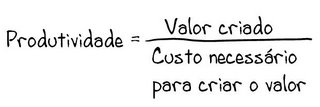
A produtividade é um rácio entre entradas e saídas, ou um rácio entre os recursos utilizados e o valor gerado, como ilustro em “Acerca do Evangelho do Valor”:
Quando o relatório refere:
“e não há produtividade sem qualificações, pelo que é essencial apostar na formação ao longo da vida, na reconversão e aquisição de competências.
...
Há ainda o problema das qualificações dos gestores, em que quase não se tem visto investimento, com o país a apresentar a maior percentagem de empregadores que não terminou O ensino secundário. "Em 2021, era o caso para 47,5% dos empregadores, praticamente o triplo da média europeia (16,4%).”
Podemos acreditar que a produtividade cresce com mais qualificações, mas esse crescimento é pouco para o que o país precisa, esse crescimento é baseado sobretudo na melhoria da eficiência, na redução das entradas. As melhorias de produtividade que o país precisa são aquelas que são baseadas em brutais aumentos do valor criado. Mais valor criado traduz-se em preços mais elevados. As melhorias de produtividade que o país precisa são baseadas no gráfico de Marn e Rosiello como explico em “Para aumentar salários ... (parte IV)”:
E isto leva-nos à lição dos finlandeses que aprendi em 2007:
"It is widely believed that restructuring has boosted productivity by displacing low-skilled workers and creating jobs for the high skilled."
Mas, e como isto é profundo:
"In essence, creative destruction means that low productivity plants are displaced by high productivity plants."
E isto leva-nos a um pedido que faço aqui no blogue há muitos anos: DEIXEM AS EMPRESAS MORRER!!!
Mais formação para os trabalhadores actuais ou futuros não resolve o problema porque o problema não está na oferta do mercado de trabalho, o problema está na falta de procura para trabalhadores mais qualificados. Mais formação dos trabalhadores num país sem procura por ela promove a emigração. Recordar o postal “Lerolero”:
“In my experience, well-educated Haitians are very easy to find as taxi drivers in the French-speaking part of Canada. An estimated 82 per cent of Jamaican medical doctors practise abroad. Seventy per cent of all inhabitants of Guyana with a university education work outside the country. North American hospitals vacuum up poor English-speaking countries like Trinidad for nurses, while in many places in the Caribbean Cuban nurses are the ones that keep the health sector functioning.”
Mais formação para os trabalhadores actuais é um tema que sigo no blogue desde a primeira década deste século com as promessas de amor de Sócrates. Recordar o tema da caridadezinha em “Caridadezinha strikes again”:
"The problem is that poverty and unemployment are not much influenced by the qualities and qualifications of the workforce. They depend, rather, on the state of demand for labor. They depend on whether firms want to hire all the workers who may be available and at the pay rates that firms are willing, or required, to offer, especially to the lowest paid."
Neste podcast, “Formação e salários: não podemos nivelar por baixo”, João Ferreira do Amaral pede estudos, sector a sector, para comparar as empresas mais produtivas de outros países com as empresas portuguesas, para retirar ensinamentos. E regresso a 2011 e a uma tarde de Verão em Guimarães a fazer horas para entrar numa empresa, e ao que aprendi com mais uns nórdicos em “Acerca da produtividade, mais uma vez (parte I)”. Comparar sector a sector é, inconscientemente, assumir que as saídas de cada empresa são semelhantes e que as diferenças estão na forma de gerir as entradas para produzir as saídas. O que os nórdicos me chamaram a atenção é que não faz sentido comparar a produtividade de quem faz sapatos que saem de uma mini-fábrica-ateliê a 600 euros o par com quem faz 2000 pares de sapatos por dia a 25 euros o par. Recordo de 2010, “As anedotas”.
Percebo que a Fundação José Neves e outras entidades se foquem na formação porque é algo que se pode planear e porque é algo que agrada a uma vasta fauna de partes interessadas instaladas no terreno e habituadas a viver da formação.
Então quem vai dar formação aos empresários? Daniel Bessa? Alguém de entre estes outros 24 cromos?
Deixem os empresários que estão a trabalhar em paz. Saúdem o seu esforço. Concentrem-se no que chamo o mastim dos Baskerville. Concentrem-se nas empresas e nos empresários que não existem. As melhorias de produtividade que o país precisa dependem das empresas e dos empresários que não existem. Recordo “Empresários e escolaridade ou signaling”.
Por fim, volto ao exemplo irlandês. Acredita que o brutal salto de produtividade na Irlanda foi conseguido à custa dos empresários irlandeses? Se acredita que sim, pense outra vez. Recordo, “Tamanho, produtividade e a receita irlandesa”.
Lembre-se do mastim dos Baskerville.
quinta-feira, junho 23, 2022
"you must organize around projects"
"a different way of thinking about knowledge work: you must organize around projects, not jobs.
...
Knowledge workers don’t manufacture products or perform basic services. But they do produce something, and it is perfectly reasonable to characterize their work as the production of decisions: decisions about what to sell, at what price, to whom, with what advertising strategy, through what logistics system, in what location, and with what staffing levels.
At desks and in meeting rooms, every day of their working lives, knowledge workers hammer away in decision factories. Their raw materials are data, either from their own information systems or from outside providers. They produce lots of memos and presentations full of analyses and recommendations. They engage in production processes—called meetings—that convert this work to finished goods in the form of decisions. Or they generate rework: another meeting to reach the decision that wasn’t made in the first meeting. And they participate in postproduction services: following up on decisions"
...
Knowledge work actually comes primarily in the form of projects, not routine daily tasks. Knowledge workers, therefore, experience big swings between peaks and valleys of decision-making intensity”
Fez-me recuar a:
- Avaliar projectos (parte II)
- Provocação para empresas certificadas complementada com a parte II
- Tenho de testar isto ...
"A ideia de fazer de cada ano um espécie de projecto, algo único e irrepetível, em vez de uma continuação da rotina de sempre, é capaz de ser útil para mudar mentalidades em muitas empresas."
Trechos retirados de "A New Way to Think" de Roger Martin.
quarta-feira, junho 22, 2022
"individuals work with one another"
"Culture. You can only change it by altering how individuals work with one another....So, what is culture and why is it so persistent and limiting to strategy?There are as many definitions of culture as there are for strategy, but I think of it primarily as a book of rules residing in the minds of employees that guides how they interpret situations and decisions. Culture is what helps a manager understand "how things get done around here,' "what I should do in this situation," and "who must I pay attention to." The rules making up the culture are developed by each person's observations of how people around them react to and explain situations and decisions, particularly those involving extreme outcomes with significant impact for the people involved, even if such decisions or events are unusual.The strength of a company's culture is determined by the similarity of the mental rule books of the employees. A culture is weak or diffuse if the rule books vary across peopleso that employees' interpretations of a given situation or decision are heterogeneous. Cultures are powerful when the people all have a very similar rule book and consequently interpret and react to the same decision or situation in the same way....Somewhat like a neural network in the brain, culture emerges from the interaction between the environment (the formal mechanisms) and individual behaviors (the interpersonal mechanisms). Because of that, little can be done to change the culture of the organization directly by fiat, and CEOs who make the attempt usually lose their jobs....For a culture to align with changes to the formal mechanisms of the organization, changes are required in the way members of the organization interact....When executives try to change an organization's culture, they often bring the wrong tools to the task-changes to formal processes and systems along with righteous admonition. This approach is doomed to failure because culture depends not on systems and processes or a leader's beliefs but on how individuals react to each other in the context of their rules and relationships. To achieve real culture change, executives should focus on and show discipline in how they structure the human interactions that make up an organization's working day. That requires investing time and committing to repetition. People won't change their ways overnight, but when they do, the consequences are profound and durable."
Trechos retirados de "A New Way to Think" de Roger L. Martin.
terça-feira, junho 21, 2022
Anónimo da província muito à frente
"Por que é que uma PME-tipo há-de trabalhar com uma multinacional só interessada no preço se tem mais hipóteses de ser bem tratada e ganhar mais dinheiro trabalhando com outras propostas de valor para outro tipo de clientes?.As multinacionais do ramo automóvel não são flor que se cheire, contratos leoninos com cláusulas que impõem respeito e medo..O meu conselho genérico para as PMEs é sempre o mesmo: "Fuja dessa gente. Não se iluda com as quantidades... quantos cêntimos é que vai ganhar por peça? Qual o risco que vai correr? Compensa?""
Em Março de 2016 escrevi Um optimista sem ser cor de rosa onde usei esta imagem:
O mundo 1 é para os pandas (chineses, ou empresas grandes capazes de lidarem com margens apertadas e quantidades grandes)."This is the typical dynamic in the modern era. There is full price/value discovery, and the goal of big customers is to grind down suppliers to cost plus as tiny a margin as possible through relentless shopping and negotiation. Smaller customers, on the other hand, are more inclined to buy an offer that meaningfully helps them “do more business.”The problem is that most B2B companies are still in the mode of thinking that big customers are the most important — the key to both growth and profitability. Hence, they still spare no expense to serve them and put their best sales resources against them. However, though they might expect gratitude in return, they get nothing of the sort. Big customers grind down their suppliers and provide zero rewards for the extra resources that suppliers dedicate to them.Meanwhile, these B2B companies underinvest in SME customers because they think of them as less important than their big customers....I think the next wave will feature two dynamics. First, B2B companies will figure out that big customers are not good for them and will make the transition to aligning their R&D efforts and their best sales assets behind SME customers."
segunda-feira, junho 20, 2022
"The payoff for price increases is massive"
"Sales professionals are ill prepared to talk with customers about price increases because they don't get trained and there are almost no resources to help them develop the skills to do so....One of the reasons that I hated price increases and believed that I was betraying my customers is that I didn't understand basic business fundamentals. I didn't understand that price increase campaigns are far more effective at generating profit and free cash flow than increasing topline revenue through sales volume increases or acquiring new customers. Nothing else in the business-to-business sales arsenal protects the health of your company like price increases. They protect the enterprise during inflationary periods, produce capital for investment in growth, help improve quality and service delivery, boost stock prices, and protect jobs.The payoff for price increases is massive. They can drop through as much as 400 percent more profit as increases in sales volume. For example, a l percent increase in sales volume, will produce 3.3 percent in profit. However, a 1 percent increase in price, when sales volume remains stable, delivers an 11.1 percent increase in operating profit. [Moi ici: Recordar Marn e Rosiello]...The bottom line is that increasing prices is the single greatest profit improvement opportunity and strategy for B2B enterprises. That is, of course, if you retain your customers along the way."
Trechos retirados de "Selling the price increase the ultimate B2B field guide for raising prices without losing customers" de Jeb Blount.