"The results show that executives feel that they have a high level of understanding of their companies’ strategic priorities, while sales reps — who aren’t typically in the planning meetings, on the conference calls, or roaming the halls with the people crafting strategy — said they did not.
...
The sales force gets better and better at things that leaders and customers value less and less while remaining unclear about performance expectations.
...
In order to achieve alignment, companies need to break these routines and treat causes, not symptoms.
...
They linked strategy to behaviors.
...
They changed their approach to training.
...
They revamped their compensation and performance evaluations."
sábado, julho 01, 2017
Alinhar vendas com estratégia
Na sequência de "Fiquei com curiosidade ..." recordei "Executives and Salespeople Are Misaligned — and the Effects Are Costly":

"A lack of workers"
"China Daily reported in 2015 the building of the first robot-led plant in Dongguan by the Guangdong Everwin Precision Technology company, in which it planned to use 1,000 robots to reduce the labour needed for the factory by 90 per cent.' The gearing is interesting, as the assistant general manager of the company indicated that sixty robots could take an assembly line that needed 600 workers in the past down to 100. So, not fully dark, but a significant reduction in the number of hands involved in the production process.Tendo em conta o que a Toyota e a Mercedes já aprenderam com a automatização, esta tendência pode contribuir para um acelerar do reshoring por causa da falta de flexibilidade e as exigências de quantidades mínimas crescentes por modelo.
.
This story is repeated in factory after factory, across sectors and companies around China. The Cambridge Industries Group (CIG) wants to replace two-thirds of its workers in a factory making optical networking equipment in Shanghai because labour costs have doubled over the past seven years and they face competition from automated manufacturing in Germany and other traditionally high-cost economies, According to Gerald Wong, the CEO of CIG, 'It is very clear in China: people will either go into automation or they will go out of the manufacturing business:. The main driver for these changes? A lack of workers. Hiring is difficult in the region, with estimates of a shortage of 100,000 workers from the local government. It may seem counter-intuitive to those outside China that there is a labour shortage in these areas, as the narrative was companies moving east to access the lower labour costs where hands were abundant. That has changed, as wages in manufacturing have risen and China's working-age population begins to shrink. According to some estimates, between now and 2050 China will see the number of its population aged between fifteen and fifty-nine shrink by 212 million." For the planners and factory owners across China, it looks as if they are hoping to pivot from labour-intensive manufacturing to robot-intense manufacturing, leaping forward to become a high-tech centre for making."
Por outro lado, a "lack of workers" relatada leva-me a fazer um paralelismo com as celuloses e os modelos cancerosos de crescimento. É preciso apostar num crescimento baseado na subida na escala de valor e não na quantidade pura e simples.
Trecho retirado de "From Global to Local" de Finbarr Livesey
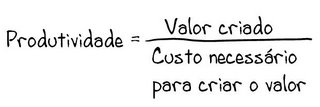
Prioridades?

Figura retirada de "Closing the skills gap: companies and colleges collaborating for change"
Tour de France 2017
O maior espectáculo desportivo em solo europeu começa hoje:

Força Froome e Cavendish.

Força Froome e Cavendish.
sexta-feira, junho 30, 2017
Curiosidade do dia
"O ministro da Agricultura afirmou que é preciso disciplinar as plantações de eucaliptos. Novas plantações vão ser proibidas excetuando transposição de áreas ecologicamente mal localizadas."O que são áreas ecologicamente mal localizadas?
Qual o critério para classificar uma área como bem ou mal localizada ecologicamente?
Recordo:
"Se o eucalipto for introduzido em territórios onde não exista falta de água, ao contrário do seu terreno natural, este crescimento será ainda mais rápido, com elevada voracidade de absorção de água e nutrientes dos solos. E é assim que em Portugal e Espanha temos boas condições para o eucalipto, razão pela qual os mais altos Eucalyptus globulus do mundo se encontram na Península Ibérica e não na Oceânia O eucalipto está perfeitamente adaptado a Portugal, o problema é que Portugal não está perfeitamente adaptado ao eucalipto."E volto a perguntar:
O que são áreas ecologicamente mal localizadas?Por que é que nenhum so-called jornalista coloca a questão?
Fazem-me lembrar o José Alberto Carvalho a convenientemente perguntar, "Esta assinatura é sua?" Em vez de perguntar, "E este projecto, é da sua autoria?"
Primeiro trecho retirado de "Capoulas Santos: É preciso “disciplinar” o eucalipto" (O mesmo que Abril passado se justificava assim):
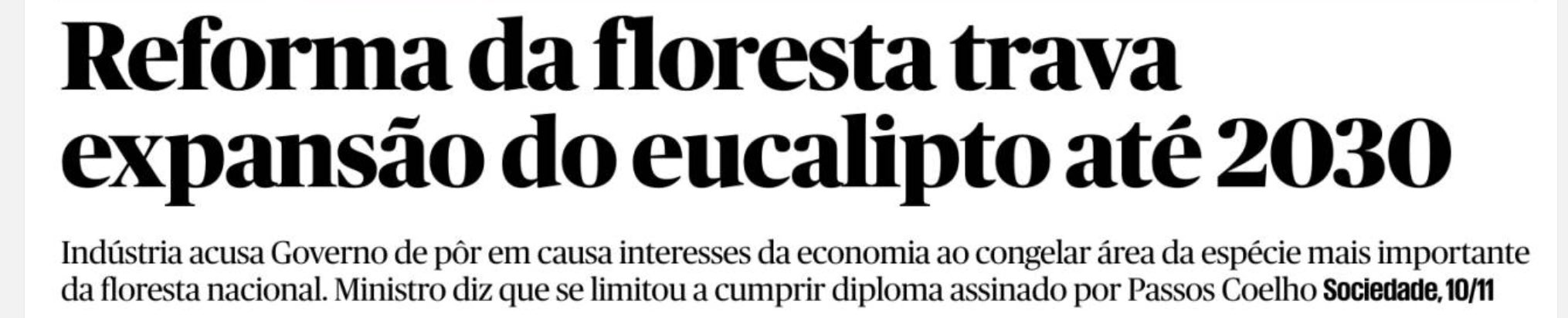
Segundo trecho retirado de "Eucaliptugal, o ecocídio da floresta nacional"

"All models are wrong, some are useful"
Há anos que uso esta frase "All models are wrong, some are useful." Ajuda a não ser fundamentalista, a aprender a tolerar os modelos "infantis" que encontro, segundo os meus padrões, mas que são autênticos quando bem intencionados e funcionam:
Trechos retirados de "All Models Are Wrong"
"All models are wrong, some are useful.
...
Remember that all models are wrong; the practical question is how wrong do they have to be to not be useful.
...
A model is a simplification which fosters understanding.
...
we believe in using models for the purpose of building a massive, but finite amount of fundamental, invariant knowledge about how the world really works. Applying this knowledge is the key to making good decisions and avoiding stupidity.
.
“Scientists generally agree that no theory is 100 percent correct. Thus, the real test of knowledge is not truth, but utility. Science gives us power. The more useful that power, the better the science.”
...
Too many people are caught up wasting time on physics-like precision in areas of practical life that do not have such precision available. A better approach is to ask “Is it useful?” and, if yes, “To what extent?”
.
Mental models are a way of thinking about the world that prepares us to make good decisions in the first place."
Trechos retirados de "All Models Are Wrong"
A força da testosterona é demolidora...
A propósito de "Pick-up da Mercedes já pode ser encomendada" que li ontem à noite lembrei-me logo da sensação que tive ontem de tarde quando passei por um SUV da Porsche.
Lembrei-me do hummer da Volvo e de "Reflexões sobre a evolução das marcas".
A diluição de uma marca avança assim... a força da testosterona é demolidora...
Lembrei-me do hummer da Volvo e de "Reflexões sobre a evolução das marcas".
A diluição de uma marca avança assim... a força da testosterona é demolidora...
A confiança é demasiado importante
Artigos destes "Tem a certeza de que está a comprar comida biológica?" põem em causa todo um sector.
Ao não identificarem os "culpados" lançam um suspeição sobre todos.
Justo ou injusto não interessa, é a vida.
Eu, se fosse um operador biológico procuraria forma de me destacar da massa e estaria a pensar em forma de me distinguir e de reforçar a minha credibilidade.
A confiança é demasiado importante para este tipo de negócio ...
Ao não identificarem os "culpados" lançam um suspeição sobre todos.
Justo ou injusto não interessa, é a vida.
Eu, se fosse um operador biológico procuraria forma de me destacar da massa e estaria a pensar em forma de me distinguir e de reforçar a minha credibilidade.
A confiança é demasiado importante para este tipo de negócio ...
quinta-feira, junho 29, 2017

Estas coisas não lembram à corte lesboeta
Ontem em conversa com um empresário fiquei a saber do caos que reina na zona de Águeda.
Parece que estas coisas não chegam ao mainstream, não lembram aos lesboetas que mandam nos media.
Águeda é um avatar do que vai acontecer em breve no resto do país. Águeda é forte na metalomecânica. Ainda há dias sublinhava isto:
Parece que estas coisas não chegam ao mainstream, não lembram aos lesboetas que mandam nos media.
Águeda é um avatar do que vai acontecer em breve no resto do país. Águeda é forte na metalomecânica. Ainda há dias sublinhava isto:
"“O setor não tem número de formandos necessários e isto é uma tragédia e com a taxa de desemprego a baixar, este é um problema que se vai agudizar”, sublinha."Este empresário já está a pensar numa resposta: automatização.
Ainda mais especulações
Conjugo facilmente o estarmos a entranharmos-nos em Mongo e o choque com a teimosia anglo-saxónica de continuar a acreditar no século XX: eficiência, volume, escala, custo.
"if investment declines over the long term, it could imply at least two bad trends -- either businesses don’t see many good opportunities, or society is becoming more short-termist in its thinking.
...
Net of depreciation, privately held American businesses are only investing about 2 percent of the country’s gross domestic product in the U.S. itself"
Constância de propósito?
Os mesmos que diziam isto em Fevereiro de 2017:
Agora dizem que a expansão do eucalipto começou em 2013.
Os mesmos que ainda em Abril deste ano diziam:
Como não recordar o tema da constância de propósito.
Os mesmos que ainda em Abril deste ano diziam:
"O Governo garante que pretende "aumentar a produção e a produtividade do eucalipto" e que continuará a apoiar o setor do celulose e do papel."Agora dizem:
"Capoulas Santos: “Não haverá mais um único hectare de eucalipto em Portugal”"
Como não recordar o tema da constância de propósito.
"knowing who you are and ... why you exist"
Um texto com uma séries de mensagens deste blogue concentradas num único ponto: "Brand Value Niche, What?"
"Your Brand Value Niche (BVN) involves knowing who you are and just as important why you exist.[Moi ici: O "who" tem a ver com o ADN]
.
Your ideal client is not everyone—it cannot be everyone, let me restate—it cannot be everyone.
...
You need to step back and take a sharp look at everything that you are doing. Ask yourself what am I doing well? What am I not doing well? What is it that excites me both in my personal life as well as my professional life? What do I think I could do better than anyone else in my field? [Moi ici: Tem de haver alguma coisa em que possamos fazer a diferença, algo que os clientes valorizem, ...]
...
The time you dedicate to clearly defining your brand’s value, offering, and audience will come back to you twenty-fold. If you do not give proper attention to this phase it can result in your company completely missing the target with your ideal client, create a lack of direction as to exactly where you fit in and not help you connect the right features and benefits with your most appropriate prospects.
...
- You can’t be everything to everybody. Avoid the urge to be everything to everybody–focus, focus, and focus!
- Having a unique selling point (USP) isn’t enough. A customer needs to see the value of your service or product as it relates to their life—not just that it’s unique or different.
- Be disciplined and consistent in your messaging. You only have a few moments to capture their attention and generate enough interest for them to want to learn more.
- Your internal culture reflects your external image. Make sure that everyone on the team is working with the same clear goal and vision.
- Don’t let conventional wisdom determine your customer value proposition. While conventional wisdom may serve as a guidepost, don’t get trapped by its limitations. Just because it works for someone else does not mean that it will work for your business."
quarta-feira, junho 28, 2017
No-brainer
Escrevo aqui muito sobre Mongo, sobre a explosão de tribos, sobre a progressiva radicalização de cada tribo e sobre o problema das empresas grandes, habituadas a trabalhar para a grande caixa da massa central, a tentarem continuar a servir todos.
Tribos radicalizadas valorizam a autenticidade...
Como é que as empresas grandes vão lidar com o desafio:
Tribos radicalizadas valorizam a autenticidade...
Como é que as empresas grandes vão lidar com o desafio:
"Startups can do anything..Trechos retirados de "Steve Blank Why a Company Can’t “Be More Like a Startup”"
Companies can only do what’s legal..
Startups can do anything One of the unheralded advantages of a startup is what at first glance appears to be its weakness. Initially, a startup has no business model and no market share to defend. Its employees and investors don’t depend on an existing revenue stream. If they select a business model that targets industry incumbents, they don’t have to worry about upsetting existing customers, partners or distribution channels.
.
Yet those very weaknesses give startups an overwhelming advantage in innovation. Startups can try any idea and any business model—even those that are on the surface patently illegal.
.
At times laws and regulations are in place for the health and safety of consumers. But often the legal obstacles confronting startups have been put in place by companies that look to the government and regulators as their first line of defense against new market entrants. (Existing companies also use network effects of monopolies/duopolies, distribution channel kickbacks, etc., to stifle competition.)
.
In the past, these anti-innovation tools were sufficient to keep new entrants out. But today, investors realize that companies that depend on regulation and artificial market constraints are actually vulnerable. Once presented with an alternative to the status quo, customers who have been locked into rent-seeking companies flock to innovative startups with business models that provide better service, lower prices, etc. Enormous financial returns are available to startups taking on incumbents, regulators and the law. So, startup investors comfortable making a risk capital bet are actively encouraging startups to go after large, static industries that look prime for disruption.
...
Companies can do anything legal In the 20th century companies worried about increasing their market share, profit margins, return on investment and return on net assets. They tenaciously protected their existing markets from other existing companies that were using the same business model. They very rarely worried about disruption from new firms as the barriers to entry (financial, legal, regulatory) were so high.
.
Ironically once companies become locked in their entrenched market positions, it became difficult for them to compete by breaking the same laws or untangling their existing channel relationships. In contrast to startups, companies are constrained by local, state and federal laws and regulations. The risk of breaking laws can result in large penalties and shareholder lawsuits. The Justice Department and State Attorneys General find large companies attractive targets.
.
As a consequence, one of the roles of the legal department in large corporations is to protect the company from straying into any legal or regulatory danger."
Uma mudança de paradigma
"Mass customization doesn't have to be a trend to offer an opportunity to differentiate yourself from competitors and boost margins. That's the point of the Bain study, which found that people are warming to the idea of customized products.Trechos retirados de "Mass Customization: Let Your Customers Have It Their Way"
.
Although fewer than 10 percent had actually purchased customized products or options, between 25 percent and 30 percent were interested. "While it is hard to gauge the overall potential of customization, if 25 percent of online sales of footwear were customized, that would equate to a market of $2 billion per year," Bain wrote.
.
It's not as though only giants can offer customization. FashionPlaytes is a young business that lets girls order customized clothing. Any auto or motorcycle shop that builds custom vehicles would be a clear example.
...
Customization is an old service that has a chance for some new appreciation. Customization can tie a customer closer to you and give them a reason not to do business with competitors who don't do things the customer's way."
"People don’t buy IoT"
Recomendo "People Don’t Buy IoT, They Buy a Solution to a Problem" à atenção do Victor M.:
"Too many product teams and entrepreneurs think, “If I connect it, they will come.” The problem is that people don’t buy IoT, they buy a solution to a problem.
...
The fact that we can connect any device to the Internet doesn’t mean we should. And if we’re not careful, we can fall into the trap of having technology looking for a problem, instead of starting with a problem and looking for the best way to solve it.
...
People don’t buy IoT, they buy a solution to a problem.
...
You see, Brita never set out to become an IoT company. They didn’t sit in their lab with IoT components trying to figure out what to build. Instead, they realized that IoT was a good tool to solve their user’s problem. Remember, people don’t buy IoT, they buy a solution to a problem.
...
So start by understanding your customer’s needs [Moi ici: O job to be done] and then choose the best tool for the job. It might be IoT and it might not. And figuring that out early on will save you a lot of time and money."
Surpreso explica a surpreso
A propósito de "Têxtil português conta história de sucesso ao FMI" onde se pode ler:
E recordando aquele título "Sei o que fizeste no Verão passado" viajo até 2010 e a "Arrepiante". Não foi só o FMI que ficou surpreso, foi a própria cúpula da ATP uma vez que a revolução foi bottom-up e começou pelas empresas mais pequenas.
A propósito deste exemplo usado pela ATP:
A TMG que apresentaram ao FMI não tem nada a ver com o têxtil... foi onde tive o meu primeiro emprego.
"“foi uma conversa simpática, na qual o FMI se mostrou muito interessado e surpreso por uma indústria dita tradicional ser hoje uma indústria moderna, incorporando tecnologia, design e serviço e aumentando a sua presença global“.Não deixo de enquadrar esta surpresa do FMI no que relato aqui há anos e anos como sendo a mentalidade da tríade, baseada no século XX: eficiência, escala, volume, custo.
...
Os responsáveis pelo setor têxtil aproveitaram a ocasião para demonstrar como um setor condenado há uma década exibe hoje uma dinâmica renovada e aparece como exemplo para outros setores na economia tendo, em 2016, ultrapassado a fasquia dos cinco mil milhões de euros em exportações.
...
A ATP destacou ainda, na sua apresentação, a mudança de paradigma do setor baseando-se a competição no valor e não no preço, o que implicou por parte do setor uma aposta no design, na moda, na tecnologia, na inovação e no serviço. E também um investimento em missões internacionais e na participação nalgumas das mais importantes feiras do setor."
E recordando aquele título "Sei o que fizeste no Verão passado" viajo até 2010 e a "Arrepiante". Não foi só o FMI que ficou surpreso, foi a própria cúpula da ATP uma vez que a revolução foi bottom-up e começou pelas empresas mais pequenas.
A propósito deste exemplo usado pela ATP:
"Isabel Furtado fez inclusivamente uma apresentação do grupo TMG, especialmente focada na mudança de uma empresa têxtil convencional para uma altamente tecnológica."Recordo este postal escrito num parque de campismo no Gerês "Exemplo da diversidade intra-sectorial".
A TMG que apresentaram ao FMI não tem nada a ver com o têxtil... foi onde tive o meu primeiro emprego.
terça-feira, junho 27, 2017
Curiosidade do dia

O amigo Aranha mandou-me esta!
Lembrei-me logo do calvário que ele viveu por causa da actuação desta Empresa na Hora.
Tecnologia e salários
Há dias chamei a atenção para isto:
Agora encontro:
 "even more critically, the enabling technology view implies that any improvement in technology should lead to higher wages for all types of workers. But wage declines for low-education workers have been the norm not the exception over the past 30 years in the US labor market. [Moi ici: Acredito que grande parte desta tendência deveu-se à deslocalização?] In particular, the real wages of workers with less high school, high school or some college have all fallen sharply since the early 1970s. The inability of this conical framework to account for the pervasive phenomenon of declining real wages of certain groups of workers is one of its most jarring shortcomings.
...
In particular, wages at the bottom, median and the top move very differently over different time periods. Most notably, in contrast with simple skill-biased technological change view, we do not see an opening of the gap between median and bottom wages.
...
there is an extended period from the mid-1980s to the mid-1990s where wages at the bottom are increasing more rapidly than wages in the middle of the distribution.
.
In contrast to a view based on enabling technologies helping the most highly skilled workers, we see rapid employment growth at the bottom of the wage distribution both in the 1990s and 2000s. The picture that emerges is thus one in which the economy is generating considerably more employment in lower- paid occupations than in occupations in the middle of the wage distribution.
.
Finally, we can also verify that this is not just a US phenomenon. The middle-paying occupations have contracted in every European country between 1993 and 2006, strongly suggesting that the employment patterns we are witnessing in the United States are due to common technological trends rather than idiosyncratic US factors.
...
In contrast to the standard framework based on enabling technologies, replacing technologies can reduce wages. This contrasts with the predictions of the canonical model we discussed in the previous section. The key is the difference between enabling and replacing technologies.
...
Pede-se aos teóricos sem skin in the game que olhem para as fotos da realidade. Por favor. Veja os empregos criados com curso superior pic.twitter.com/HTL4SdaRr2— Carlos P da Cruz (@ccz1) June 21, 2017
Agora encontro:

...
In particular, wages at the bottom, median and the top move very differently over different time periods. Most notably, in contrast with simple skill-biased technological change view, we do not see an opening of the gap between median and bottom wages.
...
there is an extended period from the mid-1980s to the mid-1990s where wages at the bottom are increasing more rapidly than wages in the middle of the distribution.
.
In contrast to a view based on enabling technologies helping the most highly skilled workers, we see rapid employment growth at the bottom of the wage distribution both in the 1990s and 2000s. The picture that emerges is thus one in which the economy is generating considerably more employment in lower- paid occupations than in occupations in the middle of the wage distribution.
.
Finally, we can also verify that this is not just a US phenomenon. The middle-paying occupations have contracted in every European country between 1993 and 2006, strongly suggesting that the employment patterns we are witnessing in the United States are due to common technological trends rather than idiosyncratic US factors.
...
In contrast to the standard framework based on enabling technologies, replacing technologies can reduce wages. This contrasts with the predictions of the canonical model we discussed in the previous section. The key is the difference between enabling and replacing technologies.
...
- Even with a single type of labor competing against technology or capital, a set of tasks shifting from labor to capital can reduce wages. This effect is further strengthened if there are multiple types of labor, and new technologies directly take away some of the tasks performed by a specific type of labor (for example, semi-skilled manufacturing workers or operators).
- For the same reasons as articulated in the previous bullet point, replacing technologies displace workers, and may cause unemployment.
- If new technologies replace tasks in the middle of the pay distribution, they will cause polarization of employment. Intuitively, these new technologies will take away the middle paying occupations, and thus the overall wage distribution will have a smaller, in some sense ‘hollowed’ middle, causing wage polarization. Interestingly, because workers dislocated by technology from the middle of the pay distribution will compete with others, changes in employment structure may be divorced from wage growth patterns. As a result, we may expect to find faster growth of employment in lower- paying occupations as those dislocated by technology also seek employment in these occupations, which is confirmed by the changes in employment structure shown in the figure below, but this does not necessarily imply faster wage growth in these expanding occupations."
Trechos retirados de "Daron Acemoglu on: Will robots take our jobs?"
Subscrever:
Mensagens (Atom)
%2006.21.jpeg)