sexta-feira, junho 05, 2015

Ter uma estratégia clara = escolhas claras = ideias claras = desejar sucesso à concorrência (parte III)

Parte I e parte II.

Do relatório "European Health & Fitness Market - Report 2015" da Deloitte, retiro estes trechos de uma entrevista com Stefan Tilk, director geral da cadeia Fitness First Germany.
.
Esta é a terceira entrevista que aqui citamos, e a terceira abordagem diferente ao mundo do fitness, mais uma forma de servir um segmento de clientes diferente.
"From your point of view, what are the major trends and developments in the fitness industry that influence your company now and also in the future?.
Digitalisation plays a key role. We see it as an instrument for achieving our major goal: interaction with our customers. Therefore, we use different ways to get in contact with the customers and plan to increase the integration of fitness in the daily life of our members by implementing innovative products and services. Digitalisation also means having an increasing focus on individualisation. With the term "mass customisation", other companies from different industries have already shown that there can be new business models out of this movement. We challenge ourselves: How can we fulfil the customers' increasing expectations? We cannot expect that our members are automatically satisfied when we open a new club. The entire fitness industry, and in particular Fitness First, needs to focus on the individual members' needs. It is important to find reasonable answers to new questions. Moreover, the fitness market is fragmenting. Particularly, micro gyms have seen strong growth over the last years because those concepts fulfil the customers' needs and the investment is manageable. We adopted this development and opened a site with a focus on slow movement in March in Cologne under the new brand "re-level". With "re-level" we implement a different brand identity and offer a new course and price model. The range of courses of re-level includes different elements from yoga to Pilates to functional patterns of movement and cardio sequences that lead to a compensation of tension. The visitor can choose from a unique combination of courses. Instead of a monthly membership fee, "re-level" clubs offer a "pay-as-you-go" concept to be flexible concerning the visits in our sites. If the new concept will be successfully adopted in Cologne, we can envision implementing this concept in other cities. [Moi ici: Mais uma referência ao uso da experimentação para a tomada de decisões de escalar de novas abordagens de negócios]
.
In which market segments do you see a potential to catch up compared to other industries and from which industry can your industry learn? .
The fitness industry can learn from different market segments and industries. A comparison with the retail industry seems to be reasonable. With its new design and product concepts the retail industry offers lots of approaches and inspiration for the fitness industry. More precisely, I think about "shop-in-shop" systems, a link between product worlds and cooperations. [Moi ici: E, com isto, fico a pensar num modelo de negócio de loja multimarcas. Um espaço comum gerido por uma entidade que o promove e aluga a profissionais especializados em disciplinas de fitness, cobrando aos clientes e pagando aos profissionais. Uma espécie de El Corte Ingles de serviços de fitness?]
...
How would you assess the development of the different fitness industry segments and how do you see the alignment of Fitness First in the future? .
There will always be a market for the premium segment. The net income of the German population is increasing constantly and the demand for exclusivity is analogue to this development. Vice versa, the discount segment focuses on the opposed trend. Nowadays, people do not associate "discount" with lower standards, but with "value-for-money" aspects. Concepts such as McFIT, clever fit and FitX have adopted this trend and their success validates their existence."

Duas dúvidas de um anónimo da província

Duas notícias, duas empresas, duas dúvidas de um anónimo da província:

"Para a Efacec, a entrada do novo accionista vai implicar a mudança na gestão e uma aposta crescente em Angola e noutros mercados africanos."
A aposta crescente em Angola, e em outros mercados africanos, significa que deixará de ter recursos para trabalhar o mercado norte-americano? Se sim, é uma genuína escolha estratégica legítima. Terá consequências na gama de produtos e nas margens? Implicará produtos mais maduros? É uma mudança importante nos factores críticos de sucesso, que implicará outros tipos de competências.

"Um grupo de seis bancos, encabeçado pelo maior credor de 23 milhões de euros em dívida, afastou a família Rocha da gestão e nomeou um ex-quadro da Sonae e da Amorim para arrumar a casa"
Espero que o afastamento tenha só a ver com os cargos da gestão de topo e, porquê um ex-quadro da Sonae e da Amorim?
.
Quadros da Sonae Indústria e da Amorim são treinados e são muito bons na gestão de negócios em que a eficiência é fundamental, em que a gestão interna da "Gemba" é crítica. Contudo, o campeonato da Viriato não é o preço, não é a eficiência. O princípio dos problemas da Viriato resultaram do azar de um investimento forte, motivado por um grande sucesso comercial, ter cruzado com uma baixa importante da procura no terrível ano de 2009, algo conjuntural, o know-how e o know-who da família continuam a ser importantes. Continuam ligados ao projecto?

quinta-feira, junho 04, 2015

Curiosidade do dia

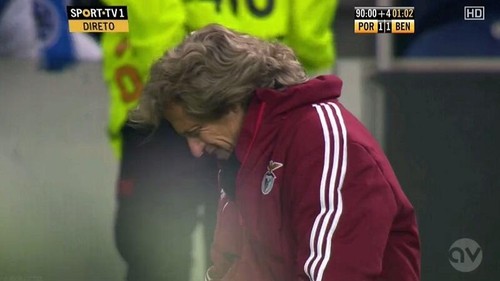
Agora, neste momento em que Jesus deixa o Benfica, recordo esta imagem mais do que nunca.
.
Nas duas épocas seguintes saiu por cima.
.
Todos nós podemos ter de ajoelhar. O Eclesiastes diz-nos que ninguém pode prever o futuro, que se pode fazer tudo bem e, no fim, não ganhar o prémio.
.
O importante não é o termos de ajoelhar, o importante é o que fazemos depois do ajoelhar, é a forma como lidamos com o infortúnio... podemos optar por lá ficar, por nos martirizarmos, por culparmos outros pelo que nos aconteceu e não digerirmos, e não aprendermos com a derrota.
.
BTW, espero que Bruno de Carvalho, que estava a fazer o papel de Sócrates-2005, e bem, não tenha passado a fazer o papel de Sócrates-2009

Acerca das escolhas que fazemos

Um excelente resumo dos vários mecanismos que afectam as escolhas que os humanos fazem em "The Psychology Behind How We Make Choices":
  • Bias;
  • Priming and Behavior;
  • Priming and Choice;
  • Bias and Choice;
  • 1) Anchoring bias
  • 2) Framing effect bias
  • 3) Ingroup bias
  • 4) Loss aversion bias
  • Choice Overload;
  • Choice and Willpower;
  • How to Make Choosing Easier
  • 1) Cut
  • 2) Make things concrete
  • 3) Categorize
  • 4) Condition for complexity
"The reasons we make decisions are not always rational and can’t be isolated from who we are, where we are, or maybe even how long it took us to decide what outfit to wear that morning. But by being aware of the psychological factors that affect our choices -- and recognizing how a decision we make at 8 a.m. affects one at 3 p.m. -- we’ll be able to not only make better decisions for ourselves, but help others do the same."


Para reflexão (parte VI)

Parte I, parte IIparte IIIparte IV e parte V.
.
Nos últimos dias tem sido um festival de textos e vídeos associados à Bayesian approach da estratégia.
.
Por exemplo:
"You are so busy looking at what 3D printing can’t do that you’re ignoring what it can do!
.
While her competitors had dismissed additive manufacturing because it couldn’t (at that point) print an entire product, she had focused on just one element of the product. Her firm ramped up from 100 customized parts to 10,000 in just one year. It is now expanding into other parts, and will soon be able to offer customization of the overall product at a premium price. As the company moves down the learning curve and costs come down, the savings from reduced waste, inventory, and assembly labor will even make it competitive for the mass production segment of the market."
  • "The Discipline of Business Experimentation" (artigo de Stefan Thomke e Jim Manzi, publicado na HBR de Dezembro de 2014)
"big data can provide clues only about the past behavior of customers - not about how they will react to bold changes. When it comes to innovation, then, most managers must operate in a world where they lack sufficient data to inform their decisions. Consequently, they often rely on their experience or intuition. But ideas that are truly innovative - that is, those that can reshape industries - typically go against the grain of executive experience and conventional wisdom.
.
Managers can, however, discover whether a new product or business program will succeed by subjecting it to a rigorous test.
...
A rigorous scientific test, in which companies separate an independent variable (the presumed cause) from a dependent variable (the observed effect) while holding all other potential causes constant, and then manipulate the former to study changes in the latter."

  • Numa outra entrevista incluída no relatório "European Health & Fitness Market - Report 2015" da Deloitte, desta feita com Stefan Tilk, Director Geral da cadeia Fitness First Germany
"Before looking into the future, what have been the major developments and milestones for your company during the last twelve months?
.
A major milestone in 2014 was the acquisition of New-Moove, an online gym. We are convinced that there will be a strong link between the online and offline world in the near future. Therefore, we negotiated with different providers of online gyms and finally decided to acquire NewMoove for a number of good reasons.
...
Particularly with emphasis on the second aspect, we had to develop and revise our products and prices, for both our new and existing members."

Ou até mesmo:

Stuff vs experiences (parte IV)

Parte I, parte II e parte III.

Já na parte II se comentaram as conclusões de Gilovich. Sim, reconheço a superioridade das experiências sobre as coisas mas... também sei que as coisas podem adquirir uma conotação trazida por serem capazes de embeberem certas experiências que partilhámos com elas.
.
Por exemplo, o velho saco-cama que tantas vezes me acompanhou, os velhos binóculos, o velho chapéu comprado no aeroporto de San Francisco, tudo coisas com as quais vivemos experiências e que absorveram essas experiências.
.
Por exemplo, esta caneta que comprei há mais de 20 anos:
Já passamos por tantos projectos juntos que é preciosa para mim. Depois, há dias, seguindo as instruções de um vídeo no YouTube consegui limpá-la e pô-la melhor que nova, em termos de escrita.
.
Mas voltemos a Gilovich através do artigo "The 7 Reasons That Science Says You Should Pay For Experience, Not Things":
" experiences are more likely than material goods to lead to happiness.
...
[with experiences]1: We see the world through rose-tinted glasses
...
You can make them seem better in your mind.
...
[Moi ici: Claro que o artigo começa mal quando assume que correr, ou dar um passeio à chuva, é sempre uma má experiência. Pessoalmente, por exemplo, adoro fazer jogging debaixo de uma chuva miudinha] Of the cyclists, they found that even the ones who'd had a bad experience—a day of cycling in the rain—had a great time. When asked later, instead of thinking of that rainy day as unpleasant, even though it was at the time, they re-interpreted it as rewarding.
...
With experiences, our memories bring the best bits to the front and give them a rosy glow—and the annoying, tiresome parts fade into the forgotten background.
...
2: We get bored of stuff easily
...
3: It's harder to compare experiences
...
4: The life-changing magic of flow
...
5: To wait (for an experience) is great
...
6: Experiences make the man (and the woman)
Experiences are better than material goods because we are more likely to think of them as contributing to, and part of, who we are.
...
7. We're people people"

O impacte da China nos preços mundiais

Dois artigos super-interessantes e bem reveladores das redes de relações de causa-efeito que não estão à vista de todos mas que afectam a nossa vida a nível global.


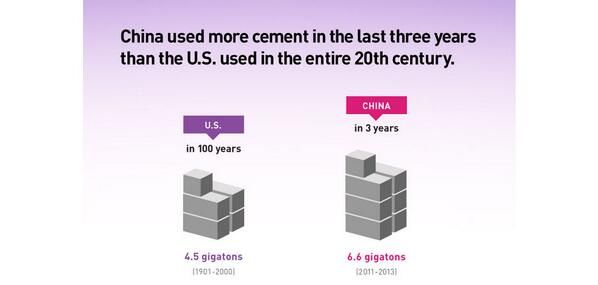
Este ritmo de consumo:
Não podia continuar!
.
Enquanto durou, foi transmitindo sinais a muitos actores presentes no mercado, que resolveram investir para dar resposta a novos níveis de procura no futuro.
.
Só que o futuro só é uma continuação do passado até deixar de ser.
"A dozen years ago, low-cost workers from the countryside poured in to China’s factories, helping bring down the cost of everything from T-shirts to tricycles.
.
Then the country’s booming demand for commodities such as oil and cotton helped to reverse that downward inflation trend, as natural-resource prices surged. Now, China’s excess manufacturing capacity and slowing growth rate are changing the equation again, putting renewed downward pressure on prices.
.
Milk producers in New Zealand, coal miners in Australia and sugar growers in Brazil have been forced to cut their prices after finding they had overestimated commodity demand from China. At the same time, Chinese manufacturers, stung by their country’s economic slowdown and excess capacity, are flooding export markets with finished goods such as tires, steel and solar panels.
...
Global deflationary pressures emanating from China are symptomatic of wider demand issues gripping economies from South America and Europe to much of Asia.
...
Last year, China exported 94 million metric tons of steel, more than the total output of the U.S., India and South Korea, the world’s third, fourth and fifth largest producers.
...
The price of a common steel product called hot-rolled coil has dropped by 44% since March 2012,
...
In 2013, Chinese authorities named 19 sectors plagued by overcapacity in the country, including cement, aluminum, copper, chemical fiber and paper. “This has happened again and again in markets, but this was on a super scale,” said Daniel Yergin, vice chairman of the Colorado market-research firm IHS Inc. “People invest, but they don’t see what everybody else is doing at the same time.”
...
Rubber trees take about seven years to mature. Planters had to decide in 2007—when China’s gross domestic product expanded by 14.2%—how many trees to plant to meet demand in 2014. When it was time to harvest, the Chinese economic growth rate had fallen by about half.
...
A tremendous amount of capacity came on line [in China] before people realized it wasn’t sustainable,” Mr. Grant said. “By then, it was too late.”"
Ah, e já agora, antes que comecem a dizer que o preço do leite deriva do fim das quotas leiteiras, convinha ler:
"New Zealand’s milk industry shows how commodity-producing countries across the world are struggling after having overestimated demand from China’s fast-growing economy.
.
As with sugar producers in Brazil, rubber farmers in Thailand and iron ore miners in Australia, New Zealand’s milk producers are coming to grips with the reality that Chinese demand didn’t materialize as expected when capacity was put in place many months back.
...
World markets are oversupplied with dairy commodities after farmers globally increased production in response to the very good milk prices paid 12 to 18  months ago,”
...
“The value of whole milk powder we sent to China in April 2015 was a fifth of the April 2014 value,” said Statistics New Zealand’s international statistics manager, Jason Attewell. “Volumes were a third of what they were in April 2014, and lower prices made up the rest of the fall in value.” Whole milk powder prices have tumbled to $2,390 per metric ton at the latest auction on GlobalDairyTrade, an internet platform, from $5,000 in early 2014.
...
It isn’t just New Zealand feeling a fallout. U.S. consumer milk prices have dropped in six of the past seven months. They are down 7% since September."
Há também aqui qualquer coisa sobre a dimensão das empresas relacionada com a rapidez da circulação da informação e o risco das bolhas.

quarta-feira, junho 03, 2015

Curiosidade do dia

"OCDE sobe previsão de crescimento e acredita em défice abaixo de 3%"
.
.
.
Oh, wait!!!
.
"Portugal vai crescer mais (e ter mais défice), prevê a OCDE"
.
A realidade existe mas nunca a poderemos conhecer de verdade, o que existe é a nossa interpretação dos estímulos que nos chegam da realidade, o que vemos é o que o nosso cérebro permite que vejamos.

Workshop "Formular uma Estratégia" (parte III)

Parte I e parte II.

Depois do primeiro passo:
1. Qual é a vantagem competitiva da sua empresa?O que é que os seus melhores clientes valorizam? O que é que ela faz como ninguém?
Vem o segundo:
2. Qual é o espaço competitivo onde actuar? 
Sim, qual é o ecossistema onde está envolvida?
Recordar:

Depois:
"Pick the biggest market you can successfully dominate, the biggest slice where you can get through the Dip and be seen as the best in that world."
Conhece a curva de Stobachoff da sua empresa, o que é que ela lhe diz?
Quem são os clientes-alvo e outros actores que vai servir?
O que é que eles procuram e valorizam?
Qual é a proposta de valor que lhes vai oferecer?
Como vai fazer a diferença?


Local e data: Porto, 30 de Junho
Duração: 7 horas
Preço: 90 €
Inscrição: metanoia@metanoia.pt com o descritivo WFE0115
.
Continua.


Talvez a solução passe por empresas menos grandes

A propósito de "A palette of plans" onde se pode ler:
"The BCG trio argue that business is so fast-moving and diverse these days that a single, overarching strategy will no longer do. The competitive landscape is constantly changing in many industries; businesses speed through the life-cycle from stars to dogs. So, they say, wise bosses should choose from a “strategic palette” in much the same way that artists choose from a palette of colours. The book identifies a handful of primary strategies, that bosses should be ready to switch between and, at times, blend."
Então, as empresas grandes têm tanta dificuldade em se concentrarem numa estratégia e aparecem uns tipos a propor uma paleta de estratégias que até podem ter de ser usadas em simultâneo... come on!
.
Talvez a solução passe por empresas menos grandes, por menos corporações, e mais proximidade com os clientes-alvo.

Um bom exemplo do que é um mau exemplo

Nos últimos tempos andava a desconfiar mas não tinha termo de comparação.
.
Entretanto, numa casa de banho muito pouco utilizada chegou ao fim o rolo de papel higiénico, como é muito pouco utilizada o rolo deve ter sido comprado há muitos meses. Então, fiquei com uma prova do que desconfiava:

À esquerda o núcleo do rolo antigo, à direita um rolo adquirido há quinze dias.
.
Comparar o diâmetro de cada cilindro.
O núcleo do rolo antigo cabe facilmente dentro do núcleo do rolo recente.
.
Estranho que os fabricantes de papel higiénico não tenham de identificar os metros lineares ou outra forma de quantificação do que estão a vender.
.
Às tantas, especulo, ainda se descobre que as várias marcas mudaram em simultâneo a dimensão do núcleo do rolo.
.
Este é um bom exemplo do que é um mau exemplo do que uma empresa pode fazer para extrair ou capturar mais valor. Em vez de aumentos internos da eficiência, para extrair mais valor, em vez de melhorias na comercialização para capturar mais valor, em vez de melhorias na proposta de valor para originar mais valor, temos estes truques.

Ter uma estratégia clara = escolhas claras = ideias claras = desejar sucesso à concorrência (parte II)

Parte I.
Novamente, outra entrevista do relatório "European Health & Fitness Market - Report 2015" da Deloitte, desta feita com Scott Lloyd, CEO da Lloyd Leisure.
"Could you briefly describe the concept behind David Lloyd Leisure? What sets your company apart from the competitors?
.
David Lloyd Leisure was established with the aim of providing exceptional service and unrivalled facilities to enable our members of all ages to enjoy active, healthy lives. Everyone who works for us is united under one principle — giving their personal best to allow others to achieve theirs.
.
What sets us apart is that we're much more than a gym — we're a club in the truest sense of the word; a place where there's something for everyone — from tennis courts to swimming pools, from children's dedicated facilities to spas — a place where the whole family can spend quality time together or doing their own thing, and a place that benefits from a real social and community atmosphere.[Moi ici: Como se lê mais à frente "a health, sport and leisure concept for the whole family", sempre a tecla de um espaço para a família, para uma comunidade. Um alvo bem diferente da gente que não quer compromissos e não tem tempo]
...
Is there further growth potential in the fitness industry in general; if so, in which regions or segments? .
Yes, absolutely. Over the past few years, people have become increasingly aware of the crucial role regular exercise plays in long-term health and the need to incorporate it into their lifestyles. It used to be the case that health club membership was considered a luxury item, but today this is far more a necessity; keeping active and healthy has become a way of life - for all the family. We are seeing this shift in consumer behaviour both in the UK and Europe, as well as further afield.
...
In recent years, low-cost operators have significantly impacted the European health and fitness industry. How would you characterise their role in the UK market today and how do they affect your business? .
Over recent years, we've seen a seismic shift in opportunities for the low-cost operator in an array of industries including the health and fitness sector. While we are likely to see more operators vying for business at this end of the market, we are also seeing growing consumer demand from a customer base who want much more than those limited offers. There is a significant and rising demand for a wider lifestyle offering, incorporating health, sports, leisure and wellbeing clubs. Our offering is very different to that of the low-cost operators, but their presence in the market is positive for the sector; it's great for consumer choice and for keeping the industry fresh, dynamic and constantly evolving in line with customers' diverse needs."
[Moi ici: Outra vez a consciência de que a procura não é homogénea, de que diferentes grupos procuram e valorizam coisas diferentes, de que a diferenciação na oferta permite a coabitação pacífica e, que o low-cost cria clientes novos]


Acerca das farmácias

Por causa de um projecto em curso, estas palavras fazem todo o sentido:
"O futuro das farmácias passa por uma redefinição do modelo de negócio, ou seja, para sobreviverem, as farmácias têm de alterar o seu papel.
...
"Não será propriamente um papel mais activo, mas sobretudo papéis diferentes, que vão além da dispensa de medicamentos",
...
A farmácia fica hoje a meio do caminho entre a auto-medicação e a procura do médico, mas poderia vir a ser mais do que um ponto de passagem. Por exemplo, poderia realizar exames médicos básicos (como sangue, urina ou mesmo raio-x). "O desafio é saber se há capacidade de fazer com que as farmácias passem a participar de outra forma na cadeia de valor da saúde, por exemplo, colaborando na prevenção e monitorização da saúde da população",
...
Mas esta maior colaboração implica também uma ligação com outras profissões de saúde, por exemplo, se se pensar no "acompanhamento de doentes crónicos, significa uma maior ligação aos médicos de família","
Recordar o recente postal "Acerca de sectores estáveis e demasiado homogéneos na oferta (parte III)".
.
Este outro texto:
"Para Paulo Duarte deveria ser criado “um sistema que incentivasse e beneficiasse o farmacêutico a dispensar genéricos”.
.
Há comprimidos, muitos, que são mais baratos do que uma carcaça. Algo está mal neste processo. O modelo que foi criado é, na nossa opinião, totalmente ineficaz”, considerou."
Ao lidar com as estratégias para uma farmácia, a toda a hora estou a chocar com barreiras legais e regulamentares.
.
Em muitos negócios, os donos das prateleiras recusam-se a vender produtos que não dão a rentabilidade adequada ao espaço. No caso das farmácias, com a teia regulamentar, o sucesso do eficientismo veio trazer ao de cima as incongruências do sistema, o dono da prateleira é obrigado a vender artigos que lhe dão prejuízo.
.
A verdade é que alguma coisa vai ter de mudar, acompanhemos...

terça-feira, junho 02, 2015

Curiosidade do dia

Por favor, fazer chegar a este senhor "Taxa de suicídio em Portugal não aumentou com os anos da crise" esta explicação "A felicidade é sempre uma medida relativa":
"Citizens of happy countries have higher suicide rates than citizens of unhappy countries, because they look at the smiling faces around them and the contrast is too great."

Workshop "Formular uma Estratégia" (parte II)

Parte I.
.
Ao longo dos anos tenho escrito aqui no blogue sobre a importância das empresas terem uma estratégia, sobre a importância de escolherem os seus clientes-alvo. Por exemplo:

Sobre a importância da diferenciação, para fugir ao aperto da comoditização. Demasiadas empresas pensam que o valor é criado quando produzem um produto ou prestam um serviço, por isso, acham que estão no negócio X ou Y. Quando, na verdade, o seu negócio é perguntar aos seus clientes-alvo, aqueles que pode servir com vantagem, como pode ajudá-los. O seu negócio é apresentar propostas de valor que serão utilizadas como recursos pelos clientes, para atingir objectivos, resultados, experiências, na sua vida. Por isso, escrevo sobre os sectores demasiado homogéneos na oferta:
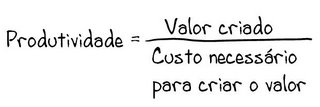
Outro tema a merecer reflexão, quando quero chamar a atenção para a importância das empresas terem uma estratégia sua, própria, é o da distribuição de produtividades:
A distribuição de produtividades elimina o efeito do exterior no desempenho das empresas e revela o impacte das suas idiossincrasias, das suas decisões, da sua estratégia, nos resultados.

O que propomos é um dia de trabalho sobre um caso que traga consigo, o da sua empresa ou outro, e procurar desenvolver uma estratégia para fazer face à realidade, ou para criar uma nova realidade.
.
Qual é a vantagem competitiva da sua empresa?
O que é que os seus melhores clientes valorizam?
O que é que ela faz como ninguém?
.
Este será o primeiro passo, partir do que se é, do que se tem, da experiência adquirida... ou da surpresa, do inesperado.
.

Local e data: Porto, 30 de Junho
Duração: 7 horas
.
Continua.


"O sector está a dar a volta."

A propósito desta reportagem, "«Negócio por uns fios»", sobre o olhar para a lã com outros olhos, recordar "Qual é o nicho?"
.
Por exemplo, o ciclo mencionado aos 15:50, descrito no postal:

Ter uma estratégia clara = escolhas claras = ideias claras = desejar sucesso à concorrência

Mão amiga deixou-me consultar o relatório "European Health & Fitness Market - Report 2015" da Deloitte. Concentrei a minha leitura numa série de entrevistas a alguns players europeus do mercado do fitness.
.
A que mais me encheu as medidas foi a feita a James Balfour co-fundador da 1Rebel:
"Could you briefly describe the concept of 1Rebel? What sets your company apart from the competitors? [Moi ici: Reparem como o homem tem os seus clientes-alvo identificados claramente. Reparem como faz sentido escolher o contrário do que propõe, sinal de que estamos realmente perante uma estratégia].
We are a true "boutique - micro gym" and market disruptor, targeting the cash-rich time-poor part of the London city population. We have conceived 1Rebel as a premium experience from start to finish, from the classes and the instructors through to the changing rooms and the organic food and juices in our restaurant. It is a five star offering that is unique.
.
We have a great location ....  We have hired the best people.
.
By getting rid of memberships and contracts, you are offering high flexibility, but at a comparably high price. What makes you confident that this strategy will be successful? [Moi ici: Prescindiram de aspectos intocáveis no modelo tradicional do negócio]
Indeed, not having a contract is a risk. But we believe strongly in our unique product that delivers our customers a fantastic experience ... they want flexibility, not signing a mortgage.
...
How do you see the role of the so called "wearables" (Fitbit, Jawbone, Fuelband, etc.) and their influence on motivation/retention? 
[Moi ici: Qual será a resposta, o ponto de vista de uma empresa que aposta na experiência da interacção?I am not yet convinced that wearables are the answer. It is indicative that Nike dropped their Fuelband project. The current models out are not yet there. We need to see improved next generations of these wearables before they will really make a big impact. Maybe Apple Watch will be the answer. At 1Rebel we believe not so much in high tech in the fitness experience; we rather let the good old honest way of your body telling you that you have had a great workout....
Is there further growth potential in the fitness industry in general; if so, in which regions or segments? [Moi ici: Acerca da importância de ter uma estratégia, de fazer escolhas]
...
I see further growth in the "boutique" model that we have launched as well as in the high-end and low-cost side of the market.
[Moi ici: Temos o nosso modelo, acreditamos nele e, acreditamos que outros, com outros modelos também podem ter sucesso, cada um no seu espaço, servindo clientes diferentes. Isto é, na prática do mundo dos negócios, o exemplo dos rouxinóis de MacArthur ou das paramécias de GauseYou need to be clear in your positioning; to be all things to all people gets you into trouble fast!.
In recent years, low-cost operators have significantly impacted the European health and fitness industry. How would you characterise their role in the UK market today and will this trend continue in the near future?  [Moi ici: Outra resposta interessante, em linha com o que ando a dizer há anos sobre a entrada das cadeias low-cost no mercado do fitness]
.
Low-cost clubs have "commoditised" the sector. They are good for a certain type of customer and I believe they have expanded the market [Moi ici: Quando abre um ginásio low-cost há um número de clientes novos que entra no mercado. Alguns desistem e não voltam. Alguns apreciam a oferta e fidelizam-se a este nível de preço e outros, descobrem que querem mais, indo alimentar a procura de outros players com ofertas diferentesThe UK was rather late with embracing the budget model, but is now catching up fast and that is a good thing for the market."

Os macacos não voam, trepam às árvores, um exemplo

Gosto muito da metáfora de Hausmann:
"os macacos não voam, trepam às árvores"
Recordar:
Foi dela que me lembrei quando li este artigo "A.Silva Matos fornece tanques de hélio para Centro Espacial do Japão" que mão amiga me fez chegar (obrigado Célia):
""Isto representa a aposta que a empresa tem vindo a fazer no sentido de entrar em mercados cada vez mais exigentes tecnicamente", explicou a responsável. Para  trás vão ficando os tempos em que a empresa apenas produzia tanques para  transporte de leite, vinho ou azeite."
Um exemplo de subida na escala de valor, não por causa de um OVNI transplantado para cá, ao estilo da Qimonda, mas acrescentando algo mais a um produto tradicional


O exemplo das conservas

A revista Exame deste mês de Junho traz um artigo a merecer alguns sublinhados, "Conservas na Crista da Onda".
.
Primeiro, alguns números muito interessantes:
  • Em 2000 as exportações portuguesas de conservas rondavam os 87 milhões de euros; e
  • Em 2014 as exportações portuguesas de conservas atingiram os 193 milhões de euros.
Segundo, o perigo de ignorar os custos de oportunidade:
  • A tentação de concentrar a atenção em substituir os 100 milhões de conservas importadas, em vez de concentrar a atenção e recursos em ganhar novos mercados;
  • Por exemplo, o calçado português não está preocupado com as importações, tem muito mais a ganhar com as exportações para mercados mais exigentes e, dispostos a pagar mais.
Gosto do exemplo das conservas porque permite ilustrar facilmente as várias opções de abordar o mercado. Recordar:
O exemplo das conservas são uma aplicação prática da metáfora da biologia para a economia, são um exemplo dos rouxinóis de McArthur.

Este pormenor para mim, um outsider, é delicioso:
"A La Gondola imprime nas embalagens da sua marca de topo, a Millésimés, o ano da campanha da pesca da sardinha que está na lata. "Como o vinho, elas também refinam e enobrecem com o tempo", conta. O conceito valoriza o produto, que já "causa furor" em França ou Itália."