sábado, março 08, 2014

IDIC

É sempre um gosto ler Don Peppers, desta vez "Building Customer Relationships in Four Steps".
.
Nós que aqui no blogue advogamos o papel da relação, da interacção com os clientes, da identificação dos clientes-alvo e da concentração e foco do negócio, não podíamos deixar de sublinhar:
"In order to set up and manage your relationships with individual customers, you have to accomplish four basic things:
.
Identify customers individually. Obviously, you can’t have a relationship with an audience or a population, but only with an individual. So before you can establish a relationship you must be capable of identifying customers, one customer at a time.
...
Differentiate customers, one from another. Customers differ from each other, in terms of both their value to your business, and what they need from your business.
...
Interact with customers. Almost by definition, a relationship depends on some interaction between two parties. You want those interactions to be cost-efficient, so drive more and more interactions into more efficient channels. But you also want them to be effective -- that is, to tell you something about the customer's needs or value, for instance, that you can't learn simply by observing.
.
Customize for customers. The “pay off step” for managing a customer relationship comes when your business behaves differently toward that customer. We call this "customization" even though we're not necessarily talking about it in terms of literally customizing the product or service. But whenever I treat Customer A different from Customer B, based on what I think I know about their differences, I am "customizing" the customer's treatment.
...
The first two tasks – identifying customers and differentiating them – are steps that a company can take in the privacy
...
By contrast, the third step – interaction – demands the customer’s personal attention and participation.
...
And the fourth step, customizing your behavior in some way to a particular customer, also involves the individual customer directly, as the "recipient" of this behavior."
I - Identificar
D - Diferenciar
I - Interagir
C - Customizar

Quem é que vai unir os pontos e colocar a questão?

Um excelente texto "Where Will You Play (Strategically Speaking)?"
.
Duas notas:

  1. Muitas vezes os empresários nem se lembram que podem questionar o mercado onde operam. Não consideram que o mercado onde actuam é mais uma variável que podem tentar manipular em seu proveito e não uma constante ditada por Deus (recordar "Variável em vez de constante" e "Uma perspectiva interessante").
  2. Muitas vezes os empresários andam tão ocupados, tão preenchidos com a lufa-lufa do trabalho corrente, com as urgências, que estão desatentos, ou cegos, aos sinais das oportunidades que vão aparecendo. Por isso, este ponto:
"After Quicken had been in the market for a bit, complaints began to come into the customer service and support call center about the software. Over time a distinct pattern emerged, to the tune of "we like Quicken, except it has no accounts receivable or payable capability."
.
Customer service reps would typically advise the caller that they were using Quicken for the wrong thing. Quicken was for personal finance, and you don't need AR or AP functionality for personal finance.
.
At some point the pattern became prevalent enough to prompt the Jerry Seinfeld question: "Who. Are. These. People?!"
.
Answer: Very small business owners. Businesses that could not afford huge, elaborate, and expensive accounting software systems. They wanted something a simple as Quicken, but focused on running a small company.
.
And so Quickbooks was born to occupy a vacant space in the financial software market…the business, not consumer, space."
Se um empresário não tem tempo para aquela percepção e aquela pergunta:
"At some point the pattern became prevalent enough to prompt the Jerry Seinfeld question: "Who. Are. These. People?!"
Quem é que na empresa vai juntar as peças, unir os pontos
e colocar a questão?
.
Pois, recordar Blakeman "Making Money Is Killing Your Business"

-Por isso, é que o futuro é para as empresas pequenas!

Ao ler "What Shake Shack Knows About Growth that McDonald’s Has Forgotten" sublinhei logo:
"The bottom line: if your growth plan is not grounded in your brand identity, it will likely disappoint in delivering the results you seek.  The problem with the areas of focus above is that none of them actually define what your company is and what it stands for. They are merely the means for executing and expressing your core, your essence — in other words, your brand.
.
Great brands use their brand identities as their one true focus because that’s the only way to ensure continued relevance and resonance with customers — and continued value to shareholders."
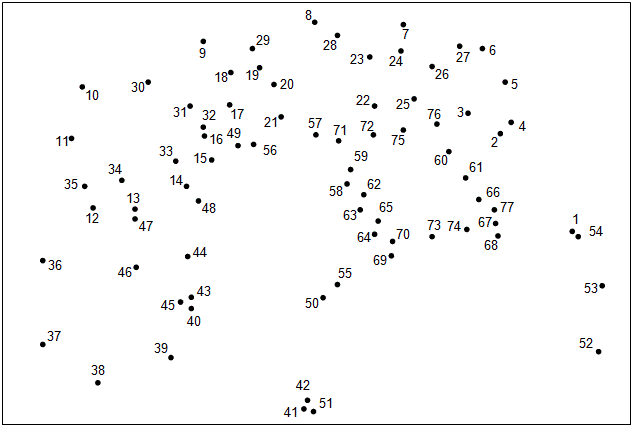
Pensei logo nesta imagem:
 E nesta outra, a dos picos mais à direita:
Ambas símbolos do Estranhistão.
.
O que é que acontece a uma empresa que serve um nicho e quer continuar a crescer?
Tem de passar a servir outro nicho... em simultâneo.
.
E o que está a acontecer a caminho do Estranhistão?
Os nichos vão-se afastando cada vez mais uns dos outros.
.
E o que vai acontecer a quem quer servir muitos nichos?
Desfocagem, incerteza.
.
Ainda ontem, rematava, numa empresa, o comentário:
.
-Por isso, é que o futuro é para as empresas pequenas!

sexta-feira, março 07, 2014

Curiosidade do dia

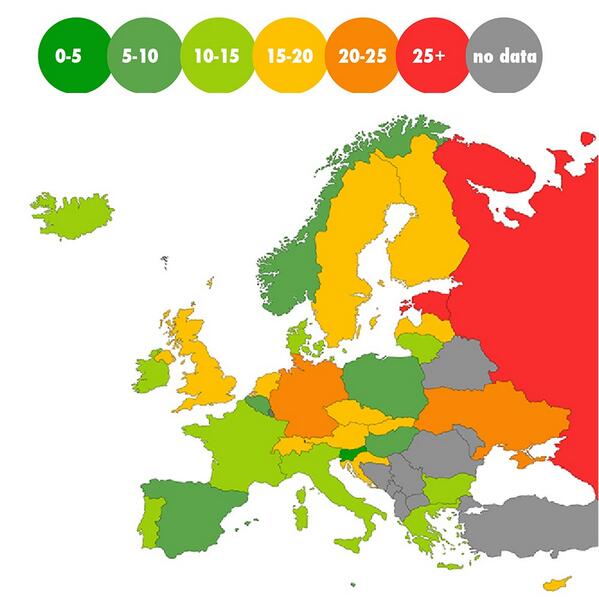
Não estava à espera das diferenças suecas e finlandesas.
.
Imagem retirada daqui "Global Gender Pay Gap Map"

"great things almost always start small"

Li "What If The Key to Making It Big Is Starting Small?" e apeteceu-me logo dizer:
.
-  Duh!
.
Parece-me óbvio. Sobretudo num mundo de incerteza e em que o que é verdade hoje manhã é mentira e vice-versa.
"The challenge for a lot of us is that when we go about our lives, we interact with so many “big” things and we forget or don’t even know how they originally started. It’s difficult to understand how the evolutionary process of products and brands contributes and is vital to what they are today."
Só os socialistas, engenheiros sociais, acham que sabem o suficiente para arrasar o que existe para erguer algo de novo.
"What I’m starting to notice more and more, is that great things almost always start small." 


Começar pelos clientes-alvo

"However, though this financial objective of the business is fundamental, its attainment is primarily a matter of competitive success in winning profitable customers in commercial markets. The arbiter of whether a business survives is its financial market, but the means of survival, its returns, are decided by customers in its commercial markets.
...
Thus the ultimate reality of business is the need to satisfy financial markets by success in winning profitable customers in commercial markets."
Por isso o meu desafio, começar sempre pelos clientes-alvo. Quem são? O que procuram e valorizam?
.
Uma empresa só tem razão de ser se virada para o exterior.
.
Trechos retirados de "Creating Value Successful business strategies" de Shiv S. Mathur e Alfred Kenyon

E no caso da sua empresa?

"The old me was a slave to time. In the business of selling time you are limited to a ceiling of where you can profit. Once I figured out I could benefit from selling my designs for more if I spent more time with the client and actually interrogating how they made money online with what systems and what pains involved, [Moi ici: O poder da interacção] it made the number I put forward a lot less daunting.
...
If I were to sell the time on a project my incentive is to try and ask for more time and therefore my “real goal” is to drag the project out.
Now if I’m selling the value, my goals are my clients, they may have a low budget so when you quote I just reduce scope to fit my “real goal”.
...
[Moi ici: Segue-se um ponto fundamental] With the ability of no ceilings, my focus shifted to work I wanted to do and work I wanted to turn down. As soon as time and money wasn’t factored in I was thinking about work and folio a lot more."
E a sua empresa, concentra-se nos minutos ou no valor? Concentra-se na quantidade de trabalho e papéis, ou no valor?
.
Estão a ver a relação do micro para o macro?
.
Enquanto se estiver no modelo mental do passado, "Salários e produtividade", todos têm de correr mais. Quando se muda de modelo mental, o mundo muda...
.
Trecos retirados de "How I Shifted to Value Pricing and Made More Money"

Salários e produditividade

Cuidado com esta frase:
"é impossível comparar os salários em Portugal com os de países como a Alemanha "pura e simplesmente porque os alemães, por hora, fazem três ou quatro vezes mais do que os portugueses"."
 Alguém acha que os trabalhadores alemães "correm" três ou quatro vezes mais do que os trabalhadores portugueses?
.
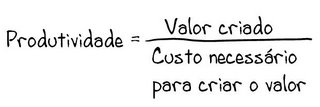
A diferença de produtividade entre os trabalhadores portugueses e alemães não reside na diferença de quantidades produzidas, reside na diferença entre o valor acrescentado potencial dos artigos produzidos.
.
A frase coloca a responsabilidade pelo aumento da produtividade nos ombros dos trabalhadores e, por isso:
"a competitividade em Portugal só pode ser estimulada através da "educação das pessoas"
Contudo, para o campeonato da produtividade de pouco serve educar os executantes. A educação dos trabalhadores que executam pode, eventualmente, contribuir para um aumento marginal da produtividade através do aumento marginal das quantidades produzidas.
.
O aumento da produtividade para os níveis alemães passa por subir na escala de valor.
A educação só pode contribuir para este aumento da produtividade se actuar nos decisores das empresas e se actuar nos criadores das empresas.
.
E mesmo:
"a competitividade em Portugal só pode ser estimulada através da ... aquisição das máquinas corretas""
Tem que se lhe diga, os insurgentes que o digam. O truque é a concentração nos clientes-alvo.
.
Trechos retirados de "Salários só podem subir quando produtividade aumentar"

quinta-feira, março 06, 2014

Curiosidade do dia

Se isto é verdade, "happiness inspires productivity", e não me custa nada a crer que sim, então, mais uma razão para evitar ouvir Constança "cortisol" e Sá.
"when I turn on the news, it seems like the majority of the information is not positive, in fact it's negative. Most of it's about murder, corruption, diseases, natural disasters. And very quickly, my brain starts to think that's the accurate ratio of negative to positive in the world. What that's doing is creating something called the medical school syndrome -- which, if you know people who've been to medical school, during the first year of medical training, as you read through a list of all the symptoms and diseases that could happen, suddenly you realize you have all of them.
...
See what we're finding is it's not necessarily the reality that shapes us, but the lens through which your brain views the world that shapes your reality. And if we can change the lens, not only can we change your happiness, we can change every single educational and business outcome at the same time.
...
90 percent of your long-term happiness is predicted not by the external world, but by the way your brain processes the world. And if we change it, if we change our formula for happiness and success, what we can do is change the way that we can then affect reality. What we found is that only 25 percent of job successes are predicted by I.Q. 75 percent of job successes are predicted by your optimism levels, your social support and your ability to see stress as a challenge instead of as a threat.
...
If you can raise somebody's level of positivity in the present, then their brain experiences what we now call a happiness advantage, which is your brain at positive performs significantly better than it does at negative, neutral or stressed. Your intelligence rises, your creativity rises, your energy levels rise."

"businesses are designing for the sake of designing"

"Before we can tackle product design or product experiences, we must first recognize the role customers play in our business today and articulate how we envision relationships and experiences evolving over time.
...
In many ways, experiences take a back seat to engagement. Rather than looking at people and the experience we want them to have, businesses tend to look at new technology as the crux of engagement. However, without defining the experiences that establish how people should think and feel, or what they should do next, engagement will always underperform against expectations.
...
businesses are designing for the sake of designing, without regard for how someone feels, thinks, or acts as a result."
Conjugar isto com o texto "PMEs insurgentes".
.
É, de certa forma, o que se passa com os media tradicionais, jornais e TV, estão numa race-to-the-bottom, tal como os insurgentes e o exército americano estão numa escalada tecnológica. É o que leva aos noticiários televisivos de 120 minutos. Um dia, alguém há-de fazer como os insurgentes e sair dessa corrida para voltar a apresentar um noticiário sucinto e profundo...

Trechos retirados de "What's the Future of Business" de Brian Solis.

Acerca do pensamento estratégico

"The task of business strategy is to make the business more valuable by a specific route: that of targeting profitable customers.
...
that business exists to satisfy its financial funding markets.
...
a business can only achieve this financial aim in its customer markets, by successfully targeting profitable customers. Customers are profitable if the business can sell to them at margins which yield returns at least equal to the cost of capital.
...
Many have said that the purpose of business is to produce financial results, and very few writers would deny that financial results are mainly achieved by success in customer markets. However, that central insight is not always followed through. Much writing and much managerial practice gives one of two extreme impressions. One is that financial results depend entirely on operating efficiencies. [Moi ici: O discurso típico da tríade dos académicos, politicos e comentadoresAt the other extreme the object of business strategy is seen as maximum sales volume and market share, meeting customer preferences as if that alone were enough to produce acceptable levels of performance. [Moi ici: O discurso dos que acreditam no market share como um fim em si mesmo] The first focuses exclusively on costs, the second ignores them."
Trechos retirados de "Creating Value Successful business strategies" de Shiv S. Mathur e Alfred Kenyon

Uma preocupação genuína

Conhecem aquela frase de Hayek?
"Never will a man penetrate deeper into error than when he is continuing on a road that has led him to great success." 
Pois, este é o momento, "OMG e vão viver de quê?", em que começo a recear o sucesso. Recordar, "O sucesso passado é um perigo, porque cria uma nova realidade".
.
Quando o sucesso se torna fácil (por favor não me interpretem mal), ou seja, quando o modelo de negócio fica testado e validado, acontecem coisas como esta "Calçado cria mais de 50 empresas ao ano", a par dos crescimentos a dois dígitos, corre-se um risco de exuberância. O lado das empresas começa a afectar a paisagem competitiva com mais intensidade.
.
O sucesso traz uma nova realidade que nem todos estão dispostos a assumir ou nem todos se apercebem.
.
Por exemplo, quem vai dar o primeiro passo e assumir que deixa de fazer férias em Agosto para se ajustar ao ritmo novo do sector?
.
Por exemplo, quem vai perceber que as novas quantidades e ritmos vão requerer um outro tipo de gestão?
.
E as árvores crescem até ao céu? E se houver um espirro no mercado, como se evita que se transforme numa pneumonia?
.
Longe de mim criticar este sector que tanto tem feito pela minha sanidade mental e pelo país, isto é apenas uma preocupação genuína.

PMEs insurgentes

Gostei muito deste artigo "FoW (13): You think innovation means better drones? Faster jets? Wrong. We've been out-innovated for the last 13 years."
.
Há muitos anos que aprendi, com Tom Peters, a usar a metáfora da Al-Qaeda para visualizar o tipo de actuação que as PMEs têm de desenvolver, para terem sucesso.
.
Rapidez, flexibilidade, by-pass aos incumbentes, seguir o caminho menos percorrido.
"The 21st-century insurgent will be adaptive. He will seize opportunities as they break.
...
The only way to fight and win as a state actor in the 21st century is to become as smart and as culturally sensitive as the insurgent."
Onde se lê insurgente leia-se PME. BTW, quanto ao poder dos incumbentes instalados, recordar este postal de ontem "Implicações de Mongo".
.
Vale mesmo a pena ler o artigo.

quarta-feira, março 05, 2014

Curiosidade do dia

E é isto, não conseguimos sair disto, só socialistas-normandos sempre a pensar em impostar mais qualquer coisa:

Acerca de Mongo

"Segundo os dados do Kickstarter, em Portugal foram registados quase 5300 financiadores, o que totalizou financiamentos na ordem dos 730 mil dólares, ou pouco mais de 530 mil euros
O Kickstarter anunciou esta segunda-feira ter atingido a meta dos mil milhões de dólares doados a projectos através da sua plataforma. De acordo com a popular plataforma de crowdfunding, mais de metade deste valor terá sido doado só nos últimos 12 meses."

Trecho retirado de "Mais de mil milhões de dólares doados via Kickstarter"

Implicações de Mongo

Excelente texto, "Why Companies are Not Startups". Imagino as implicações para a vida em Mongo em que a inovação vai imperar:
"We’re now learning that companies are not larger versions of startups.
...
There’s been lots written about how companies need to be more innovative, but very little on what stops them from doing so.
Companies looking to be innovative face a conundrum: Every policy and procedure that makes a them efficient execution machines stifles innovation.
...
paradoxically, in spite of all their seemingly endless resources, innovation inside of an existing company is much harder than inside a startup. For most companies it feels like innovation can only happen by exception and heroic efforts, not by design. The question is – why?
...
A company is a permanent organization designed to execute a repeatable and scalable business model.
.
Once you understand that existing companies are designed to execute then you can see why they have a hard time with continuous and disruptive innovation.
.
Every large company, whether it can articulate it or not, is executing a proven business model(s)."
Imagino o caldo:

  • Mongo, tribos, inovação, diferenciação e dificuldade das empresas grandes em inovar, e o pós-Coase


O que é difícil...

A coisa não é difícil, o que é difícil é mudar o chip mental. O que é difícil é escolher e dizer que não a dinheiro fácil e honesto:
"The real message here is that in order to build a business that truly can thrive you must understand who you are equipped to serve best and you must do everything in your power to attract, serve and choose them over all else."
Trecho retirado de "Customer Loyalty Is Mostly About Choosing the Right Customers"

OMG e vão viver de quê?

Neste postal de 31 de Dezembro de 2010, "O momento Janus (parte I)" escrevi sobre a esquizofrenia a que me tinha habituado:
"Um ano em que aprendi a viver e a distanciar-me da esquizofrenia de viver a trabalhar com uma economia de sucesso e, a ouvir os media a relatar quase exclusivamente outra economia, a pública e a dos bens não transaccionáveis."
A minha sanidade mental e o meu optimismo têm sido reforçados com a graça de lidar com empresas que lutam e vão tendo o seu sucesso.
.
Nunca me esqueço do que eu já via e tocava, na minha relação com as empresas, e o que a "inteligentzia" nacional, entretanto,  imaginava lá nos corredores da côrte "lesboeta", aqui e aqui.
.
Conseguem imaginar o mindset, a forma como se olha para o futuro, quando se obtém isto?
"O grupo Carité fechou o último exercício com uma facturação de 22 milhões de euros, "mais 25% do que no ano anterior", sendo que "este ano está tudo encaminhado para ser igual ou ainda melhor"."[Moi ici: Crescer 25% num ano]
Trecho retirado de "Carité vai produzir Adidas e criar mais trinta empregos"
"A Fly London, marca de sapatos do grupo Kyaia - o maior do sector português do calçado - fechou o exercício de 2013 com vendas de 34,2 milhões de euros, um crescimento de quase 16% face a 2012 - o dobro do registado pelo sector, que incrementou as exportações em 8% (para 1,7 mil milhões)."
Trecho retirado de "Fly London conquista América do Norte e abre loja em Dublin"

terça-feira, março 04, 2014

Curiosidade do dia

Olha, a espiral recessiva continua!

Proximidade (parte III)

A evolução descrita na parte II tem um lado muito positivo; a subida na escala de valor.
.
A subida na escala de valor traduz-se na venda do produto a um preço unitário cada vez maior. Como o preço não pode ser imposto, a sua subida é a contrapartida para um aumento da percepção de valor potencial por parte dos clientes e consumidores.
.
A mesma lógica por detrás deste discurso "CEO da McLaren explica porque é que só constrói carros desportivos".
.
BTW, a lógica seguida pela Lamborghini parece ser a contrária, ao decidir avançar para a produção de um SUV. Ou seja, diluição da marca.

Recordar: