terça-feira, junho 21, 2011

"All this talk of "We deliver value" is garbage!"
"All this talk of "We deliver value" is garbage!"
Gronroos, no final, chama a atenção para um ponto importante:
.
Value is created in the customer's sphere... and every time people say "We deliver value, or we deliver added value" that makes you thinking the wrong way, because that makes the person who says like that to think "I'm in charge of whether this is good value or not!"... and that is not correct. The customer is in charge of that!
Gronroos, no final, chama a atenção para um ponto importante:
.
Value is created in the customer's sphere... and every time people say "We deliver value, or we deliver added value" that makes you thinking the wrong way, because that makes the person who says like that to think "I'm in charge of whether this is good value or not!"... and that is not correct. The customer is in charge of that!
An interactive relativistic preference experience
Ontem recordei de memória Morris Holbrook. Hoje, cá está o detalhe retirado de "Introduction to consumer value" introdução ao livro "Customer value. A framework for analysis and reserach" em 1999.
.
"I define consumer value as an interactive relativistic preference experience.
...
By interactive, I mean that consumer value entails an interaction between some subject (a consumer or customer) and some object (a product).
...
Essentially, this interactionist position maintains that value depends on the characteristics of some physical or mental object but cannot occur without the involvement of some subject who appreciates it.
...
By relativistic, I mean that Customer Value is (a) comparative (among objects), (b) personal (across people), and (c) situational (specific to the context). (a) It is comparative in that one must make utility comparisons among objects rather than among people; in other words, I can legitimately claim that I like Susan Sarandon better than Madonna, but not that I like Ms. Sarandon more than you do. (b) It is personal in the sense that it varies from one individual to another; colloquially, we say that "One (hu)man's meat is another (hu)man's poison." (c) Further, value is situational in that it depends on the context in which the evaluative judgment occurs; hence, the standards on which evaluative judgments hinge tend to be context-dependent, changing from one situation to the next, as when our preference for tea varies from hot Earl Grey (in the winter) to iced orange pekoe (in the summer) and possibly to warm herbal (before bed).
...
By preference, I simply mean that consumer researchers have found a variety of names by which to refer to the general concept of an evaluative judgment. These include "predisposition" (positive-negative), "attitude" (favorable-unfavorable), "opinion" (pro-con), "directional behavior" (approach-avoidance), "valence" (plus-minus), "judgment" (good-bad), or "evaluation" (liking-disliking).
...
Finally, by experience, I mean that Customer Value resides not in the product purchased, not in the brand chosen, not in the object possessed, but rather in the consumption experience(s) derived therefrom; ... all products provide services in their capacity to create need - or want - satisfying experiences. ... the role of experience of a central position in the customer value
.
"I define consumer value as an interactive relativistic preference experience.
...
By interactive, I mean that consumer value entails an interaction between some subject (a consumer or customer) and some object (a product).
...
Essentially, this interactionist position maintains that value depends on the characteristics of some physical or mental object but cannot occur without the involvement of some subject who appreciates it.
...
By relativistic, I mean that Customer Value is (a) comparative (among objects), (b) personal (across people), and (c) situational (specific to the context). (a) It is comparative in that one must make utility comparisons among objects rather than among people; in other words, I can legitimately claim that I like Susan Sarandon better than Madonna, but not that I like Ms. Sarandon more than you do. (b) It is personal in the sense that it varies from one individual to another; colloquially, we say that "One (hu)man's meat is another (hu)man's poison." (c) Further, value is situational in that it depends on the context in which the evaluative judgment occurs; hence, the standards on which evaluative judgments hinge tend to be context-dependent, changing from one situation to the next, as when our preference for tea varies from hot Earl Grey (in the winter) to iced orange pekoe (in the summer) and possibly to warm herbal (before bed).
...
By preference, I simply mean that consumer researchers have found a variety of names by which to refer to the general concept of an evaluative judgment. These include "predisposition" (positive-negative), "attitude" (favorable-unfavorable), "opinion" (pro-con), "directional behavior" (approach-avoidance), "valence" (plus-minus), "judgment" (good-bad), or "evaluation" (liking-disliking).
...
Finally, by experience, I mean that Customer Value resides not in the product purchased, not in the brand chosen, not in the object possessed, but rather in the consumption experience(s) derived therefrom; ... all products provide services in their capacity to create need - or want - satisfying experiences. ... the role of experience of a central position in the customer value
Sintoma de que Mongo já está entre nós!
"Self-Published Author Sells a Million E-Books on Amazon"
.
Novos canais, destruição de intermediários, explosão de oferta.
.
Novos canais, destruição de intermediários, explosão de oferta.
Quando usar recompensas tangíveis ou não, como factor de motivação extrínseca

.
"First, consider nontangible rewards. Praise and positive feedback are much less corrosive than cash and trophies. In fact, in Deci’s original experiments, and in his subsequent analysis of other studies, he found that “positive feedback can have an enhancing effect on intrinsic motivation.” So if the folks on the design team turn out a show-stopping poster, maybe just walk into their offices and say, “Wow. You really did an amazing job on that poster. It’s going to have a huge impact on getting people to come to this event. Thank you.” It sounds small and simple, but it can have an enormous effect.
.
Second, provide useful information. Amabile has found that while controlling extrinsic motivators can clobber creativity, “informational or enabling motivators can be conducive” to it. In the workplace, people are thirsting to learn about how they’re doing, but only if the information isn’t a tacit effort to manipulate their behavior. So don’t tell the design team: “That poster was perfect. You did it exactly the way I asked.” Instead, give people meaningful information about their work. The more feedback focuses on specifics (“great use of color”) — and the more the praise is about effort and strategy rather than about achieving a particular outcome — the more effective it can be.
In brief, for creative, right-brain, heuristic tasks, you’re on shaky ground offering “if-then” rewards. You’re better off using “now that” rewards. And you’re best off if your “now that” rewards provide praise, feedback, and useful information."
Um exemplo a seguir
Devidamente autorizado pela empresa, aqui vai um excelente exemplo sobre como divulgar internamente as prioridades estratégicas:
 Quais as 4 mensagens principais para dentro?

- Ouvir
- Aprender
- Persistência
- Equipa
Uma imagem vale mais do que mil palavras!!!
.
Uns posters A2 em vez de um "manual".
segunda-feira, junho 20, 2011
Criar valor, uma evolução do conceito (again)
Outro artigo interessante para perceber a evolução do conceito de valor foi publicado pela HBR em Novembro de 1998, "Business Marketing: Understand What Customers Value" de James Anderson e James Narus.
.
 Value s and Price s are the value and price of the supplier’s market offering, and Value a and Price a are the value and price of the next best alternative. (Moi ici: Como escreve Hollbruck, numa fonte que agora não recordo, o valor é sempre comparativo, nunca é absoluto)
.
.
"How do you define value? (Moi ici: Excelente pergunta! Quantos gestores, quantos gestores seriam capazes de responder?) Can you measure it? What are your products and services actually worth to customers? (Moi ici: Continuamos com perguntas venenosas, daquelas que obrigam a estudar, a reflectir e sobretudo a observar os diferentes clientes) Remarkably few suppliers in business markets are able to answer those questions. And yet the ability to pinpoint the value of a product or service for one’s customer has never been more important. Customers – especially those whose costs are driven by what they purchase – increasingly look to purchasing as a way to increase profits and therefore pressure suppliers to reduce prices. To persuade customers to focus on total costs rather than simply on acquisition price, a supplier must have an accurate understanding of what its customers value, and would value. (Moi ici: Preço evalor não são a mesma coisa, ainda que um seja um proxi do outro... ou possa ser um proxi do outro. Se uma empresa não sabe o que é valor para um cliente, o mais certo é facturar menos do que podia, ou dedicar-se a um tipo de cliente que está mais interessado na minimização dos sacrifícios do que nos eventuais benefícios)
.
Value in business markets is the worth in monetary terms of the technical, economic, service, and social benefits a customer company receives in exchange for the price it pays for a market offering. ...
.
First, we express value in monetary terms, such as dollars per unit, guilders per liter, or kroner per hour. Economists may care about “utils,” but we have never met a manager who did! Second, by benefits, we mean net benefits, in which any costs a customer incurs in obtaining the desired benefits, except for purchase price, are included. Third, value is what a customer gets in exchange for the price it pays. We see a market offering as having two elemental characteristics: its value and its price. Thus raising or lowering the price of a market offering does not change the value that such an offering provides to a customer. Rather, it changes the customer’s incentive to purchase that market offering. Finally, considerations of value take place within some context. Even when no comparable market offerings exist, there is always a competitive alternative. In business markets, one competitive alternative may be that the customer decides to make the product itself rather than purchase it.
We can capture the essence of this definition of value in the following equation:

.
The difference between value and price equals the customer’s incentive to purchase. Simply put, the equation conveys that the customer’s incentive to purchase a supplier’s offering must exceed its incentive to pursue the next best alternative. (Moi ici: Isto é verdade mas não sei se é sempre verdade... existem situações em que por mais baixo que seja o preço, o valor é que manda. Por exemplo, para quê comprar marcadores de quadro branco baratos se dão cabo do quadro? Se obrigam a uma limpeza mais demorada? Se a tinta não é tão visível? Ou seja... prefiro os esquemas de Bruce Chew (Geometry of Competition) que aprendi já lá vão uns anos. Para um dado nível de preço, quem me dá o melhor nível desempenho versus para um dado nível de desempenho, quem me dá o melhor nível de preço)
…
Selecting the right market segment to target is the next step. (Moi ici: Cá está, começar por seleccionar os clientes-alvo. É o alicerce de todo o edifício competitivo que se vai construir) Because the supplier will need to conduct value assessments with at least two and perhaps up to a dozen customers to build an initial value model, it’s a good idea to start with a segment in which the supplier has particularly close, collaborative relationships with customers, extraordinary knowledge of how customers use the offering in question, or relatively simple offerings.
…
Generate a comprehensive list of value elements. Value elements are anything that affect the costs and benefits of the offering in the customer’s business. (Moi ici: Anything? No lo creio!!! Acredito que devemos concentrarmos-nos naqueles elementos que nos ajudam a fazer a diferença!!! Nesses eficácia! No resto, eficiência) These elements may be technical, economic, service, or social in nature and will vary in their tangibility.
As it is generating the list, the team should consider the entire life cycle of the offering in question, from how the customer acquires and uses it to how the customer disposes of it when it is no longer needed. (Moi ici Recordar este postal) The list should capture all the potential effects that doing business with a supplier might have on the customer’s business.
.
It’s important to be as inclusive as possible. Leaving out elements, particularly those that might make the supplier’s market offering look unfavorable next to the incumbent or next-best-alternative offering, will undermine the project’s credibility.
.
By identifying as many elements as possible, the team will be able to gauge more accurately the differences in functionality and performance its offering provides relative to the next best alternative.
…
Gaining Customers. Knowledge of how their market offerings specifically deliver value to customers enables suppliers to craft persuasive value propositions.
…
Understanding value in business markets and doing business based on value delivered gives suppliers the means to get an equitable return for their efforts. The essence of customer value management is to deliver superior value and get an equitable return for it, both of which depend on value assessment. (Moi ici: Claro que com a linguagem sdl isto está tudo gatado, mas percebe-se onde os autores querem chegar)
Marcos 4, 23
Há dias, no twitter, a propósito destes gráficos "The humble Greek (and Argentine) depositor" perguntava:
.
Quando será a nossa vez?
.
Com esta conversa "Ferreira do Amaral defende que Portugal use dinheiro da troika para sair do euro", quem tem depósitos em bancos portugueses não pode vir a argumentar que não sabia, que não podia acreditar que tal acontecesse.
.
Marcos 4, 23
.
Quando será a nossa vez?
.
Com esta conversa "Ferreira do Amaral defende que Portugal use dinheiro da troika para sair do euro", quem tem depósitos em bancos portugueses não pode vir a argumentar que não sabia, que não podia acreditar que tal acontecesse.
.
Marcos 4, 23
Para nós não é novidade nem precisamos de esclarecimentos
"Adolfo Domínguez reduz produção na China devido à subida de custos":
.
"A marca espanhola de luxo Adolfo Domínguez - que tem lojas no mercado português - irá fabricar este ano na China menos 45% do volume que encomendou em 2010, revelou o jornal "Expansión". Já a STL, empresa que detém as marcas Purificación Garcia e Carolina Herrera, também de luxo, prevê reduzir as suas encomendas em cerca de 30%. Contactada pelo Diário Económico, a STL não quis prestar mais informações sobre esta questão. Já a Adolfo Domínguez não esteve disponível para esclarecimentos até ao fecho da edição."
.
E não é só por causa da subida dos custos.
.
.
.
Talvez estas marcas já tenham aprendido a lição:
.
Se o cliente não se preocupa com o preço, o retalhista não se deve preocupar com o custo. E trabalhar na China é um travão à rapidez e flexibilidade.
.
Esta revolução está a ocorrer e o mainstream não consegue juntar as peças e ver a imagem que está a emergir. Firedman em "O Mundo é Plano" tinha um título num capítulo inicial que dizia qualquer coisa como:
.
"Enquanto dormíamos" onde relatava a transferência mais ou menos silenciosa de postos de trabalho para a Ásia na primeira década do século XXI.
.
Pois bem, a lei dos vasos comunicantes está de novo a actuar e agora o sentido da transferência inverteu-se.
.
Por causa dos custos e por causa dos sacrifícios e restrições que trabalhar com a Ásia impõe a um modelo de negócio.
.
"A marca espanhola de luxo Adolfo Domínguez - que tem lojas no mercado português - irá fabricar este ano na China menos 45% do volume que encomendou em 2010, revelou o jornal "Expansión". Já a STL, empresa que detém as marcas Purificación Garcia e Carolina Herrera, também de luxo, prevê reduzir as suas encomendas em cerca de 30%. Contactada pelo Diário Económico, a STL não quis prestar mais informações sobre esta questão. Já a Adolfo Domínguez não esteve disponível para esclarecimentos até ao fecho da edição."
.
E não é só por causa da subida dos custos.
.
.
.
Talvez estas marcas já tenham aprendido a lição:
.
Se o cliente não se preocupa com o preço, o retalhista não se deve preocupar com o custo. E trabalhar na China é um travão à rapidez e flexibilidade.
.
Esta revolução está a ocorrer e o mainstream não consegue juntar as peças e ver a imagem que está a emergir. Firedman em "O Mundo é Plano" tinha um título num capítulo inicial que dizia qualquer coisa como:
.
"Enquanto dormíamos" onde relatava a transferência mais ou menos silenciosa de postos de trabalho para a Ásia na primeira década do século XXI.
.
Pois bem, a lei dos vasos comunicantes está de novo a actuar e agora o sentido da transferência inverteu-se.
.
Por causa dos custos e por causa dos sacrifícios e restrições que trabalhar com a Ásia impõe a um modelo de negócio.
Acerca da motivação
Este artigo de Daniel Pink no The Telegraph "Forget shareholders, maximise consumer value instead" está em sintonia com o relato que ando a ouvir há dias durante o meu jogging sobre o seu livro "Drive".
.
O 2º capitulo "Seven Reasons Carrots and Sticks (Often) Don’t Work . . ." relata vários estudos que ilustram como a Motivação 2.0 não faz sentido, tem resultados contraproducentes no mundo do século XXI à medida que nos afastamos de trabalhos repetitivos e sem criatividade
.
O 2º capitulo "Seven Reasons Carrots and Sticks (Often) Don’t Work . . ." relata vários estudos que ilustram como a Motivação 2.0 não faz sentido, tem resultados contraproducentes no mundo do século XXI à medida que nos afastamos de trabalhos repetitivos e sem criatividade
Aumentar a produtividade? Façam as contas!
Trecho retirado de "Cápsulas de café já valem 15% do negócio da Delta":
.
"Dentro destas contas, o negócio das cápsulas de café - segmento no qual a empresa está através da Delta Q -, representa já entre 10% e 15% das vendas totais da empresa, explica Rui Nabeiro. Com uma quota de mercado de cerca de 41% no canal de retalho alimentar,"
.
Vender cápsulas de café é mais do que vender café em grão ou moído, é incluir mais "operant resources". Aposto que a produtividade dos trabalhadores da Delta deu um salto positivo.
.
O aumento do preço praticado mais do que compensou o aumento dos custos incorridos. A aposta no numerador compensa muito mais do que a aposta no denominador.
.
"Dentro destas contas, o negócio das cápsulas de café - segmento no qual a empresa está através da Delta Q -, representa já entre 10% e 15% das vendas totais da empresa, explica Rui Nabeiro. Com uma quota de mercado de cerca de 41% no canal de retalho alimentar,"
.
Vender cápsulas de café é mais do que vender café em grão ou moído, é incluir mais "operant resources". Aposto que a produtividade dos trabalhadores da Delta deu um salto positivo.
.
O aumento do preço praticado mais do que compensou o aumento dos custos incorridos. A aposta no numerador compensa muito mais do que a aposta no denominador.
domingo, junho 19, 2011
Education Is Not Important For Success
Aconselho qualquer pessoa a prosseguir os seus estudos.
.
Mas também sei reconhecer a validade desta mensagem "Education Is Not Important For Success" em especial desta parte:
.
"What makes business owners successful? According to research, education doesn’t show up in the top five. (Entrepreneurial Intuition, an Empirical Approach, La Pira, April 2010), but these do:
Seeing the big picture – being a visionary is most important. If you can’t see it, you won’t shoot for it.
Speed of Execution – taking action while others are researching.
Never giving up; being the bull dog; finding a way to make it work.
Being a life-long learner.
.
Learning is massively different than being educated. Education fills our heads with information, while learning transforms our lives and the world around us with grounded and applied intelligence.
If you want to have your head filled with facts, get an education. It you want to learn, change lives and/or make money, you’re better off apprenticing with someone who’s done it. They won’t try to educate you, they’ll just make sure you are effective and becoming something you aren’t, yet.
The Greeks were wrong.
We don’t think our way to a new way of acting; we act our way to a new way of thinking."
.
Isto fez-me logo recordar esta figura do livro "Chaos, Management and Economics" de David Parker e Ralph Stacey.
 A acção é que leva à descoberta!
.
Não esquecer esta correlação:

E esta:

.
Mas também sei reconhecer a validade desta mensagem "Education Is Not Important For Success" em especial desta parte:
.
"What makes business owners successful? According to research, education doesn’t show up in the top five. (Entrepreneurial Intuition, an Empirical Approach, La Pira, April 2010), but these do:
Seeing the big picture – being a visionary is most important. If you can’t see it, you won’t shoot for it.
Speed of Execution – taking action while others are researching.
Never giving up; being the bull dog; finding a way to make it work.
Being a life-long learner.
.
Learning is massively different than being educated. Education fills our heads with information, while learning transforms our lives and the world around us with grounded and applied intelligence.
If you want to have your head filled with facts, get an education. It you want to learn, change lives and/or make money, you’re better off apprenticing with someone who’s done it. They won’t try to educate you, they’ll just make sure you are effective and becoming something you aren’t, yet.
The Greeks were wrong.
We don’t think our way to a new way of acting; we act our way to a new way of thinking."
.
Isto fez-me logo recordar esta figura do livro "Chaos, Management and Economics" de David Parker e Ralph Stacey.

.
Não esquecer esta correlação:

E esta:

E se for a Alemanha a ter de sair da zona euro? (parte V)
Continuado daqui.
.
"Why Germany must exit the euro" (Se sair a Alemanha não sai sozinha, vai com ela a Liga Hanseática)
.
Há uma altura em que um credor deixa de se enganar a si próprio e reconhece que o melhor que tem a fazer é esquecer a dívida e o devedor.
.
Há uma altura em que se devem assumir os "custos afundados", aprender a lição e mudar de vida.
.
Há uma altura em que o devedor já goza com o credor.
.
Que fique bem claro que considero o desafio de termos a nossa moeda no mesmo barco da moeda alemã a melhor ajuda para disciplinar políticos ignorantes, e obrigar as empresas a subir na escala de valor potencial, única forma de o nível de vida dos portugueses subir de forma sustentada.
.
"Why Germany must exit the euro" (Se sair a Alemanha não sai sozinha, vai com ela a Liga Hanseática)
.
Há uma altura em que um credor deixa de se enganar a si próprio e reconhece que o melhor que tem a fazer é esquecer a dívida e o devedor.
.
Há uma altura em que se devem assumir os "custos afundados", aprender a lição e mudar de vida.
.
Há uma altura em que o devedor já goza com o credor.
.
Que fique bem claro que considero o desafio de termos a nossa moeda no mesmo barco da moeda alemã a melhor ajuda para disciplinar políticos ignorantes, e obrigar as empresas a subir na escala de valor potencial, única forma de o nível de vida dos portugueses subir de forma sustentada.
Criar valor, uma evolução do conceito
Em Julho de 1993, Richard Normann e Rafael Ramirez publicaram na HBR o artigo "From Value Chain to Value Constellation: Designing Interactive Strategy"
.
A primeira frase do artigo é:
.
"Strategy is the art of creating value"
.
Onde isto nos pode levar...
.
Quem é que cria valor?
.
Os fornecedores não criam valor!
.
Quando muito os fornecedores podem co-criar valor quando interagem com os clientes... sim, são os clientes que criam o valor.
.
Ou melhor, são os clientes que, ao usarem o produto/serviço, vivem as experiências que valorizam melhor ou pior, ou seja, a percepção do valor é algo que emerge decorrente da experiência sentida pelos clientes.
.
Normann e Ramirez escrevem a seguir:
.
"It provides the intellectual frameworks, conceptual models, and governing ideas that allow a company's managers to identify opportunities for bringing value to customers and for delivering that value at a profit. (Moi ici: OK, estávamos em 1993. Primeiro com o abandono do marxianismo entranhado e, depois, com a descoberta da SDL, percebi melhor o desafio. Hoje, leio a frase sublinhada e percebo o que os autores querem dizer, mas escreveria-a de outra forma: identify opportunities for bringing potential value to customers, identify opportunities to offer a more richer and denser value proposition...
.
.
.
Errado!!! É tão fácil cometer este erro... começo a pensar no desafio de criar valor e concentro-me na proposta de valor, daí escrever "richer and denser". Errado, devo começar por pensar é no cliente. Quem são os clientes-alvo? Não faz muito sentido pensar numa proposta de valor em abstracto, quando uma proposta de valor é algo que se oferece, que se propõe a alguém. Assim, fica melhor primeiro identificar esse alguém a quem nos dirigimos. Os clientes a quem servimos não devem ser um dado do "enunciado do problema" das empresas, devem ser uma variável do desafio: "identify the target-customers to identify opportunities to offer them a more richer and denser value proposition") In this respect, strategy is the way a company defines its business and links together the only two resources that really matter in today’s economy: knowledge and relationships or an organisation’s competencies and customers" (Moi ici: Daí que a escolha dos clientes-alvo não seja só uma questão de gosto mas também uma questão de possibilidade. Não basta querer, é preciso também poder, é preciso ter ou adquirir as valências e capacidades que permitem servir os clientes-alvo. Assim, para muitas PMEs a escolha dos clientes-alvo não é verdadeiramente uma escolha entre diferentes alternativas, mas antes tomar consciência da alternativa mais adequada para focar os esforços de concentração no cliente-alvo)
.
"In so volatile a competitive environment, strategy is no longer a matter of positioning a fixed set of activities along a value chain. Increasingly, successful companies do not just add value, they reinvent it. (Moi ici: Só reinventando a proposta de valor é que as empresas podem dar os saltos quânticos de produtividade que as poderão colocar ao nível das congéneres da OCDE) Their focus of strategic analysis is not the company or even the industry but the value-creating system itself, (Moi ici: Onde é que acontece a criação de valor? Na vida dos clientes, nas suas experiências, naquilo que lhes acontece e sentem, quando optam por um produto ou serviço de um determinado fornecedor. Sim, ás vezes é preciso percorrer a cadeia da procura e identificar actores críticos que influenciam toda a cadeia, mesmo quando não são clientes directos ou não são clientes de todo - caso dos reguladores, dos influenciadores e dos consumidores quando se está numa relação B2B) within which different economic actors--suppliers, business partners, allies, customers--work together to co-produce value. Their key strategic task is the reconfiguration of roles and relationships among this constellation of actors in order to mobilise the creation of value in new forms and by new players. And their underlying strategic goal is to create an ever-improving fit between competencies and customers"
...
Depois, pegando no exemplo da IKEA e da introdução das ATMs os autores começam a desbravar um terreno que apontava para o futuro que estamos hoje a viver:
.
"What is so different about this new kind of value? One useful way to describe it is that value has become more dense. Think of density as a measure of the amount of information, knowledge, and other resources that an economic actor has at hand at any moment in time to leverage his or her own value creation (Moi ici To leverage his or her value proposition. Na linguagem da SDL isto é, em vez de oferecer operand resources, oferecer uma cascata de operant resources sobre operant resources, sobre operant resources. Em vez de vender maçãs, vender maçãs fatiadas numa máquina de vending, vender sumo de maçã, vender pectina da casca da maçã). Value has become more dense in that more and more opportunities for value creation are packed into any particular offering."
...
Este pormenor da linguagem ... antevia já o futuro:
.
"in a world where value occurs not in sequential chains but in complex constellations, the goal of business is not so much to make or do something of value for customers as it is to mobilise customers to take advantage of proffered density and create value for themselves."
...
"The new logic of value, and the dialogue between competencies and customers that it creates, presents every company with a stark choice: either re-configure its business system to take advantage of these trends or be reconfigured by more dynamic competitors.
.
To exploit these trends, managers must take a number of steps. To begin with, they must reconsider the business potential of their chief assets: the company’s knowledge base and its customer base. Then they must reposition or reinvent the company’s offerings to create a better fit between the company’s competencies and the value creating activities of its customers. (Moi ici: Já estavam lá. Bingo!!!) Finally, they need to make new business arrangements and sometimes new social and political alliances to make these offerings feasible and efficient."
.
Sem perceber que são os clientes que criam valor o campo de actuação das empresas fica muito mais limitado. As empresas já não ficam restringidas ao que fabricam mas podem preparar-se para influenciar a experiência na vida do cliente durante o uso.
"
.
A primeira frase do artigo é:
.
"Strategy is the art of creating value"
.
Onde isto nos pode levar...
.
Quem é que cria valor?
.
Os fornecedores não criam valor!
.
Quando muito os fornecedores podem co-criar valor quando interagem com os clientes... sim, são os clientes que criam o valor.
.
Ou melhor, são os clientes que, ao usarem o produto/serviço, vivem as experiências que valorizam melhor ou pior, ou seja, a percepção do valor é algo que emerge decorrente da experiência sentida pelos clientes.
.
Normann e Ramirez escrevem a seguir:
.
"It provides the intellectual frameworks, conceptual models, and governing ideas that allow a company's managers to identify opportunities for bringing value to customers and for delivering that value at a profit. (Moi ici: OK, estávamos em 1993. Primeiro com o abandono do marxianismo entranhado e, depois, com a descoberta da SDL, percebi melhor o desafio. Hoje, leio a frase sublinhada e percebo o que os autores querem dizer, mas escreveria-a de outra forma: identify opportunities for bringing potential value to customers, identify opportunities to offer a more richer and denser value proposition...
.
.
.
Errado!!! É tão fácil cometer este erro... começo a pensar no desafio de criar valor e concentro-me na proposta de valor, daí escrever "richer and denser". Errado, devo começar por pensar é no cliente. Quem são os clientes-alvo? Não faz muito sentido pensar numa proposta de valor em abstracto, quando uma proposta de valor é algo que se oferece, que se propõe a alguém. Assim, fica melhor primeiro identificar esse alguém a quem nos dirigimos. Os clientes a quem servimos não devem ser um dado do "enunciado do problema" das empresas, devem ser uma variável do desafio: "identify the target-customers to identify opportunities to offer them a more richer and denser value proposition") In this respect, strategy is the way a company defines its business and links together the only two resources that really matter in today’s economy: knowledge and relationships or an organisation’s competencies and customers" (Moi ici: Daí que a escolha dos clientes-alvo não seja só uma questão de gosto mas também uma questão de possibilidade. Não basta querer, é preciso também poder, é preciso ter ou adquirir as valências e capacidades que permitem servir os clientes-alvo. Assim, para muitas PMEs a escolha dos clientes-alvo não é verdadeiramente uma escolha entre diferentes alternativas, mas antes tomar consciência da alternativa mais adequada para focar os esforços de concentração no cliente-alvo)
.
"In so volatile a competitive environment, strategy is no longer a matter of positioning a fixed set of activities along a value chain. Increasingly, successful companies do not just add value, they reinvent it. (Moi ici: Só reinventando a proposta de valor é que as empresas podem dar os saltos quânticos de produtividade que as poderão colocar ao nível das congéneres da OCDE) Their focus of strategic analysis is not the company or even the industry but the value-creating system itself, (Moi ici: Onde é que acontece a criação de valor? Na vida dos clientes, nas suas experiências, naquilo que lhes acontece e sentem, quando optam por um produto ou serviço de um determinado fornecedor. Sim, ás vezes é preciso percorrer a cadeia da procura e identificar actores críticos que influenciam toda a cadeia, mesmo quando não são clientes directos ou não são clientes de todo - caso dos reguladores, dos influenciadores e dos consumidores quando se está numa relação B2B) within which different economic actors--suppliers, business partners, allies, customers--work together to co-produce value. Their key strategic task is the reconfiguration of roles and relationships among this constellation of actors in order to mobilise the creation of value in new forms and by new players. And their underlying strategic goal is to create an ever-improving fit between competencies and customers"
...
Depois, pegando no exemplo da IKEA e da introdução das ATMs os autores começam a desbravar um terreno que apontava para o futuro que estamos hoje a viver:
.
"What is so different about this new kind of value? One useful way to describe it is that value has become more dense. Think of density as a measure of the amount of information, knowledge, and other resources that an economic actor has at hand at any moment in time to leverage his or her own value creation (Moi ici To leverage his or her value proposition. Na linguagem da SDL isto é, em vez de oferecer operand resources, oferecer uma cascata de operant resources sobre operant resources, sobre operant resources. Em vez de vender maçãs, vender maçãs fatiadas numa máquina de vending, vender sumo de maçã, vender pectina da casca da maçã). Value has become more dense in that more and more opportunities for value creation are packed into any particular offering."
...
Este pormenor da linguagem ... antevia já o futuro:
.
"in a world where value occurs not in sequential chains but in complex constellations, the goal of business is not so much to make or do something of value for customers as it is to mobilise customers to take advantage of proffered density and create value for themselves."
...
"The new logic of value, and the dialogue between competencies and customers that it creates, presents every company with a stark choice: either re-configure its business system to take advantage of these trends or be reconfigured by more dynamic competitors.
.
To exploit these trends, managers must take a number of steps. To begin with, they must reconsider the business potential of their chief assets: the company’s knowledge base and its customer base. Then they must reposition or reinvent the company’s offerings to create a better fit between the company’s competencies and the value creating activities of its customers. (Moi ici: Já estavam lá. Bingo!!!) Finally, they need to make new business arrangements and sometimes new social and political alliances to make these offerings feasible and efficient."
.
Sem perceber que são os clientes que criam valor o campo de actuação das empresas fica muito mais limitado. As empresas já não ficam restringidas ao que fabricam mas podem preparar-se para influenciar a experiência na vida do cliente durante o uso.
"
Políticas de Estado de protecção nacionalista são perigosas
Não existem diferenças étnicas de maior entre o Norte do país e os mouros do Sul, também não existem diferenças de língua e de religião.
.
No entanto, sinto uma simpatia crescente pela ideia radical da independência do Norte do país.
.
No Norte ainda não se perdeu de todo o espírito empreendedor, e é triste ver a riqueza criada com tanto esforço ser sorvida e drenada pelo Sul que cada vez mais vejo com um país de funcionários públicos.
.
As empresas que criam emprego a Norte, as PMEs, estão cada vez mais dedicadas à exportação, ou suportam empresas que se dedicam à exportação, dado que o mercado interno vai a caminho de um "Inverno nuclear".
.
Se o Norte eventualmente se tornasse independente não creio que tivesse os problemas catalães, porque se tem especializado a produzir aquilo que o país não pode consumir, por falta de poder de compra. Atentem nos números:
.
Comparar os números no excelente artigo de Ghemawatt "The ties that bind Catalonia" (também aqui) com a conversa de um amador a jogar bilhar:
.
No entanto, sinto uma simpatia crescente pela ideia radical da independência do Norte do país.
.
No Norte ainda não se perdeu de todo o espírito empreendedor, e é triste ver a riqueza criada com tanto esforço ser sorvida e drenada pelo Sul que cada vez mais vejo com um país de funcionários públicos.
.
As empresas que criam emprego a Norte, as PMEs, estão cada vez mais dedicadas à exportação, ou suportam empresas que se dedicam à exportação, dado que o mercado interno vai a caminho de um "Inverno nuclear".
.
Se o Norte eventualmente se tornasse independente não creio que tivesse os problemas catalães, porque se tem especializado a produzir aquilo que o país não pode consumir, por falta de poder de compra. Atentem nos números:
.
Comparar os números no excelente artigo de Ghemawatt "The ties that bind Catalonia" (também aqui) com a conversa de um amador a jogar bilhar:
Esta conversa é a mesma que motiva estas ideias que apelido de "o TGV-do-CDS":
Num mundo interligado, políticas de Estado de protecção nacionalista são perigosas e podem trazer sérias repercussões para o vazio bolso dos contribuintes.
.
Estar contra políticas de Estado de protecção nacionalista não impede que cada um à medida das suas possibilidades faça, no acto de compra, as opções que entender. Por exemplo, na última vez que fui ao Pingo Doce tive de escolher entre:
- maçã Gala do Brasil;
- maçã Fuji de França; e
- maçã Golden de Portugal.
Confesso que nem comparei preços, valorizei sobretudo a crença de que as mais saborosas seriam as portuguesas porque poderiam ter sido colhidas mais tarde.
.
.
BTW, o Pingo Doce deixou de fazer referência, no caso das maçãs portuguesas, à zona de onde provêm. Ninguém me tira da ideia que é para retirar poder negocial aos produtores. Produtores que leiam coisas destas "Branding in the post-internet era" ficam com mais poder.
sábado, junho 18, 2011
I see socialists everywhere

Uma empresária com familiares nos Estados Unidos enviou-me um e-mail com este relato que me fez recordar relatos históricos do "monstro das bolachas"
.
"A very interesting column.. COMPLETELY NEUTRAL
Be sure to Read the Poem at the end.
Charley Reese's final column for the Orlando Sentinel...
He has been a journalist for 49 years.
He is retiring and this is HIS LAST COLUMN.
Be sure to read the Tax List at the end.
This is about as clear and easy to understand as it can be. The article below is completely neutral, neither anti-republican or democrat. Charlie Reese, a retired reporter for the Orlando Sentinel, has hit the nail directly on the head, defining clearly who it is that in the final analysis must assume responsibility for the judgments made that impact each one of us every day. It's a short but good read. Worth the time. Worth remembering!
545 vs. 300,000,000 People
-By Charlie Reese
Politicians are the only people in the world who create problems and then campaign against them.
Have you ever wondered, if both the Democrats and the Republicans are against deficits, WHY do we have deficits?
Have you ever wondered, if all the politicians are against inflation and high taxes, WHY do we have inflation and high taxes?
You and I don't propose a federal budget. The President does.
You and I don't have the Constitutional authority to vote on appropriations. The House of Representatives does.
You and I don't write the tax code, Congress does.
You and I don't set fiscal policy, Congress does.
You and I don't control monetary policy, the Federal Reserve Bank does.
One hundred senators, 435 congressmen, one President, and nine Supreme Court justices equates to 545 human beings out of the 300 million are directly, legally, morally, and individually responsible for the domestic problems that plague this country.
I excluded the members of the Federal Reserve Board because that problem was created by the Congress. In 1913, Congress delegated its Constitutional duty to provide a sound currency to a federally chartered, but private, central bank.
I excluded all the special interests and lobbyists for a sound reason. They have no legal authority. They have no ability to coerce a senator, a congressman, or a President to do one cotton-picking thing. I don't care if they offer a politician $1 million dollars in cash. The politician has the power to accept or reject it. No matter what the lobbyist promises, it is the legislator's responsibility to determine how he votes.
Those 545 human beings spend much of their energy convincing you that what they did is not their fault. They cooperate in this common con regardless of party.
What separates a politician from a normal human being is an excessive amount of gall. No normal human being would have the gall of a Speaker, who stood up and criticized the President for creating deficits. The President can only propose a budget. He cannot force the Congress to accept it.
The Constitution, which is the supreme law of the land, gives sole responsibility to the House of Representatives for originating and approving appropriations and taxes. Who is the speaker of the House? John Boehner. He is the leader of the majority party. He and fellow House members, not the President, can approve any budget they want. If the President vetoes it, they can pass it over his veto if they agree to.
It seems inconceivable to me that a nation of 300 million cannot replace 545 people who stand convicted -- by present facts -- of incompetence and irresponsibility. I can't think of a single domestic problem that is not traceable directly to those 545 people. When you fully grasp the plain truth that 545 people exercise the power of the federal government, then it must follow that what exists is what they want to exist.
If the tax code is unfair, it's because they want it unfair.
If the budget is in the red, it's because they want it in the red.
If the Army & Marines are in Iraq and Afghanistan it's because they want them in Iraq and Afghanistan ...
If they do not receive social security but are on an elite retirement plan not available to the people, it's because they want it that way.
There are no insoluble government problems.
Do not let these 545 people shift the blame to bureaucrats, whom they hire and whose jobs they can abolish; to lobbyists, whose gifts and advice they can reject; to regulators, to whom they give the power to regulate and from whom they can take this power. Above all, do not let them con you into the belief that there exists disembodied mystical forces like "the economy," "inflation," or "politics" that prevent them from doing what they take an oath to do.
Those 545 people, and they alone, are responsible.
They, and they alone, have the power.
They, and they alone, should be held accountable by the people who are their bosses.
Provided the voters have the gumption to manage their own employees...
We should vote all of them out of office and clean up their mess!
Charlie Reese is a former columnist of the Orlando Sentinel Newspaper.
What you do with this article now that you have read it... is up to you.
This might be funny if it weren't so true.
Be sure to read all the way to the end:
Tax his land,
Tax his bed,
Tax the table,
At which he's fed.
Tax his tractor,
Tax his mule,
Teach him taxes
Are the rule.
Tax his work,
Tax his pay,
He works for
peanuts anyway!
Tax his cow,
Tax his goat,
Tax his pants,
Tax his coat.
Tax his ties,
Tax his shirt,
Tax his work,
Tax his dirt.
Tax his tobacco,
Tax his drink,
Tax him if he
Tries to think.
Tax his cigars,
Tax his beers,
If he cries
Tax his tears.
Tax his car,
Tax his gas,
Find other ways
To tax his ass.
Tax all he has
Then let him know
That you won't be done
Till he has no dough.
When he screams and hollers;
Then tax him some more,
Tax him till
He's good and sore.
Then tax his coffin,
Tax his grave,
Tax the sod in
Which he's laid...
Put these words
Upon his tomb,
'Taxes drove me
to my doom...'
When he's gone,
Do not relax,
It’s time to apply
The inheritance tax.
Accounts Receivable Tax
Building Permit Tax
CDL license Tax
Cigarette Tax
Corporate Income Tax
Dog License Tax
Excise Taxes
Federal Income Tax
Federal Unemployment Tax (FUTA)
Fishing License Tax
Food License Tax
Fuel Permit Tax
Gasoline Tax (currently 44.75 cents per gallon)
Gross Receipts Tax
Hunting License Tax
Inheritance Tax
Inventory Tax
IRS Interest Charges IRS Penalties (tax on top of tax)
Liquor Tax
Luxury Taxes
Marriage License Tax
Medicare Tax
Personal Property Tax
Property Tax
Real Estate Tax
Service Charge Tax
Social Security Tax
Road Usage Tax
Recreational Vehicle Tax
Sales Tax
School Tax
State Income Tax
State Unemployment Tax (SUTA)
Telephone Federal Excise Tax
Telephone Federal Universal Service Fee Tax
Telephone Federal, State and Local Surcharge Taxes
Telephone Minimum Usage Surcharge Tax
Telephone Recurring and Nonrecurring Charges Tax
Telephone State and Local Tax
Telephone Usage Charge Tax
Utility Taxes
Vehicle License Registration Tax
Vehicle Sales Tax
Watercraft Registration Tax
Well Permit Tax
Workers Compensation Tax
STILL THINK THIS IS FUNNY?
Not one of these taxes existed 100 years ago, & our nation was the most prosperous in the world.
We had absolutely no national debt, had the largest middle class in the world, and Mom stayed home to raise the kids.
What in the heck happened? Can you spell 'politicians?'
I hope this goes around THE USA at least 545 times!!! YOU can help it get there!!!
GO AHEAD. . . BE AN AMERICAN!!!"
Mais uma sugestão de modelo de negócio (parte III)
Não sou bruxo, simplesmente procuro olhar para o dia depois de amanhã, enquanto a maioria dos decisores políticos ainda está furiosamente ao volante a 200km/h a caminho de uma parede.
.
Em Dezembro passado escrevi "Mais uma sugestão de modelo de negócio (parte I)" na sequência de "27 meses depois".
.
Hoje encontro no i "Universidades. Corrida a donativos já chegou a Portugal"
.
BTW, aprendam a lição que a Guida Gorda da Abraço me ensinou.
.
.
Donativos implicam: mais transparência!
.
Donativos implicam: prestar contas!
.
Donativos implicam: apresentar resultados!
.
Em Dezembro passado escrevi "Mais uma sugestão de modelo de negócio (parte I)" na sequência de "27 meses depois".
.
Hoje encontro no i "Universidades. Corrida a donativos já chegou a Portugal"
.
BTW, aprendam a lição que a Guida Gorda da Abraço me ensinou.
.
.
Donativos implicam: mais transparência!
.
Donativos implicam: prestar contas!
.
Donativos implicam: apresentar resultados!
O que estará por detrás disto?
Há ideias tão absurdas, mas tão absurdas, que me interrogo sobre qual o modelo mental que as pode suportar, quando os factos, quando os números são eloquentes a desmentir essas mesmas ideias.
.
Devo estar a ser um anjinho ao pensar que é só um engano desta gente:
.
"A CGTP defendeu hoje que os sindicatos passem a reivindicar cláusulas ambientais porque acredita que as empresas sustentáveis em termos ambientais e relacionadas com as energias renováveis vão criar mais postos de trabalho."
.
"Energias renováveis destroem 2 empregos por cada 1 que criam"
.
Já imagino o BES e a CGTP de braço dado... mas porquê?
.
Devo estar a ser um anjinho ao pensar que é só um engano desta gente:
.
"A CGTP defendeu hoje que os sindicatos passem a reivindicar cláusulas ambientais porque acredita que as empresas sustentáveis em termos ambientais e relacionadas com as energias renováveis vão criar mais postos de trabalho."
.
"Energias renováveis destroem 2 empregos por cada 1 que criam"
.
Já imagino o BES e a CGTP de braço dado... mas porquê?
É assim tão difícil perceber este fenómeno? (parte IV)
Discutir produtividade em Portugal é um festival.
.
Na parte I desta série, referi o postal de Álvaro Santos Pereira "Produtividade na OCDE". Ontem, ao voltar a esse postal, para ver se havia comentários, encontrei este que me mereceu especial atenção:
.
"Eu trabalho numa multinacional da área dos serviços implantada no Mundo inteiro. Portugal está integrado numa região do Sul da Europa, que também inclui Espanha e Itália. Temos melhores indicadores, de longe, que Espanha e Itália, a todos os níveis, proporcionalmente falando. Somos, a empresa em Portugal, um exemplo para o resto da Europa. Por isso custa-me compreender esta coisa da baixa produtividade, se já trabalhamos tanto (e melhor)... Já sei, os indicadores e tal, mas dos exemplos que conheço somos melhores que eles!"
.
Como é que a produtividade portuguesa é só 54% da produtividade americana? Os trabalhadores americanos trabalham com turbo?
.
Como é que o gráfico do Desmitos:
 se concilia com a produtividade dos portugueses no Luxemburgo e com o comentário acima transcrito?
.
É fácil...
.
Basta meter na cabeça que o nosso problema da produtividade portuguesa não está na forma como nós produzimos, não está na forma como nós trabalhamos! Isso é capaz de nos ajudar a subir meia-dúzia de pontos no gráfico mas não é suficiente, são peanuts!!! Isso é conversa do lean!!!
.
O nosso problema da produtividade portuguesa está no que produzimos. O que produzimos tem um baixo valor potencial e, por isso, tem preços demasiado baixos.
.
O teste faz-se quando empresas a trabalhar em Portugal produzem o mesmo tipo de serviços e produtos que outras empresas a trabalhar noutros países.
.
Quem faz o comentário está a contar esse caso.
.
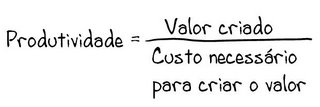
Repare-se na equação:
 Consideremos uma empresa em Portugal que produz os produtos ou serviços A e consegue e vendê-los ao preço B tendo os custos C.
.
Comparemos com uma empresa do mesmo grupo ou concorrente, localizada noutro país, que produz os mesmos produtos ou serviços A que vende ao preço B.
.
Como tem custos D superiores aos nossos, a nossa produtividade é sempre superior!
.
Quando no início da década passada a Alemanha passava um mau bocado, os trabalhadores alemães da indústria automóvel tiveram de concordar com o abaixamento dos seus salários, porque competiam com os outros europeus do Sul. Os outros alemães, os que produzem o que é único e não têm concorrência a sério no resto da Europa, os campeões escondidos de Hermann Simon, não têm esse problema. Basta recordar "As anedotas".
.
Aquilo que mais ajuda a perceber este fenómeno é, em minha opinião, escolher um sector de actividade de um mesmo país. Assim, isolam-se e podem ignorar-se toda uma série de factores brandidos pelos políticos e académicos (legislação laboral, horários de trabalho, formação dos trabalhadores, ...). Depois, comparem-se as produtividades dos diferentes agentes... ficarão parvos com a distribuição de produtividades que vão encontrar.
.
E essa é a mensagem-chave que devia ser mostrada, comunicada, explicada... tudo o resto é treta e conversa de catequistas bem intencionados que querem melhorar o mundo, nem que para isso tenham de o destruir.
.
Na parte I desta série, referi o postal de Álvaro Santos Pereira "Produtividade na OCDE". Ontem, ao voltar a esse postal, para ver se havia comentários, encontrei este que me mereceu especial atenção:
.
"Eu trabalho numa multinacional da área dos serviços implantada no Mundo inteiro. Portugal está integrado numa região do Sul da Europa, que também inclui Espanha e Itália. Temos melhores indicadores, de longe, que Espanha e Itália, a todos os níveis, proporcionalmente falando. Somos, a empresa em Portugal, um exemplo para o resto da Europa. Por isso custa-me compreender esta coisa da baixa produtividade, se já trabalhamos tanto (e melhor)... Já sei, os indicadores e tal, mas dos exemplos que conheço somos melhores que eles!"
.
Como é que a produtividade portuguesa é só 54% da produtividade americana? Os trabalhadores americanos trabalham com turbo?
.
Como é que o gráfico do Desmitos:

.
É fácil...
.
Basta meter na cabeça que o nosso problema da produtividade portuguesa não está na forma como nós produzimos, não está na forma como nós trabalhamos! Isso é capaz de nos ajudar a subir meia-dúzia de pontos no gráfico mas não é suficiente, são peanuts!!! Isso é conversa do lean!!!
.
O nosso problema da produtividade portuguesa está no que produzimos. O que produzimos tem um baixo valor potencial e, por isso, tem preços demasiado baixos.
.
O teste faz-se quando empresas a trabalhar em Portugal produzem o mesmo tipo de serviços e produtos que outras empresas a trabalhar noutros países.
.
Quem faz o comentário está a contar esse caso.
.
Repare-se na equação:

.
Comparemos com uma empresa do mesmo grupo ou concorrente, localizada noutro país, que produz os mesmos produtos ou serviços A que vende ao preço B.
.
Como tem custos D superiores aos nossos, a nossa produtividade é sempre superior!
.
Quando no início da década passada a Alemanha passava um mau bocado, os trabalhadores alemães da indústria automóvel tiveram de concordar com o abaixamento dos seus salários, porque competiam com os outros europeus do Sul. Os outros alemães, os que produzem o que é único e não têm concorrência a sério no resto da Europa, os campeões escondidos de Hermann Simon, não têm esse problema. Basta recordar "As anedotas".
.
Aquilo que mais ajuda a perceber este fenómeno é, em minha opinião, escolher um sector de actividade de um mesmo país. Assim, isolam-se e podem ignorar-se toda uma série de factores brandidos pelos políticos e académicos (legislação laboral, horários de trabalho, formação dos trabalhadores, ...). Depois, comparem-se as produtividades dos diferentes agentes... ficarão parvos com a distribuição de produtividades que vão encontrar.
.
E essa é a mensagem-chave que devia ser mostrada, comunicada, explicada... tudo o resto é treta e conversa de catequistas bem intencionados que querem melhorar o mundo, nem que para isso tenham de o destruir.
Subscrever:
Comentários (Atom)
%2006.21.jpeg)