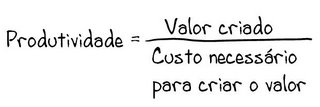
- a eficácia é mais importante que a eficiência;
- aumentar a produtividade à custa da criação de valor (numerador) em detrimento da concentração obcecada na redução dos custos (denominador)
quinta-feira, agosto 19, 2010
Macedónia
"Creating Efficiency vs. Creating Value" Um tema recorrente neste blogue:
"Crappy Innovation" Julgo que há aqui uma lição para as nossas PMEs... não precisam de parcerias com laboratórios que fazem investigação fundamental... precisam de estar atentas às necessidades insatisfeitas do mercado.
"A destruição criativa" Em termos estatísticos ainda estamos na fase da destruição, para ser criativa a destruição tem de ser compensada com a criação.
Optimismo (não documentado)
Ontem à noite jantei com o Aranha no âmbito do nosso já tradicional circuito das francesinhas (até agora as que apreciei mais foram as do Zig-Zag). Contou-me a história de um colega de curso que com 29 anos continua desempregado. Para cada ideia que o Aranha lhe dá sobre um hipotético negócio levanta mil e uma dificuldades.
.
Para pessoas que passam a vida a lamuriar-se, a levantar auto-problemas, a auto-desvalorizarem-se:
.
"The reason is simple: artists have the chance to make things better.
Other people often make the choice to be victims. They can be the flotsam and jetsam tossed by the waves of circumstance. Until they make the choice to be artists, they sadly float along.
.
Artists understand that they have the power, through gifts, innovation, and love, to create a new story, one that's better than the old one.
Optimism is the most important human trait, because it allows us to evolve our ideas, to improve our situation, and to hope for a better tomorrow.
...
Optimism is for artists, change agents, linchpins, and winners. Whinning and fear, on the other hand, are largely self-fulfilling prophecies in organizations under stress."
.
Aranha, tem uma paciência com esse seu colega...
.
Texto de Linchpin de Seth Godin
Tão natural, tão expectável
"Salários altos batem recorde apesar da crise no emprego"
.
"Também se percebem as tendências salariais quando se olha para o leque das profissões. O maior aumento do emprego (único digno de referência pois todas os outras profissões estagnaram ou caíram) aconteceu entre os especialistas das profissões intelectuais e científicas, onde a criação de emprego foi de 3,5%."
.
Se o autor do artigo ler o "Linchpin" de Seth Godin vai perceber muito bem o porquê desta evolução... é tão natural, tão expectável.
.
Quando as empresas descobrem que a corrida na espiral da eficiência, da padronização, da média não leva a lado nenhum, as que tentam ter futuro optam por procurar fazer diferente, por procurar ser diferente... tal só se consegue com gente diferente, com gente que faz a diferença.
A estrada menos percorrida
Todos os meses recebo e-mails deste tipo:
.
"Greetings,
I'd like to contact the person responsible for the development of balancedscorecard.blogspot.com.
I can list your website in our search engine (xxxxx). This will give you a) extra in-bound links, and b) additional traffic. We currently send over 12,000 visitors per day to those sites that are listed at no cost to our users.
Here are some sample runs, your site will of course be listed under YOUR keywords:
xxxx/dvd-release-dates/
xxxx/ethiopian-review/
xxxx/apartments/
The data for the search engine is provided by our free Real Analytics tracking system, so all you have to do is set up tracking on your website and our system will do the rest automatically. Our Real Analytics program will also provide you with detailed traffic statistics. Furthermore, it will report your website's rank in all search engines for all keywords, including specialty search engines, like Google Images.
..."
I'd like to contact the person responsible for the development of balancedscorecard.blogspot.com.
I can list your website in our search engine (xxxxx). This will give you a) extra in-bound links, and b) additional traffic. We currently send over 12,000 visitors per day to those sites that are listed at no cost to our users.
Here are some sample runs, your site will of course be listed under YOUR keywords:
xxxx/dvd-release-dates/
xxxx/ethiopian-review/
xxxx/apartments/
The data for the search engine is provided by our free Real Analytics tracking system, so all you have to do is set up tracking on your website and our system will do the rest automatically. Our Real Analytics program will also provide you with detailed traffic statistics. Furthermore, it will report your website's rank in all search engines for all keywords, including specialty search engines, like Google Images.
..."
.
Nunca ligo. Há o caso de uma empresa brasileira que quase me insulta porque não respondo.
.
Descobri há momentos um texto de Tom Asacker que descreve o meu pensamento "Don't pursue marketplace success"
Hipotéticos futuros...
Lembro-me de Ventoro...(gráfico da página 16 deste relatório).
.
Lembro-me deste postal "O regresso dos clientes".
.
"Reliance on Chinese plants is suddenly proving double-edged. "We conclude that labour and transportation cost pressures are a major concern for executives that may be under-appreciated by investors," it said.
The US industrial giant General Electric raised eyebrows in May with plans to shift production of its hybrid water heater from China back to Kentucky next year after securing lower wages from US workers. The company cited the narrowing pay gap, lower transport costs, and shorter delivery times."
.
Trecho retirado de "Western profits wilt on China's surging wages" onde o autor refere "Rising wage and production costs in China are eating into the profits of Western companies and may soon set off an exodus of multinational companies to cheaper locations". As multinacionais podem ter os recursos para fazer a mudança, mas as outras... sem conhecer os locais, sem ligações e conhecimentos nas cheaper locations vão hesitar bastante.
.
Poderemos assistir a mais casos como o referido no texto sobre o retorno das fábricas?
.
Ontem, as notícias referiam que a Foxconn pretende contratar mais 400000 trabalhadores no próximo ano, sabendo que "Given that the "cohort" of young people aged 20 to 30 currently joining the workforce is now contracting as China's demographic crunch starts to bite," quais as implicações?
.
ADENDA:
quarta-feira, agosto 18, 2010
Títulos para todos gostos
Sou um visual, para mim uma imagem vale muito mais que mil palavras.
.
Sinto que o uso de uma imagem, que o uso de alguns esquemas básicos, ajudariam a perceber melhor aquilo que à primeira vez parece contraditório:
.
.
.
"Portugal vai contar com mais dificuldades em financiar-se".
Faz lembrar aquela velha história dos vendedores de sapatos enviados para África mas não, tudo depende daquilo que é salientado pelo autor.
.
BTW, basta apreciar este podcast para perceber o poder do visual para lidar com muita informação em simultâneo "Visual Thinking: It’s About The THINKING Too"
Do You Need a Résumé?
Em tempos protestei contra os CVs padronizados que agora estão na moda em "CV e os sinais dos tempos + Diferenciação" (Agosto de 2007).
.
Depois, em Dezembro desse ano, na sequência desta reflexão "Será que faz sentido a criatividade de uma empresa começar na lista telefónica?" alterei o meu CV passando a capeá-lo com um esquema:
Hoje, no descanso de um piquenique na Ria de Aveiro, li um trecho de Linchpin de Seth Godin que me ultrapassou claramente e foi mais longe do que eu tinha pensado com o seguinte trecho "Do You Need a Résumé?"
.
Há bocado encontrei um texto de 2008 no seu blogue que expõe a ideia do livro "Why bother having a resume?"... "Great jobs, world class jobs, jobs people kill for... those jobs don't get filled by people emailing in resumes. Ever."
.
Gostava de pegar neste livro de Seth Godin e usá-lo para alimentar umas discussões com alunos à beira de entrarem no mercado de trabalho... ou para desempregados licenciados.
Not so fast Mr. Sibbet
Utilizo quase sempre o Powerpoint nas minhas acções de formação. Graças à ajuda de pessoas como Garr Reynolds, Nancy Duarte, Cliff Atkinson e outros tenho aprendido a usar essa ferramenta de forma cada vez mais interessante, cada vez menos texto e mais imagem.
.
Sei o quão mau se pode ser com o Powerpoint, arruinando uma acção de formação, uma conferência, uma reunião. Nós, humanos, temos tendência a usar o Powerpoint como um instrumento para ajudar o formador, ou o apresentador, ou o conferencista, e esquecemo-nos de o usar para fomentar a experiência mental do receptor da mensagem. Por isso, quando a minha filha me contou que a professora de Matemática dela, no 10º ano, usava o Powerpoint nas aulas em vez de usar o quadro temi logo o pior... e com razão.
.
Ontem li estes trechos de David Sibbet no seu recente livro "Visual Meetings: How Graphics, Sticky Notes & Idea Mapping Can Transform Group Productivity":
.
"I am conviced from my own experience that it is impossible to do what is called "systems thinking" without visualization.
...
When you want to understand anything you can't experience all in one moment, ... then you need to be able to connect different pieces of information experienced at different times. If you want to think about how things connect and are related you will have to make some kind of display.
...
This idea seems so obvious to me now I sometimes have trouble understanding why people think that listening to presentation after presentation is a skillful way to learn. I would much rather engage people in cocreating a display where they find their own patterns in the information. That kind of learning sticks. That is what visual thinking is all about. This is why teachers work through ideas step by step on blackboards!
...
Geoff Ball, wrote a little unpublished paper on Explicit Group Memory. He reported that of all the ideas he and other members of the project were exploring, the use of a common working display made the most difference. They believed that shared computer displays would be the power tools of the future. I took display to mean any kind of visual display, and understood through Geoff's paper why chalkboards are probably the last tool a teacher would ever give up."
.
Not so fast Mr. Sibbet, infelizmente, esta doença aliada à falta de paixão pelo que se faz, contaminada pelo novo riquismo burocrata das novas tecnologias for the sake of novas tecnologias, pode fazer anti-milagres.
A impotência corrompe
Brilhante reflexão de Rosabeth Moss Kanter "Powerlessness Corrupts":
.
"Powerlessness is particularly apparent in the middle ranks. When companies slash midlevel positions, they often increase the burden on the remaining people without increasing their efficacy and influence—a combination likely to arouse risk-averse rigidity. Hemmed in by rules and treated as unimportant, people get even by overcontrolling their own turf, demanding tribute before responding to requests.
...
The powerless retaliate through subtle sabotage. They slow things down by failing to take action—a form of pocket veto, in which a bill is killed simply because time runs out. Negativity and low aspirations show up in behaviors psychologists call defensive pessimism, learned helplessness, and passive aggression.
It doesn’t have to be that way. Every change can be an occasion for empowerment, in which people add their own hopes and ideas to common goals. Leaders can give them more control over their circumstances—for example, by rethinking constricting rules. Giving associates opportunities to develop initiatives and be recognized for them can result in small wins that propel big changes. Deep and wide involvement can spread power: tens of thousands in communication networks, thousands in brainstorming sessions, hundreds on problem-solving teams.
Great leaders build confidence in advance of victory."
...
The powerless retaliate through subtle sabotage. They slow things down by failing to take action—a form of pocket veto, in which a bill is killed simply because time runs out. Negativity and low aspirations show up in behaviors psychologists call defensive pessimism, learned helplessness, and passive aggression.
It doesn’t have to be that way. Every change can be an occasion for empowerment, in which people add their own hopes and ideas to common goals. Leaders can give them more control over their circumstances—for example, by rethinking constricting rules. Giving associates opportunities to develop initiatives and be recognized for them can result in small wins that propel big changes. Deep and wide involvement can spread power: tens of thousands in communication networks, thousands in brainstorming sessions, hundreds on problem-solving teams.
Great leaders build confidence in advance of victory."
.
Claro que chefias medrosas, chefias com receio de perderem o seu lugar, chefias politizadas, têm receio de subordinados com ideias... tolos e de vistas-curtas, não sabem nem imaginam que a maior parte das chefias não são promovidas porque ... não há subordinados à altura de os substituirem.
Se não mudamos o presente, como podemos aspirar a um futuro diferente?
"Governo aumenta despesa mas não o défice"...
.
Desta vez não passou de uma desculpa para incluir aqui uma ilustração de Frits Ahlefelt... tenho inveja de quem consegue captar a vida desta forma desenhada.
.
Para reflexão
"John Seddon: Why Management Tools Don't Work"
.
A mensagem do autor é mais actual que nunca e aplica-se a todos nós!!!
Pense nesta possibilidade
Pega-se em ""O futuro está todo indefinido"" e pergunta-se:
.
- Acredita que consegue fazer a diferença?
- Acredita que pode ser inovador?
.
Depois, lê-se o "Linchpin" de Seth Godin ou, como foi o meu caso, lê-se "The Seven Habits of High Effective People" de Stephen Covey, para ganhar energia e reforçar a auto-confiança.
.
Por fim, junta-se a "Microcrédito gera 566 empresas em plena crise" e cria a sua própria empresa... ou para lidar directamente com as crianças e os seus pais, ou para ajudar as organizações incumbentes, como consultor, a melhorar as suas práticas.
terça-feira, agosto 17, 2010
Se puderem não percam
Se lidam com a satisfação dos clientes, com a importância do serviço ao cliente, com o desafio da fidelização dos clientes, imho, um artigo a não perder é um incluído na série da Harvard Business Review - How I did it - e está no número de Julho-Agosto "Zappos's CEO on Going to Extremes for Customers".
.
O artigo é um hino ao serviço ao cliente, não é mambo-jambo que só gera cinismo e está tão distante do que é o pensamento, ou antes, as acções correntes da maioria. Basta pensar nos call-centers... basta pensar neste exemplo, basta pensar na quantidade de serviços que consumidores e empresas utilizam e que não estão à altura: não cumprem prazos; não sabem do que falam (uma vez perguntei num daqueles pontos de fast-food presumivelmente israelita nos centros comerciais que carne é que entrava num dado menu... a resposta foi, juro que é verdade, porco); fazem mal; entregam mal; não têm palavra... em suma, um mundo de oportunidades de negócio para quem quiser fazer a diferença.
.
"We were reluctant to outsource the call center, because we'd had bad experiences with outsourcing in the past. In fact, one of the big lessons ofZappos's first few years was that it never makes sense to outsource your core competency, especially if your aim is to be maniacal about customer service.
In its earliest days, Zappos fulfilled orders with drop shipments: We didn't carry any inventory; instead we relied on shoe manufacturers to ship products directly to our customers. That system never worked very well.
...
As an e-commerce company, we should have considered warehousing to be our core competency from the beginning. Trusting that a third party would care about our customers as much as we did was one of our biggest mistakes.
If we hadn't reacted quickly by starting our own warehouse operation, that mistake would eventually have destroyed Zappos.
...
If we were serious about building our brand around being the best in customer service, customer service had to be the whole company, not just a single department.
...
On many websites the contact information is buried at least five links deep, because the company doesn't really want to hear from you. And when you find it, it's a form or an e-mail address. We take the exact opposite approach. We put our phone number (it's 800-927-7671, in case you'd like to call) at the top of every single page of our website, because we actually want to talk to our customers. And we staff our call center 2417.
...
At Zappos we don't hold reps accountable for call times. (Our longest phone call, from a customer who wanted the rep's help while she looked at what seemed like thousands of pairs of shoes, lasted almost six hours.) And we don't upsell- a practice that usually just annoys customers.
We care only whether the rep goes above and beyond for every customer. We don't have scripts, because we want our reps to let their true personalities shine during every phone call, so that they can develop a personal emotional connection with each customer"
In its earliest days, Zappos fulfilled orders with drop shipments: We didn't carry any inventory; instead we relied on shoe manufacturers to ship products directly to our customers. That system never worked very well.
...
As an e-commerce company, we should have considered warehousing to be our core competency from the beginning. Trusting that a third party would care about our customers as much as we did was one of our biggest mistakes.
If we hadn't reacted quickly by starting our own warehouse operation, that mistake would eventually have destroyed Zappos.
...
If we were serious about building our brand around being the best in customer service, customer service had to be the whole company, not just a single department.
...
On many websites the contact information is buried at least five links deep, because the company doesn't really want to hear from you. And when you find it, it's a form or an e-mail address. We take the exact opposite approach. We put our phone number (it's 800-927-7671, in case you'd like to call) at the top of every single page of our website, because we actually want to talk to our customers. And we staff our call center 2417.
...
At Zappos we don't hold reps accountable for call times. (Our longest phone call, from a customer who wanted the rep's help while she looked at what seemed like thousands of pairs of shoes, lasted almost six hours.) And we don't upsell- a practice that usually just annoys customers.
We care only whether the rep goes above and beyond for every customer. We don't have scripts, because we want our reps to let their true personalities shine during every phone call, so that they can develop a personal emotional connection with each customer"
.
O artigo é escrito na primeira mão pelo fundador da Zappos, Tony Hsieh. Escreve tão bem, e tão umas ideias tão genuinamente originais na prática, na convicção com que as defende "The most efficient way to run a warehouse is to let the orders pile up, so that when a worker walks around picking up orders, the picking density is higher and the worker has less distance to walk. But
we're not trying to maximize picking efficiency.
We're trying to maximize the customer experience, which in e-commerce involves getting orders out to customers as quickly as possible." Muito à frente na defesa da eficácia em detrimento da eficiência, que durante o meu jogging ando a ouvir, pela primeira vez na vida, um livro, escrito Hsieh e que conta a história da Zappos "Delivering Happiness: A Path to Profits, Passion, and Purpose"
we're not trying to maximize picking efficiency.
We're trying to maximize the customer experience, which in e-commerce involves getting orders out to customers as quickly as possible." Muito à frente na defesa da eficácia em detrimento da eficiência, que durante o meu jogging ando a ouvir, pela primeira vez na vida, um livro, escrito Hsieh e que conta a história da Zappos "Delivering Happiness: A Path to Profits, Passion, and Purpose"
"Yes, You Can Change The Future, But Only By Changing The Present" (parte III)
"The more you can see of the present, the more you can see of the future"
.
"Governo não corta despesa e gasta ainda mais que o previsto"
.
"Governo não corta despesa e gasta ainda mais que o previsto"
.
Em contrapartida, sinto a estupefacção deste "apesar" "Merkel continua com cortes na despesa apesar do crescimento económico", não joga bem com o modelo mental do mainstream português...
.
E questionar se a Alemanha está numa espiral virtuosa e nós numa viciosa?
.
menos despesa -> menos saque impostado -> mais riqueza ao serviço da economia -> mais crescimento -> mais receita e mais emprego
.
versus
mais despesa -> mais saque impostado -> menos riqueza ao serviço da economia -> menos crescimento -> menos receita e menos emprego ... here we go again
São os erros que nos tornam humanos, credíveis e interessantes?
Quando um político inicia um mandato virgem é fácil dizer que se tem um problema, que algo foi mal feito (por outros, claro).
.
E as pessoas concordam, a sua experiência com a realidade quotidiana, está em sintonia e ressoa com o que o político diz.
.
Depois, o político refere que vai ser difícil fazer a mudança, mas que ela não é impossível e, apresenta um caminho para chegar à Terra Prometida.
.
E as pessoas acreditam.
.
E quando um político está a meio de um mandato, ou no início de um mandato não-virgem? E quando esse político, como humano que é, cometeu erros... terá coragem de os enumerar?
.
O mais fácil é negar a realidade, negar a existência do problema...
.
Só que o discurso deixa de ressoar com o sentimento das pessoas...
.
.
.
"“When you tell a story, the whole gist is to admit the negative side, then dramatize the positive side of how the courageous little company overcame all the negatives. To get executives to admit they ever made a mistake – that they didn’t predict that would happen, that surprises came from out of the blue, that means they were not in control – that really scares the shit out of them.”
“A great leader knows how to do this. ‘You wouldn’t believe it – just when we got to this point, when out of the blue comes this a competitor with a better product, or the government wouldn’t give us the patent, we were knocked back on our heels, but we turned it around and did this and did that.’”
“Everybody loves it when the underdog gets off his back and back on his feet and wins. But to do that you have to admit that something happened you couldn’t predict or you made a mistake. And then you had to fix it. That’s why the storytelling for a lot of people is terrifying. They don’t have the ability to admit they ever misjudged anything any person or any situation. And to tell a story, you have to do that.”"
“A great leader knows how to do this. ‘You wouldn’t believe it – just when we got to this point, when out of the blue comes this a competitor with a better product, or the government wouldn’t give us the patent, we were knocked back on our heels, but we turned it around and did this and did that.’”
“Everybody loves it when the underdog gets off his back and back on his feet and wins. But to do that you have to admit that something happened you couldn’t predict or you made a mistake. And then you had to fix it. That’s why the storytelling for a lot of people is terrifying. They don’t have the ability to admit they ever misjudged anything any person or any situation. And to tell a story, you have to do that.”"
...
"Stories – and admitting that bad things have, and do, happen – do more than just build credibility. They draw us in. We want to hear how the hero returns triumphant.
We’re tired of bullshit because it’s plastered everywhere we look. No one tells the truth anymore. In a culture increasingly built on instant success without accomplishment, we wrongly look down upon failure. These failures are what make us human, credible and interesting to the world."
Future of Chemicals An Overview
"Future of Chemicals An Overview" um interessante trabalho da Booz & Company. A minha curiosidade não são as commodities, são as especialidades:
.
"Commoditization of Specialty Chemicals
Specialty chemicals companies, such as DSM, Evonik, and Altana, enjoyed a period of prosperity until the early 2000s; they were able to realize higher margins than basic chemicals and had the opportunity to differentiate themselves from traditional suppliers in low-cost countries. Recently, however, the financial performance of specialty companies has stagnated as many chemicals have become commodities and opportunities to realize premium prices have evaporated. Western companies with broad specialty portfolios are in the unenviable position of having to change their business models to reflect this sharp drop in pricing power for their products, and the situation is exacerbated by the overall margin squeeze.
...
Pharmaceutical and agrochemical companies must still focus on inventing new entities, but elsewhere in the chemical industry the focus has moved to optimizing processes (especially for basic chemicals), creating new formulations and blends for polymers and other specialty products, and developing new business models (such as pay-for-performance contracts or adding service elements to the initial product offering). This trend is especially strong in Europe, where it has been fostered by the introduction of REACH (registration, evaluation, authorization, and restriction of chemicals) legislation, which limits companies’ ability to register new chemical entities. Thus, active product life cycle management has become a challenge in several chemical segments; consequently, investment in product innovations is under more and more pressure.
...
In specialty chemicals, three types of players are likely to emerge from the current fragmented landscape. First is the portfolio manager, which follows an M&A strategy that combines “seeking size” and “pick and choose.” These companies will actively buy and sell businesses and consolidate chemical segments within a holding structure that manages businesses with minimal overlaps.
The second type is the integrator, which acquires companies that enhance its horizontal position along the value chain. These companies will be driven especially by the downstream integration of basic chemical companies, which will lead to integrated specialty majors. The third type is the technology boutique, (Moi ici: IMHO a mais interessante para um mundo quase plano e para maiores produtividades) which will primarily focus on organic growth in its niche and only selectively integrate value-adding technology positions.
In specialty chemicals, three types of players are likely to emerge from the current fragmented landscape. First is the portfolio manager, which follows an M&A strategy that combines “seeking size” and “pick and choose.” These companies will actively buy and sell businesses and consolidate chemical segments within a holding structure that manages businesses with minimal overlaps.
The second type is the integrator, which acquires companies that enhance its horizontal position along the value chain. These companies will be driven especially by the downstream integration of basic chemical companies, which will lead to integrated specialty majors. The third type is the technology boutique, (Moi ici: IMHO a mais interessante para um mundo quase plano e para maiores produtividades) which will primarily focus on organic growth in its niche and only selectively integrate value-adding technology positions.
...
New business models are required to ensure outstanding performance as chemical companies grapple with accelerated commoditization. Building a culture that inspires the development of new offerings to generate additional value is mandatory. At the same time, in the few remaining real specialty segments, customer intimacy remains a key success criterion for sustaining the high margins and specialty character of the product."
.
Continua.
Acerca da criação de emprego
"Where the US will find growth and jobs":
.
"From 1995 to 2005, service sectors generated all net job growth in high-income economies and 85 percent of net new jobs in emerging economies. Low-tech green jobs in local services, such as improving building insulation and replacing obsolete heating and cooling equipment, could generate more jobs than would be created through the development of renewable technologies."
.
"Revitalizing the American Dream" com uma lista de 16 passos para fomentar a criação de startups nos Estados Unidos.
.
"Given our anemic and largely jobless economic recovery, this is more important than ever. Young companies -- those younger than six years old -- provide the bulk of new jobs; in 2007, they accounted for 64 percent of them, according to a 2009 survey by the Kauffman Foundation that looked at start-up formation since the 1970s. John Haltiwanger, an economist at the University of Maryland, came to a similar conclusion in a more recent study: His research found that start-ups account for only 3 percent of total U.S. employment but almost 20 percent of gross job creation."
.
"From 1995 to 2005, service sectors generated all net job growth in high-income economies and 85 percent of net new jobs in emerging economies. Low-tech green jobs in local services, such as improving building insulation and replacing obsolete heating and cooling equipment, could generate more jobs than would be created through the development of renewable technologies."
.
"Revitalizing the American Dream" com uma lista de 16 passos para fomentar a criação de startups nos Estados Unidos.
.
"Given our anemic and largely jobless economic recovery, this is more important than ever. Young companies -- those younger than six years old -- provide the bulk of new jobs; in 2007, they accounted for 64 percent of them, according to a 2009 survey by the Kauffman Foundation that looked at start-up formation since the 1970s. John Haltiwanger, an economist at the University of Maryland, came to a similar conclusion in a more recent study: His research found that start-ups account for only 3 percent of total U.S. employment but almost 20 percent of gross job creation."
.
.
Seth Godin em "Linchpin" diz tudo o que há a dizer sobre a crise na criação de emprego:
.
"Over time, drip by drip, uear by year, the manual was written, the procedures were set, and people were hired to follow the rules. The organization gets extremely efficient at producing a certain output a certain way... and then competition or change or technology arrives and the old rules aren't particularly useful, the old efficiencies not so profitable.
.
In the face of a threat like this, the natural reaction is to try to become more efficient. (Moi ici: é o que o mainstream quer dizer quando fala em aumentar a produtividade e só pensa em reduzir custos... ainda não perceberam que a eficácia é mais importante que a eficiência)
...
Of course, this isn't the answer. Doing more of what you were doing, but more obediently, more measurably, and more averagely, will not solve the problem, it will make it worse.
...
Our economy has reached a logical conclusion. The race to make average stuff for average people in huge quantitues is almost over. We're hitting an asymptote, a natural ceiling for how cheaply and how fast we can deliver uninspired work.
.
Becoming more average, more quick, and more cheap is not as productive as it used to be.
...
So, what's left is to make - to give - art."
Houve um tempo em que isto encheria alguém de vergonha...
"Estradas de Portugal só é sustentável com mais portagens":
.
"O investimento médio anual que a Estradas de Portugal tem mantido nos últimos anos ronda os mil milhões de euros. As receitas apuradas estão muito longe destes valores: a Contribuição do Serviço Rodoviário (CSR), que veio substituir as transferências de verbas via PIDDAC, ronda os 600 milhões."
.
"O investimento médio anual que a Estradas de Portugal tem mantido nos últimos anos ronda os mil milhões de euros. As receitas apuradas estão muito longe destes valores: a Contribuição do Serviço Rodoviário (CSR), que veio substituir as transferências de verbas via PIDDAC, ronda os 600 milhões."
.
.
.
Lucas 14, 28-32
.
"Quem de vós, desejando construir uma torre, não se senta primeiro a calcular a despesa, para ver se tem com que terminá-la? Não suceda que, depois de assentar os alicerces, se mostre incapaz de a concluir e todos os que olharem comecem a fazer troça, dizendo:
‘Esse homem começou a edificar, mas não foi capaz de concluir’.
E qual é o rei que parte para a guerra contra outro rei e não se senta primeiro a considerar se é capaz de se opor, com dez mil soldados, àquele que vem contra ele com vinte mil? Aliás, enquanto o outro ainda está longe, manda-lhe uma delegação a pedir as condições de paz."
‘Esse homem começou a edificar, mas não foi capaz de concluir’.
E qual é o rei que parte para a guerra contra outro rei e não se senta primeiro a considerar se é capaz de se opor, com dez mil soldados, àquele que vem contra ele com vinte mil? Aliás, enquanto o outro ainda está longe, manda-lhe uma delegação a pedir as condições de paz."
segunda-feira, agosto 16, 2010
Como é que uma universidade privada pode competir com uma universidade pública? (parte II)
Parte I.
.
.
Gostaria de salientar o seguinte trecho:
.
"os cachets são cada vez mais caros e que as grande bandas só tocam onde e quando querem" e as bandas estão a competir com... o grátis. Basta ir ao Youtube e sacar a música que se pretende. Por outro lado, devem existir milhares de bandas disponíveis para actuarem gratuitamente... mas "os cachets são cada vez mais caros e que as grande bandas só tocam onde e quando querem".
.
Hoje contaram-me o caso de duas empresas de consultoria, que após a chegada de uma terceira ao mercado (um organismo público), mantiveram os atributos do serviço e baixaram o valor da proposta em 60%... faz-me recordar este texto de "Mark Ritson on Branding: hold your line and don't cut your price":
.
"Too many marketers contradict their brand's positioning either by launching at too low a price or dropping that price too easily at the first sign of trouble.
The consulting firm McKinsey has long observed that between 80% and 90% of incorrect pricing decisions are made by managers who charge too little for their products. That's a stunning fact and comes with an even more astonishing implication: these organisations could have enjoyed better margins and unit sales - as well as stronger brand equity - if they had only followed the Burt Lancaster School of Pricing.
As the recession drags on into its second painful year, it's a philosophy that becomes ever harder for marketers to believe in. Every week sees another brand drop its prices and walk away from the challenge."
The consulting firm McKinsey has long observed that between 80% and 90% of incorrect pricing decisions are made by managers who charge too little for their products. That's a stunning fact and comes with an even more astonishing implication: these organisations could have enjoyed better margins and unit sales - as well as stronger brand equity - if they had only followed the Burt Lancaster School of Pricing.
As the recession drags on into its second painful year, it's a philosophy that becomes ever harder for marketers to believe in. Every week sees another brand drop its prices and walk away from the challenge."
.
Se não se consegue ser diferente... o preço manda ponto.
Subscrever:
Comentários (Atom)