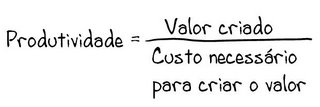
Agora, o online chegou e está a matar os centros comerciais.
- The new industrial revolution hits retail: prepare for mass firings.
- The retail apocalypse has officially descended on America
"This is a growing concern as organizations — like society in general — tend to become more risk averse. Introducing ever more rules looks like a simple and effective way to lower risk.Como não recordar as greves de zelo.
...
Limiting people’s freedom does indeed mean they have less opportunity to do the wrong things or to do them in the wrong way (at least, that is what you hope!) But it also restricts their ability to do things that are worthwhile: experimenting, using their judgement, being creative. How can people learn from experience if their options are curtailed by a forest of rules?
...
Many rules were originally intended to be guidelines to help shape behaviour, but instead over time get codified into rigid laws. Often most people in the organization no longer know why the rules were even implemented. And yet depressingly, “Rule Nazis …. They cling to the rules like Leonardo DiCaprio clung to that door in Titanic — as if their lives depend on it. And they make sure everyone else does too, even when the rule doesn’t make sense or stands in the way of productivity,”
...
Rules mostly creep in one by one. As their number grows, they contribute to a culture of conformity, rather than one of intelligent judgment and empowered employees who do what is right.
.
Maybe such hard compliance is exactly what you want. But it’s worth making really sure, because the control it gives you can be illusory. If your organization relies on bright people responding intelligently to the complex interactions with your customers or service users, or with their colleagues, then you had better think twice before you implement yet another rule. Otherwise you might find yourself having to appoint someone to change dumb company rules.
.
Don’t let rules rule your organization."
"Trying to beat Amazon at its own game is not only likely to fail, it’s also not in Walmart’s best interests. Walmart has perhaps the best physical distribution and retail network in the world. It needs to be competitive on digital channels, sure. But, more important, it should excel at brick-and-mortar. Improving the in-store experience, promoting omnichannel shopping and fulfillment options, and developing in-person service innovations are avenues that leverage its brand equity and core competencies — and they’re approaches that would put Amazon at a disadvantage. Instead of cutting human resource jobs (which seems counterproductive for a company that employs 2.3 million people) and closing new store formats (which make the brand more convenient and accessible to more people), Walmart should invest to advance its strongest competitive advantage: its physical stores.Trechos retirados de "Walmart Won’t Stay on Top If Its Strategy Is “Copy Amazon”"
.
The company’s obsession with competing with Amazon also seems to have taken Walmart’s focus off its brand identity in everyday low prices.
...
Many companies feel a pull to imitate the practices of successful rivals. But this rarely ends well. Core competencies stagnate, customers become confused, and the opportunity to lead instead of follow is squandered. Instead of gaining on Amazon, Walmart seems poised to lose valuable ground."
"A ideologia, por vezes, paga-se muito caro.Trecho retirado de "Privatização da Caixa Geral Depósitos"
Aí está a CGD para o atestar."
"There is no economic topic more important than productivity, which in the long run determines whether living standards surge or stagnate. Productivity growth has been disappointing for more than 40 years, particularly disastrous since the financial crisis, and worse in the UK than in most other rich nations.
...
An alternative view is that what’s really lacking is a different kind of innovation: the long shot. Unlike marginal gains, long shots usually fail, but can pay off spectacularly enough to overlook 100 failures.
...
These two types of innovation complement each other. Long shot innovations open up new territories; marginal improvements colonise them.[Moi ici: Talvez haja alguma relação com isto "Competition From China Reduced Innovation in the US". Embora para mim o título não traduza a minha versão: A atenção da gestão de topo das empresas grandes ocidentais esteve mais ocupada em extrair os benefícios da deslocalização, baseados na redução de custos, do que na originarão de valor. E o tempo que se gasta com uma coisa é irremediavelmente perdido para outras]
...
many countries have a long tail of poorly managed companies. The culprit may be a lack of competition: vigorous competition tends to raise management quality by spurring improvements and by punishing incompetents with bankruptcy. [Moi ici: E os habituais apoios e subsídios estatais, para fazer frente aos despedimentos] It’s no coincidence that the philosophy of marginal gains is popular in the unforgiving arena of elite sport.
.
But the second question is why productivity growth has been so disappointing.
...
The obvious answer is that the long shots matter, too. In almost every field except computing, we’ve hoped for revolutionary breakthroughs and they haven’t yet happened.
...
In a data-driven world, it’s easy to fall back on a strategy of looking for marginal gains alone, avoiding the risky, unquantifiable research. Over time, the marginal gains will surely materialise. I’m not so sure that the long shots will take care of themselves."
"The best-run companies, in contrast, think of cost management as a way to support their strategy, and of cost as precious investment that will fuel their growth. They put their money where their strategy is and continually cut bad costs and redirect resources toward good costs. After all, if we aren’t directing spending to the right places, what chance do we have to grow?Como não recuar a 2007 e a "Como descobri que não é suficiente optimizar os processos-chave." (parte I, parte II e parte III)
.
Management teams at such companies spend a lot of effort separating out the costs that truly fuel their distinct advantage from the ones that don’t. They base their decisions about where to cut and where to invest on the need to support their greatest strengths: the capabilities that enable them to create unique value for customers.
...
connect costs and strategy. Look at every opportunity to cut costs as an opportunity to channel investments toward strengthening your value proposition. Connect your budget directly to your strategic priorities; if your budget doesn’t reflect your priorities, you have very little chance of executing your vision. This entails viewing costs not merely as an in-year expense but also as a multiyear investment in differentiating capabilities designed to help your company execute its strategy."
"You could safeguard against rules that hinder people doing the right thing while failing to solve the presumed problem by ensuring the rule-makers themselves are subject to the rules they make. At least they would then experience first-hand the benefits and the costs involved.Mas voltaremos a este texto por causa das greves de zelo e não só.
...
In practice, those who make the rules are often insulated from the true consequences. The lack of a good feedback mechanism to adjust the rules would be bad enough if the rules were based on evidence and logic. But it’s often even worse, because rules often originate from received (but dubious) wisdom, unproven ‘common sense’, or reactions to one-off events. Rules that are based on beliefs rather than evidence, and never tested, are unlikely to produce net benefits. Yet such rules are precisely the ones the makers feel most protective of."
"Whereas many economists focus on inequality between individuals, Bloom’s view is filtered through his early work as a consultant at McKinsey, where he became interested in the impact of good management on the economy. “Economists have long dismissed the importance of management practices and were often skeptical of the value of management research,” says Bloom.
...
Bloom was amazed by the variation in management practices he saw among clients — and by how convinced each client was that theirs was the best way.
...
Bloom shares his research on the role firms and management play in the rise of income inequality. He highlights how competitive forces and corporate decision making have contributed to divergent outcomes for individuals and suggests that inequality can’t be fully understood without thinking about companies.
...
Companies can contribute to rising income inequality in two ways. As we’ve just discussed, pay gaps can increase within companies — between how much executives and administrative assistants are paid, for example. But studies now show that gaps between companies are the real drivers of income inequality.
...
We found that the average wages at the firms employing individuals at the top of the income distribution have increased rapidly, while those at the firms employing people in the lower income percentiles have increased far less.
...
In other words, the increasing inequality we’ve seen for individuals is mirrored by increasing inequality between firms. But the wage gap is not increasing as much inside firms, our research shows. This may tend to make inequality less visible, because people do not see it rising in their own workplace."
"Alerta que "é muito fácil pregar as situações óptimas" e que "a opinião pública está anestesiada porque lhe é escamoteada a compreensão do problema [da dívida] e lhe é permanentemente afirmada a oferta ilusória que é impraticável". "A realidade far-se-á sentir na altura própria," adverte.Estes políticos profissionais carregados de culpas no cartório, chegam à reforma e continuam, sempre sem skin-in-the-game, como Vestais a proporem soluções como se tivessem aterrado agora vindos de Marte de onde sempre viveram.
...
Acrescenta ainda que as políticas sociais e o seu alcance também têm de ser trazidas à discussão "em função daquilo que é a realidade e a capacidade da economia. E se estamos a seguir um caminho certo (…) ou a viver a assimilação de uma sucessão de ilusões da qual só pode resultar um desastre," adverte."
"When you lose on price, it really means that you didn’t deliver enough value for the price. Both sides matter.Trechos retirados de "Losing on Price"
.
To avoid losing, you can do two things: lower your price or increase the value you deliver. Lowering your price is usually a horrible idea, so how can you increase value?
.
Create more value by improving your product. You can add more capability, more features, more services. However, these additions must be valued by your market or you still won’t win at your price. Talk to your market to be certain what you are adding matters to them.
.
Communicate your value better. You could have the best product in the world, but if your market doesn’t know it, you won’t get paid for it.
...
As a rule of thumb, if you aren’t losing 10 percent of deals based on price, you should raise your prices. Of course, there is an emotional cost to losing deals, but we have to get over it. We are in the business of making money. Not losing deals is a clear indication you are leaving money on the table."
"Most U.S. and European companies have spent the past 20 years concentrating more and more of their manufacturing in East Asia to reduce costs by exploiting labor-arbitrage opportunities and address the promise of that rapidly growing market. It’s time for them to rethink their supply-chain strategies. Adjusting to new economic realities as well as political and economic uncertainties will require making their supply chains much more resilient.E nem uma palavra sobre a necessidade acrescida de rapidez, flexibilidade, co-criação, reposições rápidas, lotes pequenos, ...
.
There are three reasons a rethink is due:
East Asia’s shrinking cost advantage.
...
Advances in manufacturing technology.
...
A shift toward protectionism."
"One of the most important tests of your organization's maturity level and business orientation is how you use the word "commodity." If this is a common way for you to describe your products—internally and especially externally—you shouldn't be surprised if customers treat you as a commodity, meaning they argue that you have no differentiation. They have no desire at all to pay a premium. A commodity mindset shows that you don't have the right business orientation for VBP. ...Given maturity and a business orientation, there is also a difference between going through the motions and making the required changes and improvements. The volume-versus-value mindset is decisive. It is often the acid test for a transformation and for whether an organization is serious about it. ...You can spend all the money you want and create the culture you want, but if your organization is not willing to let go of market share, it will not change. Pretty brutal, but true. The market share mindset is the antithesis of a value mindset. It is the Jack Welch "be number r or number 2" mentality that still determines the way so many Gen Xers and Gen Yers run their businesses. I find it almost surreal in some companies that make market share into one of their most important and most reported KPIs."
@Peliteiro @fassistapt @walternatez existe alguma Antral das análises q se possa sentir melindrada? https://t.co/hq42Llj02O— Carlos P da Cruz (@ccz1) March 16, 2017
o meu: "metam código nisso" https://t.co/ffJ1xNfsvF— Carlos P da Cruz (@ccz1) March 19, 2017
Por isso é que políticos viciados em "picking winners" gostam deste "distortions occur" e preferem que sejam candidaturas avaliadas por eles a definir quem deve ter lugar no mercado em vez dos clientes.
"Simply, the minute one is judged by others rather than by reality, the mechanism becomes warped as follows. Firms that haven’t gotten bankrupt yet have something called personnel departments, with people trained into a discipline of dealing with other peoples. So there are metrics used and “evaluation forms” to fill.
.
The minute one has evaluation forms distortions occur.
...
the mere fact than an evaluation causes you to be judged, not by the end results, but by some intermediary metric that invites you to look sophisticated, bring that distortion."
"Earnings before interest, tax, depreciation and amortisation were equal to 35 per cent of group revenues.Como não pensar na cerveja artesanal...
Rivals squeeze less juice from sales.
...
Fever-Tree is mixing with these bruisers as a lightweight with £100m in revenue and just 46 employees. Britvic, with a similar market worth, has 4,000 staff and revenue of £1.4bn.
Over the next few years, Fever-Tree aims to grow organically rather than through acquisition."
"You don't need to know pricing to understand value, but you need to understand value to find the prices that best fit your products, services, and strategic goals. Value management has three steps: creation, dollarization, and capture. These correspond to the deceptively simple questions I have asked throughout the book: What do you do for customers? What is it worth? How much of it will you capture? Only that last phase (capture) requires some knowledge of pricing."
"Companies in many industries prefer a small slice of a huge market to a large slice of a small one. The thinking is, of course, that the former promises unlimited growth potential. And there’s a certain amount of truth to that. But all too often, the size of the opportunity encourages sloppy strategy making. Why choose where to play or how to win when there’s a huge market to conquer? Anybody is a potential customer, so just go out and sell stuff.Foi dele que me lembrei ao ler "Google Glass Didn't Disappear. You Can Find It On The Factory Floor":
.
But when anyone could be a customer, it is impossible to figure out whom to target and what those people actually want. The results tend to be an offering that is not captivating to anybody and a sales force that doesn’t know where to spend its time. This is when crisp strategy making and clear thinking about opportunities are most important."
"Google Glass fizzled out and was discontinued in the consumer market.E recordo que a locomotiva a vapor não surgiu para transportar pessoas, a sua primeira aplicação foi nas minas para substituir os cavalos no transporte de minério.
.
But now, it's getting a second life in the manufacturing industry.
...
Google Glass tells her what to do should she forget, for example, which part goes where. "I don't have to leave my area to go look at the computer every time I need to look up something," she says.
.
With Google Glass, she scans the serial number on the part she's working on. This brings up manuals, photos or videos she may need. She can tap the side of headset or say "OK Glass" and use voice commands to leave notes for the next shift worker."
"o que é que Vítor Constâncio está lá a fazer".Trecho retirado de "Belém acha "inacreditável" ameaça de BCE e Vítor Constâncio"
"Os dias de casting de modelos na casa dos 20 anos e tamanhos pequenos ou, ainda, de tez branca, parecem estar a chegar ao fim, com as marcas de moda a começarem a ser mais representativas, especialmente quando se trata de usar modelos numa faixa etária diferente. A necessidade de mudança vem, ironicamente, dos números.Subitamente lembrei-me de um texto escrito aqui no blogue em 2006, "Spray maritimo que precede o splash da onda":
.
Aqueles com mais de 60 anos constituem o grupo em maior crescimento nas populações dos países ricos e o seu número deverá aumentar mais de um terço até 2030, de 164 para 222 milhões. Os consumidores mais velhos são também os mais ricos, graças à inflação dos preços de imóveis e às suas reformas generosas."
"Um dia, os noticiários da TV, as passagens de modelos, os anúncios de TV, os enredos dos filmes, ... serão protagonizados por gente com mais de 60 anos. Serão o espelho da sociedade..."Apetece repetir as palavras de Reagan:
"You ain't seen nothing yet"
"It is widely believed that restructuring has boosted productivity by displacing low-skilled workers and creating jobs for the high skilled."Mas, e como isto é profundo:"In essence, creative destruction means that low productivity plants are displaced by high productivity plants." Por favor voltar a trás e reler esta última afirmação.
.
"Lovaglia’s Law: The more important the outcome of a decision, the more people will resist using evidence to make it."
"If an organisation is too stable it can ossify, but if it is too unstable it can disintegrate. Successful organisations work between these two conditions or states, in what Stacey called ‘the chaos zone’."
"If the customer doesn't care about the price, then the retailer shouldn't care about the cost,"
“It's not enough that we do our best; sometimes we have to do what's required”.
"Das Leben, das uns gegeben ist, ist uns nicht als etwas Fertiges gegeben, sondern wir müssen es uns gestalten, und zwar jeder sein eigenes."
"Eine Regierung, die nichts wert ist, kostet am meisten."
"Forget trying to persuade them; light their pants on fire."
"O futuro é o que importa. O futuro é a base do significado, é de onde vem o projecto que alguém tem para si próprio"
"The single biggest problem in communication is the illusion that it has taken place."
“It is not the strongest of the species that survives, nor the most intelligent; it is the one that is most adaptable to change.”
"o Marketing só existe a partir do pensamento estratégico, caso contrário "não resulta""
"It is difficult to get a man to understand something, when his salary depends upon his not understanding it"
"Perder diversidade é como arrancar páginas de um livro. Quantas páginas poderemos arrancar até deixar de compreender o enredo?"
The great enemy of the truth is very often not the lie – deliberate, contrived and dishonest – but the myth, persistent, persuasive, and unrealistic. Belief in myths allows the comfort of opinion without the discomfort of thought."
"By strategy, I mean a cohesive response to a challenge. A real strategy is neither a document nor a forecast but rather an overall approach based on a diagnosis of a challenge. The most important element of a strategy is a coherent viewpoint about the forces at work, not a plan."
"Un desastre està punt de succeir a Espanya. El malentès de la gravetat de la crisi costarà car als inversors, ja que tindrà profundes conseqüències per a tot el sistema bancari europeu", afirma.
Entre d'altres coses, Mauldin diu que "els inversors estan fumant crack si creuen que els bancs espanyols són entre els més forts d'Europa, ja que estan amagant les seves pèrdues".
“… there are no “sunset” industries condemned to disappear in high wage economies, although there are certainly sunset and condemned strategies, among them building a business on the advantages to be gained by cheap labor”
"o vencedor da vida, o optimista que vive em incesto com o próprio ego, é o traço mais frágil do líder"
"We shall not grow wiser before we learn that much
that we have done was very foolish."
You may not be able to change the world but can at least get some entertainment & make a living out of the epistemic arrogance of the human race.
"I wanted you to see what real courage is, instead of getting the idea that courage is a man with a gun in his hand. It's when you know you're licked before you begin but you begin anyway and you see it through no matter what. You rarely win, but sometimes you do."
“Trust your guts. But not too much!”
"Customers will try 'low-cost providers,' because the majors have not given them any clear reason not to." "
"Natal é quando as Crianças pedem e os Pais pagam. Défices é quando os Pais pedem e as Crianças pagam."
"A imprevidência dos povos é infinita, a dos governos é legal"
"What a man sees depends both upon what he looks at and also upon what his previous visual-conceptual experience has taught him to see"
“The leaders first task is to be the trumpet that sounds a clear sound”
"lamented the lack of any systematic data on the scale of unfunded IOUs that care-free politicians have handed out like confetti."
"Let them call me rebel and welcome, I feel no concern from it; but I should suffer the misery of devils, were I to make a whore of my soul..."
O problema não é o consumo. O problema é o consumo assente em endividamento."
"There are designations, like "economist", "prostitute", or "consultant" for which additional characterization doesn't add information."
When it becomes more difficult to suffer than change, you will change"
"Hope is not a strategy and a crisis is a terrible thing to waste"
The more you can see of the present, the more you can see of the future"
Yes, You can change the future, but only changing the present"
"Entrepreneurship is 'Having aspirations greater than your resources'"
“The single biggest reason companies fail is they overinvest in what is, as opposed to what might be."
"The first principle is that you must not fool yourself - and you are the easiest person to fool. So you have to be very careful about that"
"A estabilidade é uma ilusão"
"When we create the conditions of possibility, the universe becomes our co-conspirator"
Thinking about doing is not doing. Talking about doing is not doing. Doing is doing."
"'God has created me to do him some definite service. He has committed some work to me which he has not committed to another'.
...
"Each of us has a mission, each of us is called to change the world, to work for a culture of life, a culture forged by love and respect for the dignity of each human person.
"As our Lord tells us in the Gospel we have just heard, our light must shine in the sight of all, so that, seeing our good works, they may give praise to our heavenly Father."
"The future is not there waiting for us. We create it by the power of imagination."
"confusing testosterone with strategy is a bad idea"
"Much consulting involves the application of models to a system, as opposed to getting involved in the system as a positive change agent""
"O Portugal que pára sem orçamento é precisamente aquele que vive dele e que há todo o interesse em parar."
"credibilidade da política financeira e dos seus executores está ao nível da credibilidade de uma barraca das farturas"
"The role of the manager is thought to be reduction of uncertainty rather than the capacity to live creatively in it"
"today an entrepreneur is closer to artists than managers"
"A business without a path to profit isn’t a business, it’s a hobby"
"If no one’s upset by what you’re saying, you’re probably not pushing hard enough. (And you’re probably boring, too.)"
"Storytelling isn’t just how we construct our identities, stories are our identities"
"'He who has a why to live can bear almost any how' "
"They can because they think they can"
"Se há coisa que não suporto é misturar catequese com negócios, é a incapacidade para calçar os sapatos do outro e só pensar na nossa posição de coitadinhos, pobres vítimas indefesas dos maus e que por isso precisamos do Estado todo poderoso para nos proteger e, nem percebem na volta, os juros que o Estado cobra por esse serviço mafioso de protecção que, ainda por cima não resolve nada."
"Empathy is like a universal solvent. Any problem immersed in empathy becomes soluble."
"In victory, do not brag; in defeat, do not weep"
"Value it's a feeling not a calculation"
"An economist is someone who has had a human being described to him, but has never actually seen one."
"Don't finish first--it's not about running a rat race. Start with a better ending in mind."
"If you sit in on a poker game and don’t see a sucker, get up. You’re the sucker.”
"The 'value added' for most any company, tiny or enormous, comes from the Quality of Experience provided."
"Crediting government with the success of entrepreneurs is like crediting the guy who built Bill Gates’ garage with the success of Microsoft."
"I have found that assuming social scientists understand the difference between correlation and causality is not generally a good one."
"Promising never to raise taxes, without reaching a deal on spending, really means a high and rising commitment to future taxes."
"Some things are so foolish that only an intellectual could believe them, for no ordinary man could be such a fool"
"os bancos não financiam a economia, a poupança sim"
"I do not know the key to success, but the key to failure is trying to please everybody"
"Never be afraid to try, remember... Amateurs built the ark. Professionals built the Titanic."
"terms such as 'experiment' and 'observation' cover complex processes containing many strands. 'Facts' come from negotiations between different parties and the final product - the published report - is influenced by physical events, dataprocessors, compromises, exhaustion, lack of money, national pride and so on."
"'science in the making' is 'the consequence of [a] settlement' of 'controversies'."
"If the state wishes to spend more, it can do so only by borrowing your savings or taxing you more. And it's no good thinking someone else will pay, that someone else is you."
"All failures of strategy are rooted in the assumption that outcomes are predictable."
"Doing things like your bigger competitors is how to get killed in the wars out there"
“Uma moeda boa e forte é como a saúde. Só lhe damos verdadeiramente valor quando não a temos.”
"Life’s tough. It’s tougher if you’re stupid"
"O homem de bem exige tudo de si próprio; o homem medíocre espera tudo dos outros"
"Change is a threat when done to me, but an opportunity when done by me."
"As elites foram deixando de falar das exportações à medida que se foi percebendo que o país consegue exportar sem elas"
"Your toughest competition is the little voice inside your head telling you to stop"
"Pain is just weakness leaving your body"
"Built to last" is bad economics. Built to do something great" is the better idea. Think: "Creative destruction."
"the world is an uncertain place no matter how many Greek letter equations you affix to a problem."
"You never change things by fighting existing reality. To change s.th., build a new model making the existing model obsolete"
“No, no, you're not thinking; you're just being logical.”
"Success is not a destination. It's the trail you leave behind you."
"Winners make a habit of manufacturing their own positive expectations in advance of the event."
“You’ve got to start with the customer experience and work back toward the technology – not the other way around”
"Strategy as the "smallest set of - intended or actual - choices and decisions sufficient to guide all other choices and decisions sufficient to guide all other choices and decisions."
"When something is commoditized, an adjacent market becomes valuable"
"nature evolves away from constraints, not toward goals"
"There aren't any textbooks on what to stop doing!"
"With great power comes great irresponsibility "
"Weird things happen when you take price out of the equation for consumers"
"‘It’s so damn complex. If you ever think you have the solution to this, you’re wrong and you’re dangerous.’"
"Saruman believes it is only great power that can hold evil in check, but that is not what I have found. I found it is the small everyday deeds of ordinary folk that keep the darkness at bay. Small acts of kindness and love."
"Increasing stuff that doesn't add value dilutes existing value."
"O federalismo não é a alternativa à troika, é a troika para sempre."
"Never underestimate the difficulty of changing false beliefs by facts"
"Stressors are information"
“If you hear a “prominent” economist using the word ‘equilibrium,’ or ‘normal distribution,’ do not argue with him; just ignore him, or try to put a rat down his shirt.”
"The advantage of experiences over things for most of us is that we can make them seem unique, which = scarce, which = value"
"Pedras no caminho?
Guardo todas, um dia vou construir um castelo"
"Without risk, faith is an impossibility."
"Não posso com quem vive a achar que os outros lhe devem sempre alguma coisa."
"In a world of increasing automation, our ability to perform tasks is not nearly as important as our ability to dream. The questions we need to ask are not ones of action, but ones of meaning"
"Me arrancam tudo a força e depois me chamam de contribuinte."
"Letting people vote for expensive programs that “somebody else” will finance is a good recipe for getting people to vote irresponsibly"
"what's fairness gotta do with pricing based in value?"
"The epic battle of our generation is between the status quo of mass and the never-ceasing tide of weird."
“Price is emotional”
"There will always be a reason why you can't pursue it, until competitors create a reason why you must."
"The most important thing to study is opening theory"
"The greater the contrast, the greater the potential"
“Customers don't care about your solution, they care about their problems.”
"Todos querem conhecer a verdade, mas o que desejam é que lhes contem uma mentira em que não sejam protagonistas."
"Execution efficiency strangles innovation in the crib, but not with malice, by default.”
"Our obsession with scalability is getting in the way of unleashing the potential of the 21st century."
"The system is optimized to mitigate risk, not create value"
"Champions are made when no one is looking"
"Don't bargain on value. Half as expensive is often twice as cheap."
"Customers care about outcomes, not effort, technology, or originality."
"
"You don't have to pick between 1) playing the game and 2) not playing the game. You can *change* the game."
""The first principle is that you must not fool yourself and you are the easiest person to fool." "