sexta-feira, maio 20, 2016

Compreender o contexto

Consideremos uma empresa de vestuário em Portugal e a implementar um sistema de gestão da qualidade segundo os requisitos da ISO 9001:2015.
.
Que tipo de factores externos listará ao abrigo da cláusula 4.1?
.
.
.
Quantas registam coisas como esta, "The rise of athleisure is eating into the profits of regular clothes"?
"Shoppers are spending less on clothes and looking for discounts when they do. Amazon and fast fashion are stealing their customers.
.
But there’s another factor hitting these businesses, according to a comprehensive research note by Deutsche Bank. Athletic clothing is taking a bite out of regular clothing’s sales.
.
“We see athletic apparel boosting the industry, up 4.1% from 2008-2015 on average,” the authors write. “Meanwhile, non-athletic apparel was up only 0.2% during that timeframe and lagged overall apparel in seven of the past eight years."
Que impacte é que isto vai ter no negócio dos clientes dos seus clientes?
Que consequências nos negócios da empresa?
.
Como remediar esta tendência?
Como aproveitar esta tendência?
Que implicações para a estratégia?
.
Se não considera estas coisas como é que o sistema de gestão da qualidade é relevante para o negócio?

Promotores da concorrência imperfeita, dos monopólios informais e das rendas excessivas (Parte II)

Parte I.
"Several broad forces, most of them peculiar to our times, are combining to create advantageous conditions for small companies. A market segment known as “selectionists,” who constitute 30 percent of consumers, are seeking greater variety and new tastes in the food and drinks they buy—and sometimes care deeply about factors such as the origins of a product and how far it has been shipped. Some traditional supermarkets are catering to this trend as a way to differentiate themselves from Walmart and big price clubs. The fragmentation of media and the generally lower cost of digital platforms are giving small players new outlets to reach customers in more targeted, cost-efficient ways. But what should most concern large players is how technology is eroding their scale-driven advantages. Small players are increasingly able to outsource invoicing, HR systems, and logistics, as well as other back-office SG&A functions. Retail consolidation is further chipping away at scale advantage. The preference among bigger retailers is to work with a broad range of manufacturers—both large and small—to keep large consumer packaged goods companies from gaining too much leverage."
Em vez de choradinho, pensamento estratégico.
.
Em vez de mais do mesmo, novidade, diferenciação, proximidade, autenticidade.
.
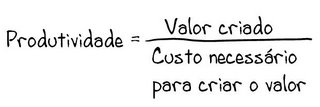
Em vez da aposta na eficiência e no denominador, aposta na eficácia e no numerador.

Sem arte ...

Sem arte, o produto fabricado pela sua empresa será apenas mais uma commodity que pode ser substituído por este ecossistema "UPS teams with SAP to invest in 3-D printing":
"Customers will be able to place 3-D printing orders on the Fast Radius website, which will send them to one of UPS' more than 60 stores outfitted with 3-D printers, or Fast Radius' production facilities in Louisville. Where the order is sent will depend on speed, geography and the product quality the customer requires.
.
SAP customers will be able to use the system to digitize and simplify the production part approval process.
...
According to a study published in April by the Manufacturing Institute, 71% of U.S. manufacturers are using 3-D printing technology in some way. While the majority still use it mainly for prototypes, almost 7% are using it to produce end products."
E de "3D Printing Comes of Age in U.S. Industrial Manufacturing":
"While roughly the same percentage of US manufacturers are currently adopting 3DP in some way (roughly two-thirds) a higher percentage (51%) are using it for prototyping and final-products than two years ago (35%); meanwhile, fewer are simply “experimenting” to determine how they may use the technology (17% vs 29% two years earlier).
...
3D printing seen to disrupt supply chain, threaten intellectual property Manufacturers are equally split on what will be 3DP’s most disruptive effect, with 22% saying it will be in restructuring supply chains, and another 22% that it will be threats to intellectual property, and 18% believe that it will be changed relationships with customers. Two years ago, the stand-alone, number-one concern was supply chain disruption."
E de "3D printing industry to triple in four years to $21B":
"This year, the 3D printing industry, which includes machines, materials and printing services, will reach $7.3 billion. By 2020, it is expected to grow to $21 billion,
...
3D printing can speed development and delivery for customized products and bring increased flexibility through better inventory management and real-time production of wares that have variable demand.
.
Other advantages named in the report: Manufacturing advantages for small batches, cost advantages based on efficiencies for certain applications and unprecedented flexibility in new markets. 3D printing also can improve quality through lighter parts, better ergonomics and more design freedom."
Matéria-prima para fazer emergir um novo tipo de economia, até que ponto voltaremos ao modelo pré-industrial?

quinta-feira, maio 19, 2016

Curiosidade do dia

Interessante a evolução relatada em "The fad for the Andean staple has not hurt the poor—yet".
.
O sucesso foi tão grande que fez com que os profissionais da agricultura intensiva se interessassem pelo que deixou de ser um nicho.
.
Até que ponto a diferenciação e autenticidade pode funcionar como barreira contra a commoditização?

A concorrência imperfeita a funcionar

Enquanto o governo, o presidente e a oposição se digladiam acerca das exportações, mais exemplos do que é a concorrência imperfeita a funcionar:
"A produção de fruta e produtos hortícolas em Portugal está cada vez mais direcionada para o exterior, tendo registado em 2015 um forte crescimento de 24% nas exportações face ao ano anterior, com um valor de 570 milhões de euros, de acordo com o estudo setorial ‘Frutas e Produtos Hortícolas’ da Informa D&B. Se recuarmos até ao início da década, este crescimento das exportações é de mais de 80%, já que o setor exportou 313 milhões de euros em 2010."
"Os Vinhos de Lisboa aumentaram as suas exportações em 2015, apesar de Angola ter deixado de ser o principal mercado e ter baixado de 20% para 2,5% o peso que tinha nas vendas ao estrangeiro.
...
Vasco Avillez, presidente da Comissão Vitivinícola Regional (CVR) de Lisboa, disse que de 2014 para 2015 as exportações «aumentaram 35% em volume e 50% em valor», com o preço médio por garrafa a subir de 2,70 para 3 euros."
"Em 2015, as exportações portuguesas de vinho crescerem 1,6% em valor, para atingirem o sexto recorde consecutivo, e caíram 1,2% em volume, com o preço médio por litro a subir 2,8%, para €2,63."

A treta do leite

Um reforço do sintoma do quão mau é o jornalismo em Portugal.
.
Em Março passado escrevemos "Os Trump do leite e a preguiça dos media (parte II)" acerca do grito dos produtores de leite por causa de um suposto dumping dos preços dos produtos lácteos que, segundo eles, chegam a Portugal.
.
Entretanto, descubro estes números "Comércio intracomunitario - Janeiro de 2016". o texto remete para um pdf onde podemos ver a evolução das exportações intracomunitárias portuguesas de manteiga (+41%), queijo (-6%), leite em pó desnatado (+ mais de 300%) e leite em pó inteiro (+5%).
.
Relativamente aos tais preços do leite que chegam a preços de dumping e que desmontámos aqui, números recentes aqui.
.
Tudo indica que os elementos mais conservadores do sector fazem barulho e os políticos vão atrás cheios de medo e os jornalistas servem de megafone.

Promotores da concorrência imperfeita, dos monopólios informais e das rendas excessivas

Às vezes encontramos artigos tão em sintonia com o que pensamos, com o que prevemos, com o que sentimos...
"Small consumer packaged goods (CPG) companies in the U.S. are steadily gaining market share these days, often at the expense of larger competitors. Booz & Company recently analyzed the food and beverage industry and found that small players (those with sales of less than US$1 billion) are outperforming the competition in 18 of the top 25 categories, including the largest and most consolidated ones, such as bakery, dairy, snacks, and ready meals (see Exhibit). From 2009 to 2012 in packaged foods and from 2008 to 2011 in beverages, small players grew revenue about three times faster than the overall category.
...
Along with market share gains, small players enjoyed price premiums in many categories.
...
Small players also showed pricing strength over private label manufacturers. From 2011 to 2012, the price premium for small players over private labels jumped 5 percent for butter, olive oil, and packaged/industrial bread."
Como não recordar logo o texto deste ex-economista "Monopoly’s New Era":
"In today’s economy, many sectors – telecoms, cable TV, digital branches from social media to Internet search, health insurance, pharmaceuticals, agro-business, and many more – cannot be understood through the lens of competition. In these sectors, what competition exists is oligopolistic, not the “pure” competition depicted in textbooks. A few sectors can be defined as “price taking”; firms are so small that they have no effect on market price."
Claro que existem monopólios, sobretudo protegidos pelos Estados, onde o crony capitalism floresce viçosamente.
.
No entanto, os trechos iniciais são acerca de um outro tipo de monopólio.
.
O tipo de monopólio que defendemos e incitamos as empresas a criarem com o nosso mote:
Promotores da concorrência imperfeita, dos monopólios informais e das rendas excessivas.
Joseph E. Stiglitz ainda pensa a economia como um mundo povoado por econs?
.
As pequenas empresas CPG dos trechos iniciais:

  • crescem mais;
  • crescem mais depressa;
  • praticam preços superiores; e
  • são menos sujeitas à erosão dos preços por causa da concorrência.
Falcatrua? Cronysmo? Ilegalidade? Não! Apenas estratégias de diferenciação. Recordo que Edward Chamberlin, estava contra a existência de marcas, porque elas permitem a diferenciação dos produtos. A diferenciação dos produtos permite que mais monopólios, "informais"  acrescento eu, sejam criados e, por isso, as empresas, pelo menos algumas, tenham retornos superiores.
.
Trechos iniciais retirados de "The Big Bite of Small Brands".

Mistério esclarecido?

Em Fevereiro passado comentei:

Entretanto, descubro isto "Leite de cabra precisa-se!" de Setembro de 2015


quarta-feira, maio 18, 2016

Curiosidade do dia

"A dívida do Estado tem como efeito inevitável o aumento dos impostos - o Estado funciona com o dinheiro dos outros. Os agentes económicos privados, pelo contrário, terão de aumentar a eficiência dos seus investimentos e das organizações empresariais para poderem pagar o serviço da dívida - e as alternativas são a venda dos seus activos ou a falência.
 .
Nesta singularidade do Estado, em democracia como em ditadura, esconde-se uma realidade perversa, uma prática que ninguém quer admitir: no interior do Estado proliferam as redes de interesses e de protecção, com um mercado próprio de compras e de vendas, com o poder de eliminar os concorrentes mais eficientes e com a garantia de proteger os fiéis, mesmo que incompetentes ou delinquentes."
Trecho retirado de "Redes de influência e protecção"

E na sua empresa, como é?

"Incumbents are still segmenting almost exclusively by value, which leads sales teams to stack-rank customers on the basis of revenues and operating margins"
E na sua empresa, como é feita a segmentação dos clientes?
.
Em "Small Customer Today, Revenue Giant Tomorrow" uma sugestão que talvez mereça reflexão na sua empresa:
"With a new approach to segmentation, incumbents can find their “growth hot spots,” those high-potential customers obscured by more traditional methods. Sales leaders need to consider two critical but often overlooked factors when assessing their current and future customers: need and behavior." 
Um passo em direcção à consideração dos clientes-alvo e ao seu comportamento, uma espécie de journey mapping.

Um conselho aplicável a muitas empresas

Um conselho aplicável a muitas empresas e não só às grandes:
"on the basis of our recent analysis of 12 major U.S. packaged food and non-alcoholic beverage companies, we believe management can drive comparable shareholder returns by deploying an alternative formula that has three key components. The first is cost reduction. Companies must reduce costs sufficiently to offset the margin erosion inherent in their businesses, create enough savings to allow for reinvestment in the business, and raise operating margins by 400 basis points. Second, companies must rationalize their portfolios so that they retain only businesses in which core capabilities create unique advantage. [Moi ici: Recordar a série sobre o tecto de vidro] Third, and most significant, they must create new avenues for step-change profitable growth that build upon current capabilities."
Trecho retirado de "The Shareholder Value Triple Play"

Execução e alinhamento

"At its heart, execution is about organizational alignment—making sure the people, the formal organization, and the culture support the execution of the strategy
provides a model that illustrates this. In this model, if I am clear about my strategy and objectives, then I can identify the key success factors that need to be accomplished to achieve the objectives (e.g., what the three or four things are that I have to accomplish over the next twelve to eighteen months if I am to be successful at implementing my strategy). Once I have these specified, I can then think about aligning the people, formal organization, and culture in a way that ensures that the organization will achieve these. For each of these elements (people, formal organization, and culture), I can ask a set of diagnostic questions:
...
Answers to these questions will help determine whether the organization is aligned in a way to execute the strategy. Misalignments (e.g., not having the right skills or using the wrong metrics) decrease the chances of successful execution."
Figura e trechos retirados de "Lead and disrupt : how to solve the innovator’s dilemma" de Charles A. O’Reilly III e Michael L. Tushman


Não há certeza de nada

Daqui:
"in strategy there is no single right answer to find. Strategy requires making choices about an uncertain future. It is not possible, no matter how much of the ocean you boil, to discover the one right answer. There isn’t one."
Daqui:
"What was the best strategy in the end? What Lindgren found was that this is a nonsensical question. In an evolutionary system such as Lindgren's model, there is no single winner, no optimal, no best strategy. Rather, anyone who is alive at a particular point in time, is in effect a winner, because everyone else is dead. To be alive at all, an agent must have a strategy with something going for it, some way of making a living, defending against competitors, and dealing with the vagaries of its environment.

Likewise, we cannot say any single strategy in the Prisoner's Dilemma ecology was a winner. Lindgren's model showed that once in a while, a particular strategy would rise up, dominate the game for a while, have its day in the sun, and then inevitably be brought down by some innovative competitor. Sometimes, several strategies shared the limelight, battling for "market share" control of the game board, and then an outsider would come in and bring them all down. During other periods, two strategies working as a symbiotic pair would rise up together—but then if one got into trouble, both collapsed."
E em "Doing Everything Right Still Won't Make You a Winner":
"Just because you do everything right doesn’t mean that you’re still going to win.
.
Doing what is right doesn’t mean that nothing wrong is going to come into your life.
.
You don’t get an automatic entry to the podium just because you gave it your all."
Julgo que isto é muito difícil de perceber por pessoas com ideias feitas ainda que não tenham capacidade de idear, como dizia Ortega Y Gasset. Isto é o que torna a estratégia interessante, não há certeza de nada. O que é verdade hoje no mundo de hoje pode ser mentira amanhã no mundo de amanhã.

terça-feira, maio 17, 2016

Curiosidade do dia

A narrativa mudou, os malvados foram embora. Pena que a realidade seja tramada:

Estratégia em todo o lado

Ouvi há pouco uma entrevista na rádio em que o treinador que levou o Chaves à I Liga de futebol, a sua 9ª subida, dizia que não iria continuar e que tinha recebido propostas de vários clubes que estava a analisar para brevemente tomar uma decisão.
.
Normalmente os clubes escolhem os treinadores.
.
Vítor Oliveira, porque tem uma estratégia para a sua actividade profissional, porque se especializou, porque se diferenciou, porque escolheu um nicho, recebe convites e é ele que escolhe.
.
E a sua empresa, também se diferencia? Também tem uma estratégia?

E na sua empresa, como é?

A propósito desta figura
retirada de "A Simple Way to Test Your Company’s Strategic Alignment".
.
Relacionar com este texto e vídeo "Para reflexão".
"How well does your organization support the achievement of your business strategy? “Organization,” as we’re using it here, includes all of the required capabilities, resources (including human), and management systems necessary to implement your strategy.
...
To maintain strategic alignment, a company’s people, culture, structure and processes have to flex and change as the strategy itself shifts. The symptoms of poor alignment are often obvious, especially to those who work in the company, but also to customers who do not experience the service they expect from a company’s branding and advertising. Using the same 1 – 100 scale ask yourself: How well does our organization support the achievement of our strategy? If your organization is incapable of delivering its strategy, the strategy is effectively worthless and your company’s purpose will go more or less unfulfilled."
E na sua empresa, como é?

A economia não é um jogo de soma nula

Agora com os dados de Março de 2016, "Hotelaria fecha primeiro trimestre com subida de 16% nas dormidas", retomo o tema desta Curiosidade do dia e saliento este outro título "Casas para arrendar a turistas não param de aumentar".
.
A mensagem é a de que a economia não é um jogo de soma nula.
.
Ao mesmo tempo, recordo o postal de há um mês acerca da mentalidade extractiva que nos auto-mutila, "A mentalidade extractiva" e este outro de Janeiro último, "Prestes a cometer um crime".
.
A sério, convido à leitura dos números de Março de 2016 sobre a hotelaria, quando o RevPar médio sobe 22,1%... está tudo dito.

Soa-me estranho...

Ao ler "Bel Portugal: "É ridículo estarmos a consumir leite e lacticínios estrangeiros"" como não pensar logo: para onde exporta a Bel Portugal?
.
E recordar "Multinacional Bel já aguarda há 3 anos autorização para exportar para o Brasil":
"A Bel Portugal está há cerca de três anos a trabalhar nos dossiers para iniciar as exportações de laticínios das marcas Terra Nostra e Limiano para o Brasil.
...
Atualmente, a Bel Portugal coloca os seus produtos em mais de 12 países, sendo que o principal destino de exportação é Angola, que no ano passado registou um crescimento de 42%. As exportações da empresa têm registado "um crescimento acelerado" e o objetivo é "continuar" a aumentar as vendas para exterior. Em 2014, a Bel Portugal deu "os primeiros passos na Suíça".
.
A maioria das exportações tem como destino os países de expressão portuguesa, mas também mercados como o francês (onde se localiza a sede da empresa)."
Soa-me estranho neste mundo globalizado para onde queremos exportar, ao mesmo tempo querermos impor barreiras aos outros e impedir a reciprocidade- Por que é que a Bel não concentra os seus esforços em se diferenciar?
.
Por que é que a Bel não salienta, não alavanca a diferença entre vacas felizes versus produções hiper-intensivas?
.
Come on, eu que os elogiei:

Fico desconfiado que não acreditam na estratégia que definiram... que afinal não passa de marketing.

segunda-feira, maio 16, 2016

Curiosidade do dia

Pode ser o rastilho para qualquer coisa feia "Transportadoras contra lei que obriga a pagarem salário mínimo francês"

Acerca do "endowment effect"

Ainda a propósito de "The Power of Customisation Without The Pain" de onde retiro estes trechos:
"The desire for more unique and authentic products means customers will respond positively to being asked for input rather than just choice. Building emotional connections requires them to imagine the product while creating it, see their lives with the product and how it fits them, long before they commit to buy, let alone receive the product. This emotional connection will encourage them to buy, so it is important to encourage them to develop it early.
...
Remember emotional branding: your customer should already be envisioning the sheets on their own bed when looking at your website, and not want to look elsewhere because yours look perfect. To do that, I would recommend very realistic product visualisation with the different SKUs broken down to their constituent design elements.
.
So from a customer’s perspective, once they’ve selected the right “product”, they see a stunning visualisation of the sheets on a bed so that they can easily make the mental leap to imagining owning them."
Como não relacionar isto com o "endowment effect". Ver "Why Buyers and Sellers Inherently Disagree on What Things Are Worth":
"A third tactic is to get buyers to touch, hold, or imagine owning the good. Experiences like interacting with a product through a touchscreen, receiving a coupon for it, or temporarily being the highest bidder for it in an auction all have the potential to induce the endowment effect for the product if they make us feel like we own it."