.
Não acredito em coincidências, todos os acasos são significativos!
.
Há dias reflecti sobre o risco de olharmos para o mundo ignorando as interacções.
.
Ontem, à porta de uma empresa, enquanto aguardava pelo horário de uma reunião, encontrei um subcapítulo, no livro "Complexity and Management - Fad or radical challenge to systems thinking?" de Ralph D. Stacey, Douglas Griffin e Patricia Shaw, intitulado "Scientific management: ignoring interaction":
.
"Frederick Taylor (1911) in the United States and Henri Fayol ([1916] 1948) in Europe, the founding figures of scientific management, were both engineers. Taylor’s central concern was with the efficient performance of the physical activities required to achieve an organization’s purpose. His method was that of meticulously observing the processes required to produce anything, splitting them into the smallest possible parts, identifying the skills required and measuring how long each part took to perform and what quantities were produced.
.
His prescription was to provide standardized descriptions of every activity, to specify the skills required, to define the boundaries around each activity and to fit the person to the job requirement. Individual performance was to be measured against the defined standards and
rewarded through financial incentive schemes. He maintained that management was an objective science that could be defined by laws, rules and principles: if a task was clearly defined, and if those performing it were properly motivated, then that task would be efficiently performed." (Moi ici: Quantas pessoas estão de acordo com este recorte? E como ser coerente e continuar a ser consultor de sistemas de gestão sem acreditar nesta "prescription"?)
rewarded through financial incentive schemes. He maintained that management was an objective science that could be defined by laws, rules and principles: if a task was clearly defined, and if those performing it were properly motivated, then that task would be efficiently performed." (Moi ici: Quantas pessoas estão de acordo com este recorte? E como ser coerente e continuar a ser consultor de sistemas de gestão sem acreditar nesta "prescription"?)
...
"The particular approach that the manager is then supposed to take toward the organization is that of the scientist, the objective observer, who regards the natural phenomenon as a mechanism.
The whole mechanism is thought to be the sum of its parts and the behavior of each part is thought to be governed by timeless laws. An organization is, thus, thought to be governed by efficient causality and the manager’s main concern is with these “if-then” causal rules. There is a quite explicit assumption that there is some set of rules that are optimal; that is, that produce the most efficient global outcome of the actions of the parts, or members, of the organization." (Moi ici: Comparar uma organização a um mecanismo... essa é demasiado puxada. Não ver que uma empresa é mais do que a soma das partes é ignorar a emergência dos sistemas. Acreditar em leis independentes do tempo e em causas suficientes é ignorar a realidade.)
The whole mechanism is thought to be the sum of its parts and the behavior of each part is thought to be governed by timeless laws. An organization is, thus, thought to be governed by efficient causality and the manager’s main concern is with these “if-then” causal rules. There is a quite explicit assumption that there is some set of rules that are optimal; that is, that produce the most efficient global outcome of the actions of the parts, or members, of the organization." (Moi ici: Comparar uma organização a um mecanismo... essa é demasiado puxada. Não ver que uma empresa é mais do que a soma das partes é ignorar a emergência dos sistemas. Acreditar em leis independentes do tempo e em causas suficientes é ignorar a realidade.)
...
"The scientist discovers the laws of nature while the manager, in the theory of management science, chooses the rules driving the behavior of the organization’s members. In this way, Rationalist Teleology is brought into play but it is one that differs in important ways from Kant’s notion. First, this Rational Teleology applies only to the manager. It is he who exercises the freedom of autonomous choice in the act of choosing the goals and designing the rules that the members of the organization are to follow in order to achieve the goals. Those members are not understood as human beings with autonomous choice of their own but as rule-following entities making up the whole organization. Closely linked to this point about freedom is that of acting into the unknown. Kant argued that the choices humans make are unknown. In its use in scientific
management, Rationalist Teleology is stripped of the quality of the unknown, and also of the ethical limits within which action should take place, to provide a reduced Rationalist Teleology. In fact scientific management does what Kant argued against. It applies the scientific
method in its most mechanistic form to human action, whereas Kant argued that it was inapplicable in any form simply because human freedom applies to all humans."
management, Rationalist Teleology is stripped of the quality of the unknown, and also of the ethical limits within which action should take place, to provide a reduced Rationalist Teleology. In fact scientific management does what Kant argued against. It applies the scientific
method in its most mechanistic form to human action, whereas Kant argued that it was inapplicable in any form simply because human freedom applies to all humans."
...
"Elton Mayo (1949), a social psychologist. He conducted experiments to identify what it was that motivated workers and what effect motivational factors had on their work. He pointed to how
they always formed themselves into groups that soon developed customs, duties, routines and rituals and argued that managers would only succeed if these groups accepted their authority and leadership. He concluded that it was a major role of the manager to organize teamwork and so sustain cooperation. Mayo did not abandon a scientific approach but, rather, sought to apply the scientific method to the study of motivation in groups."
they always formed themselves into groups that soon developed customs, duties, routines and rituals and argued that managers would only succeed if these groups accepted their authority and leadership. He concluded that it was a major role of the manager to organize teamwork and so sustain cooperation. Mayo did not abandon a scientific approach but, rather, sought to apply the scientific method to the study of motivation in groups."
...
"From the 1940s to the 1960s, behavioral scientists (for example, Likert, 1961) continued this work and concluded that effective groups were those in which the values and goals of the group coincided with those of the individual members and where those individuals were loyal to the group and its leader. Efficiency was seen to depend upon individuals abiding by group values and goals, having high levels of trust and confidence in each other in a supportive and harmonious atmosphere. In extending freedom to all members of an organization and paying attention to motivational factors, the Human Relations school took up a fuller notion of Rationalist Teleology but still thought of this as encompassing an organizational whole driven by efficient causality with an implicit Natural Law Teleology in that the movement of the whole organization was toward an optimal state of harmony."
.
"Taking scientific management and Human Relations together, we have a theory in which stability is preserved by rules, including motivational rules, that govern the behavior of members of an organization (a mixture of Rationalist Teleology and Natural Law Teleology). Change is brought about by managers when they choose to change the rules, which they
should do in a way that respects and motivates others (Rationalist Teleology) so that the designed set of rules will produce optimal outcomes (secular Natural law Teleology). Because they are governed by efficient cause, organizations can function like machines to achieve given purposes deliberately chosen by their managers. (Moi ici: Tanta ingenuidade!!!) Within the terms of this framework, change of a fundamental, radical kind cannot be explained.
should do in a way that respects and motivates others (Rationalist Teleology) so that the designed set of rules will produce optimal outcomes (secular Natural law Teleology). Because they are governed by efficient cause, organizations can function like machines to achieve given purposes deliberately chosen by their managers. (Moi ici: Tanta ingenuidade!!!) Within the terms of this framework, change of a fundamental, radical kind cannot be explained.
.
Such change is simply the result of rational choices made by managers and just how such choices emerge is not part of what this theory seeks to explain. The result is a powerful way of thinking and managing when the goals and the tasks are clear, there is not much uncertainty and people are reasonably docile, but inadequate in other conditions. Truly novel change and coping with conditions of great uncertainty were simply not part of what scientific management and its Human Relations consort set out to explain or accomplish."
Such change is simply the result of rational choices made by managers and just how such choices emerge is not part of what this theory seeks to explain. The result is a powerful way of thinking and managing when the goals and the tasks are clear, there is not much uncertainty and people are reasonably docile, but inadequate in other conditions. Truly novel change and coping with conditions of great uncertainty were simply not part of what scientific management and its Human Relations consort set out to explain or accomplish."
.
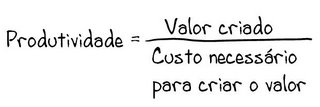
Depois, de tarde, estive a trabalhar nuns acetatos para uma acção de formação a realizar em Outubro próximo sobre a "Abordagem por processos". A certa altura construí este:

Ao fazê-lo, tinha em mente alertar os formandos para o absurdo de descrever processos em detalhe, querendo prever todas as situações, ter tudo "matematizado". Ás vezes encontro organizações com sistemas de gestão com longos procedimentos que tudo querem definir.
.
Ao final do dia, neste blogue, encontrei esta frase que se ajusta bem ao tema:
.
"Todos estes homens herdaram de Déscartes e dos racionalistas de seiscentos a firme convicção de que eram capazes de compreender integralmente a realidade, de conhecer e declarar as suas «leis», de a antever e de transformar os seus desígnios, tendo transposto para a política estas convicções."
.
Agora que escrevo este postal ainda dou mais importância ao título dado por Rui Albuquerque no blogue acima referido "Quanto menos, melhor".
.
Como respondo à primeira questão:
- "Estratégia, mapas errados e self-fulfilling prophecies" Este trecho é fundamental e poético "“Strategic plans are a lot like maps. They animate people and they orient people. Once people begin to act, they generate tangible outcomes in some context, and this helps them discover what is occurring, what needs to be explained, and what should be done next. Managers keep forgetting that it is what they do, not what they plan that explains their success. They keep giving credit to the wrong thing – namely, the plan – and having made this error, they then spend more time planning and less time acting. They are astonished when more planning improves nothing.”" Mas não basta um mapa qualquer, tem de ser um mapa em que acreditemos à partida, ainda que depois o alteremos.
- "Confiar a razão? (parte I)"
- "Eclesiastes, acção e sensemaking"
- "O tempo de feedback associado a um plano (plano I)"


%2006.21.jpeg)