sexta-feira, junho 11, 2010

Onde isto já vai...
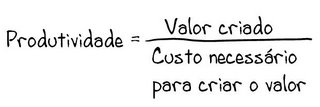
Actividades versus resultados
quinta-feira, junho 10, 2010
A nossa exportação mais importante
.
"During the research for a forthcoming book, I started to think about the impacts of our prolonged stagnation on the job market. Interestingly, in spite of low job creation, until recently unemployment never rose to really high levels. Therefore, I was left to wonder what could cause such a phenomenon. The answer was relatively obvious: emigration. We all know that Europe exhibits a low degree of job mobility, but we also know that, historically, Portugal has been a country of heavy emigration"
.
BTW, "Ter memória" e "The world doesn't owe us a living"
Mudança de discurso
O triunfo das ideias do Grande Planeador
Quem vier atrás que feche a porta (parte II)
Germany abandoned the Deutschemark in 2002 when it joined the single currency.
The theory is that Germany's exit would prompt a steep fall in the euro, which would go some way to restoring the competitiveness of Germany's debt-strapped neighbors including Spain, Portugal, Greece and Ireland. Exports would rise, allowing them to put money aside to pay their debts and to service the future needs of their ageing populations.
In time, he said, Germany could consider rejoining the euro after a correction in the region's economic imbalance."
"There's no future for any country that is in the sort of mess that these countries are in -- they need the protection of the eurozone," he said.
"It is much more feasible for Germany to say, 'Hey guys 28 percent of our GDP -- and it is growing as a percentage now - is in exports that go outside Europe or outside of the eurozone. (Moi ici: Para empresas que operam no quadrante D o preço é um qualifier não um order-winner) So what do we have to lose by coming out?'"
And remember that German debt is in euros so if the Germans went back to the mark it would be much cheaper for them to pay," he added."
quarta-feira, junho 09, 2010
Quem vier atrás que feche a porta
It paid 5.225 per cent to raise €816m in 10-year bonds, higher than some analysts expect to be charged by the newly created European Financial Stability Facility, which has €440bn at its disposal to help eurozone members facing difficulties issuing debt."
.
Em Espanha a coisa está, também, cada vez mais negra "UPDATE 2-Spain small lenders struggling for funding"
Ah!!! É um sector de ponta, alta-tecnologia, um nicho longe dos competidores asiáticos...
Este facto permitiu uma recuperação na utilização da capacidade produtiva, que já está “a níveis normais para a época do ano” para cerca de dois terços das empresas.
Esta melhoria reflectiu-se também positivamente no emprego, com uma tendência de aumento do número de pessoas ao serviço na indústria: “Embora quatro em cada cinco empresas afirmem que ele permaneceu inalterado, as que dizem que aumentou são mais do que as que dizem que diminuiu”, nota a APICCAPS.
Relativamente ao estado dos negócios, pela segunda vez nos últimos três trimestres são mais as empresas que entendem que é “bom” do que as que pensam que é “mau”, sendo esta proporção a mais elevada desde 2001. Ainda assim, três em cada quatro empresas consideram que o estado dos negócios é “suficiente”.
No que respeita à evolução da carteira de encomendas, 43 por cento das empresas diz ter estabilizado, 27 por cento afirma ter aumentado e 29 por cento refere ter diminuído, notando-se um melhor desempenho das empresas com maior peso de colecção própria nas suas vendas. (Moi ici: as que estão no quadrante D)
Reconhecimento merecido
Gostava de saber
Ser diferente
Target faced a choice - one that easily might have put it in the same spot as doomed chains like Caldor or Bradlees. "Some people tried to do the dance on both sides," says Ulrich. "As Wal-Mart got bigger and bigger, [other rivals] started emulating them more, but they were still trying to appeal to an upscale guest. They'd pile shit in the middle of their aisle and then throw in some merchandise that wasn't the right quality for the store level. It's the classic mistake."
Instead, Ulrich's team saw an opening: If Wal-Mart was striving to be the king of logistics, with enough muscle to force vendors to deliver on price, Target could deliver on a great store experience and a product that was exciting and unique. "Wal-Mart's strategy is in many ways more simple than ours," says Ulrich. "It's more about price and more about mass quantities. It's a hell of a competition, but ours is more dependent on innovation, on design, and on quality."
First, it puts our competitors at the center of our management process. Competitors become our driving force, our relevant benchmark. We look at strategy, and consequently at management, as rivalry. In order for us to succeed, we have to beat someone. Strategy is destructive; strategy is war.
Second, and equally troublesome, using our competitors as a way to define our course of action basically anchors us in the past. On reflection, this is an approach that seems counterproductive in a time of revolutionary change, when we want to create discontinuities, not reaffirm old practices. Is this what we should be aiming at in today’s turbulent environment, when change is virtually mandatory? We must challenge our previous state of business. We must have the ability to be creative and separate ourselves from the herd, to find a new and unique way of conducting business.
Often, companies seem obsessed with their competition, studying and watching it intensely to detect anything that could signal a way to operate more effectively.
This might not be a very smart way to manage. I tell my students, “Study your competition deeply, but do not imitate them.” I believe that strongly. It is a meaningful challenge. To separate ourselves from our competitors, we must offer our customers something that is truly unique and distinctive. How do we do that?
terça-feira, junho 08, 2010
Velhos tempos
Retratos de Portugal
The Delta Model

...
We begin by segmenting the customer base so that we can identify subsets of customers sharing similar needs, to which we will be providing distinct value propositions. We cannot overemphasize the importance of this task. It is the true foundation of a well laid out strategy.
…
Task 2 The Existing and Desired Competencies of the Firm
The previous task allows us to understand the demand side of our business in a creative way. This task forces us to deeply focus on the supply side, on our own capabilities.
…
Task 3 The Mission of the Business
The previous two tasks – customer segmentation and customer value proposition; and existing and desired competencies – are the foundation of our overall diagnosis.
What emerges is a clear understanding of where we are and what changes will be required to improve our existing circumstance. The true purpose of the mission statement is to capture and clearly articulate our intent. It is a critical task because it integrates the strategic tasks that we have conducted into a sole statement that defines the purpose of the organization and the challenges we face to move it in the desired direction. The mission is a fundamental vehicle to communicate our sense of direction, both inside and outside the organization.
Task 4 The Strategic Agenda
The strategic agenda attempts to identify and lay out in very pragmatic and concrete terms the specific tasks that we must undertake in order to serve our customers, define our new capabilities, and move the organization forward into the desired state of leadership. It should not only spell out the tasks but also identify who is accountable for their execution, as well as how to establish the necessary organization, information, and control mechanisms for its proper implementation.
Task 5 Monitoring the Strategy Execution
What happens after we have formulated what we hope is a winning strategy? The answer is obvious: we need to assure its proper implementation. In other words, we need to “manage by strategy” – so that strategy becomes the compass that directs the myriad tasks that are part of the routines of management.
Two important elements are required to assure proper implementation of the strategy, in addition to the unbounded attention that managers have to devote to its proper execution. The first is the development of an “intelligent budget.” ... The second vehicle required to assure proper implementation is the use of the Balanced Scorecard, both at the business and individual customer tier. This allows us to continue to focus on how we deliver the differentiated value propositions for each individual customer group."
Posicionamentos estratégicos
 O autor tem uma abordagem diferente sobre a forma como classifica o que é "Best Product":
It is an inward-looking approach. Attention is centered on the product economics, the value chain, and the abilities to develop the capacities to deliver the best product."
segunda-feira, junho 07, 2010
O choque chinês num país de moeda forte (parte V)
and the (Uneven) Growth of U.S. Manufacturing Plants"
.
We focus on US trade with low-wage countries.
...
Given their high relative wages, it is virtually impossible for U.S. firms to earn profits producing labor-intensive goods.
...
labor-intensive plants are relatively more susceptible to low-wage country imports than are capital- and skill-intensive plants in the same industry. As a result, within-industries, activity should shift towards relatively capital- and skill-intensive plants. (Moi ici: Basta recordar o exemplo da Tema Home para ver a quantidade de novas funções na empresa parte I e parte II)
...
We find evidence of reallocation in three dimensions. At the industry level, exposure to low-wage country imports is negatively associated with plant survival and employment growth.(Moi ici: Coincide com o exemplo do calçado português) Within industries, the higher the industry’s exposure to low-wage country imports, the bigger is the relative performance difference between capital- and labor-intensive plants. (Moi ici: empresas que sobrevivem como subcontratadas no quadrante A e empresas no quadrante D) Finally, there is a positive association between exposure to low-wage country imports and industry switching. Plants that switch industries shift into industries with less exposure to low-wage country imports and greater capital- and skill-intensity than the industries left behind. Together, these results support the view that U.S. manufacturing is moving away from comparative-disadvantage activities and towards comparative advantage industries via exit, growth and industry switching. (Moi ici: este abandono, sem explorar as oportunidades de negócio no sector, como tão bem explica Suzanne Berger, não há sectores obsoletos há é estratégias obsoletas, depois gera situações que levam ao descrédito das marcas, por exemplo aqui a propósito de "The triple-A Supply Chain”, da autoria de Hau L. Lee, publicado pela Harvard Business Review em Outubro de 2004, sob o subtítulo “The perils of efficiency”.
%2006.21.jpeg)