"An increasingly global design culture is playing a role in the surge of maximalist design as well, driving the creation of more unique, modern pieces that appeal to different tastes.
...
“Design is often led by feeling,” Giulia Molteni, a spokesperson for the Italian brand Molteni&C, says. “And maximalist design invokes maximum senses. Bold color is not only for the eyes, it’s for the soul. Interesting materials and textures are not only felt, but also seen. Right now, our senses crave more, crave something different.”"
quarta-feira, abril 19, 2017
"the creation of more unique, modern pieces that appeal to different tastes"
O avanço de Mongo manifesta-se, concretiza-se nesta evolução das tendências: "Minimalism Is Dead. Hello, Maximalism":

Que investimento?
"SHAREHOLDER VALUE CREATION is the outcome—not the driver—of effective business strategy, which should be aimed at profitably creating and retaining satisfied customers. But how can a business best do this? In this chapter, I will show how the actions of a firm at all levels can create value for shareholders and other stakeholders.[Moi ici: A nossa ideia de que há objectivos que devem ser encarados como consequências, a obliquidade]Quantas empresas se preocupam com isto? Quantas empresas investem realmente em fazer com que os trabalhadores percebam o que é realmente importante?
...
how can a firm improve its ROIC? [Moi ici: Return on invested capital] Figure 4.1 suggests that the drivers of ROIC include actions that either increase the numerator (by improving operating margins) or decrease the denominator (by reducing the amount of investment required for a given level of business output). [Moi ici: Outra ideia que acarinhamos no nosso trabalho, a diferença entre o numerador e denominador] These measures themselves can be further deconstructed into a set of management actions that drive higher-level business results.
...
...
every business function can and should contribute to shareholder value enhancement. Business functions can do this by improving revenue growth, which is the primary domain of marketing and innovation, or through operational and capital efficiency, which is a shared responsibility throughout the organization. As such, every employee within an organization should clearly understand how the creation and retention of satisfied customers drives overall profits, revenue growth, and shareholder value, and how their actions contribute to this. If employees do not understand the value of their daily activities, they are probably working ineffectively, working for a company with a poorly communicated management strategy, or both."

Trechos e figura retirados de "If You're in a Dogfight, Become a Cat!: Strategies for Long-Term Growth"
terça-feira, abril 18, 2017
Curiosidade do dia
"Não havendo melhores condições de crédito do que as que são oferecidas pelas verbas incluídas em rubricas do Orçamento do Estado, os que recorrem ao "swap" são os que foram expulsos pela porta da despesa pública - mas depois voltam a entrar pela janela da dívida pública. O que não se deixa entrar no Orçamento no presente e se encaminha para o crédito com "swap" tem como futuro a dívida, e ninguém o poderia ignorar quando tomou essa decisão."Trecho retirado de "O presente tem futuro"
A minha abordagem preferida
Começar pelo fim:
"Scrapping the “present-forward” perspective, they no longer started with an assessment of its current products and contracts.O anónimo da província há anos que recomenda isto: "future-back" approach to strategy"
.
Instead, they began the planning process by envisioning the company in the further-off year of 2030. Starting with a clean sheet of paper, they imagined how customer needs would be different due to geopolitical forces, defense budget crunches, and technological disruptions. The exercise was conducted with brutal honesty as to how its product pipeline would unfold and play in the newly envisioned “future state” of the world."
Um punhado de pérolas (I)
"There are many ways to center a business. You can be competitor focused, you can be product focused, you can be technology focused, you can be business model focused, and there are more. But in my view, obsessive customer focus is by far the most protective of Day 1 vitality.Trechos retirados de "2016 Letter to Shareholders"
...
As companies get larger and more complex, there’s a tendency to manage to proxies. This comes in many shapes and sizes, and it’s dangerous, subtle, and very Day 2.
.
A common example is process as proxy. Good process serves you so you can serve customers. But if you’re not watchful, the process can become the thing. This can happen very easily in large organizations. The process becomes the proxy for the result you want. You stop looking at outcomes and just make sure you’re doing the process right.
...
Another example: market research and customer surveys can become proxies for customers – something that’s especially dangerous when you’re inventing and designing products. “Fifty-five percent of beta testers report being satisfied with this feature. That is up from 47% in the first survey.” That’s hard to interpret and could unintentionally mislead.
.
Good inventors and designers deeply understand their customer. They spend tremendous energy developing that intuition. They study and understand many anecdotes rather than only the averages you’ll find on surveys. They live with the design.
.
I’m not against beta testing or surveys. But you, the product or service owner, must understand the customer, have a vision, and love the offering. Then, beta testing and research can help you find your blind spots. A remarkable customer experience starts with heart, intuition, curiosity, play, guts, taste. You won’t find any of it in a survey."
Conciliação possível?
Em "The importance of purpose in a digital world" sublinhei estes trechos
Se a massa central homogénea de clientes está a desaparecer e a espalhar-se cada vez mais em grupos heterogéneos, como é que as empresas grandes vão conciliar a mensagem do artigo citado com a evolução da realidade? Como é que a mesma empresa vai conciliar trabalhar em simultâneo para diferentes grupos cada um com diferentes valores?
Pessoalmente não acredito que tal seja possível no longo prazo. Outra força a contribuir para o advento de Mongo e para uma paisagem de oferta muito mais diversa.
"Purpose is not a marketing idea, it’s a company idea – and it drives the entire organisation. Essentially, it’s that unique identifier that answers why the brand exists and defines how the customer experiences the brand. Purpose touches on how a company operates and delivers its social impact and its shared values.E volto a sublinhar aquele:
.
We call organisations that have a clear sense of purpose ‘purpose-led organisations.’ These businesses don’t just pay lip service to a cute slogan, being purpose-led means making every effort to ensure that all decisions and actions taken by business leaders – be that with customers, employees, suppliers, partners, shareholders or the wider community – fully encapsulate and transmit its values.
...
With purpose, values, meaning and brand in alignment, that message must carry through every point of interaction with the outside world: websites, content, advertisements, even the helpdesk script.
.
Businesses hit the sweet spot when those expressed values can, through association, say something positive about the customer. When customers get a strong sense that ‘your values are my values’, when they believe the company’s commitment to those shared values is genuine and that communicating that bond to their peer group says something desirable or favourable about them, or simply engenders a feeling of pride, that’s when the magic happens. It brings the brand to life.
...
I feel as if the shift toward purpose we’re now seeing is one of a number of examples lately that demonstrate an encouraging change in the way organisations relate to the public. Whether it’s businesses and their customers or governments and citizens, it’s the human element that’s now, happily, coming to the fore.
...
Purpose, in the context of business, is the realisation that companies have always sold more than what’s inside the packaging. My hope is that as western society proceeds on its collective journey toward knowing itself, we’ll see it transform into one that reflects who we are, what we want to be, and serves us in the ways that we really need."
"Businesses hit the sweet spot when those expressed values can, through association, say something positive about the customer. When customers get a strong sense that ‘your values are my values’"Agora admitamos que isto tem um fundo de verdade (pessoalmente acredito que sim e escrevo-o aqui há vários anos) e acrescentemos o que Seth Godin escreveu em "We are all weird" e que sublinhámos em "Estranhistão... weirdistão".
Se a massa central homogénea de clientes está a desaparecer e a espalhar-se cada vez mais em grupos heterogéneos, como é que as empresas grandes vão conciliar a mensagem do artigo citado com a evolução da realidade? Como é que a mesma empresa vai conciliar trabalhar em simultâneo para diferentes grupos cada um com diferentes valores?
Pessoalmente não acredito que tal seja possível no longo prazo. Outra força a contribuir para o advento de Mongo e para uma paisagem de oferta muito mais diversa.
segunda-feira, abril 17, 2017
Curiosidade do dia
A propósito de "FMI: Empresas batoteiras prejudicam a produtividade" e deste trecho:
"É que quando as empresas fogem ao Fisco, permitem-se levar a cabo investimentos que não são tão produtivos, porque o custo do capital que aplicam é, artificialmente, mais baixo. É como se estas empresas estivessem a ser subsidiadas. Ora, se investem de forma menos exigente, também têm piores resultados e, na verdade, atrasam o crescimento da produtividade do país.Será que também podemos aplicar o mesmo racional às empresas que obtêm subsídios e apoios dos governos e dizer exactamente o mesmo?
.
Se, pelo contrário, forem obrigadas a pagar todos os impostos devidos, os incentivos são colocados nos investimentos certos. Se estas empresas acabarem por não sobreviver, então é porque não eram suficientemente produtivas, não criavam valor suficiente. Ao saírem de atividade, acabam por abrir espaço no mercado para que as outras, as cumpridoras e produtivas, ganhem quota."
"É que quando as empresasfogem ao Fisco, [Moi ici: Recebem apoios e subsídios] permitem-se levar a cabo investimentos que não são tão produtivos, porque o custo do capital que aplicam é, artificialmente, mais baixo. [Moi ici: Como não recordar as explorações agrícolas com dezenas de tractores] É como se estas empresas estivessem a ser subsidiadas. Ora, se investem de forma menos exigente, também têm piores resultados e, na verdade, atrasam o crescimento da produtividade do país."
Que preparação?
Este texto "Does Shopping Still Have a Future? What if Shoppers Became Makers?" está em linha com o que aqui costumamos escrever sobre Mongo, sobre o Estranhistão, sobre a democratização da produção, sobre o futuro da evolução do retalho. Fez-me lembrar o almoço do passado dia 10 onde discutimos este tema com os gerentes e director financeiro de uma fábrica.
O que não me oferece dúvida nenhuma é a necessidade das lojas físicas do futuro se reinventarem, de encontrarem novos modelos que atraiam os clientes. Sem isso, nada feito.
Isto é muito importante para o comércio português mas também para as PME, que produzem produtos com marca própria ou para marcas de outros, e que são vendidos no retalho físico.
Chamo a atenção para o lead do texto "Always-On Strategy":
"One of the possibilities that is now often put forward by experts and already giving rise to many business promises is the idea of providing customers with the opportunity to make, prepare, grow, or build their own things.Já fui mais crente neste modelo. Actualmente acredito mais num futuro em que os clientes recorrerão a especialistas glocais com quem replicarão as relações com os artesãos do passado.
...
The success of collaborative spaces — coworking spaces, makerspaces, fab labs, hackerspaces — that have spread fast in urban centres (and sometimes also in more rural areas), testifies to the idea that modern-day commons are indeed being (re)invented. The popular makers movement is further evidence that the Do It Yourself trend continues to spread across the globe."
O que não me oferece dúvida nenhuma é a necessidade das lojas físicas do futuro se reinventarem, de encontrarem novos modelos que atraiam os clientes. Sem isso, nada feito.
Isto é muito importante para o comércio português mas também para as PME, que produzem produtos com marca própria ou para marcas de outros, e que são vendidos no retalho físico.
Chamo a atenção para o lead do texto "Always-On Strategy":
"Why do companies fail or fall behind their rivals? Among the many reasons, three stand out. Some companies miss a major strategic shift or industry disruption. Others see a big change coming but fail to develop the right strategy in response. And some define a winning strategy but are not able to implement it effectively."
"the person who can't stop playing the short game"
"the person who can't stop playing the short game... well, he realizes that it's all sort of a house of cards, and often indulges in the urge to freak out, disgorging panic and fear and even hatred on the person that's easy to blame.
.
The thing is, thin ice doesn't give you a lot of leverage, and thin ice can be a self-fulfilling prophecy.
.
The first step for the agent, the middle manager, the hanger-on is to invest in the long term, to find an arc that actually builds an asset that lasts.
.
And the second is to act 'as if'. All that panic doesn't pay off. It merely makes it more likely that the people you need to earn trust with will do precisely the opposite."
Trecho retirado de "How thin is your ice?"
Acerca da minha missão
Sábado passado, a propósito de "Outra lição de 2008" voltei a este postal de Outubro de 2015, "um atestado de desconhecimento da realidade". E não pude deixar de voltar a ler o comentário que o Bruno Fonseca então fez:
Não estou a brincar, basta ler "Ainda a produtividade luxemburguesa vs a produtividade"
Estas explicações podem ser compreendidas se considerarmos o conteúdo de documentos como o referido em "Actualizem o documento por favor".
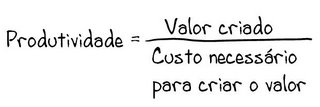
Todos estas opiniões só concebem olhar para o denominador da equação da produtividade:
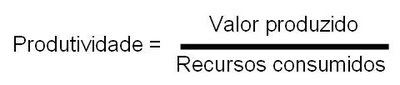 Daí a importância da minha missão de chamar a atenção para o numerador.
"de rir ouvir hoje a Helena Garrido a falar.Recordei-me logo de outra explicação para a elevada produtividade dos emigrantes portugueses na Europa Central: a saudade.
disse que, basicamente, os portugueses têm baixa produtividade apesar de trabalharem imenso, porque quase "distraiam-se" com tantas horas."
Não estou a brincar, basta ler "Ainda a produtividade luxemburguesa vs a produtividade"
Estas explicações podem ser compreendidas se considerarmos o conteúdo de documentos como o referido em "Actualizem o documento por favor".
Todos estas opiniões só concebem olhar para o denominador da equação da produtividade:
Empresas que não têm tempo para definir um futuro
A propósito de "Produção têxtil foge para África devido à falta de mão de obra" não adianta copiar os geringonços e amaldiçoar a gravidade, a aritmética ou os sonhos das pessoas.
Se uma empresa tem falta de um recurso talvez seja sinal de que precisa de mudar algo no seu modelo de negócio. Saliento que este problema vai-se agravar cada vez mais (aqui e aqui), a demografia conjugada com o reshoring e com a falta de marketing da indústria são difíceis de contrariar.

A alternativa mais fácil é deslocalizar para África.
Eu proponho a alternativa mais custosa. A maioria das empresas continua concentrada num modelo de negócio que implica que mais facturação só é conseguida através de mais produção, de mais quantidade, numa relação mas ou menos linear. Como continuar a crescer se não há mais pessoas e as possibilidades de automatização ou são caras ou não existem (para já)?
Subindo na escala de valor!
Subir na escala de valor implica conseguir parar e tomar consciência do que se passa na empresa. Implica reflectir sobre quem são os clientes actuais, sobre quem são os clientes de sonho e porquê, sobre quem sãos clientes que dão mais rentabilidade, sobre quais são as vantagens competitivas de uma empresa. Implica pensar no depois de amanhã.
Acontece que muitas empresas estão tão ocupadas que
 não têm tempo para definir um futuro. Assim, decidem que sejam as circunstâncias a impor-lhe um futuro.
Se uma empresa tem falta de um recurso talvez seja sinal de que precisa de mudar algo no seu modelo de negócio. Saliento que este problema vai-se agravar cada vez mais (aqui e aqui), a demografia conjugada com o reshoring e com a falta de marketing da indústria são difíceis de contrariar.

A alternativa mais fácil é deslocalizar para África.
Eu proponho a alternativa mais custosa. A maioria das empresas continua concentrada num modelo de negócio que implica que mais facturação só é conseguida através de mais produção, de mais quantidade, numa relação mas ou menos linear. Como continuar a crescer se não há mais pessoas e as possibilidades de automatização ou são caras ou não existem (para já)?
Subindo na escala de valor!
Subir na escala de valor implica conseguir parar e tomar consciência do que se passa na empresa. Implica reflectir sobre quem são os clientes actuais, sobre quem são os clientes de sonho e porquê, sobre quem sãos clientes que dão mais rentabilidade, sobre quais são as vantagens competitivas de uma empresa. Implica pensar no depois de amanhã.
Acontece que muitas empresas estão tão ocupadas que
domingo, abril 16, 2017
Páscoa

Enquanto ouvia o Evangelho do passado Doming de Ramos pensava em quanto do que vem nos textos do Novo Testamento foi mesmo realidade histórica.
Ao escutar o nome Barrabás pensei logo que em Bar-qualquer coisa, o filho de alguém. Quando oiço o nome Maria Madalena penso logo que o nome dela não era Madalena, era Maria e era natural da povoação de Magdala. E recordei o que li em ZEALOT: The Life and Times of Jesus of Nazareth (apesar de ter encontrado algumas incongruências e incorrecções no livro).
Reza Aslan, o autor do livro, duvida da veracidade de muitas passagens e, ao mesmo tempo, estranhamente crê noutras. Por exemplo, Mateus 10, 34-36
Com base em trechos como este Reza Aslan crê que Jesus era um revolucionário político que queria lutar contra o poder de Roma.“34 Não penseis que vim trazer paz à terra; não vim trazer paz, mas espada. 35 Porque eu vim pôr em dissensão o homem contra seu pai, a filha contra sua mãe, e a nora contra sua sogra; 36 e assim os inimigos do homem serão os da sua própria casa”.
Não acredito que estas palavras tenham sido ditas por Jesus. Elas foram escritas e postas na boca de Jesus para dar força à seita judaica dos seus seguidores. Estes tinham-se afastado tanto da Lei de Moisés para acolher os pagãos e gentios, que foi-lhes imposto um ultimato pelos sacerdotes do Templo de Jerusalém: ou voltam à Lei de Moisés ou deixariam de ser considerados judeus. Perante este ultimato seria natural que muitos sentissem a tentação de voltar... é esta a separação do texto bíblico.
O Novo Testamento não é um documento histórico e com o intuito de retratar a verdade histórica. Mais, acredito que o Cristianismo perde muitos seguidores nos dias de hoje quando as Igrejas são incapazes de comunicar tal diferença.
Para um cristão como eu, que continua a ser católico, só há um critério: a ressurreição de Jesus. Só ela conta e só ela dá sentido a tudo.
E continuo a acreditar que Jesus ressuscitou ao terceiro dia.
Santa Páscoa.
sábado, abril 15, 2017
Curiosidade do dia
Por falar em ridículo, há dias no Facebook encontrei este vídeo.
O ódio conjugado com a militância tolda o juízo.
O ódio conjugado com a militância tolda o juízo.
A explicação de Graça Franco para o crescimento espanhol é digna de um sketch dos Monty Python
'Worth it' is a fine goal"
"Sort by price is the dominant way that shopping online now happens. The cheapest airline ticket or widget or freelancer comes up first, and most people click.A fazer lembrar esta figura sobre o trabalho de Pine & Gilmore e a "experience economy":
...
It's lazy for the consumer. If you can't take the time to learn about your options, about quality, about side effects, then it seems like buying the cheapest is the way to go--they're all the same anyway, we think.
.
And it's easy for the producer. Nothing is easier to improve than price. It takes no nuance, no long-term thinking, no concern about externalities. Just become more brutal with your suppliers and customers, and cut every corner you can. And then blame the system.
.
The merchandisers and buyers at Wal-Mart were lazy. They didn't have to spend much time figuring out if something was better, they were merely focused on price, regardless of what it cost their community in the long run.
.
We're part of that system, and if we're not happy with the way we're treated, we ought to think about the system we've permitted to drive those changes.
...
What would happen if we insisted on 'sort by delight' instead?
...
There are differences, and sometimes, those differences are worth what they cost.
.
'Worth it' is a fine goal.
.
What if, before we rushed to sort at all, we decided what was worth sorting for?
.
Low price is the last refuge of the marketer who doesn't care enough to build something worth paying for.
.
In your experience, how often is the cheapest choice the best choice?"

Trechos retirados de "'Sort by price' is lazy"
Outra lição de 2008
Outra lição de 2008, que continuo a usar com alguma frequência, aprendi-a com Terry Hill:
BTW2, à atenção do bicicletas.
"the most important orders are the ones to which a company says 'no'"Recordei-a, mais uma vez, ao ler:
"Novos hotéis em Portugal com margens e dimensão pouco sedutorasBTW, a propósito da pergunta dentro da dúvida, acerca da família, "Viriato espera "apoio" da Lone Star nos quartos de hotel" responde claramente.
.
A explosão do sector hoteleiro em Portugal não chega para atrair a Viriato a apostar no mercado doméstico, que vale apenas 5% do volume de negócios anual e onde mantém alguns clientes, como o grupo Pestana para quem mobilou, por exemplo, o hotel CR7 em Lisboa. "Vemos muitos hotéis em construção, mas as margens não são grandes, estão muito apertadas. E a nossa estrutura está preparada para outro tipo de negócios, de maior dimensão", analisou João Martins, que prefere apostar nos projectos no estrangeiro e "perseguir as cadeias que já conhecem a empresa e que têm vindo a repetir" encomendas."
BTW2, à atenção do bicicletas.
Cuidado com a automatização
A propósito de "When Robots Miss the Minutiae":
"But the case for automation isn’t universally clear. For although they may lack certain human foibles, software programs also lack certain human attributes that can be enormously useful in business.Recordar "a Mercedes e a Toyota"
...
In time, of course, it’s possible that computers will develop the capacities of empathy, historical understanding, and social awareness that humans have. But it’s clear they are not there yet. And in the meantime, it poses a dilemma. The business of online advertising – as so many others do today – relies increasingly on automation. Insert more people into the process, and the price goes up while the pace of execution declines dramatically. That’s bad for margins. But there are clearly times when leaving the computers to their own devices can lead to results that drive clients to rethink their decisions to do business on a platform in the first place. And that’s even worse for margins."
"multiple markets comprise every customer "
"mass markets is basically where multiple customers [indivíduos] represented a single marketTrechos captados em "Interview with Joe Pine on Infinite Possibility"
...
then mass customization where able for the first to get down to markets of one where we recognize that every individual is his own market
...
well that's not where the progression ends: the progression flips on its head where the next step is that instead of multiple customers comprising a market
...
multiple markets comprise every customer [indivíduo]
then what the multiverse recognizes it's not just a few markets
is basically infinite possibility for creating experiences that each individual person is going to want to have at differing times"
sexta-feira, abril 14, 2017

quinta-feira, abril 13, 2017
Curiosidade do dia
"A economia é por definição escolher entre alternativas, num ambiente de recursos escassos. Nunca há almoços grátis, há sempre alguém a pagar. O que os políticos em geral fazem é adiar custos ou distribuir a factura pelos mais fracos ou sem poder de pressão. É a isto que temos assistido no país, proveitos generosos para alguns com custos para o povo em geral ou para pequenos grupos sem poder. Assim foi com as estradas desnecessárias, a política energética, a banca, as pensões e agora de novo com o arrendamento. A iliteracia financeira e uma sociedade infantilizada e que se auto-desresponsabiliza têm sido dois dos grandes aliados para a falta de qualidade das nossas políticas públicas.Trechos retirados de "A culpa não é dos governos, é nossa"
...
António Costa e os que apoiam o seu Governo conhecem e usam e abusam como poucos a sociedade em que nos transformamos. Garantem os nossos direitos iludindo o preço que estamos ou vamos pagar por eles. Tudo é apresentado como construído em defesa dos mais desfavorecidos quando uma análise mais profunda a muitas dessas medidas resulta em geral no efeito contrário. E nalguns temas nem se toca, como é o caso das rendas da energia.
...
Nesta grande ilusão, os contribuintes pagam as crises dos bancos sem que ninguém seja responsabilizado, os proprietários suportam as rendas de quem não consegue pagar por uma casa, as novas gerações pagam com salários mais baixos os salários mais altos de quem está há mais tempo empregado, quem está a trabalhar paga as pensões que não vai ter e as gerações futuras pagarão a dívida que estamos a deixar. Os recursos são escassos e para uns terem mais os outros têm menos, essa é a escolha que acontece sempre no presente e entre gerações. E a escolha é nossa, a culpa é nossa. Quem nos governa apenas reflecte a imagem da nossa hierarquia de valores."
Subscrever:
Mensagens (Atom)
%2006.21.jpeg)