sexta-feira, outubro 07, 2016

O que prejudica a inovação

"I struggled with innovation for many years. I finally made progress when I focused on two things: (1) the customers’ struggle to make life better and (2) how customers imagine their lives being better when they have the right solution. This understanding has helped me become a better innovator.
...
Creative destruction is accelerating. The average time a company spends on the S&P 500 continues to drop. ... This happened for numerous reasons. A big one is that it has never been easier to create a product and get it to customers.
...
even though solutions and technologies come and go, human motivation changes very slowly. In some cases, human motivation hasn’t changed at all. The focus on customer motivation is the key to successful, ongoing innovation and business."
Segue-se uma série de ideias sobre o que prejudica a aposta na inovação:
"“Sunk costs” keep us from creating new products.
...
It’s a mistake to focus on our customers’ physical characteristics.
...
We don’t take into consideration how customers see competition.
...
We myopically study and improve upon customers’ “needs” and expectations of today; instead we should study and improve the systems to which customers belong.
...
We may think only about the upsides of product changes, ignore the downsides, and fail to embrace new ways of solving customers’ problems.
...
Our decision making can be misled when we manage by visible figures only, and don’t appreciate the context surrounding them."

Trechos retirados de "When coffee & kale compete" de Alan Klement.

"to base critical decisions on inner strengths and convictions rather than on alleged external needs"

Costumo escrever e defender que uma PME deve começar pela sua identidade, pela sua experiência, por aquilo que tem (recordar a effectuation). Por isso, isto toca-me:
"Choose Your Destiny Plasticity guides companies to base critical decisions on inner strengths and convictions rather than on alleged external needs.
...
purpose: the unbreakable conviction about what the company stands for, something that cannot be traded for something else. Having this vision is probably the most indispensable element. To develop and survive in a competing world, companies also must have a reason for being. If they are only followers mimicking the leaders, they are destined to die."
Trechos retirados de "Corporate Plasticity: How to Change, Adapt, and Excel

Diferenciação e B2B

"in our experience, there are 4 methods for increasing product differentiation that are generally underutilized, if not completely ignored.
...
In a commoditized B2B market, there are four additional ways to differentiate your offering from the competition and increase your differentiation: leveraging the brand, innovating your service offering, as well as designing product and packaging in a way that creates an aesthetic beyond the functional."
Quantas destas alavancas as PME em Portugal utilizam? E a sua empresa?
.
Ontem, ao realizar uma auditoria, foi bom descobrir uma PME a apostar na criação de uma marca B2B, a apostar no desenvolvimento de actividade comercial proactiva, ...
.
Trechos retirados de "differentiating - alternative ways to differentiate in an increasingly commoditizing market place"

Quando se pensa no futuro ...

Quando se começa a pensar no futuro, quando se começa imaginar as implicações do que pode vir aí, alguns não escondem a cabeça debaixo da areia e fazem algo:
"we are moving from a mobile-first world to an AI-first one; that was the context for the introduction of the Google Assistant.
.
It was a year prior to the aforementioned iOS 6 that Apple first introduced the idea of an assistant in the guise of Siri; for the first time you could (theoretically) compute by voice. It didn’t work very well at first (arguably it still doesn’t), but the implications for computing generally and Google specifically were profound: voice interaction both expanded where computing could be done, from situations in which you could devote your eyes and hands to your device to effectively everywhere, even as it constrained what you could do.
...
An assistant has to be far more proactive than, for example, a search results page; it’s not enough to present possible answers: rather, an assistant needs to give the right answer.
...
Google has a business-model problem: the “I’m Feeling Lucky Button” guaranteed that the search in question would not make Google any money. After all, if a user doesn’t have to choose from search results, said user also doesn’t have the opportunity to click an ad, thus choosing the winner of the competition Google created between its advertisers for user attention. Google Assistant has the exact same problem: where do the ads go?
...
It is not that Google is artificially constraining its horizontal business model; it is that its business model is being constrained by the reality of a world where, as Pichai noted, artificial intelligence comes first. In that world you must own the interaction point, and there is no room for ads, rendering both Google’s distribution and business model moot. Both must change for the company’s technological advantage to come to the fore."
E a sua empresa, o que faz?
Trechos retirados de "Google and the Limits of Strategy"

quinta-feira, outubro 06, 2016

Curiosidade do dia

So it begins:

Dolorosa leitura

Em "Redsigma - O fim da linha" escrevi:
"prefiro apoiar empresas a estarem à frente da onda, tão à frente que ainda não existem normas."
Descobri isto em 2004, quando PME e eu percebemos que a marcação CE vinha abrir caminho à comoditização acelerada.
.
Relacionar com:
"1. Innovation precedes regulation, not the other way around. In entrepreneurial societies, innovation always precedes regulation. In the United States, for instance, scientists and engineers in Silicon Valley, Boston, and New York are always one step ahead of regulators, developing innovations that help us solve some of our most critical problems. The regulators eventually catch up, but not before the innovators have developed viable solutions for us to improve our lives. If the regulations in your society precede innovation from entrepreneurs, this is likely to curb the entrepreneurial spirt of innovators."
Relacionar o "é preciso perder a vergonha de impostar quem acumula dinheiro" com:
"2. Entrepreneurs and innovators are richly rewarded for their breakthroughs. In an entrepreneurial society, entrepreneurs are popular heroes and profit materially from their work. People want to emulate them. In non-entrepreneurial societies, government officials, politicians, and civil servants are the ones who—while not heroes— reap the greatest financial rewards, largely because they are key to getting anything done. When that is the case, then society is at the mercy of the altruism of government officials as opposed to the ingenuity of entrepreneurs and innovators." 


Para muitos, nesta sociedade a caminho da "prosperidade socialista venezuelana", o trecho que se segue é perigosa retórica de direita:
"5. Work is becoming more modularized. As societies become more entrepreneurial, work, and our idea of work, is becoming more modularized. In other words, work will no longer be confined to employment contracts that require people to work at least eight hours a day for an indefinite amount of time for a corporation. Instead, work will depend largely on shorter term engagements and will be specific to a particular project." 
 E, talvez o trecho mais doloroso para quem acompanha a sociedade portuguesa:
"6. The society is either prosperous or is on a clear path toward prosperity. Perhaps the clearest sign that you live in an entrepreneurial society is that it is either prosperous or on a path to prosperity. Prosperity is different from growth. Economies can grow without becoming prosperous."
Trechos retirados de "6 Signs You’re Living in an Entrepreneurial Society"

Theatre vs Theater

Em 2005 ou 2006 li "The Experience Economy: Work Is Theatre & Every Business a Stage".
.
Se repararem na foto do livro o título é "The Experience Economy: Work Is Theatre & Every Business a Stage". No entanto, se repararem no título da Amazom... "The Experience Economy: Work Is Theater & Every Business a Stage".
"the authors challenge the reader’s perceptions and constraints of traditional business constructs. The title presents a shift of the reader’s attention from processes and procedures to those of performance and staging.
.
Theatre is the performance.
Theater is the environment containing the performance.
.
If this is true, then the title also creates a second challenge by asking; if work is theatre and every business a stage, then what type of guides must one follow in order to design the constructs for the work theater and the type of staging required to curate the experience? Some models of experiential design are needed to go beyond architectural design."
Nunca tinha pensado nesta nuance, theatre/theater, tão comum no inglês e que se perde no português (como, por exemplo, exploration vs exploitation").
.
Trabalho é uma performance e todo o negócio é um palco. Como deve ser esse palco? Como é que esse palco contribui para a realização da performance e para a experienciação?

Trechos retirados de "Creating Experiential Places: A Case For Place Personae" de Kevin M. Dulle.

A merecer reflexão

Por mais de uma vez trabalhei com empresas que na mesma reunião de análise do desempenho, exibiam com orgulho um relatório que afiançava o elevado grau de satisfação dos clientes e o seu progresso face ao ano anterior, enquanto ao mesmo tempo discutiam com preocupação a continuada erosão da facturação. Tento sempre chamar a atenção para a contradição.
.
Este trecho que se segue vai no sentido oposto mas ilustra o mesmo problema com os números:
"Spirit Airlines. Customers have consistently rated it as the worst airline in America. Nevertheless, it continues to be the fastest-growing and most profitable airline in America. If customers hate it so much, why do they keep buying it?
Figures can not only be misleading; they can be misused."
Para quem trabalha com a ISO 9001:2015 recomendo a leitura exegética do segundo requisito que se pode retirar da cláusula 4.2. Aposto que esta Spirit Airlines identificou claramente os seus clientes-alvo e faz-lhes uma proposta de valor que eles acham muito boa embora imponha um trade-off muito forte. Ver "Bare Fare".
.
Reflectir em "Figures can not only be misleading; they can be misused"


Trecho retirado de "When coffee & kale compete" de Alan Klement.

Para reflexão

Uma chamada de atenção para as PME portuguesas que operam no B2B.
.
Algures no vosso ecossistema vai estar um C de consumidor:
E se isto está a acontecer com os consumidores, "The 10 Commandments of New Consumerism".
.
Como é que esta evolução pode ser aproveitada pelas PME portuguesas para se diferenciarem de concorrentes de multinacionais e não só?


quarta-feira, outubro 05, 2016

Curiosidade do dia

Dedicado ao amigo Cortes, fiel escudeiro da Geringonça:

Vai ao encontro do seu modelo mental?

Dados do World Footwear 2016 Yearbook:

  • preço médio de um par de sapatos exportado de Portugal: 26.08 USD
  • preço médio de um par de sapatos importado para Portugal: 10.76 USD
À atenção dos que querem substituir importações por produção nacional.
.
À atenção do bicicletas que apesar de ser professor universitário e investigar estas coisas não conhece a realidade.

  • preço médio de um par de sapatos exportado da China: 5.18 USD
  • preço médio de um par de sapatos importado para a China: 25.34 USD
Mais interessante ainda, comparar a China com a Alemanha:
  • preço médio de um par de sapatos importado para a Alemanha: 14.98 USD
E podemos continuar:
  • preço médio de um par de sapatos importado para a França: 13.90 USD
  • preço médio de um par de sapatos importado para a Espanha: 10.50 USD
  • preço médio de um par de sapatos importado para o Reino Unido: 9.61 USD
  • preço médio de um par de sapatos importado para a Holanda: 12.40 USD
  • preço médio de um par de sapatos importado para Japão: 8.83 USD
  • preço médio de um par de sapatos importado para a Itália: 15.31 USD
  • preço médio de um par de sapatos importado para a Dinamarca: 20.20 USD
  • preço médio de um par de sapatos importado para a Áustria: 19.10 USD
Sapatos baratos a China tem e produz, muitos. Agora marca, agora estilo, agora "made in Europa" não, e uma classe média com poder de compra paga por isso.

Outra base para o padrão Mongo

E volto ainda a "Lessons from the Strategy Crisis at Netflix" agora por causa de um tema completamente diferente:
"If streaming is winning and if Netflix is the most likely winner in streaming, shouldn’t Netflix be a reliable profit generator sometime in the future, as ABC, NBC, and CBS are today in broadcast TV and Comcast is in cable? The stock price says yes. But without a big strategy change, the answer is more likely no.
.
The broadcast and cable businesses have enormous scale economies that produced profitable oligopolies.
...
The streaming business, however, has relatively few scale economies.
...
Thus there is little reason to believe that the proliferation of new streaming entrants — including some very deep-pocketed ones, such as Hulu and Amazon — will be followed by a period of extreme consolidation, as was the case in broadcasting and cable.
...
Instead, the streaming business is more likely to develop into something that looks a lot like the highly fragmented magazine sector, in which no one dominates and very few now make good money. Without the consolidation that true scale economies inevitably produce, streaming services will need powerfully differentiated value propositions to gain the pricing clout with consumers and purchasing power with content producers to sustain oligopoly-style profits."
O que é isto senão parte do racional que alicerça postais como "O padrão Mongo"?, a parte tecnológica, a parte das barreiras à entrada e saída. A outra parte é a das tribos. Por exemplo, devo ver cerca de 2 horas de televisão por dia, nunca vi nenhuma das séries da moda, mas sou fã do Morse, do Poirot, da Miss Marple e de outras séries da Fox Crime. Devo pertencer a uma minoria que nunca, mas nunca viu um episódio de Game of Thrones e passa bem.

Como se gera um Trump

Ontem à noite, quando finalmente liguei a televisão, sorri.
.
A televisão abriu no canal RTP3 e três personagens conversavam sobre o momento político:

  • Ana Lourenço;
  • António José Teixeira; e
  • André Macedo.
Três apoiantes do partido do governo conversavam sobre o momento político... e contraditório?
.
Este blogue há muito tempo que faz o serviço público de informar que devemos ter dupla precaução com o que André Macedo diz, porque André Macedo tem um cadastro de falhanços em toda a linha. Por exemplo, recordar Fevereiro de 2008 "Cuidado com as generalizações, não há "sunset industries""
.
A certa altura, António José Teixeira para branquear a evolução do PIB da economia portuguesa diz que a evolução do PIB nos países europeus vai muito baixa e até a Alemanha tem tido uma evolução de desapontar.


Pára aí!!! ISTO É MENTIRA!!!
.
Logo saquei do ipad e pesquisei:
Então, a minha mente voou para um texto que tinha lido na viagem de comboio de segunda-feira, o início do capítulo I de "Invisible Influence: The Hidden Forces that Shape Behavior" intitulado "Monkey See, Monkey Do" onde o autor descreve a experiência de Solomon Asch.
Se eu lhe perguntar:
- Qual das linhas, A ou B ou C da figura da direita, tem uma altura semelhante à da figura da esquerda?
.
Aposto que não tem qualquer dúvida em responder:
- A linha C.
.
Agora imagine que lhe mostro esta figura todos os dias e, todos os dias pergunto a 5 ou 6 Antónios Josés Teixeiras qual a linha correcta e eles respondem que é a linha A. Aposto que ao fim de um ou dois meses começa a duvidar da sua capacidade visual e a conformar-se com a opinião das sumidades. Afinal, eu não passo de um anónimo mas aqueles senhores e senhoras que botam faladura na TV são sumidades, são experts, são inteligentes, são ... se eles dizem que é a linha A é porque estou a ver mal e é mesmo a linha A.
"Apparently, people conform for two main reasons: because they want to fit in with the group (normative influence) and because they believe the group is better informed than they are (informational influence)."
Acredito que é isto, também, que gera candidatos como Trump. Anos e anos de gurus na televisão a enganarem as pessoas, levam-nos a, depois de baterem com a cabeça na parede tantas vezes, escolher o contrário do que esses gurus endeusam.


Parar a evolução, o sonho de muito "empresário"

"The lesson for strategists is that you can never take for granted the most fundamental strategy questions: “What business should you be in?” “What should be your value proposition?” And “What capabilities do you need to win in your business and deliver your value proposition?” Answering these questions is never as easy as it seems, and the answers never last as long as you think or hope."
Dedico este parágrafo final retirado de "Lessons from the Strategy Crisis at Netflix" a todos os "empresários", políticos, académicos e jornalistas que se especializaram em apoiar empresas que não querem mudar apesar do seu contexto ter mudado, fazendo-se de vítimas dos maus que, supostamente, mandam no mundo.
.
A verdade é que o contexto muda, os clientes mudam, os concorrentes mudam, e, por isso, os verdadeiros empresários também mudam, a si e às suas empresas.
.
Há bocado favoritei no Twitter este tweet:
Acho que muitos "empresários", os especialistas em obter suporte de vida dos governos, dirão antes:
If we can keep government money focused on us while the world change, we can decouple and turn out all right.

terça-feira, outubro 04, 2016

Curiosidade do dia

"A dívida pública portuguesa aumentou 2,5 mil milhões de euros em agosto, relativamente ao final de julho, para 243,3 mil milhões de euros, divulgou hoje o Banco de Portugal (BdP)."
No caminho certo rumo ao socialismo venezuelano: o da orgia despesista.

Conjugar com "É preciso cobrar mais de 17 mil milhões em impostos para cumprir objetivo" e com "BCE deverá reduzir gradualmente as compras antes do fim do programa"

Trecho retirado de "BdP. Dívida pública aumenta para 243,3 mil mil milhões em agosto"

Acerca do trabalho em Mongo

Outra previsão feita há vários anos neste blogue:
"The time is ripe for entrepreneurs, but will employees survive the next evolution? Maybe, but they're going to have to change, now.
.
The work world is shifting in favor of those who want to do something, contribute, create, innovate, make meaning, and own their lives. Recent studies show the workplace is headed in a participatory direction that will not accommodate traditional employees stuck in Industrial Age management structures.[Moi ici: Conjuguem isto com DIY, com democratização da produção, explosão de tribos, tribos mais aguerridas, plataformas cooperativas e Mongo]
...
Trend #1: Crowdsourcing and Crowdsource services. People will work everywhere and some will never meet. Just-in-time labor will reduce the number of permanent employees.
...
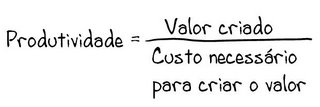
Trend #2: Productivity measured in outputs, not hours.[Moi ici: Tantas discussões sobre a produtividade e os salários portugueses porque a maioria só mede as horas]
...
Trend #3: Values vs. rules. Values, which guide and encourage personal initiative, will be more prevalent than rules, which box people in, dull their thinking, and keep them from innovating.
...
Trend #4: Employee-led innovation. The best innovation will come from the "bottom up," not from management or R&D departments."
Trechos retirados de "Unmotivated Employees Won't Like Where The Work World Is Headed"

"Finding Promising Business Ideas Hidden in Plain Sight"

Um exemplo claro das muitas oportunidades que vão surgir com Mongo:
"Genet and Ango stumbled across this business prospect hidden in plain sight after they felt the pain of ordering packaging for their first entrepreneurial venture, Inkodye, an art supply dye company. The shipping supplies industry has long catered to large corporations that are ordering hundreds of thousands of boxes, not start-ups looking for small run quantities. [Moi ici: Trabalhar para os underserved] And the ordering process, which requires going through layers of middlemen and sometimes even using fax machines to submit orders, feels byzantine.
.
Lumi has stepped in as a conduit between the customer and the manufacturing partner. Using Lumi.com, customers can now customize their packing supplies in a few mouse clicks and submit orders of many sizes. Then a manufacturer for the job is chosen based in the work required and the proximity to the buyer’s location.
.
What the packaging industry lacks in glamour, it makes up for in opportunity.
...
The manufacturers have insulated themselves over the last 50 years as much as possible from talking to small brands. They did this for a good reason. There was no Internet, and they had to find a way of focusing on manufacturing, so they set up all these layers of middlemen.
...
It’s also hard for small businesses to create relationships with old school packaging manufacturers because they are used to dealing with large conglomerates that are ordering hundreds of thousands of boxes. If you’re a start-up ordering 10,000 boxes that is not really a big deal to those companies, so it’s hard for young companies to get their foot in the door. At Lumi, we cater to companies of all sizes, including those who need as little as 1,000 custom boxes in a production run."
Agora basta imaginar que eu tenho alguma razão acerca da hipótese de Mongo para começar a suspeitar na quantidade de startups que vão precisar destas pequenas quantidades, pequenas séries e peças não mixirucas. Ainda ontem, à porta da estação das Devesas em Gaia, a minha mente divagou acerca de um camião com os dizeres "caixotaria". Juro que pensei na quantidade de potenciais clientes que poderiam usar embalagens de madeira mas que fugirão quando ouvirem a palavra caixotaria.
.
No B2B a maior lacuna das PME é a pouca ou nenhuma aposta numa marca própria distinta e distintiva.

Trechos retirados de "Jesse Genet: Finding Promising Business Ideas Hidden in Plain Sight"

Diferenciação e preço

"Price Is Maximized Through Differentiation.
Differentiation is the most critical issue when it comes to brand building and pricing power. You maximize your pricing power by offering something unique. Over time you maintain pricing power by creating a brand that stands out as unique in the mind of the customer. They pay more because of the uniqueness.
You know you're different when people tell you that you are. If people never tell you you're different, then you're not different enough.
.
Your brand is the embodiment of your unique ideals. Marketers call that a Unique Selling Proposition, or a USP. You need one.
.
Having a USP that customers understand and respect gives you a powerful brand in the minds of customers, and that creates their willingness to pay a premium price
...
So un-branded doll clothing is a commodity. Un-branded anything is a commodity.
And the #1 attribute of a commodity is that it is not unique.
.
The second attribute of a commodity is that the only thing that can possibly be unique is the purchase price. Therefore, people use the price to compete.
You don’t want to be in that space – not in the doll-clothing marketplace – or any other type of product or service. You need a Unique Selling Proposition so that you can compete on something other than price.
...
That means prospective customers don’t care whom they buy from in a commodity market. When that happens – pricing power vanishes."

Trechos retirados de "Craft Pricing Power - 12 Proven Pricing Principles For Small Business Marketers" de By Jason G. Miles

Mongo também passa por isto

Fundamental que este tipo de informação circule e mude as mentes de muita gente formatada na escola que nos prepara, e mal, para sermos funcionários de organizações no Porto ou Lisboa.
"Depois da publicação do primeiro livro ‘O Pastoreio e o Queijo da Serra’, resolvi dinamizar, com as Câmara Municipais, as primeiras feiras e concursos de Queijo da Serra que aconteceram em 1978 em Seia, Gouveia, Manteigas, Celorico e Guarda, foram os cinco concelhos onde começámos a promover estes eventos que entretanto deram um salto extraordinário na qualidade e na valorização deste produto, uma vez que o queijo estava numa fase crítica em que os preços caiam constantemente e não havia reconhecimento do mercado.Com a realização destes concursos e com a influência dos meios de comunicação social, aproximou-se o consumidor do produtor. Em 1977, se alguém quisesse comprar um queijo da Serra, o produtor só vendia uma arroba, 15 quilos, era a tradição.Estes concursos trouxeram a oportunidade de adquirir queijos à unidade, o que constituiu uma revolução tremenda por si só. O preço do queijo duplicou, e no terceiro ano quase triplicou. Desde aí, o queijo Serra da Estrela tem tido manifestações de grande interesse e, sobretudo, de incentivo às novas gerações, porque é uma boa aposta que se pode fazer neste setor. Com 70, 80 ovelhas, qualquer casal tira mais rendimento do que um casal de professores licenciados. Hoje ser pastor é um negócio atrativo. Houve uma revolução, nas feiras e concursos, quer em Seia, Gouveia, Manteigas, Fornos de Algodres, Oliveira do Hospital, já se encontra muita gente nova a abraçar esta profissão."
Recordar "A mudança em curso passa por coisas como estas" e "Bem haja!"
.
Recordar "O repovoamento do interior também passa por isto"


segunda-feira, outubro 03, 2016

Curiosidade do dia

"As crises modernas no capitalismo têm tido a sua origem no excesso de emissão de moeda e de crédito e não nas propriedades materiais deste ou daquele sector. Ainda que este excesso se exprima e concretize primeiramente num dado sector."

Trechos retirados de "Sectores malditos"