domingo, junho 13, 2010

Pobre Freddy Krugman
"Dealing With Chermany"
.
"And it’s also important to send a message to the Germans: we are not going to let them export the consequences of their obsession with austerity.
.
Nicely, nicely isn’t working. Time to get tough."
.
Nicely, nicely isn’t working. Time to get tough."
.
Os alemães vão demonstrar que a treta das ideias de Krugman são isso mesmo, treta, e é disso mesmo que ele tem medo.
.
Segmentar os vários tipos de clientes
Voltando ao delta que ilustra 8 posicionamentos estratégicos possíveis, como proposto por Arnoldo Hax no seu livro "The Delta Model":
 "We want to segment customers to identify the best value proposition for each one of them. We cannot and should not treat every customer equally, because they are different. If we do not recognize this, we are making the fatal mistake of commoditizing customers, which ultimately leads toward the commoditization of the business. We have said, “Commodities only exist in the minds of the inept.”
reduce total costs, and promote higher sales.
does not necessarily yield higher sales or economies of scale.
price."

 "We want to segment customers to identify the best value proposition for each one of them. We cannot and should not treat every customer equally, because they are different. If we do not recognize this, we are making the fatal mistake of commoditizing customers, which ultimately leads toward the commoditization of the business. We have said, “Commodities only exist in the minds of the inept.”
.
This is basically true because there is no such thing as a commodity customer, which implies that there is no such a thing as a commodity business.
However, in most cases, we cannot deal from the outset with every customer as if it were a unique, singular entity. We need to find a comfortable middle ground. This is accomplished by a process of segmentation that identifies differences among the whole customer base but seeks some similarities in subgroups of customers that share similar requirements.We call these entities customer tiers. The art and science of customer segmentation – which is much more art than science – is to find proper criteria that will allow us to perform the segmentation in the most appropriate way."
.
Hax, depois dá o exemplo do caso da Castrol:
.
"Castrol is one of the leading lubricant companies in the world. They realized that playing the Best Product strategy was not going anywhere, since the business was getting commoditized and differentiation through premium products was not generating a sustainable competitive advantage. Typically, 6 months after they would successfully introduce a new premium lubricant, competitors would launch a similar product. Selling lubricants by the gallon was not a very compelling proposition.
...
First, in the process of making lubricants, Castrol had accumulated a remarkable degree of knowledge about plant maintenance. (Moi ici: algo que demora anos a atingir) This is not surprising, since the purpose of a lubricant is to improve the productivity of machinery and equipment of the plant. Rather than using this knowledge strictly for the development of new products, the idea that emerged was that it could be transferred to select customers with consequences that were far more important than merely delivering lubricants.
The second realization was that services were much more critical than products to fight a commoditization syndrome. Product can seldom, if ever, be massively customized; services, on the other hand, are inherently customizable.
...
First, in the process of making lubricants, Castrol had accumulated a remarkable degree of knowledge about plant maintenance. (Moi ici: algo que demora anos a atingir) This is not surprising, since the purpose of a lubricant is to improve the productivity of machinery and equipment of the plant. Rather than using this knowledge strictly for the development of new products, the idea that emerged was that it could be transferred to select customers with consequences that were far more important than merely delivering lubricants.
The second realization was that services were much more critical than products to fight a commoditization syndrome. Product can seldom, if ever, be massively customized; services, on the other hand, are inherently customizable.
...
In order to develop an effective set of value propositions, Castrol undertook a careful customer segmentation project. Often, companies segment markets. Castrol certainly did that by identifying the major clusters of business applications: cement, sugar, pulp and paper, textile, food and beverage, wood, mining, and glass. But that was not enough. The brilliant next step for Castrol was to identify, within each market segment, which customers to target with varying degrees of priorities. They performed that task by recognizing the different attitudes the customers had about accepting a full Total Customer Solutions approach.
They considered three Tiers.
They considered three Tiers.
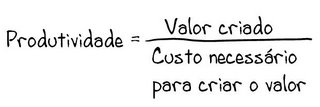
- Primary Target Segment – Productivity-Conscious Customers.
reduce total costs, and promote higher sales.
- Secondary Target Segment – Cost-Conscious Customers.
does not necessarily yield higher sales or economies of scale.
- The Least Desirable Segment – Price-Conscious Customers.
price."

Ou sistematizando de forma a ir ao âmago:

"This segmentation is also very useful in helping to decommoditize the full business base. It recognizes that there are some legitimate customers, who fit in the transaction category, that only want a standard product at the lowest price from you.
The reason behind that, most of the time, is that they are self-sufficient. The other two tiers offer opportunities for customization and uniqueness of delivery with different degrees of value added. The Support tier expects some help, normally in cost reduction. The Relationship tier seeks as full and complete assistance as it can be given, hoping that this will result in increases of revenues and profitability, as well as cost and productivity improvements."
The reason behind that, most of the time, is that they are self-sufficient. The other two tiers offer opportunities for customization and uniqueness of delivery with different degrees of value added. The Support tier expects some help, normally in cost reduction. The Relationship tier seeks as full and complete assistance as it can be given, hoping that this will result in increases of revenues and profitability, as well as cost and productivity improvements."
.
Por vezes, quando pergunto numa empresa quem são os seus clientes-alvo, a resposta sabe-me a pouco, sabe-me a algo de arcaico. Em vez da segmentação dos clientes mostram-me a segmentação dos mercados por diferentes parâmetros: demografia; geografia; canal; dimensão; rentabilidade; ...
sábado, junho 12, 2010
Lidar com as prateleiras
Para terminar a minha leitura do livro de Neil Rackham "Rethinking the Sales Force - Redefining Selling to Create and Capture Customer value" escrito em 1999... 1999!!!
.
.
Destaco este trecho sobre o papel e a importância dos canais de distribuição, os "donos das prateleiras":
.
"Most suppliers will need to change their thinking about channels in some very fundamental ways. First of all, suppliers have historically thought about the value channels created for thembut seldom about the value created for customers.
...
This does not mean that value to suppliers isn't important - just that it's no longer enough. Success in the future is going to require thinking much more about value both to end users and to the channel players themselves.
.
In addition to focusing on value for the customer, suppliers need to rethink their role in ensuring channel performance, especially when it comes to intermediary channels - those that are not supplier owned. One of the major mistakes most suppliers make is to treat intermediary channels as self-managing and to assume that the channel doesn't need the management time and attention that it would get if it were a direct, owned sales force.
In addition to focusing on value for the customer, suppliers need to rethink their role in ensuring channel performance, especially when it comes to intermediary channels - those that are not supplier owned. One of the major mistakes most suppliers make is to treat intermediary channels as self-managing and to assume that the channel doesn't need the management time and attention that it would get if it were a direct, owned sales force.
...
As a result of this logic, many suppliers focus little or no attention on how the agent or franchisee is running the business. When there are supplier's people devoted to the channel, they are usually spread very thinly, and they tend to view their role as "relationship management""
.
Escrito em 1999... o que é que as marcas fizeram?
.
.
.
.
.
.
.
Relações profundas não se quantificam
Em Maio de 2006 escrevia, acerca da avaliação da satisfação dos clientes, sobre como utilizar os resultados numéricos de uma campanha de recolha de opiniões, para desencadear acções de melhoria alinhadas pelas prioridades dos clientes.
.
Em Maio de 2010 escrevi acerca do ponto fraco da abordagem de 2006 - a comoditização.
.
Em Julho de 2009 escrevi "Cada vez mais, estou convencido de que este Santo Graal de obter uma pontuação do grau de satisfação dos clientes... serve para muito pouco".
.
Hoje, encontro um interessante texto de Roger Martin "The Secret to Meaningful Customer Relationships" acerca do perigo da quantificação das relações...
.
"subordinates generally object to receiving qualitative performance feedback from their superior, especially if it is at all negative. They typically are dismissive of the qualitative feedback and ask for the feedback to be on a quantitative basis only.
.
Jensen's counter-intuitive advice to the superior is not to apologize for the qualitative nature of the feedback but rather to tell the subordinate that if he could actually be evaluated using purely quantitative measures, his job should be outsourced. That is because if everything important about his work could be defined quantitatively, it would be easy and more efficient to design a contract with clearly defined service level agreements with an outsourced provider."
.
Jensen's counter-intuitive advice to the superior is not to apologize for the qualitative nature of the feedback but rather to tell the subordinate that if he could actually be evaluated using purely quantitative measures, his job should be outsourced. That is because if everything important about his work could be defined quantitatively, it would be easy and more efficient to design a contract with clearly defined service level agreements with an outsourced provider."
.
"The same logic applies to a firm's relationships with customers. If our understanding of customers is based entirely on quantitative analysis, we will have a shallow rather than deep relationship with them.
This runs against the prevailing view of customer understanding. Quantitative customer analysis with a large statistically significant sample and multiple choice questions that enable quantitative analysis of the answers is deemed 'rigorous'. Qualitative customer research that uses small samples and conversational and/or observational approaches is considered by many to be lax and/or shoddy — and certainly unscientific."
This runs against the prevailing view of customer understanding. Quantitative customer analysis with a large statistically significant sample and multiple choice questions that enable quantitative analysis of the answers is deemed 'rigorous'. Qualitative customer research that uses small samples and conversational and/or observational approaches is considered by many to be lax and/or shoddy — and certainly unscientific."
...
"if you want a deep relationship with your customers don't spend your time talking to them through the vehicle of quantitative research tools."
.
Recentemente, a trabalhar com uma empresa em que estou a facilitar a implementação de um sistema de gestão segundo as boas-práticas da ISO 9001:2008, concordamos em não usar inquéritos para medir a opinião ou a satisfação dos clientes. Será redigido um guião de auxílio a uma "conversa" com o cliente sobre alguns temas. As respostas serão tratadas e, a partir daí será elaborado um relatório como entrada para uma reunião de análise e tomada de decisões e acções.
sexta-feira, junho 11, 2010
Fim ao deboche do endividamento
"Alguns especialistas argumentam que a única forma de salvar o euro é acompanhar a união monetária com uma união orçamental. A receita que defendem passa por políticas de impostos mais elevados, gastos sociais mais altos (e défices não demasiado baixos) nas grandes economias do norte da Europa, na Alemanha e na França. Mas isso seria um grande erro. O que é necessário são limitações à política orçamental de cada país e não uma autoridade orçamental supranacional.
.
O problema que enfrentam muitas democracias avançadas, na Europa e em outras partes do mundo, é o crescente nível dos gastos públicos, dos impostos e da dívida pública. Em conjunto, estes factores afectam seriamente o crescimento económico. Em resposta a esta tendência, o Fundo Monetário Internacional apela a um regresso aos rácios da dívida pública que existiam antes da crise. De outra forma, a explosão da dívida pública vai permanentemente diminuir o crescimento do rendimento per capita em um terço ou mais nas economias avançadas - uma estagnação permanente surpreendente - e afectaria a capacidade dos governos de enfrentar a próxima recessão.
...
As principais lições do fiasco da dívida grega não são novas: 1) os governantes eleitos ignoram, sistematicamente, os custos de longo prazo para alcançaram benefícios no curto prazo; 2) esperam para agir quando são forçados a fazê-lo; 3) as políticas governamentais não podem evitar as leis da economia; 4) os governos não podem anular as leis da aritmética; e 5) a política orçamental não é mera contabilidade.
.
Quando um Governo pede um euro emprestado (ou um dólar, libra, peso ou yuan), compromete-se a pagar este euro ao valor actual do pagamento de juros futuros e à eventual devolução do capital.
.
Esse dinheiro deve ser proveniente de impostos mais elevados, de uma erosão do valor real dos balanços monetários e da dívida pública através da inflação. Ou directamente de um incumprimento de pagamentos e da reestruturação da dívida. Os eventuais custos de qualquer destas acções são severos.
.
Além disso, o problema não é apenas a dívida pública. Um rácio mais elevado entre impostos e produto interno bruto apenas troca o problema do défice por um crescimento económico mais lento. Nas últimas décadas, as grandes economias avançadas com impostos mais elevados cresceram muito mais lentamente. E as economias com impostos mais elevados nem sequer registaram défices orçamentais mais pequenos do que os Estados Unidos, uma economia com impostos mais baixos; impostos mais elevados apenas permitiram maiores gastos.
...
Assim, será melhor que cada país aplique sérias limitações legais à autoridade orçamental dos seus legisladores. Restrições aos défices orçamentais são um início mas não são suficientes. O imenso crescimento do estado social e a subida dos défices e das dívidas públicas tornaram-se nas maiores fontes de riscos económicos sistémicos tanto a nível nacional como global. Por isso, é preciso aplicar restrições simultâneas aos gastos, impostos e dívida para evitar crises económicas e financeiras futuras.
...
O problema não é que os governos tenham falta de recursos para gastar mas que o aumento dos gastos, impostos e da dívida pública estão a afectar negativamente o crescimento económico e os padrões de vida futuros. Este futuro parece estar no horizonte não apenas na Europa, mas em todo o lado, a não ser que os governos restrinjam os seus gastos."
.
O problema que enfrentam muitas democracias avançadas, na Europa e em outras partes do mundo, é o crescente nível dos gastos públicos, dos impostos e da dívida pública. Em conjunto, estes factores afectam seriamente o crescimento económico. Em resposta a esta tendência, o Fundo Monetário Internacional apela a um regresso aos rácios da dívida pública que existiam antes da crise. De outra forma, a explosão da dívida pública vai permanentemente diminuir o crescimento do rendimento per capita em um terço ou mais nas economias avançadas - uma estagnação permanente surpreendente - e afectaria a capacidade dos governos de enfrentar a próxima recessão.
...
As principais lições do fiasco da dívida grega não são novas: 1) os governantes eleitos ignoram, sistematicamente, os custos de longo prazo para alcançaram benefícios no curto prazo; 2) esperam para agir quando são forçados a fazê-lo; 3) as políticas governamentais não podem evitar as leis da economia; 4) os governos não podem anular as leis da aritmética; e 5) a política orçamental não é mera contabilidade.
.
Quando um Governo pede um euro emprestado (ou um dólar, libra, peso ou yuan), compromete-se a pagar este euro ao valor actual do pagamento de juros futuros e à eventual devolução do capital.
.
Esse dinheiro deve ser proveniente de impostos mais elevados, de uma erosão do valor real dos balanços monetários e da dívida pública através da inflação. Ou directamente de um incumprimento de pagamentos e da reestruturação da dívida. Os eventuais custos de qualquer destas acções são severos.
.
Além disso, o problema não é apenas a dívida pública. Um rácio mais elevado entre impostos e produto interno bruto apenas troca o problema do défice por um crescimento económico mais lento. Nas últimas décadas, as grandes economias avançadas com impostos mais elevados cresceram muito mais lentamente. E as economias com impostos mais elevados nem sequer registaram défices orçamentais mais pequenos do que os Estados Unidos, uma economia com impostos mais baixos; impostos mais elevados apenas permitiram maiores gastos.
...
Assim, será melhor que cada país aplique sérias limitações legais à autoridade orçamental dos seus legisladores. Restrições aos défices orçamentais são um início mas não são suficientes. O imenso crescimento do estado social e a subida dos défices e das dívidas públicas tornaram-se nas maiores fontes de riscos económicos sistémicos tanto a nível nacional como global. Por isso, é preciso aplicar restrições simultâneas aos gastos, impostos e dívida para evitar crises económicas e financeiras futuras.
...
O problema não é que os governos tenham falta de recursos para gastar mas que o aumento dos gastos, impostos e da dívida pública estão a afectar negativamente o crescimento económico e os padrões de vida futuros. Este futuro parece estar no horizonte não apenas na Europa, mas em todo o lado, a não ser que os governos restrinjam os seus gastos."
.
Trechos retirados do Jornal de Negócios "Hora de restringir o governo" de Michael J. Boskin
Onde isto já vai...
- Com que então Portugal não precisa de recorrer ao Fundo Europeu de Emergência?
.
- Não, não somos como os espanhóis!
.
Actividades versus resultados
"Many companies confuse activities and results. As a consequence, they make the mistake of designing a process that sets out milestones in the form of activities that must be carried out during the sales cycle. Salespeople (Moi ici: e muito mais gente) have a genius for doing what's compensated rather than what's effective. If your process has an activity such as "submit proposal" or "make cold call," then that's just what your people will do. No matter that the calls were to the wrong customer or went nowhere. No matter that the proposal wasn't submitted at the right point in the buying decision or contained inappropriate information. The process asked for activity, and activity was what it got. Salespeople have done what was asked for. "Garbage in, garbage out" they will delight in telling you. "It's not our problem, it's this dumb process.""
.
"It is more important to know where you are going than to get there quickly. Do not mistake activity for achievement." (Mabel Newcomber)
.
Primeiro trecho de Neil Rackham em "Rethinking the Sales Force - Redefining Selling to Create and Capture Customer value".
quinta-feira, junho 10, 2010
A nossa exportação mais importante
"700,000 New Emigrants":
.
"During the research for a forthcoming book, I started to think about the impacts of our prolonged stagnation on the job market. Interestingly, in spite of low job creation, until recently unemployment never rose to really high levels. Therefore, I was left to wonder what could cause such a phenomenon. The answer was relatively obvious: emigration. We all know that Europe exhibits a low degree of job mobility, but we also know that, historically, Portugal has been a country of heavy emigration"
.
BTW, "Ter memória" e "The world doesn't owe us a living"
.
"During the research for a forthcoming book, I started to think about the impacts of our prolonged stagnation on the job market. Interestingly, in spite of low job creation, until recently unemployment never rose to really high levels. Therefore, I was left to wonder what could cause such a phenomenon. The answer was relatively obvious: emigration. We all know that Europe exhibits a low degree of job mobility, but we also know that, historically, Portugal has been a country of heavy emigration"
.
BTW, "Ter memória" e "The world doesn't owe us a living"
Mudança de discurso
"Este contrato de coesão nacional passa também por uma maior solidariedade territorial e geracional: “Não podemos deixar que sejam os dois extremos da pirâmide etária, os mais velhos e os mais novos, a suportar os encargos sociais mais pesados das dificuldades do presente”."
.
Há 36 anos os discursos eram sobre a guerra de classes...
.
Hoje os discursos são sobre a guerra das gerações ...
.
O triunfo das ideias do Grande Planeador
"According to the views now dominant the question is no longer how we can make the best use of the spontaneous forces found in a free society. We have in effect undertaken to dispense with the forces which produced unforeseen results and to replace the impersonal and anonymous mechanism of the market by collective and "conscious" direction of all social forces to deliberately chosen goals."
.
Hayek em "The Road to Serfdom"
Quem vier atrás que feche a porta (parte II)
"Portugal já paga juros mais altos do que a Grécia no plano de ajuda financeira"
.
"As medidas de austeridade (Moi ici: austeridade para as pessoas com o aumento do saque impostado. Porque não há maneira do Estado reduzir despesa a bem.) que o Governo português aprovou não estão a salvar o país da pressão dos mercados, que ontem, pela primeira vez, exigiram, numa emissão de obrigações realizada pelo Estado, juros mais altos do que o valor a pagar pela Grécia no plano de ajuda financeira da União Europeia (UE) e do Fundo Monetário Internacional (FMI)."
.
A primeira vez que o escrevi foi a primeira vez que o li "E se for a Alemanha a ter de sair da zona euro?"
.
Pois bem, o que propõe Edward Hugh em "British blogger unlikely economic sage":
.
"So I put forward this idea is that maybe the simplest and quickest solution is for Germany to go back to the mark," he said.
Germany abandoned the Deutschemark in 2002 when it joined the single currency.
The theory is that Germany's exit would prompt a steep fall in the euro, which would go some way to restoring the competitiveness of Germany's debt-strapped neighbors including Spain, Portugal, Greece and Ireland. Exports would rise, allowing them to put money aside to pay their debts and to service the future needs of their ageing populations.
In time, he said, Germany could consider rejoining the euro after a correction in the region's economic imbalance."
Germany abandoned the Deutschemark in 2002 when it joined the single currency.
The theory is that Germany's exit would prompt a steep fall in the euro, which would go some way to restoring the competitiveness of Germany's debt-strapped neighbors including Spain, Portugal, Greece and Ireland. Exports would rise, allowing them to put money aside to pay their debts and to service the future needs of their ageing populations.
In time, he said, Germany could consider rejoining the euro after a correction in the region's economic imbalance."
.
Saliento este ponto:
.
"If these countries -- like Spain, Portugal, Greece, Ireland -- can't find a way to get back to growth then the debt is just going to mount and mount and mount on them.
"There's no future for any country that is in the sort of mess that these countries are in -- they need the protection of the eurozone," he said.
"It is much more feasible for Germany to say, 'Hey guys 28 percent of our GDP -- and it is growing as a percentage now - is in exports that go outside Europe or outside of the eurozone. (Moi ici: Para empresas que operam no quadrante D o preço é um qualifier não um order-winner) So what do we have to lose by coming out?'"
And remember that German debt is in euros so if the Germans went back to the mark it would be much cheaper for them to pay," he added."
"There's no future for any country that is in the sort of mess that these countries are in -- they need the protection of the eurozone," he said.
"It is much more feasible for Germany to say, 'Hey guys 28 percent of our GDP -- and it is growing as a percentage now - is in exports that go outside Europe or outside of the eurozone. (Moi ici: Para empresas que operam no quadrante D o preço é um qualifier não um order-winner) So what do we have to lose by coming out?'"
And remember that German debt is in euros so if the Germans went back to the mark it would be much cheaper for them to pay," he added."
Governos que se dão ao respeito são mais previsíveis daí que os governados confiem no seu comportamento futuro. Portanto, os 80 mil milhões de euros de poupanças que a Alemanha resolveu fazer, cortando na despesa do Estado nos próximos anos, em vez de um efeito recessivo vão ter um efeito expansivo "CAN SEVERE FISCAL CONTRACTIONS BE EXPANSIONARY? TALES OF TWO SMALL EUROPEAN COUNTRIES"
quarta-feira, junho 09, 2010
Quem vier atrás que feche a porta
Os tansos que ficarem por cá que se amanhem...
.
Em Espanha a coisa está, também, cada vez mais negra "UPDATE 2-Spain small lenders struggling for funding"
.
"Portugal was forced to pay yields on Wednesday for new debt at levels that could force the country to turn to the eurozone’s new emergency funding body.
.
It paid 5.225 per cent to raise €816m in 10-year bonds, higher than some analysts expect to be charged by the newly created European Financial Stability Facility, which has €440bn at its disposal to help eurozone members facing difficulties issuing debt."
It paid 5.225 per cent to raise €816m in 10-year bonds, higher than some analysts expect to be charged by the newly created European Financial Stability Facility, which has €440bn at its disposal to help eurozone members facing difficulties issuing debt."
.
.
Em Espanha a coisa está, também, cada vez mais negra "UPDATE 2-Spain small lenders struggling for funding"
Ah!!! É um sector de ponta, alta-tecnologia, um nicho longe dos competidores asiáticos...
Atenção ao artigo "Primeiro trimestre foi o melhor da década para o sector do calçado" onde se pode ler:
.
"O primeiro trimestre de 2010 foi o melhor da última década para a indústria portuguesa de calçado, com a produção, emprego e encomendas a melhorarem, mas o “aumento brutal” das matérias-primas e as medidas de austeridade preocupam os empresários.
Este facto permitiu uma recuperação na utilização da capacidade produtiva, que já está “a níveis normais para a época do ano” para cerca de dois terços das empresas.
Esta melhoria reflectiu-se também positivamente no emprego, com uma tendência de aumento do número de pessoas ao serviço na indústria: “Embora quatro em cada cinco empresas afirmem que ele permaneceu inalterado, as que dizem que aumentou são mais do que as que dizem que diminuiu”, nota a APICCAPS.
Relativamente ao estado dos negócios, pela segunda vez nos últimos três trimestres são mais as empresas que entendem que é “bom” do que as que pensam que é “mau”, sendo esta proporção a mais elevada desde 2001. Ainda assim, três em cada quatro empresas consideram que o estado dos negócios é “suficiente”.
No que respeita à evolução da carteira de encomendas, 43 por cento das empresas diz ter estabilizado, 27 por cento afirma ter aumentado e 29 por cento refere ter diminuído, notando-se um melhor desempenho das empresas com maior peso de colecção própria nas suas vendas. (Moi ici: as que estão no quadrante D)
.
Ah!!! É um sector de ponta, alta-tecnologia, um nicho longe dos competidores asiáticos...
.
Este artigo devia fazer pensar todos aqueles que falam na incapacidade de competir com a Ásia, que falam na necessidade de proteccionismo.
.
Não há sectores obsoletos ou em que as empresas portuguesas não possam competir. Há sim estratégias obsoletas.
Reconhecimento merecido
Nem sempre estou de acordo nas soluções, mas totalmente de acordo com o diagnóstico, Edward Hugh "The Blog Prophet of Euro Zone Doom"
Gostava de saber
Era tão interessante saber os valores monetários por detrás destes fluxos. A que preço a energia é colocada na rede, qual a percentagem desse preço paga pelos contribuintes em subsídios vários e, depois, a que preço a energia está a ser vendida aos operadores de bolsa de energia.
.
.
Talvez Jacinto Nunes percebesse a incongruência em protestar contra o aumento do preço da energia ao consumidor final quando se elogia a política de renováveis.
.
Se as pessoas percebessem as enormidades (não são ilegalidades) que se escondem por detrás de coisas como esta "Energia está mais barata na bolsa ibérica mas isso não se sente no bolso do cliente" revoltavam-se.
Ser diferente
Ontem, ao final de um dia de auditoria, enquanto aguardava "boleia" para atravessar a área produtiva, junto à máquina de café encontrei o número de 31 de Março de 2008 da revista Fortune com este interessante artigo "Target's inner circle" de onde saliento este trecho:
.
"“when Wal-Mart first made inroads into Target country. With its everyday-low-price strategy, Wal-Mart began eating into Target's sales while spending far less on marketing than Target, which produced colorful - and costly - Sunday advertising sections. Alarmed, Ulrich approved a test in 1985, converting 50 Target stores in Albuquerque and Knoxville, Tenn., to emphasize low prices. Quickly, Target found that it did okay in new stores but abysmally in places where people were trained to expect that circular. "We realized that we wouldn't ever be able to convert the entire chain," says Jones. "And we couldn't really run a bifurcated strategy." (Moi ici: Ninguém pode!)
Target faced a choice - one that easily might have put it in the same spot as doomed chains like Caldor or Bradlees. "Some people tried to do the dance on both sides," says Ulrich. "As Wal-Mart got bigger and bigger, [other rivals] started emulating them more, but they were still trying to appeal to an upscale guest. They'd pile shit in the middle of their aisle and then throw in some merchandise that wasn't the right quality for the store level. It's the classic mistake."
Instead, Ulrich's team saw an opening: If Wal-Mart was striving to be the king of logistics, with enough muscle to force vendors to deliver on price, Target could deliver on a great store experience and a product that was exciting and unique. "Wal-Mart's strategy is in many ways more simple than ours," says Ulrich. "It's more about price and more about mass quantities. It's a hell of a competition, but ours is more dependent on innovation, on design, and on quality."
What Target did have, thanks to its department store sisters, was access to people who anticipated desires. So Ulrich started a trend department, bringing over fashion scouts from Dayton Hudson, who started by expanding the color palette for T-shirts. "I can remember all the skepticism," says Jones.”"
.
Arnoldo Hax ajuda à festa com este raciocínio retirado de "The Delta Model - Reinventing Your Business Strategy":
.
"Until now, the prevailing view – shared by most practicing managers and academics – has been to define the goal of strategy as achieving sustainable competitive advantage. Most, if not all, of the most respected and popular frameworks that guide the strategy development process are anchored in this concept. This is a mindset likely to cause severe problems moving forward.
First, it puts our competitors at the center of our management process. Competitors become our driving force, our relevant benchmark. We look at strategy, and consequently at management, as rivalry. In order for us to succeed, we have to beat someone. Strategy is destructive; strategy is war.
Second, and equally troublesome, using our competitors as a way to define our course of action basically anchors us in the past. On reflection, this is an approach that seems counterproductive in a time of revolutionary change, when we want to create discontinuities, not reaffirm old practices. Is this what we should be aiming at in today’s turbulent environment, when change is virtually mandatory? We must challenge our previous state of business. We must have the ability to be creative and separate ourselves from the herd, to find a new and unique way of conducting business.
Often, companies seem obsessed with their competition, studying and watching it intensely to detect anything that could signal a way to operate more effectively.
This might not be a very smart way to manage. I tell my students, “Study your competition deeply, but do not imitate them.” I believe that strongly. It is a meaningful challenge. To separate ourselves from our competitors, we must offer our customers something that is truly unique and distinctive. How do we do that?
Third, the excessive concern about competitors can lead us, consciously or otherwise, into imitating their behavior. Our products begin to take on similar characteristics of those of the leaders. The development of our new products adheres to the prevailing standard of the industry, the channels of distribution that access our customer base are indistinguishable – in other words, the industry begins to converge into a well-established set of norms and standards. The result of this congruency leads toward the commoditization of our business, which is the worst possible outcome for all players."
terça-feira, junho 08, 2010
Subscrever:
Mensagens (Atom)
%2006.21.jpeg)