Como começa:

Robots serving in a restaurant 👏🏽👏🏽👏🏽👏🏽👏🏽 pic.twitter.com/eNQTxYN3cj
— Efø Vìøléñþ Ķīßßêŕ😘👿 (@premooooooo) March 6, 2023

Como começa:
Robots serving in a restaurant 👏🏽👏🏽👏🏽👏🏽👏🏽 pic.twitter.com/eNQTxYN3cj
— Efø Vìøléñþ Ķīßßêŕ😘👿 (@premooooooo) March 6, 2023


"O preço médio por noite no alojamento tem vindo a subir a dois dígitos. Isto é um fator de atração ou pode também ser um fator de afastamento de turistas?Não se evolui na cadeia de valor no sentido da redução dos preços. O que se faz é evoluir naquilo que é a qualidade da oferta e, naturalmente que a qualidade da oferta tem de ter o correspondente valor desse aumento. É o caminho que o setor tem feito. Não é um caminho no sentido de um turismo de massas. Não. E um caminho no sentido de um turismo de qualidade, que aporta valor. E, aliás, é nesse contexto que tem havido até uma diversificação para mercados de maior valor acrescentado."
Como conciliar os dois pensamentos?
Faz-me lembrar um discurso parolo de 2008 que registei em I wonder...
"Não é o sector que determina o desempenho, não há sectores velhos e obsoletos, são as escolhas de gestão, são as apostas estratégicas, são as decisões dos humanos que ajudam a fazer a diferença. E que diferença"
É tudo verdade, mas também é tudo mentira... não me quero repetir, escrevi o argumento recentemente em Think again!
Há anos que escrevo sobre o futuro das plataformas - Estratégia em todo lado - não é winner-take-all:
Parte I, parte II e parte III.
No ano passado apresentei aqui a minha tese para explicar a evolução negativa da produtividade industrial norte-americana. Tese que voltei a referir recentemente em Bons empregos...
Entretanto, esta semana via Twitter fui encaminhado para America's Manufacturing Productivity Problem.
Olhando para os gráficos pode-se concluir que a causa com maior impacte na tendência negativa da produtividade na indústria norte-americana é/foi a deslocalização das indústrias de alta tecnologia. Esta tendência teve um efeito profundo porque os sectores de crescimento elevado da produtividade, como a electrónica, eram um impulsionador significativo da produtividade industrial global. O declínio deste sector por si só explica cerca de 40% do declínio da produtividade industrial durante a década de 2010. A transferência destas indústrias para o estrangeiro não só reduziu a participação da indústria de alta tecnologia nos EUA, como também levou a uma mudança mais ampla para sectores de menor tecnologia e menor produtividade dentro da base industrial norte-americana.
Em a Receita irlandesa e no recente Think again! ilustro como o salto da produtividade irlandesa foi feito à custa do contrário do que aconteceu na indústria norte-americana, em vez de "deslocalização das indústrias de alta tecnologia" tivemos uma "localização das indústrias de alta tecnologia". Daí o título desta série que muitos ainda não perceberam, precisamos de atrair e manter os mastins dos Baskerville.
BTW, desde 2008(?) que olho com curiosidade para a distribuição da produtividade intrasectorialmente. Por isso, no mesmo site referido acima, sobre a produtividade norte-americana, é interessante perceber que a tendência de aumento da dispersão da produtividade, ou seja, a diferença entre os fabricantes mais e menos produtivos, aumentou. Isto é particularmente evidente nos sectores de alto crescimento da produtividade, como a electrónica, onde algumas empresas permanecem altamente produtivas, enquanto a maioria fica para trás devido à difusão mais lenta da inovação e ao crescimento reduzido da I&D. Em países como Portugal acrescentaria também como motivo as paletes e as bofetadas.
Há anos que escrevo aqui sobre o oxímoro que é meter na mesma frase Inditex e sustentabilidade. Recordo Are you prepared to walk the talk? (parte II)
No FT de hoje é publicada a Europe's Climate Leaders list que inclui no topo da "Textiles, apparel & luxury goods" a Inditex. Podia enveredar por uma via cínica, até porque a H&M também faz parte da lista, mas tenho de reconhecer que a Inditex tem feito mudanças estratégicas para fugir do fast-fashion.
Verdade seja dita que não entro numa loja da Zara à mais de 18 meses, não sei se na prática mudou alguma coisa.
Camilo Lourenço termina o seu programa diário da passada quinta-feira (ver a partir do minuto 26:30) a demonstrar que ainda não percebeu o tema do IRC.
Caro Camilo, a redução do IRC não é estratégica por causa das empresas portuguesas, mas por causa dos mastins dos Baskerville.
Pois, Não são elas que precisam de Portugal, Portugal é que precisa delas (parte III)
Recordo o que acontece, quando os mastins não aparecem:
"Cerca de 80% da criação de emprego dos últimos dois anos, em Portugal, isto é, desde que começou a crise inflacionista (acelerada pela guerra da Rússia contra a Ucrânia), é explicada pela criação de postos de trabalho pouco ou nada qualificados.
A "resiliência" e a "força" do emprego, que tantas vezes tem sido destacada por políticos e decisores, é afinal pouco rica em qualificações e está associada a salários normalmente muito baixos, o que também pode ajudar a explicar a baixa produtividade da economia portuguesa."
"'The Profiteers: How Business Privatizes Profits and Socializes Costs', by Christopher Marquis
"Most economics students will be familiar with the concept of externalities: "the negative side effects of a company's operations and practices, that are not factored into their profit and loss statements", in the telling of Judge Business School professor Christopher Marquis. In this engaging read, he brings to life the real-world manifestations of this rather dry term, showing how the public and environment pay the hidden costs of business while irresponsible corporations reap the rewards.
Examples range from industrial carbon emissions that cause climate change, flooding and failed harvests; to discriminatory practices that hold back the marginalised; to vast imbalances in income and returns that entrench inequality. Marquis reserves special ire for greenwashing companies that pretend responsibility while wreaking havoc on the planet and doing little to clean it up.
At root, he argues, is a shareholder capitalism in which corporations "only engage in activities that increase profits" and limit responsibility for any damage that causes. Yet despite his systemic diagnosis, the book is not despairing. It details many encouraging examples of change, and does not limit itself to radical projects. Marquis argues large investment portfolios, for example, are well positioned to take externalities into account because some companies in them will inevitably be hit by risks created by others' gains."
Recordo logo as paletes.
Era minha intenção escrever a continuação da Parte I avançando para mais uma nota retirada do artigo da HBR deste mês. Contudo, a minha leitura matinal de ontem parece-me perfeitamente adequada para servir de ligação ao tema da calibração da mudança:
"We begin with what happens to humans when the future is uncertain, as, for example, when it's not clear what the impact of the new initiative is going to be, or when it's not clear who's in charge or how long that person will be around for.
...
We really don't like uncertainty.
...
Fear and anxiety are different, in other words, because fear comes with an ending. ... But when our stress is not immediately related to an object, then there is nothing to remove in order to alleviate it. This is what's particularly pernicious about uncertainty, then: It is unbounded.
...
But here's the rub: It's very hard to make safety signals for humans at work, precisely because change at work is so often unbounded.
...
Beyond ulcers, another characteristic of our response to uncertainty is that we become less rational.
...
Unbounded uncertaintywhich we can think of as the possibility of disruptive change coupled with the absence of any credible signal that things will return to normal-produces high levels of stress. At the same time, our need for an end to unpredictability leads us to attempt to latch on to anything that offers the promise of a return to certainty, however irrational those things may be."
Trechos retirados de "The Problem with Change" de Ashley Goodall.
Agora é a vez de mais um "enviado da troika", Martin Wolf, em "Increased longevity will bring profound social change":
"People will have to work longer and pension systems will need to be transformed. [Moi ici: Come on! Qual o político com eles no sítio para nos dizer isto na cara?"]
...
In the UK in 1965, the most common age of death was in the first year of life. Today the most common age to die is 87 years old. [Moi ici: Olha, o 25 de Abril também teve efeitos na mortalidade infantil do Reino Unido]
...
in 1990, there were only 95,000 people over 100 years old in the world. Today, there are over half a million, and rising.
...
Equally clearly, a world in which most are likely to live into their 90s, many even longer, needs to be thoroughly rethought. The idea of 25 or so years of education, 35 years of work and then, say, 35 years of retirement is impossible, for both individuals and society. It is certainly unaffordable. It is also likely to produce an empty old age for vast proportions of the population.
...
It is going to be necessary to work longer as a matter of course. This is also going to require several changes in one's career over a lifetime. [Moi ici: Já oiço os piegas que antes da troika se reformavam aos 55 anos. Apre!] Instead of one period of education, one of work and one of retirement, it will make sense for people to mix the three up. People will go back to study, repeatedly. They will take breaks, repeatedly. They will change what they do, repeatedly. This is the way to make longevity affordable and, as important, bearable."
Comecemos com este vídeo no Twitter:
Acidente no rally Portugal, aquele gnr bem pode agradecer a todos os santinhos pic.twitter.com/wdOjB4hkkM
— Bilbia mt engarsada (@BilbiaOfissial) May 10, 2024
O GNR teve sorte...
E depois?
Há anos aprendi a lei de H. W. Heinrich:
"para cada lesão grave, há 29 lesões leves e 300 eventos de quase acidentes"
A implicação é que se nos concentrarmos na redução do número de quase acidentes, o número de lesões diminuirá proporcionalmente. E como se reduz o número de quase acidentes?
Primeiro, há que os reportar. Os quase acidentes têm de ser tornados visíveis. Se não podem ser detectados, não podem ser geridos.
Qual a tendência nas empresas, a começar pelos quase acidentados?
Esconder os quase acidentes!
E confiar na sorte e nos santinhos.
Será que este caso, entre outros, vai ser objecto de estudo, na GNR ou na organização da prova, para melhorar o posicionamento futuro dos guardas?
Uma família podia agora estar a chorar um seu ente querido, esteve tão perto de acontecer.
$20 hour minimum wage and this is how McDonald's responds.
— Wall Street Silver (@WallStreetSilv) May 4, 2024
No registers open.
No menus turned on.
Self serve ONLY.
Thoughts on this?
🚨🚨🚨 pic.twitter.com/9BVVbnh9Ov
A revista HBR de Maio-Junho de 2024 traz o artigo "Transformations That Work". Um artigo interessante e que merece várias leituras.
Uma delas é esta, "3.Explicitly managing organizational energy". Segundo os autores as transformações organizacionais muitas vezes falham porque esgotam mais energia do que geram, levando ao esgotamento dos funcionários e à resistência à mudança. O artigo enfatiza a importância de gerir eficazmente a energia organizacional para evitar estas armadilhas. As transformações bem-sucedidas identificam e abordam os impactes nos trabalhadores e funções mais afectados, garantindo que as mudanças são introduzidas de forma gerível e sequencial.
"Our research shows that if an organization tries to change more than two primary routines simultaneously, the odds of failure increase dramatically.
...
In successful programs leaders explicitly identify the employees and functions that will be most impacted by each aspect of the initiative and ensure that no group is expected to alter multiple routines at once. Changes are carefully sequenced to limit disruption and prevent widespread organizational fatigue. Success is recognized and rewarded along the way to build energy and enthusiasm for the effort."
Notas para aplicar no desenvolvimento próximo das iniciativas estratégicas de um projecto em curso:
1. Antes de implementar mudanças, identificar que funcionários e funções serão mais afectados pelas mudanças requeridas pelo conjunto de iniciativas estratégicas. Perceber qual a sua carga de trabalho actual e a sua capacidade de lidar com mudanças.
2. Implementar as mudanças numa sequência estruturada, em vez de todas de uma vez. Esta abordagem ajuda a minimizar as interrupções e evita a sobrecarga de qualquer departamento ou equipa.
3. Evitar alterar mais de duas rotinas primárias ao mesmo tempo dentro do mesmo grupo de funcionários para reduzir o risco de perda de produtividade e fadiga de mudança.
4. Regularmente, reconhecer os esforços e celebrar os sucessos no processo de transformação. Isto não só aumenta o moral, mas também sustenta a energia e o compromisso necessários.
5. Estar pronto para adaptar a abordagem com base no feedback e nos níveis de energia da equipa.
Na análise feita no mês passado o cenário parecia adivinhar melhorias futuras qando olhava para a coluna das setas. Contudo, essa previsão não se confirmou, o primeiro trimestre traçou um cenário de quebra generalizada das exportações.

"Por um lado, não se está interessado em debater as questões estruturais, demasiado abstractas para se expressarem na linguagem da propaganda eleitoral....Para acontecimentos com esta gravidade e esta amplitude de consequências, o silêncio dos especialistas em assuntos económicos e políticos não pode ser explicado pela ignorância, mas antes pela necessidade de não reconhecerem a sua responsabilidade nos erros que conduziram à crise."
Recordo #schadenfreude (parte II)

Esta reflexão de Seth Godin, Inverting the vex, sobre a diferença entre situações e problemas devia ser lida por muita gente preocupada com:
Primeiro a provocação:
Oh @ccz1 venha aqui :)
— A.S.C. (@AMISCZ) May 9, 2024
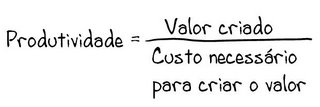
Notar a diferença entre a produtividade e competitividade:

A esquerda protectora da classe trabalhadora. torna-se na sua maior inimiga. Recordar porque é que os ex-comunistas italianos começaram a votar no Chega lá do sítio.
Entretanto, no DN do dia 9 de Maio, "80% do brilharete do emprego assenta em trabalhos pouco ou nada qualificados":
"Cerca de 80% da criação de emprego dos últimos dois anos, em Portugal, isto é, desde que começoua crise inflacionista (acelerada pela guerra da Rússia contra a Ucrânia), é explicada pela criação de postos de trabalho pouco ou nada qualificados.
A "resiliência" e a "força" do emprego, que tantas vezes tem sido destacada por políticos e decisores, é afinal pouco rica em qualificações e está associada a salários normalmente muito baixos, o que também pode ajudar a explicar a baixa produtividade da economia portuguesa.
...
Problema: mais de 78% (122 mil indivíduos) desta criação líquida de emprego ficou concentrada em duas profissões onde imperam baixas qualificações e baixos ordenados.
...
Os dois setores juntos representam quase metade da criação de emprego desde o início de 2022."
Entretanto, mão amiga mandou-me esta imagem:

%2006.21.jpeg)