Recordar:
- A previsão mais fácil de todas. Socialismo = Sildávia!
- Para reflexão
- É sempre possível piorar!
- A caminho da Sildávia ao vivo e a cores, mais um pacotão
Recordar:
"This article presents results from the first statistically significant study of traffic forecasts in transportation infrastructure projects. The sample used is the largest of its kind, covering 210 projects in 14 nations worth U.S.$9 billion. The study shows with very high statistical significance that forecasters generally do a poor job of estimating the demand for transportation infrastructure projects. For 9 out of 10 rail projects, passenger forecasts are overestimated; the average overestimation is 106%. For half of all road projects, the difference between actual and forecasted traffic is more than +20%. The result is substantial financial risks, which are typically ignored or downplayed by planners and decision-makers to the detriment of social and economic welfare. Our data also show that forecasts have not become more accurate over the 30-year period studied, despite claims to the contrary by forecasters. The causes of inaccuracy in forecasts are different for rail and road projects, with political causes playing a larger role for rail than for road."
Trecho retirado de "How (In)accurate Are Demand Forecasts in Public Works Projects? - The Case of Transportation" de Bent Flyvbjerg, Mette K. Skamris Holm, e Soren L. Buhl, publicado no Journal of the American Planning Association, Vol. 71, No. 2, Spring 2005.
No início da década de 90 trabalhei com uma empresa japonesa do ramo automóvel no projecto CDW27, que mais tarde seria o Ford Mondeo. O japonês com quem trabalhava gabava-se do cliente Toyota ser muito mais dinâmico que a Ford. Julgo que ele dizia que enquanto a Ford demorava 5 anos a pôr um carro no mercado a Toyota demorava 3 anos, ou então era 7 anos versus 5 anos. Não interessam os números exactos, o que interessa é chamar à reflexão o pensamento de Boyd sobre a vantagem de quem consegue iterar mais depressa, o que tiver o ciclo OODA mais curto:
"The key is the combination — rigor in each step; and getting through more cycles of the OODA Loop faster than the enemy."
Nestes tempos de contexto a mudar a um ritmo alucinante, interrogo-me sobre a vantagem das empresas com um rolling budget versus a que têm um orçamento anual e uma disciplina férrea na sua execução.
O ministro João Galamba.
Este blogue percebe-o tão bem. Ontem ao fm da tarde li, ""Teremos uma fábrica de comboios em Portugal", garante João Galamba".
Como não recordar o recente postal "awarding contracts to domestic companies is a good way to make influential friends and win public support"
Uma, mais uma, excelente reflexão de Roger Martin, que por sua vez nos põe a pensar. Desta vez é "Cost-Effective Differentiation - Why it Really Matters for your Strategy" da qual sublinho a parte final:
"Real differentiators have the margin room to be aggressive with pricing when needed and, in addition, have the earnings from their high margins to invest in the next differentiation. And low-cost players can grab share by pricing below the level that any other player is game to match. Consequently, ineffective high-value players have difficulty growing. Customers who happen to really value their particular offering remain loyal customers at the price they need to charge. But as with all companies, ineffective high-value players face a downward-sloping demand curve in which higher prices mean lower demand.
Simply, the ability to grow any business is hampered by needing to charge a high enough price to earn a return on costs. If those costs are higher than they need to be, but you add value to a set of customers, you will have a decent business. But it won’t be a great business.
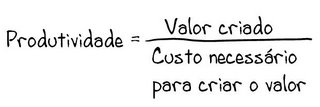
Seeking to be a differentiator isn’t a license to not worry about costs. It is all one singular value equation. The determinant of your competitiveness is the margin between the value you create and the costs you incur. And in that metric: a buck is a buck is a buck."
Recordo trading up versus trading down.
A propósito dos projectos públicos, um exemplo de uma boa prática que deve servir de alerta para as notícias que acompanham o anúncio de obras públicas:
"Subways would seem to be an even harder case for modularization, but when Madrid Metro carried out one of the world's largest subway expansions between 1995 and 2003, it leaned on modularity in two ways. First, the seventy-six stations required for the expansion were treated like Lego, with all sharing the same simple, clean, functional design. Costs plunged, and speed of delivery soared. To amplify those effects, Madrid Metro shunned new technologies. Only proven technologies - those with a high degree of "frozen experience" - were used."
Trecho retirado de "How Big Things Get Done" de Bent Flyvbjerg.
"Há regras que são simples como: para haver retorno tem que haver risco e, quem promete o contrário, dizendo que não está a correr risco, está a enganar alguém e, no fim, alguém vai pagar a conta."
Recordei logo este esquema de 2008:
Entretanto, também hoje no Twitter fixei:Isto num país endividado com empresas endividadas é um grande modificador do contexto (já não é o tempo desta política?)."if pilots anticipate being blamed unfairly, they will not make the reports on their own mistakes and near misses, thus suppressing the precious information that has driven aviation's remarkable safety record. This is why blame should never be apportioned for reasons of corporate or political expediency, but only ever after a proper investigation by experts with a ground-level understanding of the complexity in which professionals operate.The jury did their best to make up their minds on the facts, but it is not easy while sitting in a staid courtroom to make a judgment about split-second decisions made in the cockpit of a 200-ton jumbo jet flying through thick fog at nearly 200 mph.But if the Oscar November incident shows anything, it is just how easy it is to engage in the blame game. A tragedy very nearly happened, therefore someone had to be punished. Aviation is generally an industry with an empowering attitude toward error, and is rightly considered a leader when it comes to having a just culture. It rarely engages in blame and uses mistakes to drive learning....But what the Oscar November incident reveals is that even a pioneering industry like aviation is not completely immune from the blame tendency. And perhaps it exposes, more than anything, just how far we need to travel to eradicate the blame instinct once and for all."
Ontem, durante as compras da manhã emergiu na minha mente, já não me recordo porquê, a palavra temperança.
Sempre que penso nessa palavra recordo uma estória que li em 2013:
"Sonny, we’ve been in business for 85 years. What makes you think we won’t be in business another 85?"
Usar a maximização, quando se trata de negócios, é demasiado perigoso, demasiado arriscado.
A estória de 2013 é sobre um banco...
Em "How not to grow the economy" li uma espécie de resumo do que tenho escrito por aqui ao longo dos anos:
"But there is a deeper problem with Labour's and the Tories' approach to the productivity slump. While both parties have bought into the new economic consensus - that is, the belief that low business investment is at the root of lacklustre growth - they also share the belief that businesses need more state financial support. In today's circumstances, though, this would act to entrench the low-growth quagmire.
...
But there is a big problem here: state financial aid to business is self-defeating. [Moi ici: A lição de Spender] It hinders the innovation it is meant to promote. State handouts encourage corporate dependency and reduce the pressure on businesses to become more productive and commercially competitive. They often blunt the incentive for producers to experiment with and develop even better technologies. Businesses often end up concentrating on meeting various government criteria and conditions, rather than focussing on what might be best commercially. [Moi ici: Recordo A economia das carpetes e biombos e O nefasto poder aditivo dos subsídios]
...
Not all state-investment measures come with such onerous conditions. But state subsidies are never a free lunch. They are usually prescriptive and they often intrude on normal commercial practices. Whatever their intentions, state incentives often distort business-investment activities.
The contemporary problem for growth has not been too little but too much state support. Sustaining the business status quo with an abundance of subsidies doesn't just distort corporate focus and decision-making. It also helps sustain a zombie economy, by keeping inefficient and even unprofitable businesses afloat. [Moi ici: Recordar Para que servem os apoios e subsídios? e A morte lenta]
...
Zombie firms are those that, without extra support, such as cheap and easy debt facilities or state financial relief, would normally close down due to poor performance. Since the 1980s, this zombification trend has congested the wider economy. It blocks the creative-destructive process by which economies have moved ahead in the past, with lower-productivity, less-efficient businesses giving way to expanding, higher-productivity businesses.
Today, business investment is being held back by a surfeit of the old. Peter Drucker, one of the most influential 20th-century business thinkers, argued that the first step in innovation is to get rid of yesterday. 'If leaders are unable to slough off yesterday', he said, 'they simply will not be able to create tomorrow. [Moi ici: Recordar deixem as empresas evoluir ou morrer, ponto!!!] Drucker argued that dying products, services or processes - even if still profitable today shackle people and resources. This applies not just for individual businesses, but also for the economy in general. An excess of low-productivity firms gums up the whole economy, disincentivising even the healthiest businesses from investing in new advancements.
...
Instead of letting the old go, a profusion of state policies now sustains what already exists. These policies - monetary, fiscal and regulatory - tend to favour larger, incumbent companies at the expense of smaller, younger firms. And it is those smaller, younger firms that would usually be the ones innovating and driving productivity higher. [Moi ici: Recordar Maliranta em Deixar a produtividade aumentar]
...
But perhaps the biggest obstacle is the state's mummification of an already moribund economy. Fortunately, this is probably the easiest one for a government to overcome. It can turn off the corporate-welfare mechanisms that preserve and stultify. And it can start doing so right now."
Na quarta-feira ao final do dia li "A economia, as políticas e os negócios" de onde sublinhei:
"Quem quer investir num país assim?
Bom dia, o Governo tem um discurso cada vez mais agressivo contra as empresas, especialmente as maiores e que têm lucros. É trágico.
...
À medida que as condições económicas e sociais apertam, ou quando o Governo está sob pressão mediática por um qualquer caso, ao fim de sete anos de governação, já se pode identificar um padrão. Em Portugal, é preferível ter uma empresa pequena, e com prejuízos [Moi ici: Subsidize it]. As grandes empresas, com lucros, estão permanentemente em risco, mesmo quando esses lucros são 'vistosos' em termos absolutos mas limitados quando avaliados em função do capital investido (verdadeiramente, o critério que é relevante).
...
António Costa até pode beneficiar no curto prazo deste discurso contra as empresas, contra os bancos, contra as companhias de energia, de telecomunicações ou da distribuição. Num momento em que os portugueses perdem rendimento disponível, e quando o desemprego começa a dar sinais de agravamento, são um alvo fácil. É a tal habilidade política que todos lhe reconhecem. Mas é ao mesmo tempo a nossa perdição. Quem quer investir num país assim?"
"Despite the many legitimate criticisms of the short-lived Liz Truss administration, it did leave one exceptional legacy. It put the question of economic growth, and the importance of raising productivity, back on the mainstream political agenda.
...
It took an extraordinary triple whammy - the pandemic lockdowns, the postlockdown disruptions to global supply chains, and the war in Ukraine - to finally force the British political class, in the shape of the Truss administration, to acknowledge the dire state of the economy. It put the need for growth back on the agenda."
Este último artigo merece um comentário mais longo.
Na segunda-feira de manhã cedo ouvi o zunzum sobre o que se passou com o navio de patrulha Mondego.
Ontem de manhã, durante a minha caminhada matinal continuei a leitura de "How Big Things Get Done" de Bent Flyvbjerg. Comecei e acabei a leitura do capítulo 8 - “A SINGLE, DETERMINED ORGANISM”.
O capítulo fala sobre a importância de ter uma equipa coesa na implementação de um projecto e sobre como criar essa coesão. O livro usa o exemplo da construção do Terminal 5 (T5) de Heathrow sob a responsabilidade da British Airports Authority (BAA).
Os subtítulos apresentados no caso são:
"Identity was the first step. Purpose was the second. It had to matter that you worked for T5. To that end, the worksite was plastered with posters and other promotions comparing T5 with great projects of the past: the partially completed Eiffel Tower in Paris; Grand Central Terminal under construction in New York; the massive Thames Barrier flood controls in London. Each appeared on posters with the caption "We're making history, too."...I grew up in construction and know from firsthand experience that construction workers are sharp as knives at understanding what's happening on their worksites. Moreover, they have a well-founded skepticism of management. They know corporate propaganda when they see it, and they distrust it. "Most guys turn up with cynicism on any site we go to," Richard Harper said. They are usually right to be cynical "because it's all bollocks what the people [management] are saying." Promises aren't kept. Work conditions are poor. Workers aren't listened to. When reality doesn't match the words, corporate PR about teamwork and making history is worse than useless on the shop floor.The workers brought their usual cynicism to T5, Harper said. "But with that site, within, if not fortyeight hours, a week maximum, everybody had bought into the philosophy of T5. Because they could see T5 was implementing what they said they would do." It started with the on-site facilities. "It was just something mind-boggling," Harper told me, sounding amazed even now. "The guys had never seen this. The toilets, the showers, the canteens were the best I've ever seen on any site I've worked on in the world They were fantastic."...Harper said. "If guys had wet gloves, they only had to take them back to the store and they got a fresh pair of gloves. If they had a scratch on the glasses and couldn't see properly, they'd take the glasses back, and they were changed. Guys weren't used to this. This was totally new to them. On other jobs, they told you, 'If you're not happy with the glasses or whatever, buy your own.' " These may sound like small things to outsiders, but as Harper pointed out, for workers they are "massive, just massive. You set a man to work in the morning and you've put the things there that he wants, then you get a good day's work. You start them off in a bad way, and you know the next eight to ten hours, it's going to be very difficult." Multiply that by thousands of workers and thousands of days, and you do indeed get something massive.T5's managers not only listened to workers, they consulted them, asking some to sit down with designers to explore how designs and workflows could be improved."
Cheguei ao fim do capítulo, desliguei o tablet e voltei ao Mondego ...
"Os militares denunciam "a entrada de água em dois momentos diferentes, falta de manutenção do único dos dois motores que equipam a embarcação, um dos três geradores de energia inoperacionais e diversas fugas de óleo", entre outros problemas."
E pensei, que excelente forma de criar um “A SINGLE, DETERMINED ORGANISM”.
BTW, nunca esqueço:
Nestes tempos em que se fala tanto de qualidade, de satisfação dos clientes, de certificação, de clientes mistério, de ...
"Americans are encountering more problems with companies' products and services than ever before, and a higher proportion of them are actively seeking "revenge" for their troubles, a new study has found.
Some 74% of the 1,000 consumers surveyed said they had experienced a product or service problem in the past year. That is up from 66% in 2020, when the study last was conducted, and 56% in 2017. Only 32% told researchers they had experienced a problem in 1976, when a similar version of the study was first conducted.
The percentage of consumers who have taken action to settle a score against a company through measures such as pestering or public shaming in person or online, has tripled to 9% from 3% in 2020, according to the study. That reversed a downward trend with regards to revenge-seeking behavior: The average percentage of customers seeking revenge between 2003 and 2017 was 17%."(1)
"Effective support for years has been looked upon as a consumer right, however, and some customer experience executives say stratifying it into tiers runs the risk of eroding trust among those who can't or don't want to pay." (2)
(1) - As Customer Problems Hit a Record High, More People Seek 'Revenge
(2) - Want Better Customer Service? Join the (Membership) Club
"Perhaps most important, management started celebrating progress against inchstones and milestones. The spiral of negativity was replaced by an updraft of accomplishment that everyone could feel. The whole turnaround process took ninety very intense days and nights."
Ter um plano detalhado, querer cumpri-lo a sério.
Trecho retirado de "How Big Things Get Done" de Bent Flyvbjerg.
Uma pergunta, uma dúvida que me assalta várias vezes: qual o papel do líder de uma associação empresarial?
Deve o líder de uma associação pensar no futuro do sector, ou no futuro dos membros do sector? Não é a mesma coisa. O futuro não se constrói sem destruição criativa. Daí a opção pela defesa do passado em detrimento do abraço ao futuro.
Já por várias vezes li, ou ouvi, a secretária-geral da AHRESP a queixar-se da falta de trabalhadores para o sector. Ainda em Dezembro passado li:
"Antes da pandemia falávamos numa necessidade de 40 mil, mas com a pandemia esse número agravou-se. O próprio Governo falou na necessidade de cerca de 50 mil postos de trabalho e não foi resolvido. Não foi feito nada para resolver este problema."
Entretanto, no Expresso do passado Sábado li "Por dia, 14 restaurantes estão a fechar portas":
""São números que nos preocupam e que nos levam a reforçar a necessidade de serem criados mecanismos de apoio às empresas que não passem só pelas linhas de crédito. Insistimos na aplicação temporária da taxa reduzida de IVA nos serviços de alimentação e bebidas", defende Ana Jacinto, secretária-geral da AHRESP."
Às segundas, terças e quartas protestamos contra os baixos salários e horrorizamos-nos com a baixa produtividade portuguesa. Às quintas, sextas e Sábados pedimos apoios ao governo de turno para salvar as empresas que praticam baixos salários e empurram a produtividade do país para baixo.
Entretanto, no ECO leio, "Há cada vez mais restaurantes a pedirem gorjeta aos clientes. "E um 'forcing' para que continue esse incentivo"":
"A medida começou a ser implementada em agosto do ano passado, tendo como objetivo "melhoria das condições" dos colaboradores, já que as gorjetas "sempre tiveram um grande peso na composição do rendimento total dos colaboradores", e de modo a permitir uma distribuição 'mais justa e transparente" das mesmas, justifica o responsável.
...
os comerciantes fazem isto no sentido de dar um forcing para que continue esse incentivo de gorjetas. No fundo, para colmatar os baixos salários que pagam na restauração"
Recordo o meu velho grito: Deixem as empresas morrer!
"Nos últimos cinco anos houve um "pequeno movimento de concentração" na indústria dos moldes, aproveitando uma altura em que várias empresas estão em transição geracional, mas Nuno Silva sublinha que essa consolidação tem ainda de ser acelerada para o setor conseguir equilibrar os argumentos negociais com os grandes clientes, sobretudo no ramo automóvel que assegura 80% das encomendas."
Trabalhar um produto de baixo valor acrescentado, feito por encomenda num mercado com muita oferta e querer ter poder negocial? Come on!
O que aprendi sobre moldes em 2017 - Temos ainda muito trabalho por fazer.
O que recomendo às empresas há muito tempo:
"The funds flowed selectively into the least viable part of the industry, preventing change, and subsidized competition".
Arrisco dizer que muitos apoios não são para criar o futuro, mas para baixar custos de produção... recordar Uma espécie de esquema Ponzi
Bent Flyvbjerg no livro "How Big Things Get Done" refere que por vezes os projectos saem furados não por causa da execução, mas por causa das previsões irrealistas com que foram baseados:
“When delivery fails, efforts to figure out why tend to focus exclusively on delivery. That’s understandable, but it’s a mistake, because the root cause of why delivery fails often lies outside delivery, in forecasting, years before delivery was even begun.”
Uma das formas de evitar estas previsões irrealistas passa por usar informação de projectos anteriores (o título do capítulo é "SO YOU THINK YOUR PROJECT IS UNIQUE?" e o subtítulo é "Think again. Understanding that your project is "one of those" is key to getting your forecasts right and managing your risks.""
Muitos projectos seguem uma distribuição normal.
"But even with a project as simple as a kitchen renovation, the number of possible surprises, each unlikely, is long. Many small probabilities added together equal a large probability that at least some of those nasty surprises will actually come to pass. Your forecast did not account for that."
No entanto, os projectos grandes podem seguir um outro tipo de distribuição:
"There is, however, a big, fat-tailed caveat on all this. Imagine you have a graph with the costs of one thousand kitchen renovations that takes the shape of a classic bell curve—with most projects clustered around the mean in the middle, very few projects on the far right or far left, and even the most extreme data points not far removed from the mean.
...
But as noted in chapter 1, my analysis revealed that only a minority of the many project types in my database are “normally” distributed. The rest—from the Olympic Games to IT projects to nuclear power plants and big dams—have more extreme outcomes in the tails of their distributions. With these fat-tailed distributions, the mean is not representative of the distribution and therefore is not a good estimator for forecasts. For the most fat-tailed distributions, there isn’t even a stable mean that you can expect outcomes to cluster around because an even more extreme outcome can (and will) come along and push the mean further out, into the tail toward infinity. So instead of good old regression to the mean, you get what I call “regression to the tail.” In that situation, relying on the mean and assuming that your result will be close to it is a dangerous mistake.
...
If you face a fat-tailed distribution, shift your mindset from forecasting a single outcome (“The project will cost X”) to forecasting risk (“The project is X percent likely to cost more than Y”), using the full range of the distribution.
...
Contingencies might have to be 300, 400, or 500 percent over the average cost—or 700 percent, as we saw for the Montreal Olympics. That’s prohibitive. Providing such contingencies would not be budgeting; it would be blowing up the budget. So what can you do about the tail? Cut it off. You can do that with risk mitigation. I call it "black swan management".
...
Some tails are simple to cut. Tsunamis are fat-tailed, but if you build well inland or erect a high enough seawall, you eliminate the threat. Earthquakes are also fat-tailed, but build to an earthquake-proof standard, as we did with the schools in Nepal, and you are covered. Other tails require a combination of measures; for a pandemic, for instance, a blend of masks, tests, vaccines, quarantines, and lockdowns to prevent infections from running wild. That’s black swan management.
...
The critical next step is to stop thinking of black swans the way most people do. They are not bolt-from-the-blue freak accidents that are impossible to understand or prevent. They can be studied. And mitigated."
Um exemplo da mitigação apresentado é: construção de uma linha ferroviária em Inglaterra. Qual o motivo mais comum para paragem de uma obra? Achados arqueológicos! Mitigação: Contratar arqueólogos para estarem de prevenção para intervirem e reduzirem tempo de paragem.
Do JdN do passado dia 8 de Março, no artigo "Produtividade subiu 4,6%. Ganhos são estruturais?", retiro e sublinho o seguinte número:
"Segundo dados do INE ao Negócios, que recuam a 1995, no ano passado cada trabalhador português produziu 41,6 mil euros. Ou seja, a produtividade aparente do trabalho, o indicador mais utilizado e que, basicamente, divide a riqueza nacional (o PIB real) por número de trabalhadores"
No mesmo artigo ainda se lembra:
"Ainda assim, a produtividade portuguesa mantém-se abaixo da média (104,1 contra 107,9, no indice calculado pelo Eurostat)."
Depois, o mesmo JdN, mas de 9 de Março, dedica uma página a uma empresa tecnológica portuguesa, como se fosse a última Coca-Cola no meio do deserto, que facturou 5 milhões de euros em 2022 com 140 trabalhadores. Como diria uma certa personagem, "É só fazer as contas!" facturou quase 36 mil euros por trabalhador. Estranho!!!
Fui confirmar, acabo de ler as contas de uma empresa de calçado com que trabalho que factura cerca de 57 mil euros por trabalhador ... (tem mais de 100 trabalhadores)
Aqui no blogue não nos queremos enganar a nós próprios. Por isso, nunca usamos 2020 como referencial para comparação económica. E mesmo 2021 é enganador porque o primeiro trimestre foi afectado pelos lockdowns. Por exemplo, quando tratamos aqui os dados das exportações usamos 2019 como referencial. Por exemplo aqui:
Assim, soa a estranho e a manhosidade perceber a capa do JdN de ontem:Depois, no texto do artigo:"Depois de dois anos de pandemia de covid-19, a produtividade aparente do trabalho aumentou 4,6% em 2022 e atingiu o valor mais alto da série do INE....Ou seja, a produtividade aparente do trabalho, o indicador mais utilizado e que, basicamente, divide a riqueza nacional (o PIB real) por número de trabalhadores, aumentou 4,6% face ao ano anterior. De acordo com a série do gabinete de estatística, não só este foi o crescimento mais elevado em 27 anos, como é o valor de produtividade mais alto da série. [Moi ici: E o cidadão lê e rejubila com o pulo]...[Moi ici: E depois, a surpresa ...] Por isso, João Cerejeira, professor de Economia da Universidade do Minho, prefere comparar o crescimento da produtividade em 2022 com 2019. Nesse caso, houve um aumento de 1,1%. "Ou seja, em três anos houve un crescimento entre 0,3 e 0,4% por ano. Não é assim tão expressivo", frisa. Aliás, a subida da produtividade face ao pré-pandemia fica em linha com a média histórica (1%). [Moi ici: Extraordinário... na capa do jornal ainda se interrogam se será estrutural... querem fazer de nós parvos?! ]"
"O ministro das Infraestruturas, Pedro Nuno Santos, defendeu que o concurso deve ter “repercussão na indústria e no povo português”.“Queremos produção e fabrico em Portugal. Quem quiser cumprir as regras do caderno de encargos, será bem-vindo. E quem quiser produzir aqui, terá condições para criar não só para Portugal como para outras zonas do mundo”, disse o ministro em dezembro na cerimónia de lançamento do concurso.Pedro Nuno Santos disse ainda que “este concurso é um impulsionador para que Portugal venha a fazer parte do clube dos fabricantes de comboios na Europa."
Lembrei-me destas cenas e de muitas outras em que se apela aos "campeões nacionais":
"MARGINALIZING EXPERIENCE...Politicians everywhere know that awarding contracts to domestic companies is a good way to make influential friends and win public support with promises of jobs, even if the domestic company will not perform as well as its foreign competitor because it is less experienced. When this happens -and it happens routinely -those responsible put other interests ahead of achieving the project's goal. At a minimum, such an approach is economically dubious, and sometimes it is ethically dodgy, too, or downright dangerous. And elected officials are far from alone in doing this. Big projects involve big money and big self-interest. And since "who gets what" is the core of politics, there is politics in every big project, whether public or private....A Canadian example is arguably even more egregious. When the Canadian government decided it wanted to buy two icebreakers, it didn't buy them from manufacturers in other countries that were more experienced with building icebreakers, deciding instead to give the contracts to Canadian companies. That's national politics. But rather than give the contracts to one company so that it could build one ship, learn from the experience, and deliver the second ship more efficiently, it gave one contract to one company and the other to another company. Splitting the contract "will not lead to these natural learning improvements," noted a report by the parliamentary budget officer, Yves Giroux - a report that found that the estimated cost of the icebreakers had soared from $2.6 billion (Canadian) to $7.25 billion. So why do it? One company is in a politically important region in Quebec, the other in a politically important region in British Columbia. Splitting the contracts meant twice the political payoff -at the cost of experience and billions of dollars."
"It is widely believed that restructuring has boosted productivity by displacing low-skilled workers and creating jobs for the high skilled."Mas, e como isto é profundo:"In essence, creative destruction means that low productivity plants are displaced by high productivity plants." Por favor voltar a trás e reler esta última afirmação.
.
"Lovaglia’s Law: The more important the outcome of a decision, the more people will resist using evidence to make it."
"If an organisation is too stable it can ossify, but if it is too unstable it can disintegrate. Successful organisations work between these two conditions or states, in what Stacey called ‘the chaos zone’."
"If the customer doesn't care about the price, then the retailer shouldn't care about the cost,"
“It's not enough that we do our best; sometimes we have to do what's required”.
"Das Leben, das uns gegeben ist, ist uns nicht als etwas Fertiges gegeben, sondern wir müssen es uns gestalten, und zwar jeder sein eigenes."
"Eine Regierung, die nichts wert ist, kostet am meisten."
"Forget trying to persuade them; light their pants on fire."
"O futuro é o que importa. O futuro é a base do significado, é de onde vem o projecto que alguém tem para si próprio"
"The single biggest problem in communication is the illusion that it has taken place."
“It is not the strongest of the species that survives, nor the most intelligent; it is the one that is most adaptable to change.”
"o Marketing só existe a partir do pensamento estratégico, caso contrário "não resulta""
"It is difficult to get a man to understand something, when his salary depends upon his not understanding it"
"Perder diversidade é como arrancar páginas de um livro. Quantas páginas poderemos arrancar até deixar de compreender o enredo?"
The great enemy of the truth is very often not the lie – deliberate, contrived and dishonest – but the myth, persistent, persuasive, and unrealistic. Belief in myths allows the comfort of opinion without the discomfort of thought."
"By strategy, I mean a cohesive response to a challenge. A real strategy is neither a document nor a forecast but rather an overall approach based on a diagnosis of a challenge. The most important element of a strategy is a coherent viewpoint about the forces at work, not a plan."
"Un desastre està punt de succeir a Espanya. El malentès de la gravetat de la crisi costarà car als inversors, ja que tindrà profundes conseqüències per a tot el sistema bancari europeu", afirma.
Entre d'altres coses, Mauldin diu que "els inversors estan fumant crack si creuen que els bancs espanyols són entre els més forts d'Europa, ja que estan amagant les seves pèrdues".
“… there are no “sunset” industries condemned to disappear in high wage economies, although there are certainly sunset and condemned strategies, among them building a business on the advantages to be gained by cheap labor”
"o vencedor da vida, o optimista que vive em incesto com o próprio ego, é o traço mais frágil do líder"
"We shall not grow wiser before we learn that much
that we have done was very foolish."
You may not be able to change the world but can at least get some entertainment & make a living out of the epistemic arrogance of the human race.
"I wanted you to see what real courage is, instead of getting the idea that courage is a man with a gun in his hand. It's when you know you're licked before you begin but you begin anyway and you see it through no matter what. You rarely win, but sometimes you do."
“Trust your guts. But not too much!”
"Customers will try 'low-cost providers,' because the majors have not given them any clear reason not to." "
"Natal é quando as Crianças pedem e os Pais pagam. Défices é quando os Pais pedem e as Crianças pagam."
"A imprevidência dos povos é infinita, a dos governos é legal"
"What a man sees depends both upon what he looks at and also upon what his previous visual-conceptual experience has taught him to see"
“The leaders first task is to be the trumpet that sounds a clear sound”
"lamented the lack of any systematic data on the scale of unfunded IOUs that care-free politicians have handed out like confetti."
"Let them call me rebel and welcome, I feel no concern from it; but I should suffer the misery of devils, were I to make a whore of my soul..."
O problema não é o consumo. O problema é o consumo assente em endividamento."
"There are designations, like "economist", "prostitute", or "consultant" for which additional characterization doesn't add information."
When it becomes more difficult to suffer than change, you will change"
"Hope is not a strategy and a crisis is a terrible thing to waste"
The more you can see of the present, the more you can see of the future"
Yes, You can change the future, but only changing the present"
"Entrepreneurship is 'Having aspirations greater than your resources'"
“The single biggest reason companies fail is they overinvest in what is, as opposed to what might be."
"The first principle is that you must not fool yourself - and you are the easiest person to fool. So you have to be very careful about that"
"A estabilidade é uma ilusão"
"When we create the conditions of possibility, the universe becomes our co-conspirator"
Thinking about doing is not doing. Talking about doing is not doing. Doing is doing."
"'God has created me to do him some definite service. He has committed some work to me which he has not committed to another'.
...
"Each of us has a mission, each of us is called to change the world, to work for a culture of life, a culture forged by love and respect for the dignity of each human person.
"As our Lord tells us in the Gospel we have just heard, our light must shine in the sight of all, so that, seeing our good works, they may give praise to our heavenly Father."
"The future is not there waiting for us. We create it by the power of imagination."
"confusing testosterone with strategy is a bad idea"
"Much consulting involves the application of models to a system, as opposed to getting involved in the system as a positive change agent""
"O Portugal que pára sem orçamento é precisamente aquele que vive dele e que há todo o interesse em parar."
"credibilidade da política financeira e dos seus executores está ao nível da credibilidade de uma barraca das farturas"
"The role of the manager is thought to be reduction of uncertainty rather than the capacity to live creatively in it"
"today an entrepreneur is closer to artists than managers"
"A business without a path to profit isn’t a business, it’s a hobby"
"If no one’s upset by what you’re saying, you’re probably not pushing hard enough. (And you’re probably boring, too.)"
"Storytelling isn’t just how we construct our identities, stories are our identities"
"'He who has a why to live can bear almost any how' "
"They can because they think they can"
"Se há coisa que não suporto é misturar catequese com negócios, é a incapacidade para calçar os sapatos do outro e só pensar na nossa posição de coitadinhos, pobres vítimas indefesas dos maus e que por isso precisamos do Estado todo poderoso para nos proteger e, nem percebem na volta, os juros que o Estado cobra por esse serviço mafioso de protecção que, ainda por cima não resolve nada."
"Empathy is like a universal solvent. Any problem immersed in empathy becomes soluble."
"In victory, do not brag; in defeat, do not weep"
"Value it's a feeling not a calculation"
"An economist is someone who has had a human being described to him, but has never actually seen one."
"Don't finish first--it's not about running a rat race. Start with a better ending in mind."
"If you sit in on a poker game and don’t see a sucker, get up. You’re the sucker.”
"The 'value added' for most any company, tiny or enormous, comes from the Quality of Experience provided."
"Crediting government with the success of entrepreneurs is like crediting the guy who built Bill Gates’ garage with the success of Microsoft."
"I have found that assuming social scientists understand the difference between correlation and causality is not generally a good one."
"Promising never to raise taxes, without reaching a deal on spending, really means a high and rising commitment to future taxes."
"Some things are so foolish that only an intellectual could believe them, for no ordinary man could be such a fool"
"os bancos não financiam a economia, a poupança sim"
"I do not know the key to success, but the key to failure is trying to please everybody"
"Never be afraid to try, remember... Amateurs built the ark. Professionals built the Titanic."
"terms such as 'experiment' and 'observation' cover complex processes containing many strands. 'Facts' come from negotiations between different parties and the final product - the published report - is influenced by physical events, dataprocessors, compromises, exhaustion, lack of money, national pride and so on."
"'science in the making' is 'the consequence of [a] settlement' of 'controversies'."
"If the state wishes to spend more, it can do so only by borrowing your savings or taxing you more. And it's no good thinking someone else will pay, that someone else is you."
"All failures of strategy are rooted in the assumption that outcomes are predictable."
"Doing things like your bigger competitors is how to get killed in the wars out there"
“Uma moeda boa e forte é como a saúde. Só lhe damos verdadeiramente valor quando não a temos.”
"Life’s tough. It’s tougher if you’re stupid"
"O homem de bem exige tudo de si próprio; o homem medíocre espera tudo dos outros"
"Change is a threat when done to me, but an opportunity when done by me."
"As elites foram deixando de falar das exportações à medida que se foi percebendo que o país consegue exportar sem elas"
"Your toughest competition is the little voice inside your head telling you to stop"
"Pain is just weakness leaving your body"
"Built to last" is bad economics. Built to do something great" is the better idea. Think: "Creative destruction."
"the world is an uncertain place no matter how many Greek letter equations you affix to a problem."
"You never change things by fighting existing reality. To change s.th., build a new model making the existing model obsolete"
“No, no, you're not thinking; you're just being logical.”
"Success is not a destination. It's the trail you leave behind you."
"Winners make a habit of manufacturing their own positive expectations in advance of the event."
“You’ve got to start with the customer experience and work back toward the technology – not the other way around”
"Strategy as the "smallest set of - intended or actual - choices and decisions sufficient to guide all other choices and decisions sufficient to guide all other choices and decisions."
"When something is commoditized, an adjacent market becomes valuable"
"nature evolves away from constraints, not toward goals"
"There aren't any textbooks on what to stop doing!"
"With great power comes great irresponsibility "
"Weird things happen when you take price out of the equation for consumers"
"‘It’s so damn complex. If you ever think you have the solution to this, you’re wrong and you’re dangerous.’"
"Saruman believes it is only great power that can hold evil in check, but that is not what I have found. I found it is the small everyday deeds of ordinary folk that keep the darkness at bay. Small acts of kindness and love."
"Increasing stuff that doesn't add value dilutes existing value."
"O federalismo não é a alternativa à troika, é a troika para sempre."
"Never underestimate the difficulty of changing false beliefs by facts"
"Stressors are information"
“If you hear a “prominent” economist using the word ‘equilibrium,’ or ‘normal distribution,’ do not argue with him; just ignore him, or try to put a rat down his shirt.”
"The advantage of experiences over things for most of us is that we can make them seem unique, which = scarce, which = value"
"Pedras no caminho?
Guardo todas, um dia vou construir um castelo"
"Without risk, faith is an impossibility."
"Não posso com quem vive a achar que os outros lhe devem sempre alguma coisa."
"In a world of increasing automation, our ability to perform tasks is not nearly as important as our ability to dream. The questions we need to ask are not ones of action, but ones of meaning"
"Me arrancam tudo a força e depois me chamam de contribuinte."
"Letting people vote for expensive programs that “somebody else” will finance is a good recipe for getting people to vote irresponsibly"
"what's fairness gotta do with pricing based in value?"
"The epic battle of our generation is between the status quo of mass and the never-ceasing tide of weird."
“Price is emotional”
"There will always be a reason why you can't pursue it, until competitors create a reason why you must."
"The most important thing to study is opening theory"
"The greater the contrast, the greater the potential"
“Customers don't care about your solution, they care about their problems.”
"Todos querem conhecer a verdade, mas o que desejam é que lhes contem uma mentira em que não sejam protagonistas."
"Execution efficiency strangles innovation in the crib, but not with malice, by default.”
"Our obsession with scalability is getting in the way of unleashing the potential of the 21st century."
"The system is optimized to mitigate risk, not create value"
"Champions are made when no one is looking"
"Don't bargain on value. Half as expensive is often twice as cheap."
"Customers care about outcomes, not effort, technology, or originality."
"
"You don't have to pick between 1) playing the game and 2) not playing the game. You can *change* the game."
""The first principle is that you must not fool yourself and you are the easiest person to fool." "