sexta-feira, outubro 03, 2014

"making sense of value creation and co-creation" (parte VIII)

Parte I, parte II, parte IIIparte IV,  parte Vparte VI e parte VII.
.
Reparem bem na figura:
O truque é aquela "Joint Sphere" da figura.
.
O que é que a sua empresa faz para alargar, esticar, inflacionar a área daquela "Joint Sphere" da figura.
.
Empresas muito eficientes, com atendedores automáticos, com call centers subcontratados, com funcionários de loja low-cost, e low-empowerment, e low-motivation, e low-knowledge, apostam em tornar a "Joint Sphere" o mais pequena possível e até mesmo inexistente como no Grab & Go.
.
Os batoteiros pelo contrário, sacrificam a eficiência a uma cada vez maior interacção na "Joint Sphere".
.
Eu gosto de batoteiros.


quinta-feira, outubro 02, 2014

Curiosidade do dia

Coisa mais estranha!
.
Na estrada de acesso a zona industrial, esta manhã fui surpreendido por isto:
Visto mais de perto:
Uma saprófita consegue romper, rebentar a camada de alcatrão e surgir ali, junto ao lancil de granito.

Querem envergonhar um ...?

Querem envergonhar um ministro?
.
Querem envergonhar um dirigente sindical?
.
Querem envergonhar um dirigente patronal?
""O compromisso foi muito importante, não só porque se conseguiu fazer um aumento do salário mínimo, até acima daquela que era a expectativa de muitas pessoas, mas também porque se conseguiu ligar atualizações futuras do salário mínimo à produtividade do país", congratulou-se."
Perguntem-lhes, com bons modos, como se vocês fossem muito burros, com genuína ingenuidade, como é que decidiram medir a produtividade do país.
.
Trecho retirado de "Salário mínimo ligado à produtividade é "fundamental""

A produtividade quando nasce não é toda igual e não tem toda as mesmas consequências

"One of the United States’ defining – and disheartening – economic trends over the last 40 years has been real-wage stagnation for most workers.
...
the absence of real-wage growth is a major factor behind the stagnation of family incomes.
...
Many influential economists are now worried that the US faces anaemic growth and “secular stagnation,” owing to a persistent gap between aggregate demand and full employment. Stagnant middle-class incomes imply weak aggregate demand, which in turn means slack labour markets and stagnant wages for most workers.
...
Porter and Rivkin are not calling on businesses simply to pay their workers more. Instead, they are urging businesses to engage in a “strategic, collaborative” push to improve education and training to raise the skill levels of their workers.
...
The reality is different. US productivity has been growing at a respectable pace for two decades. The problem is that productivity gains have not translated into commensurate wage increases for the typical worker or income growth for the typical family.
.
According to standard economic theory, real wages should track productivity. As Lawrence Mishel of the Economic Policy Institute has documented, this was the case from 1948 until about 1973. Since then, real wages for the typical worker have flat-lined, while productivity has continued to climb. Mishel calculates that productivity increased 80.4% from 1948 to 2011, while median real wages rose only 39% – almost none of the wage growth occurred during the last four decades.
...
Strong productivity growth is an important policy goal. But it is not enough to increase most workers’ wages or most families’ incomes.
...
Some 20 years ago, Alan Blinder of Princeton University corralled a number of economists, including me, to examine existing studies on the link between profit-sharing and productivity. The overwhelming majority of the studies found a strong positive effect.
...
America’s long-run living standards and economic competitiveness depend not just on productivity growth, but also on how that growth is shared. More equitable sharing of profits with America’s workers and their families would do much to address the worrisome stagnation of wages and middle-class incomes in recent decades."
Há qualquer coisa neste artigo que não bate certo.
.
A produtividade americana tem aumentado a bom ritmo? Sim!
Então, porquê a proposta final de partilha de lucros para aumentar a produtividade?
Quer dizer que um forte crescimento da produtividade não é suficiente para aumentar os salários? Claro! Alguma novidade?
Volto sempre ao exemplo da Brisa, a produtividade aumentou com a automatização dos pagamentos e os portageiros foram para a reforma ou desemprego.
.
Recomendo a leitura de dois textos que resumem muito bem o que aqui se defende no blogue ao longo dos anos sobre o eficientismo e a guerra entre o gato e o rato (salários e custos):

O aumento da produtividade pode resultar de um aumento da eficiência, ou seja,  pode resultar da diminuição dos custos. Esta é a produtividade dos engenheiros e do pensamento de Saul (a tríade). Recordar:
Este é o aumento de produtividade de que nos falam 90% dos economistas, paineleiros e políticos. Este é o aumento de produtividade em que os americanos estão viciados há muitos anos:
"On the other side, we have a CFO, who has been given the mandate to cut down on cuts. This is fair enough in tough times, but the problem is that the CFO and his alliance do not really know much about innovation. They cut too deep. They lose their patience. No wonder. You get immediate results by cutting costs and – if successful – you have to wait 3-7 years to see the results of innovation. If you don’t know how innovation works, this becomes a no-brainer."

Como é que o calçado português aumentou a sua produtividade?
.
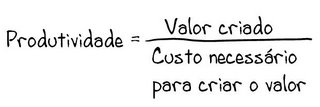
Concentrando-se mais no numerador da equação da produtividade, concentrando-se na criação de valor, onde não existem limites. Resultado? Esta alteração no perfil dos trabalhadores do sector.

Trechos retirados de "Why are US workers being left behind?"

Guerra de preços

Num texto lido ontem, encontrei uma referência a estes números. Curioso, fui à procura deles:

O que acontece aos preços quando existe uma guerra de preços?
.
E como é que se sai de debaixo do rolo compressor?
.
E como é que se minimiza a concorrência directa?
.
Pergunte-me como?

quarta-feira, outubro 01, 2014

Curiosidade do dia

Li ontem um artigo em que o autor, a propósito do storytelling, fazia referência a Joseph Campbell e ao seu estudo sobre as religiões e mitos do mundo.
.
Hoje, ao ler "Casava-me já contigo" voltei a lembrar-me de Campbell. Campbell defendia que a grande diferença cultural entre as elites da Europa do Ocidente e as da  Europa do Oriente começou com a história de Tristão e Isolda no século XII. Segundo ele, foi esta história sobre um romance de amor, cantado pelos trovadores, que criou o modo de ser ocidental.
.
Acho que consigo recuperar uma fonte... cá está "Romance of Tristan & Isolde".


Centros de decisão nacional

"His most provocative thesis, excerpted in a popular WSJ column, declares that "competition is for losers" and entrepreneurs should embrace monopolies. This is an ingenious framing device—just controversial enough to arouse debate, but commonsense enough to make an incrementalist acknowledge its virtue. Thiel is not suggesting that capitalism is bad. He's saying that, precisely because capitalism is wonderful for consumers, it's hell for companies. Truly competitive industries, like Manhattan restaurants, see their profits gobbled by rivals and fickle eaters."
Esta manhã li um texto em que o autor defendia que quanto maior um conselho de administração, quanto mais membros integrar, maior será a tendência desse conselho para não arriscar, para escolher projectos menos arriscados.
.
Assim, as empresas com conselhos de administração mais povoados terão, tendencialmente, rentabilidades mais baixas. Algo que por acaso encontrei no mês passado:
"Large corporations with small boards (around nine to 10 directors) outperformed their peers on shareholder return by 8.5 percentage points, while firms with large boards (13 to 14) underperformed peers by 10.85 percentage points,"
A não ser que... essas empresas consigam remover muito do risco dos seus projectos.
Como?
Como?!
Manipulando, manobrando, influenciando os governos para que as protejam.
.
Onde é que eu já vi isto?

Trecho inicial retirado de "Peter Thiel's Zero to One Might Be the Best Business Book I've Read"

Valor em vez de preço

Um conjunto de bons conselhos para empresas que, operando no B2B, querem subir na escala de valor:
"The best businesses compete on value, not price. In many situations, world class businesses have higher prices than that of substitute competitive offerings, but they differentiate their value beyond simple product attributes to incorporate other elements, such as service, into the offering.
.
Successful organizations identify drivers of value from their customers’ perspective and work from the market back in to their business to determine and quantify how those drivers create value for customers. They then work hard to train their sales force to sell this value to customers effectively.
...
almost every B2B industry today has a perceived “low cost” player or players that consistently underbid the market in an effort to win on price.
...
To combat these low-cost competitors, successful businesses must sell on value.
...
Segment your market carefully. While some customers and some transactions will always depend primarily on price, in every market, you will always find some customers and situations who care more about value than price. Success requires a determined effort to identify these customers and situations.
...
Understand exactly how you impact your customers’ bottom lines and quantify that value in dollars.
...
Train your sales force on these elements of value."
Trechos retirados de "Best Practices to Sell on Value Rather than Price"

Deixe de pensar como Saul, não há um caminho único

A receita do costume, o caminho mais percorrido, é a proposta de Saul para combater Golias:
"In recent years, many companies responded to the challenging economy by approaching competition from a financial perspective. Business owners strove to keep their organizations as lean as possible, to optimize efficiency, and minimize the risk of losing business to a rival who offered lower prices." 
No entanto, há os minoritários que decidem seguir outro caminho, quase uma blasfémia:
"But at the same time, some companies launched products and services - not all of them true necessities - which became must-have items despite being priced at the high end of their markets.
.
What enabled those businesses to zig as the market overall zagged? In many cases, their driving success was not in sales, but in storytelling. Their revenue ran counter to market trends because they created a narrative that integrated those products and services into the lives and identities of their target customers."
Os primeiros, ainda que não o pareçam, são como aqueles espaços Grab & Go, templos da transacção, honestos mas assépticos. Os segundos, estão disponíveis para a empatia e personalização:
"Share the story of the personal interests, challenges, or pain points that led you to develop your products or services. That shows your prospects that you have some common experiences and goals--that you “get” who they are and what they need. “People want to feel good when they make purchasing decisions." 
Recentemente, numa empresa, propusemos o seguinte lead para o começo da primeira história:
"Lembra-se daquela história sobre areia suíça vendida à Arábia Saudita? Era uma areia especial. Recentemente tivemos a história do petróleo argelino vendido à Venezuela. Era um petróleo especial. E uma empresa portuguesa começar a vender peles para a pátria das peles de alta qualidade? Sim, uma empresa portuguesa começar a vender peles para Itália... devem ter algo de especial, não?"

Trechos retirados de "Best Practices in Positioning: Tell Your Story, Your Way"

"making sense of value creation and co-creation" (parte VII)

Parte I, parte II, parte IIIparte IV,  parte V e parte VI.
.
E voltando ao artigo de Gronroos e Voima:
"that interactions are situations in which the interacting parties are involved in each other’s practices. [Moi ici: Não é uma mera transacção, não basta ir à prateleira buscar um produto padrão, não basta disponibilizar as instalações, é preciso calçar os sapatos do outro] The core of interaction is a physical, virtual, or mental contact, such that the provider creates opportunities to engage with its customers’ experiences and practices and thereby influences their flow and outcomes. Opportunities for interacting are natural in service encounters but may be created in goods marketing contexts too, such as through order taking, logistics, problem diagnosing, and call centers..Interaction is a dialogical process. Customer and provider processes merge into a coordinated, interactive process in which both actors are active, such as when a customer orders a vacation from a tour operator. In direct interactions, the processes are simultaneous and intertwined....the role of the customer and the provider in value creation and co-creation depend on the sphere in which potential and real value are being created. Only in a joint sphere is co-creation of value between the firm and the customer possible....Because value is created in usage, interactions make the value creation process potentially accessible to the provider. If the service provider manages to make use of this opportunity, it may take part in the customer’s value creation process as a co-creator."
O esquema que se segue é fundamental:


terça-feira, setembro 30, 2014

Curiosidade do dia

Ao ler este título "Pela primeira vez em mais de 30 anos não há shoppings em construção" comecei logo a fazer contas de 2007 a 2014... vão 7 anos. 7 anos até a máquina conseguir vencer a inércia do momentum e parar.
.
Dá para recordar e fazer o paralelismo entre o sinal, o choque petrolífero, e a inércia da resposta, as empresas petrolíferas demoraram 8 anos, apesar de todos os consultores e gurus, a perceberem o que se passava.

Sonhar acordado... ou delírio

Aproveitar isto, "Prada Finds No Good Deed Goes Unpunished" e atrair as marcas italianas de topo para se estabelecerem no paraíso fiscal português... ah se isto fosse a Irlanda!

Começar pelo fim

Começar pelo fim, começar pelos resultados desejados e recuar até ao que é preciso fazer.
.
Apostar na comunicação, não acreditar que ela acontece por difusão, ela tem de ser realmente executada.
"How do you get employees to behave in ways that differentiate your brand to the people that matter most to your business: customer prospects, clients, partners, colleagues, and recruits?
.
Too many companies are still trying to create thick manuals that lay out every possible scenario and a corresponding brand-appropriate response — an “if they do this, you do that” kind of approach. Very reactive.
.
With the world a messy place filled with unexpected situations, it’s just not possible to anticipate everything.  (I’d argue it’s not even desirable.) So if you can’t script every interaction, what are some ways to drive a consistent customer experience from a diverse range of employees across an even more varied range of interactions? ... You have to work from the outcomes back. And the best way to do that is to work back and from a single question: What do you want them to say after they walk away?"
Trecho retirado de "Tell Your Team What Customers Should Say About Them"

"Lovaglia’s Law"

Há anos conheci a "Lovaglia’s Law":
"The more important the outcome of a decision, the more people will resist using evidence to make it."
Foi dela que me recordei ao ler este trecho de Dave Gray:
"The more important the decision, the less informed the decision-maker will be.
.
The more important a decision, the higher it will typically be escalated in an organization. The higher it goes, the more it will be removed and abstracted from the actual situation and the problem that needs solving. This means decisions are escalated to people who know less and less about what’s actually going on."

O que me põe fora do sério

É comum ver na TV pessoas que, numa mesma frase, estão contra a redução do défice no orçamento do Estado e admiradas e contra a subida da dívida do mesmo Estado.
.
Este é mais um exemplo "Empresários pedem ao PS apoios à criação de emprego". Primeiro vem o peditório ao papá-Estado:
"No topo das prioridades dos empresários contactados pelo Diário Económico, está o maior apoio às pequenas e médias empresas (PME) e, em particular, ao fomento da criação de emprego.
...
por incentivos ao reforço da competitividade e pela maior capacidade de atrair investimentos."
Depois, vem o pedido para baixar impostos:
"Outras medidas passam ainda pelo alívio da carga fiscal das empresas,"
E de onde vem o dinheiro para os apoios, os fomentos e os incentivos?
.
É esta incapacidade para jogar bilhar como um profissional e prever as consequências do que desejamos que me põe fora do sério.

segunda-feira, setembro 29, 2014

Curiosidade do dia


A habitual conversa da treta (parte III)

Há dias fixei aqui esta frase:
"Todos os políticos que disserem agora que desconheciam o que iriam ser as consequências dessas suas decisões só mostram que não eram políticos (que têm o dever de antecipar para controlar e evitar), optando pela posição de cúmplices ingénuos, acreditando na magia dos alquimistas que prometiam transformar a dívida em capital (e o erro que desqualifica um político é o da ignorância das consequências)."
Entretanto, ontem, no "portadaloja" encontrei "O PCP e a verdade: um problema com barbas de molho" onde se pode ler, por exemplo:
"Antes do 25 de Abril, o PCP lançou nos meios metalúrgicos a ideia de que o salário mínimo nacional deveria ser da ordem dos 6000$00.
Depois da Revolução e ainda antes do PREC , naturalmente, lembraram-lhe tal coisa. E que disse então Cunhal na entrevista à Vida Mundial de14 de Junho de 1974?  Achava tal montante "incomportável para a economia nacional"..."
Entretanto, o salário mínimo vai aumentar em Outubro e começa o choradinho,
"Aumento do salário mínimo vai provocar "grandes dificuldades" às IPSS - Lino Maia". Qual a solução?
"desafiando o Governo a atualizar o apoio ao setor no próximo Orçamento do Estado."
Se não o podem pagar porque não se manifestaram antes? Por que têm de ser os contribuintes a contribuir para suportar a farsa?
.
Agora, "Bruxelas quer conhecer impacto do aumento do salário mínimo em Portugal"... o engraçado... o triste, é que a malta habituada à conversa da treta não deve fazer ideia dos impactes. Decidiu-se porque era justo... e meia bola e força.

Unidades que enganam (parte II)

A propósito disto:
"A TAP divulgou hoje os dados que confirmam uma maior "normalidade" em agosto deste ano face ao mesmo mês do ano passado. De acordo com a informação enviada pela empresa, o índice de regularidade da companhia aérea foi de 99,1% em agosto com um total de 10 541 voos realizados, melhor do que os 98,9% registados em agosto de 2013.
.
"Entre voos cancelados e regressos ao ponto de partida a TAP registou 76 ocorrências em Agosto de 2013, contra 73 no mesmo período de 2014, apesar de ter efetuado mais 303 voos e transportado mais 105 mil passageiros","
Recordar "Unidades que enganam".

Acerca da formulação de uma narrativa estratégica

Formular uma estratégia não é um desafio analítico.
"Executives often know they must break with the status quo, but there are few signposts indicating the best way forward.
...
Because the future is essentially unknowable, leaders must rely on the past for information and insight. Moreover, given that the future is unknown, there are likely to be differences and conflicts within the organization about what that future might hold. Such conflicts can impede progress on the development and execution of new strategies — especially innovative strategies that depart significantly from a company’s current approach to the market.
...
A new future could not shape strategic choices unless it was connected into a narrative that showed its connections with the past and the present. When managers settled on a particular narrative, they could make choices.
...
Our study revealed that future projections are intimately tied to interpretations of the past and the present. Strategy making amid volatility thus involves constructing and reconstructing strategic narratives that reimagine the past and present in ways that allow the organization to explore multiple possible futures.
...
strategy making was about constructing new narratives that tie together interpretations of the past, present and future. That is, effective projections of the future must be connected to resonant understandings of the present and past. [Moi ici: Espaço de Minkowski]
...
A particular view of the future shaped and was shaped by certain understandings of history and present priorities. Envisioning new futures provoked reassessments of the past and present, just as new understandings of current concerns triggered new imaginings of the future and alternative versions of history. Negotiating these interpretive differences proved to be central to strategy making in practice. We refer to this activity as constructing strategic narratives that link together efforts to re-imagine future possibilities, rethink past routines and reconsider present concerns.
...
strategic choices were only possible if managers could settle on a particular narrative. We found that for a narrative to guide strategic choices, it had to be coherent, plausible and acceptable to most key stakeholders within the company."
Lições a tirar:
"First, making strategy is not about accurate forecasting. You must consider the multiple interpretations of present concerns and historical trajectories that help to constitute those forecasts. Though the future will likely not turn out the way it was projected, this does not mean that projections do not matter. Articulating projections shapes attention, deliberation, investment and effort.
.
Second, achieving an innovative future is not about forgetting the past.
...
We found instead that managers need to engage directly with the past to shape a narrative that connects a particular understanding of history to a new future direction.
...
Third, strategy making is not about getting the “right” narrative. It’s about getting a narrative that is good enough for now, so that the organization can move forward and take action in uncertain times. This recognizes that strategy will in some ways always be evolving and “emergent.” Our view of strategy making suggests that the narratives that managers construct will shape the direction of future actions, just as those actions, in turn, will lead to further reconfiguring of the company’s strategic narratives over time."


Trechos retirados de "Beyond Forecasting: Creating New Strategic Narratives"

"making sense of value creation and co-creation" (parte VI)

Parte I, parte II, parte IIIparte IV e parte V.
.
Mais um exemplo das palavras-chave:

  • interacção + co-produção = co-criação de valor
  • co-criação de valor + utilização = experiência de criação de valor
"Today, customization is commonplace for a variety of goods from cars to jeans to computers to many others. Technological advancements are making it easier and more cost-effective for brand owners to reach consumers on a more personal level.
.
However, the expectation of tailored products and services has especially blossomed in the digital and 3D printing age. So what’s next? We’re now seeing a trend where products go beyond mass customization to individualization, truly meeting the needs of each unique person."