sexta-feira, abril 30, 2010

Reencaminhar por favor
"TGV: “Eu sigo o meu plano e sou fiel a ele”, diz Sócrates"
.
"“Eu sigo o meu plano e sou fiel ao meu plano”, disse José Sócrates, sublinhando que “o pior seria não manter a confiança no nosso plano”."
.
"“Eu sigo o meu plano e sou fiel ao meu plano”, disse José Sócrates, sublinhando que “o pior seria não manter a confiança no nosso plano”."
.
.
"But unlearning is different, it means taking ideas, thoughts, concepts, rules that you learned, believed to be true and used as the basis for making decisions and managing and ultimately tossing them in the trash can. It can leave you feeling vulnerable and cause you to stick with what you know for longer than it serves you well. After doing something for an extended period of time the assumptions are no longer questions and become almost instinctual.
.
Unlearning occurs when a new idea, concept or thought comes into play that contradicts what you’ve learned in the past."
.
Unlearning occurs when a new idea, concept or thought comes into play that contradicts what you’ve learned in the past."
.
Ou, ainda, recordar Mintzberg na California Management Review, “The Strategy Concept II: Another Look at Why Organizations Need Strategies”:
.
"Strategies are to organizations what blinders are to horses: They keep them going in a straight line, but impede the use of peripheral vision. By focusing effort and directing the attention of each part within the integrated whole, the organization runs the risk of being unable to change its strategy when it has to.
Setting oneself on a predetermined course in unknown waters is the perfect way to sail straight into an iceberg.
...
Sometimes lack of strategy is temporary and even necessary. It may, for example, simply represent a stage in the transition from an outdated strategy to a new, more viable one. Or it may reflect the fact that an environment has turned so dynamic that it would be folly to settle on any consistency for a time."
Setting oneself on a predetermined course in unknown waters is the perfect way to sail straight into an iceberg.
...
Sometimes lack of strategy is temporary and even necessary. It may, for example, simply represent a stage in the transition from an outdated strategy to a new, more viable one. Or it may reflect the fact that an environment has turned so dynamic that it would be folly to settle on any consistency for a time."
.
Era tempo de perceber o sentido deste título "Getting to Plan B"
.
ADENDA: "Decisions without Blinders":
.
"… cognitive blinders prevent a person from seeing, seeking, using, or sharing highly relevant, easily accessible, and readily perceivable information during the decision-making process.
…
The ability to focus on one task is undoubtedly useful, but focus also limits awareness.
…
The most worrisome version of the failure to seek information occurs when decision makers are motivated to favor a particular outcome."
…
The ability to focus on one task is undoubtedly useful, but focus also limits awareness.
…
The most worrisome version of the failure to seek information occurs when decision makers are motivated to favor a particular outcome."
ADENDA II: "What Makes an Effective Executive":
.
"The action plan is a statement of intention rather than a commitment. It must not become a straitjacket. It should be revised often because every success creates new opportunities.
So does every failure. The same is true for changes in the business environment, in the market and especially in people within the enterprise – all of these changes demand that the plan be revised. A written plan should anticipate the need for flexibility.
In addition the action plan needs to create a system for checking the results against expectations."
So does every failure. The same is true for changes in the business environment, in the market and especially in people within the enterprise – all of these changes demand that the plan be revised. A written plan should anticipate the need for flexibility.
In addition the action plan needs to create a system for checking the results against expectations."
Diferentes propostas de valor, diferentes comerciais, diferentes abordagens
"sales tend now to be polarized as transactional or consultative, each of which has different strategies and economics.
.
In consultative selling scenarios, the general 20th-century value proposition of ‘a little extra value for a modestly higher margin’ no longer works. The only way to win in a consultative scenario is to separate out and differentiate everything, including the sales force.
In consultative selling scenarios, the general 20th-century value proposition of ‘a little extra value for a modestly higher margin’ no longer works. The only way to win in a consultative scenario is to separate out and differentiate everything, including the sales force.
.
Transactional and consultative sales forces, processes and tools don’t mix. Consultative sales people are too talented and expensive; they are overkill in a transactional sale. But if salespeople are given the two models to sell, they’ll tend to default to transactional because it is the faster and in many respects easier option."
...
"We have analysed what has changed in selling over 2008, and concluded that sales cycles are taking up to 40 per cent longer due to budget freezes and customers’ decision processes taking longer."
...
"The natural knee-jerk reaction to this is to just fill the sales funnel with more opportunities – ‘surely something will drop’. No. Focus and stripping out the volume of opportunities to enable your teams to give more quality focus to less opportunity is the way to go. Better still that you nurture existing relationships, ideally where you are already trusted.
Before you sell anything, you must create value during the selling process itself."
Transactional and consultative sales forces, processes and tools don’t mix. Consultative sales people are too talented and expensive; they are overkill in a transactional sale. But if salespeople are given the two models to sell, they’ll tend to default to transactional because it is the faster and in many respects easier option."
...
"We have analysed what has changed in selling over 2008, and concluded that sales cycles are taking up to 40 per cent longer due to budget freezes and customers’ decision processes taking longer."
...
"The natural knee-jerk reaction to this is to just fill the sales funnel with more opportunities – ‘surely something will drop’. No. Focus and stripping out the volume of opportunities to enable your teams to give more quality focus to less opportunity is the way to go. Better still that you nurture existing relationships, ideally where you are already trusted.
Before you sell anything, you must create value during the selling process itself."
À atenção dos chefes dos aborrecidos representantes da Clix, PT e Cabovisão
que estão sempre a telefonar-me.
"I was reflecting the other day on the near infinite number of ways in which companies annoy their customers."
.
."I was reflecting the other day on the near infinite number of ways in which companies annoy their customers."
.
Mas estas empresas começam a importunar ainda antes de sermos clientes gerando pensamentos do género "Se já são melgas quando eu ainda nem sou cliente, imaginem como o serão muito mais se eu o fizer"
Para reflexão
Esta manhã encontramos várias artigos sobre o tema:
"5 Terrifying Parallels Between What's Going On Now And The Great Depression"
.
"O 13º mês pode estar em causa"
.
."5 Terrifying Parallels Between What's Going On Now And The Great Depression"
.
.
.
."O 13º mês pode estar em causa"
.
Depois de ler todas estas perspectivas, arrepia perceber qual é o ponto de vista de quem tem muita influência sobre quem manda no Governo "A culpa é do mordomo" de onde retiro.
quinta-feira, abril 29, 2010
A regra de ouro da estratégia
Por que é que Cavaco Silva falou do mar no discurso do 25 de Abril?
.
IMHO, porque o Presidente sabe que o futuro da economia portuguesa tem de passar por fazer coisas diferentes dos outros. O mar, a extensão da nossa costa, a extensão da plataforma, salta como uma diferença óbvia face aos outros países da UE.
.
Um risco óbvio que encontro nesta abordagem no estilo à la Grande Planeador é:
- Por que é que não está já a ser aproveitada?
- Se é assim tão boa por que é que não há mercado? Por que tem de ser criado, fomentado pelo Estado?
- E se acabou o dinheiro fácil é possível fazer algo sem um grande investimento de capital? Qual o risco associado?
Pessoalmente prefiro sempre a opção da micro-economia em que anónimos apostam o seu dinheiro a fazer miríade de coisas... algumas acabam por resultar.
.
Pessoalmente prefiro este conselho "Strategy's Golden Rule".
.
Claro que o macro-economista, que não tem relações amorosas com clientes, produtos e fornecedores não tem a mínima pista sobre onde nasce a alquimia que origina valor a partir do escondido que, simplesmente, estava à espera de quem o merecia encontrar. Por isso, lança-se nos grandes projectos, nos grandes planos, no grito "Espanha! Espanha! Espanha!" Lembram-se?
.
.
.
.
Já imaginaram como estaríamos se em pistão, como uma manada tivéssemos todos seguido esse conselho?
Só acordaram ontem!
Presidente da Associação Portuguesa de Bancos diz que crise foi provocada por «dinheiro fácil» "«Acabou o dinheiro barato e fácil que foi aliás o causador da crise." (Moi ici: E qual foi a resposta dos governos? Lançar mais dinheiro fácil para os escombros do deboche de endividamento)
.
.
.
.
O José Silva chama a atenção para os comentários do Anti-comuna aqui. Imperdível!!!
A não esquecer!
"You are not competing against your competitors’ offerings. You are competing against their value propositions. Your value proposition needs to be compelling enough to be able to: overcome the value proposition of your competitors (taking care that you consider substitutes and all possible alternatives in your thinking, but manage to avoid ‘analysis paralysis’!) and overcome the ‘do-nothing’ or ‘in-house’ options."
.
Trecho retirado de "Creating and Delivering Your Value Proposition" de Cindy Barnes, Helen Blake e David Pinder.
quarta-feira, abril 28, 2010
O mapa de benefícios
Quando facilito o exercício de retratar as experiências que farão com que os clientes-alvo fiquem satisfeitos é sempre muito difícil convencer as empresas a distinguir aquilo que é trivial daquilo que é realmente estratégico.

.
O que gera a satisfação dos clientes-alvo não é o normal, não é o corriqueiro, não é o esperado. Uauu!!! A EDP é espectacular, a energia não falhou hoje!!!
.
O que gera a satisfação dos clientes-alvo é o que os surpreende, é o que é diferente.
.
Há anos estava na moda diferenciar atributos explícitos de atributos implícitos. O que é implícito não gera satisfação, quando muito gera insatisfação quando falha.
.
Cindy Barnes, Helen Blake e David Pinder, no seu livro "Creating and delivering your value proposition" apresenta um mapa, o mapa dos benefícios, que me parece uma boa ferramenta a testar para atender à vontade das empresas e colocar todos os benefícios no retrato do que vai compor a experiência dos clientes-alvo satisfeitos e, em simultâneo, destacar o que faz a diferença do que é banal e implícito.

Os "ramos" das experiências implícitas básicas ficarão pelos benefícios esperados e podem ser vistos como os alicerces escondidos sobre os quais assentam os benefícios aumentados (a diferenciação: "Once you have separated out the expected benefits, you will find yourself working with additional, or ‘augmented’, benefits. These are areas where clients were pleasantly surprised, even delighted, to receive value and benefits that they hadn’t expected. These are the
benefits that will be the most useful to you when understanding why you are providing different and significant value to your customers. In other words, it’s the maximum value experience") e os benefícios potenciais (o UAUUUUUUUU).
benefits that will be the most useful to you when understanding why you are providing different and significant value to your customers. In other words, it’s the maximum value experience") e os benefícios potenciais (o UAUUUUUUUU).
.
É a economia, estúpido.
Entende o Diário Económico que se trata de um problema político "Entendam-se!"
.
Como se a raiz do problema não tivesse nada a ver com o andamento da nossa economia.
.
.
""O problema português é económico, não político"".
terça-feira, abril 27, 2010
Também serve para reflexão
"Exportações cada vez mais para fora da Europa"
.
Estas exportações obrigam as nossas empresas a mudar de modelo de negócio?
.
Estas exportações obrigam as nossas empresas a mudar de proposta de valor?
.
Estas exportações obrigam as nossas empresas a apostar na criação de mais valor?
.
Estas exportações obrigam as nossas empresas a subir na escala de valor?
.
Estas exportações permitem que as nossas empresas paguem melhores salários?
.
Estas exportações permitem que as empresas respirem... quantas aproveitarão o fôlego para se transformarem?
Proposta de valor = concentração, foco, sintonização
Para definir uma proposta de valor há que primeiro identificar e caracterizar os clientes-alvo. Assim, formular uma proposta de valor implica concentrar, focar as atenções num grupo específico de clientes e equacionar as experiências que buscam quando vão ao mercado.
.
“So a value proposition statement is a clear, compelling and credible expression of the experience that a customer will receive from a supplier’s measurably value-creating offering. It is not a description of what your organization does for a customer.
…
Value proposition thinking is at the heart of any value-focused organization. It sharpens the way organizations work by focusing activity so as to serve customers profitably. Note the use of ‘profitably’: the value proposition approach recognizes that you must be profitable to stay in business. A value proposition approach does not mean that your organization responds to every customer or prospect demand. That would be a sure path to bankruptcy.
…
value proposition development is an organizational approach to building in value to the customer experience; it is the management of the discipline of providing profitable customer value.
…
The entire value proposition building process is about focus. Going into organizations and asking them what they think their value is, it is our experience that executives adopt a ‘more is better’ approach.
They’ll say things like ‘We deliver great service’, and ‘Our intellectual property is really robust’, and ‘We’ve got the best people’, and so on, and on and on and on. The point is that although these may be interesting features, they are not differentiating, and will not make the organization stand out from the crowd.
Put simply, lists of features of this kind provide no directional clarity as to why a particular organization is special. In fact, more usually they get in the way, cluttering the view, so that it becomes impossible for a would-be client to see where the real value is in a given circumstance.
So, much of the purpose of the market, value experience and offerings steps is to strip away features that are irrelevant, unnecessary, and confusing – because they actually detract from a company’s value delivery potential.”
.
Acerca do valor e das listagens de atributos vale a pena ler este excelente postal “The Difference Between Features and Value”
.
Trechos retirados de “Creating & Delivering Your Value Proposition” de Cindy Barnes, Helen Blake e David Pinder.
Isto também é material para reflexão
Já trabalharam com uma empresa que não faz coisas repetitivas, que está sempre em torno de um novo desafio?
.
Esta abordagem da solution shop parece-me interessante:
.
segunda-feira, abril 26, 2010
Para reflexão
E depois são os gregos que têm contabilidade criativa...
"Empresa pública endivida-se para comprar imóveis ao Estado"
.
Por que o desemprego não é prioritário
Comecemos pelo livro "Creating & Delivering Your Value Proposition" de Cindy Barnes, Helen Blake e David Pinder. Os autores propõem a estratificação das relações comerciais numa pirâmide de valor: a Pirâmide de Valor:


"Component
A component is a discrete unit of something capable of being presented
and sold on a stand-alone basis.
...
Offer
An offer is a set of components, combined or bundled to fulfil a specific operational function. (...)
Notice something: components and offers are not majorly differentiated; they are simply ‘put out there’ in the marketplace for customers to self-select on the basis of recognized needs.
.
Solution
A solution is a grouping of offers or skills that, as a combined set, deliver a strategic response to a client need. Importantly, the solution is a solution – rather than an offer – because it is recognized as such by the purchaser, and delivers a measurable outcome. As one writer has put it, a solution is ‘a mutually shared answer to a recognized problem, and the answer provides measurable improvement’. Moving up the hierarchy of transactions, the change from offer to solution is a step change.
.
Co-created value
If the shift from offer to solution is a step change, the shift up to cocreated value is a giant leap. This is where a provider co-creates a customized solution with a client. The output is a unique, tailored, measurable response to an identified need.
Self-evidently, there are huge differences between selling components and selling co-created value, and it is vital to know the difference. Failure to do so must inevitably result in suboptimal performance and potentially catastrophic failure.
Selling components is a transactional activity where buyers know what they want. Selling co-created value is a consultative activity where buyers know the problem that they want to solve, but don’t necessarily know how to achieve it, and, therefore, want to enlist the help of the seller to co-create the solution. Offers and general solutions are on the scale between transactional and consultative. In transactional sales, the role of sales is to communicate value, whereas in the consultative sale the role is to create value."
.
Recordo, muitas vezes, o gráfico deste postal, nele podemos apreciar as consequências de uma economia onde a maioria das empresas se dedica à venda de componentes e ofertas. Ou seja, onde a maioria das empresas não consegue realizar transacções comerciais ricas em valor e longe da guerra dos preços e dos custos.
.
Vender componentes ou ofertas não é a mesma coisa que vender soluções. E vender soluções não é o mesmo que vender co-criação de valor, como reconhece o CEO da Electrolux "we decide we could still make money in both ends if we separated our business models for the two ends of the market. Dividing the sales force is one example of what I mean when I talk about different business models."
.
Geoffrey Moore no seu livro "How Great Companies Innovate at Every Phase of Their Evolution" apresenta a imagem que se segue para caracterizar os grupos de clientes ao longo da evolução de um negócio.
A co-criação de valor ocorre quando se vende para os visionários que compõem o grupo dos inovadores e primeiros adoptantes, quando se vende para os pragmáticos da maioria inicial já é uma questão de preço e de escala.
.
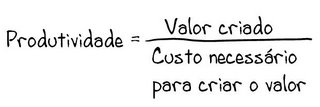
Precisamos, como país, de empresas que criem mais valor, que sejam capazes de fugir da competição pelo preço. Precisamos, como país, de empresas que cada vez mais apostem na criação de valor, no numerador, em vez do denominador como refere Rosiello, em vez da redução dos custos para competir por uma guerra de preços que nunca acaba num mar infestado de tubarões.
.
Precisamos de aumentar a produtividade, não pelo aumento da quantidade produzida e pela redução de custos, mas pela produção de soluções e co-criação de valor.
.
Por tudo isto, compreendo como é importante a renovação do tecido industrial e empresarial português, precisamos de criação de valor e de marcas. As mentes que gerem empresas que co-criam valor não são, não podem ser as mesmas mentes que gerem empresas que lutam no mercado dos custos e preços.
.
Por tudo isto, compreendo as palavras de Daniel Bessa quando defende que o desemprego não é prioritário. Quanto mais apoiarmos as empresas do passado, menos pressão elas sentirão para se recriarem, mais recursos continuarão a estar presos a opções tornadas obsoletas.
domingo, abril 25, 2010
Para reflexão
"Espanha garante que não há risco de contágio" Quando é que os políticos aprendem que há coisas que não se negam... age-se!
.
"Alemanha quer Grécia fora do euro" onde se lê ""A Grécia não tem só um problema de liquidez, mas também de crescimento estrutural"
.
Se a Grécia tem um problema de crescimento estrutural... o que dizer do país das laranjas? O que dizer de Portugal? Basta, factualmente, comparar o crescimento da economia grega e portuguesa desde o arranque do euro.
.
Julgo que muita gente em lugares de topo ainda não percebeu a sério, bem a sério, a essência de ser detentor de uma moeda forte e de como isso tem de influenciar a vida, o pensamento e as decisões. Não é à toa que defendo "Somos todos alemães"
Há marca e gente de carne e osso ou só funcionários?
Sexta de manhã, no RCP, entrevistaram um gestor, penso que da Portucel. A certa altura perguntaram-lhe algo como:
- Fala-se tanto que os livros electrónicos serão o futuro, que os jornais electrónicos serão o futuro, não está preocupado?
.
A resposta foi de mestre:
- falou da importância de ter uma marca, para distinguir produto de commodity; e
- sobretudo, não se concentrou em salvar o passado, falou das oportunidades que se podem abrir para novas aplicações.
Esta é a receita de Drucker, a gestão de topo tem de se preocupar mais com as oportunidades do que com os problemas.
.
Esta breve reflexão surge a propósito do artigo do Público de hoje "Cortiça avança com a maior promoção de sempre para combater vedantes artificiais"
.
O título mete medo, no entanto, no texto encontram-se algumas razões para ter esperança:
.
"credibilizar e valorizar a cortiça como produto natural e conquistar novos mercados na área de materiais de construção e decoração."
.
Mas há marcas por detrás destes novos mercados? Há gente disposta a queimar as pestanas num fim-de-semana sem ser paga ao taxímetro, porque tem uma marca que quer fazer a diferença inovando? Ou temos funcionários bem intencionados? Ou queremos continuar a vender uma commodity do qual outros fazem ouro?
.
Há tempos, contaram-me a estória de um funcionário que num relatório tinha proposto a uma empresa implementar um sistema de gestão da qualidade em 10 horas. DEZ horas.
sábado, abril 24, 2010
O que é a proposta de valor!
Iniciei a leitura de mais um livro sobre o conceito de proposta de valor, conceito que considero fundamental para o sucesso num mercado em que a oferta é superior à procura. Trata-se do livro "Creating and delivering your value proposition : managing customer experience for profit" de Cindy Barnes, Helen Blake e David Pinder.
.
"At a conference where Professor Neil Rackham, internationally acknowledged sales guru, was the keynote speaker he asked delegates to define a value proposition. The first person to reply said: ‘It’s marketing bullshit for a benefits statement.’ This is completely incorrect, but it is probably what most people think."
...
"When, late in the 20th century, the globalization tipping point happened, enabling supply to approach and exceed demand, and when Japanese goods were enthusiastically being snapped up, Western companies at long last recognized the imperative to produce quality goods. But even then, it took a while for many companies to understand that quality has to be built in to products and services, rather than being ‘inspected in’.
In the mid- to late 20th century, companies often tried to identify for their products and services a unique selling proposition, or USP.
This was, as the term suggests, something that made a product or service ‘special’, something that could be thrown into a sales situation as a clincher to get the deal. Bizarrely, however, USPs often were not directly related to value and, sometimes, not even directly related to the product or service."
...
"Next, ‘features and benefits’ emerged as an advance on USPs. In fact, the formula evolved to ‘features–advantages–benefits’, which gave the handy acronym FAB. In countless workshops in the 1970s and 1980s delegates learned that features were connected to advantages, and advantages to benefits, ....
You get the idea? Fab! There was often no great effort to prove the claims, and the idea at the time was to create as long a list as possible.
More, so the thinking went, was better.
Then, the truth dawned… a feature is not a benefit unless it is a solution to a need. This was perhaps the moment that the concept of the value proposition was born. Even then, it took time to get to today’s understanding of the term.
The first post-FAB differentiating technique compared a product or service with its competitor(s) by listing points of parity (POP) and points of difference (POD). This had the virtue of at least acknowledging competitive offerings. POP–POD analyses, however, were not necessarily discriminating in relation to a particular customer’s need or situation.
The time for the value proposition had arrived.
However, no sooner had value proposition entered the business lexicon than it started to be misapplied. It became used as an alternative for USPs, features, benefits, POPs and PODs."
...
"And let’s make it clear from the outset that a value proposition is not what you do. It is the value experience that you deliver."
...
"When, late in the 20th century, the globalization tipping point happened, enabling supply to approach and exceed demand, and when Japanese goods were enthusiastically being snapped up, Western companies at long last recognized the imperative to produce quality goods. But even then, it took a while for many companies to understand that quality has to be built in to products and services, rather than being ‘inspected in’.
In the mid- to late 20th century, companies often tried to identify for their products and services a unique selling proposition, or USP.
This was, as the term suggests, something that made a product or service ‘special’, something that could be thrown into a sales situation as a clincher to get the deal. Bizarrely, however, USPs often were not directly related to value and, sometimes, not even directly related to the product or service."
...
"Next, ‘features and benefits’ emerged as an advance on USPs. In fact, the formula evolved to ‘features–advantages–benefits’, which gave the handy acronym FAB. In countless workshops in the 1970s and 1980s delegates learned that features were connected to advantages, and advantages to benefits, ....
You get the idea? Fab! There was often no great effort to prove the claims, and the idea at the time was to create as long a list as possible.
More, so the thinking went, was better.
Then, the truth dawned… a feature is not a benefit unless it is a solution to a need. This was perhaps the moment that the concept of the value proposition was born. Even then, it took time to get to today’s understanding of the term.
The first post-FAB differentiating technique compared a product or service with its competitor(s) by listing points of parity (POP) and points of difference (POD). This had the virtue of at least acknowledging competitive offerings. POP–POD analyses, however, were not necessarily discriminating in relation to a particular customer’s need or situation.
The time for the value proposition had arrived.
However, no sooner had value proposition entered the business lexicon than it started to be misapplied. It became used as an alternative for USPs, features, benefits, POPs and PODs."
...
"And let’s make it clear from the outset that a value proposition is not what you do. It is the value experience that you deliver."
Subscrever:
Mensagens (Atom)
%2006.21.jpeg)