
A partir do minuto 24 deste podcast podemos ouvir:
"There’s a wonderful story I always tell, which is about Richard Thaler, the Nobel Prize-winning behavioral economist and author of Nudge. He once spoke to a board of about ten people at a very large company. He went to the eight heads of the largest divisions of this company and asked them all, simultaneously, a question:
"Would you take a decision if it had a 50% chance of increasing your profits next year by 50%, and a 20% chance of reducing your profits by 30%?"
Six out of the eight of them said no.
And Thaler goes back and says, "Well, you’re all good enough mathematicians, I assume, to realize these are highly favorable odds. To a gambling man, this is a very, very good bet, and yet you declined to take part. Why is that?"
And six out of the eight of them reply, "Because 20% of the time, I’d lose my job."
And then the interesting thing happens, which is that the chief executive is sitting at the end of the table, looks aghast at the eight people and goes, "But I want all of you to take those odds because, net-net, in aggregate, we’d almost certainly end up massively better off. Yes, two divisions—one division—might have a slightly disappointing year, but four of them would perform spectacularly."
And you realize that the way businesses are structured, as you push responsibility and accountability further and further down the organization, they become more and more risk-averse, and they become more and more uncertainty-averse. So, they would prefer a definite 5% to 10% to a probabilistic 50% chance of 50%.
And what happens then is that, fundamentally, you become highly conservative. You’re more worried about downside avoidance than you are about upside opportunity. And as a result, obviously, both innovation and marketing, I would argue, are fat-tailed activities, where 10% of what you do is probably more valuable than everything else. You can’t tell in advance which 10% it’s going to be. They are processes of exploration and discovery.
And what you do is get rid of the discovery layer in the pursuit of efficiency. In the short term, it looks like a great idea, but in the longer term it proves fatal, I think, because you’ve lost the capacity to adapt, to reinvent, to reposition, in pursuit of the occasional breakthrough."
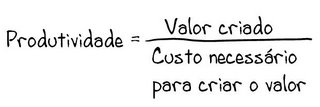
Relaciono logo esta mensagem com a fraca produtividade da inovação nas organizações incumbentes.
Muitas empresas dizem querer inovação enquanto avaliam cada unidade, cada projecto e cada gestor como se todos tivessem de produzir resultados positivos todos os anos. Descentralizam a responsabilidade, mas não a tolerância ao insucesso. O resultado é previsível: pequenas melhorias seguras vencem oportunidades potencialmente transformadoras.
%2019.15.jpeg)

%2006.21.jpeg)







Sem comentários:
Enviar um comentário